





























Which trees to choose for a park?
The choice will be made on remarkable large subjects
Contents
What a joy to have a large area to plant very tall trees! This area can be private (a large garden) or public (a park). But how do you choose a tree from the wide variety of species available?
Trees in a park must meet several specific criteria: they should be hardy, adapted to the soil and climate of the location, and sufficiently resistant to climatic variations and air pollution, as well as being tall and attractive, perhaps even a bit unusual, providing ample shade. Therefore, this choice should not be taken lightly.
Let’s discover a small selection of trees to plant in a municipal park or a very large wooded garden!

The Tulip Tree
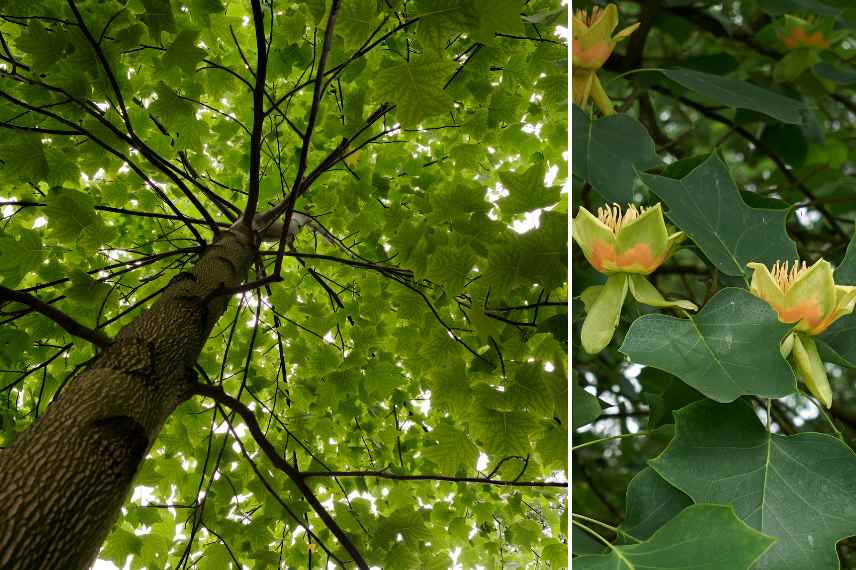
The Liriodendron tulipifera is a remarkable tree known for its strangely lobed leaves, which appear truncated, and its flowers that resemble the shape of a tulip and are slightly fragrant. While the species can reach heights of 25 m, this is not the case for cultivars, which are often somewhat smaller.
This is true for the Virginia Tulip Tree ‘Aureomarginata’, which will only reach 15 m in height with a spread of 7 m. This tree features bright green foliage strongly marginate with yellow in spring, turning beautiful orange hues in autumn. The flowering is similar to that of the species: pale yellow-green cups, orange at the base, resembling large tulips.
Very hardy, the Virginia Tulip Tree prefers deep, loose, rich, clayey soils that remain cool throughout the year and a sunny or partially shaded position.
Liriodendron tulipifera
Read also
10 shade treesThe Cedar of Lebanon
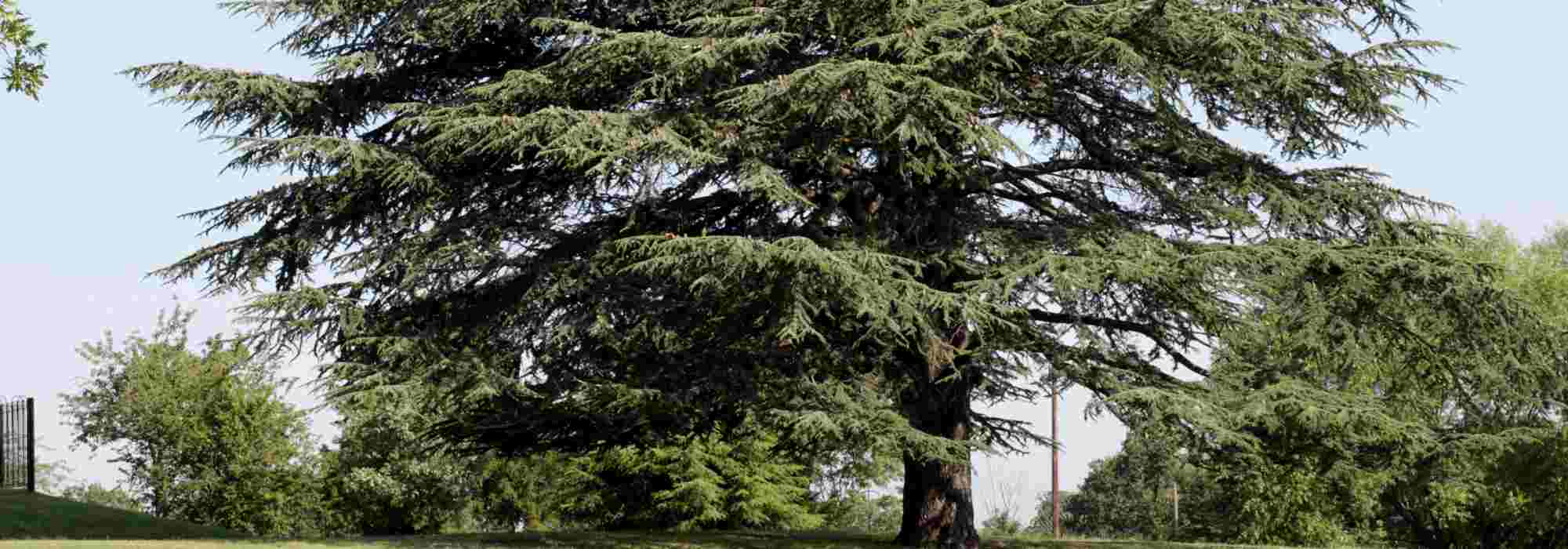
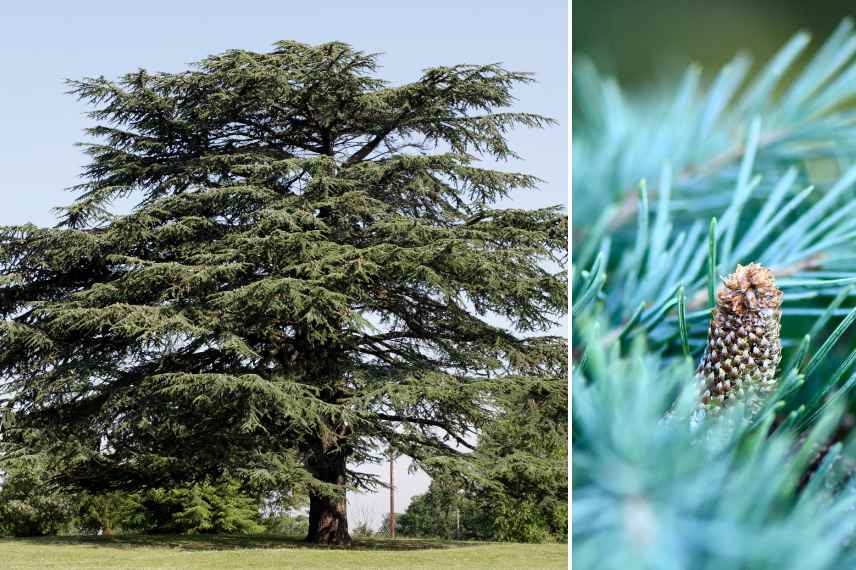
The Cedrus libani, the iconic cedar of Lebanon, is a majestic tree characterised by a pyramidal habit during its first thirty years, becoming tabular, displaying a flattened crown. Ultimately, it can reach 50 m in height and 20 m in width.
The Cedrus libani ‘Atlantica Glauca’ is a sumptuous form with bluish foliage. Its broad, pyramidal habit is slightly tighter than that of the type, and its young shoots are a magnificent silver-blue in spring. This majestic conifer, imposing in size yet smaller than the typical species (20 m high and 10 m wide), requires isolation to appreciate its beautiful silhouette and exceptional foliage.
The Atlas cedar ‘Glauca’ is not demanding in terms of soil and climate. It grows faster in fertile, deep, and cool soil but adapts to much less favourable conditions and summer drought once established. It is a beautiful tree to plant in full sun and in a location where it can grow without being hindered.
Read also our tips in How to choose the right cedar?
Cedrus Liban
Discover other Large specimen trees
View all →
Available in 3 sizes
Available in 4 sizes
Available in 5 sizes

Available in 6 sizes
Available in 6 sizes
Available in 3 sizes
Available in 4 sizes
Available in 3 sizes
Available in 5 sizes
Available in 4 sizes
The Pagoda Dogwood
The Cornus controversa, also known as the pagoda dogwood, is a true small tree that captivates with its remarkable silhouette, featuring tiered branches. It is adorned with glossy green foliage and is covered in summer with very ornamental flat white cymes, followed by shiny blue-black fruits. This dogwood grows up to 12 m high and 8 m wide.
The cultivar Cornus controversa ‘Variegata’ features glossy foliage, largely variegated with cream. The flowering is similar to the typical species. Its autumn foliage takes on red to purplish hues before revealing, in winter, the perfect architecture of its branches. This dogwood has a slower growth rate and remains smaller than the typical species, reaching about 7 m high and 6 m wide.
The pagoda dogwood prefers a cool, humus-bearing soil that is not too calcareous to slightly acidic, in full sun or partial shade.
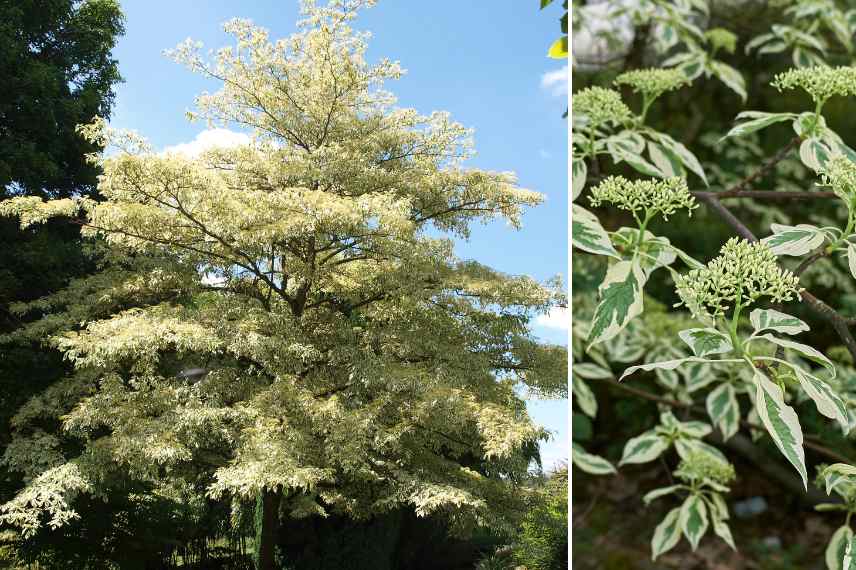
Cornus controversa ‘Variegata’
Read also
10 very hardy, frost-resistant treesGinkgo biloba
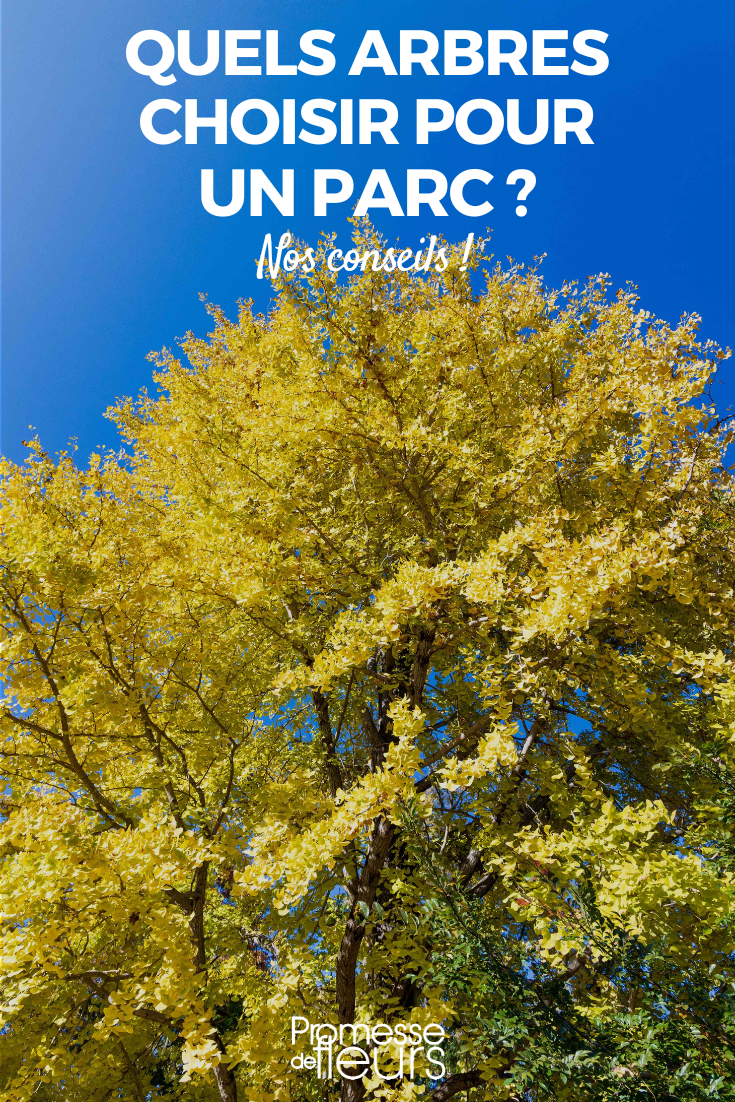
The Ginkgo Biloba, evocatively named the Tree of Forty Ecus, is a majestic tree that shines in autumn, adorned with bright yellow foliage.
The Ginkgo biloba ‘Autumn Gold’ is a selection noted for its magnificent autumn foliage of golden yellow with orange highlights. Its fan-shaped leaves emerge slightly later in spring and remain attached to the branches longer than the typical species. Then, they all fall at once, forming a carpet of gold at the base of the tree. This male selection reaches about 15 to 20 m in height and 15 m in width.
The ginkgo grows in full sun in all ordinary soils, even calcareous, provided they are cool and well-drained.
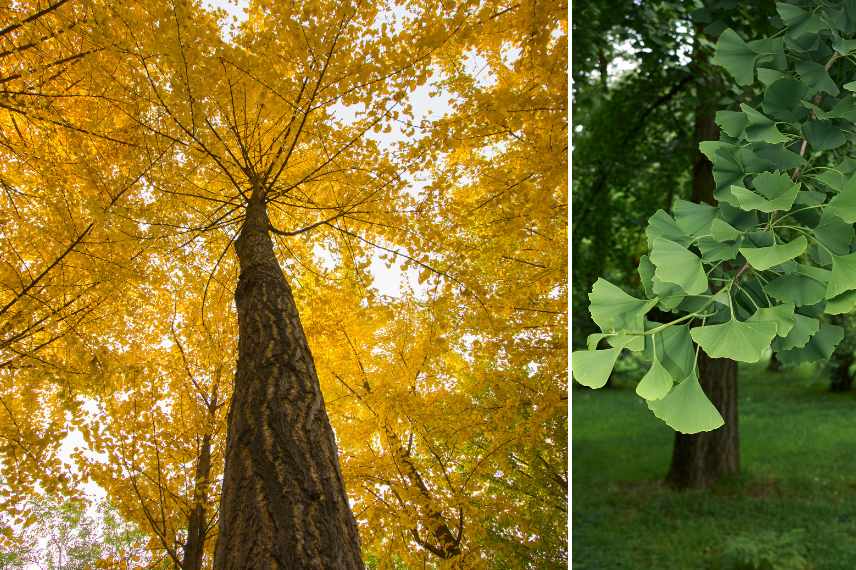
Ginkgo biloba
Liquidambar
The Liquidambar styraciflua, also known as American Sweetgum, is a deciduous tree with a slender conical habit that is particularly valued in autumn, when its ample palmate foliage takes on sumptuous orange, copper, or golden to scarlet red and purple hues. This tree can grow up to 20 m tall and 7 m wide.
The cultivar Liquidambar styraciflua ‘Palo Alto’ develops smaller leaves than the species. In autumn, it ignites in orange-red to bright red hues before falling to the ground. This tree forms a majestic silhouette, highlighted by a light bark, marked by very dense and visible corky ridges in winter. The ‘Palo Alto’ sweetgum reaches a height of 18 m and a width of 10 m.
Sweetgums prefer full sun, sheltered from strong winds, and light, deep, cool soil that is not waterlogged, preferably acidic.
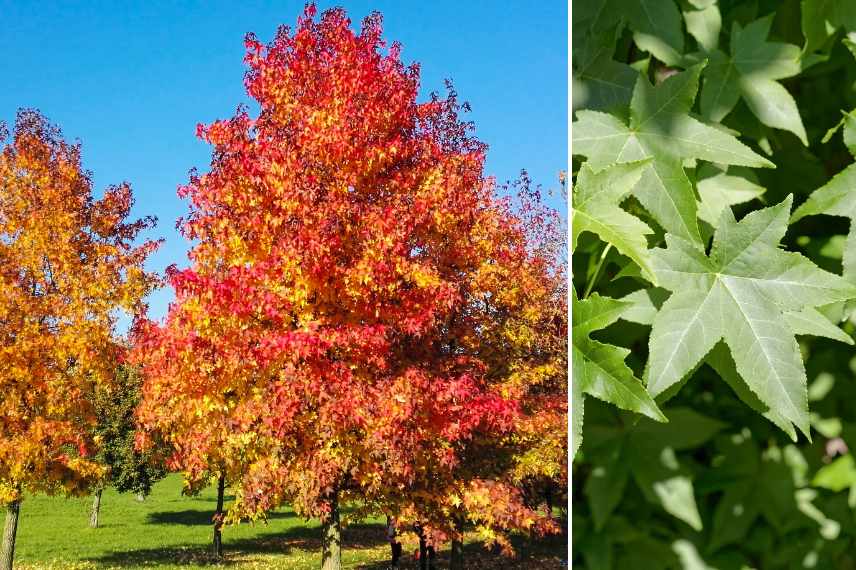
Liquidambar styraciflua
The Large-flowered Magnolia
Native to the Southeastern United States, Magnolia grandiflora, also known as the Tulip Tree, thrives in light, warmth, humidity, and rich, deep soils. It is also a magnificent tree with evergreen foliage that boasts an incredible flowering display in summer.
The Magnolia grandiflora ‘D.d Blanchard’ is a stunning selection featuring a superb, dense habit that resembles a large pyramid of greenery. It reveals the underside of its large, beautifully coloured rust-brown leaves throughout the year. It blooms for nearly three months in summer (from June to August), offering here and there sublime flowers, resembling large white tulips with a delightfully lemony fragrance. This cultivar can grow up to 15 m tall with an 8 m spread.
The Magnolia grandiflora prefers a sunny and open exposure, sheltered from prevailing winds, and a deep, rich, and cool soil even in summer.
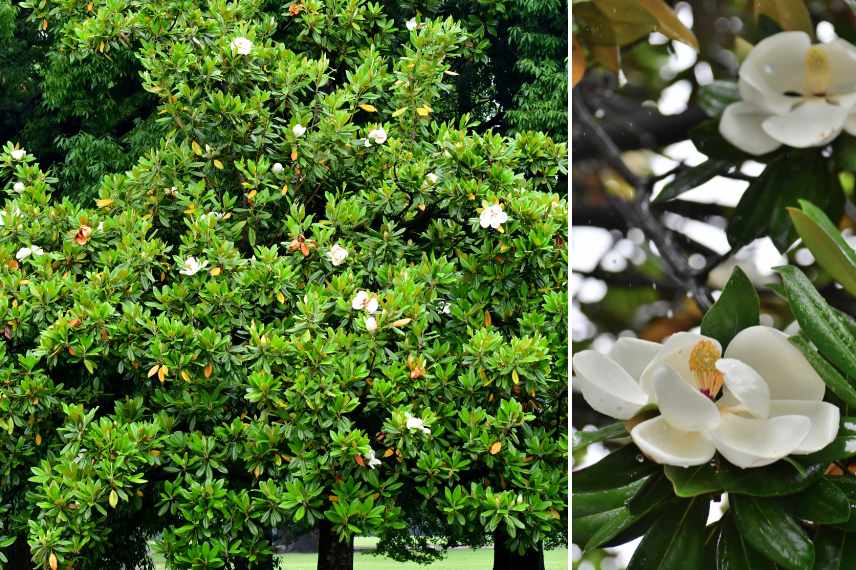
Magnolia grandiflora
Paulownia
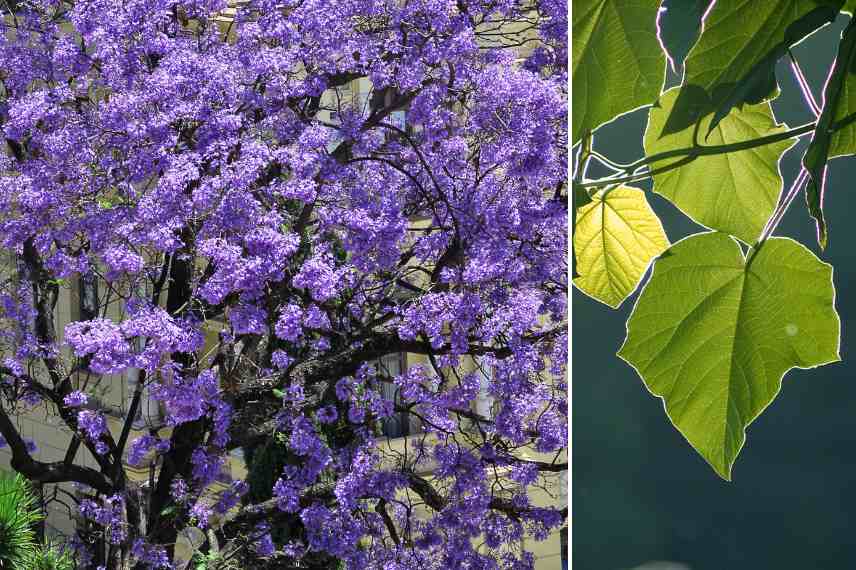
Paulownia tomentosa is a fast-growing tree whose leaves provide beautiful, dense shade. In April-May, before the foliage appears, the flowering reveals magnificent mauve, elongated bell-shaped flowers in clusters on the still naked branches.
Less known, the Paulownia fortunei ‘April Light’ is an interesting variety for its early flowering, clearly visible on its branches that are still devoid of leaves, as well as for its naturally regular and rounded habit. This variety is also distinguished by its remarkably large, highly decorative leaves that turn yellow in autumn. Broader than tall, this tree will quickly exceed 7 m in height and 10 m in width.
Paulownias should be planted in full sun, in ordinary, well-drained soil, but not too dry.
Paulownia tomentosa
The Himalayan Weeping Pine
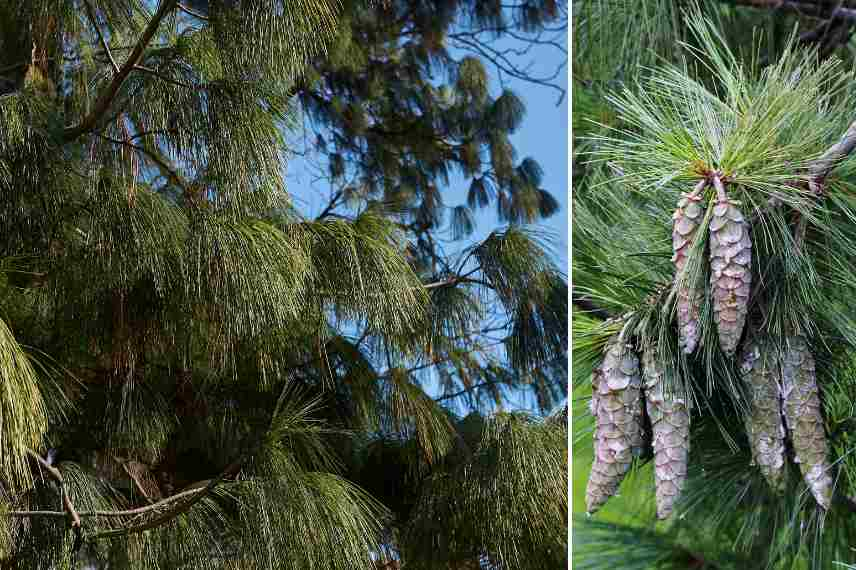
Seldom planted, the Pinus wallichiana or Himalayan weeping pine boasts a majestic weeping silhouette and very soft grey-green to glaucous blue needles. Over the years, its low branches stretch horizontally, creating a wide, light, and transparent shape. This species also produces long, pendulous, and curved cones the size of a banana, very decorative due to their shape and glaucous, frosted hue before turning caramel.
Fast-growing, it will form a splendid specimen of 3 to 4 m in 10 years with a relatively dense conical shape, eventually reaching over 20 m high and 10 m wide.
Very undemanding and frugal, the Pinus wallichiana prefers sun and cool, well-drained soils and is very resistant to cold (-28°C) and pollution.
Pinus wallichiana
The Weeping Willow
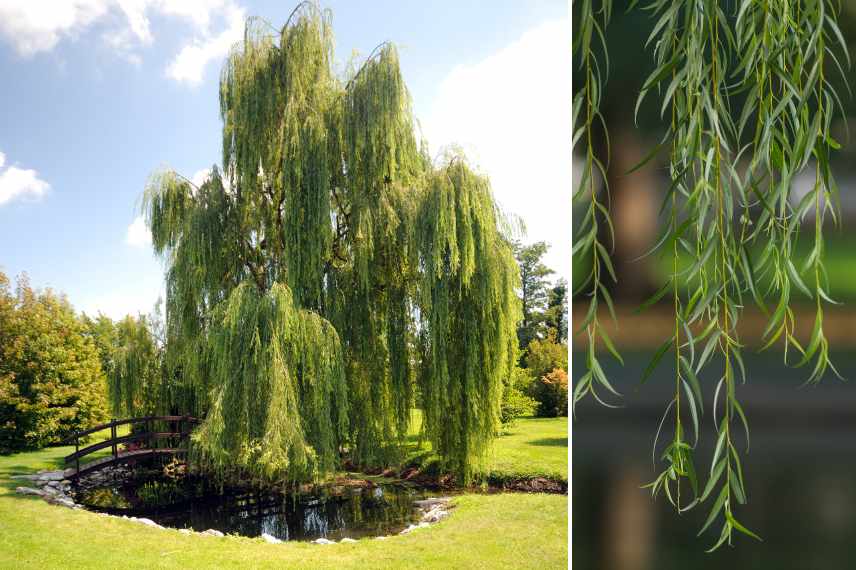
A classic among classics, yet so romantic, the Weeping Willow or Salix alba ‘Tristis’ is a large tree (20 m in all directions) with a broad rounded crown, featuring green foliage turning yellow in autumn and trailing branches that reach the ground. Notably, it produces light catkins in spring, which are interesting for pollinating insects that find food still scarce at this time of year. With a rapid growth rate and being very hardy, it is the tree to plant in moist soil or by a body of water.
The Weeping Willow should be planted in any cool, even moist, fairly heavy, rich soil, preferably non-calcareous, and in a sunny position.
Salix alba
Red Maple
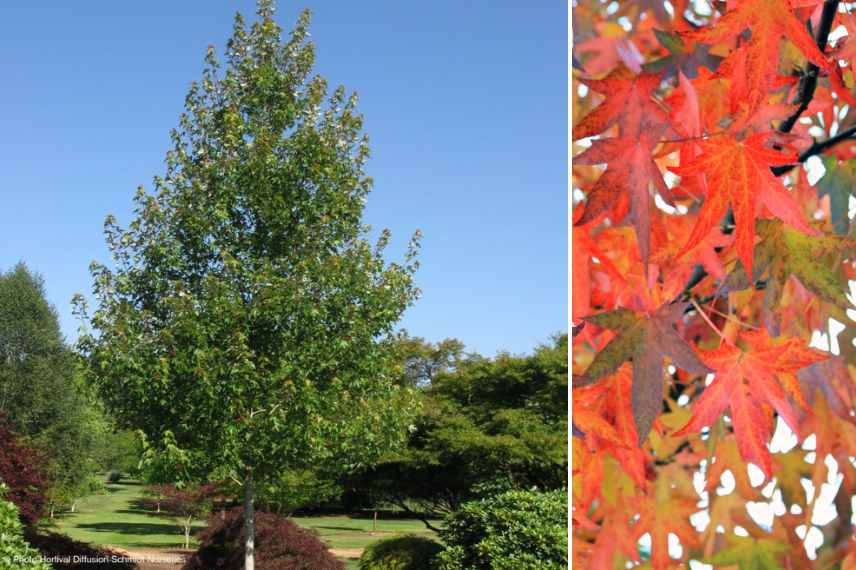
The Acer rubrum is known regionally as the Canada Maple, Red Maple, or Virginia Maple. It is a large forest tree that can reach a height of 30 m in its native habitat.
The Acer rubrum ‘Redpointe’ is an interesting selection of red maple, notable for its very regular pyramidal habit and its splendid autumn foliage of intense and brilliant red. Its flowers, petioles, and fruits (samaras) are also red. The tree will ultimately reach an average height of 12 m with a spread of 6 to 7 m at the base of the crown. This cultivar is highly valued for its vigorous growth, cold resistance, and adaptability to urban environments.
The Acer rubrum thrives in any soil that is not too chalky, deep, and cool, even moist, in a sunny or partially shaded position.
Acer rubrum ‘Redpointe’ and autumn foliage of the Acer rubrum
- Subscribe!
- Contents
Comments