





























Wild edible plants
Our guide to natural cooking
Contents
In modern times, humanity is slowly reconnecting with its roots by rediscovering the wonders of nature, notably through edible wild plants. In a world where processed foods and diets predominate, the return to a more natural diet finds a precious ally in these overlooked plants. The discovery of edible wild plants brings us back to the roots of our diet and connects us to nature in a profound way. They never cease to surprise with their diversity and health benefits. Their responsible and respectful foraging reminds us of the crucial importance of preserving our natural ecosystems. By learning to recognise them and to incorporate them into our recipes, we take a step towards a more natural diet and a renewed relationship with nature.

The benefits of returning to a natural diet
Modern society has distanced humans from their innate bond with nature. Edible wild plants provide rich, varied nutrition directly from the earth. Their high content of vitamins, minerals and antioxidants makes them a valuable and optimal source.
Before the advent of modern agriculture, our ancestors had a close relationship with nature and depended on gathering for their subsistence. Knowledge of edible wild plants was passed down through generations, forming an integral part of their way of life. Today, rediscovering this knowledge, we honour our roots and gain access to an invaluable source of food.
Our forests, fields and gardens teem with hidden treasures. Species such as nettle, dandelion and plantain, often regarded as weeds, turn out to be superfoods.
Read also
10 good reasons to let weeds growWhy take an interest in edible wild plants?
Wild edible plants are rich in essential nutrients for health. Nettle, for example, is an incredible source of iron, calcium and vitamin C. The fact that these plants grow naturally, without any specific or intensive cultivation methods, concentrates their nutrient levels to unprecedented levels. Wild plants are the most nutrient-dense.
Incorporating these plants into our diet broadens our culinary horizons. Dandelion, with its bitter leaves and sweet flowers, offers a unique flavour palate. Plant-based foods, wild plants, herbs and vegetables are sources of essential fibre in our diet; they provide nutrients indispensable for the proper functioning of the body and the digestive system. These are often the dietary sources we lack most in our modern diet.
Foraging for wild plants creates a direct link with the land and brings a sense of gratification and real pleasure. By understanding the seasonality and habitat of each plant, we strengthen our relationship with nature.
Some common edible wild plants
Here is a selection of some of the most common wild plants, though many others are edible.
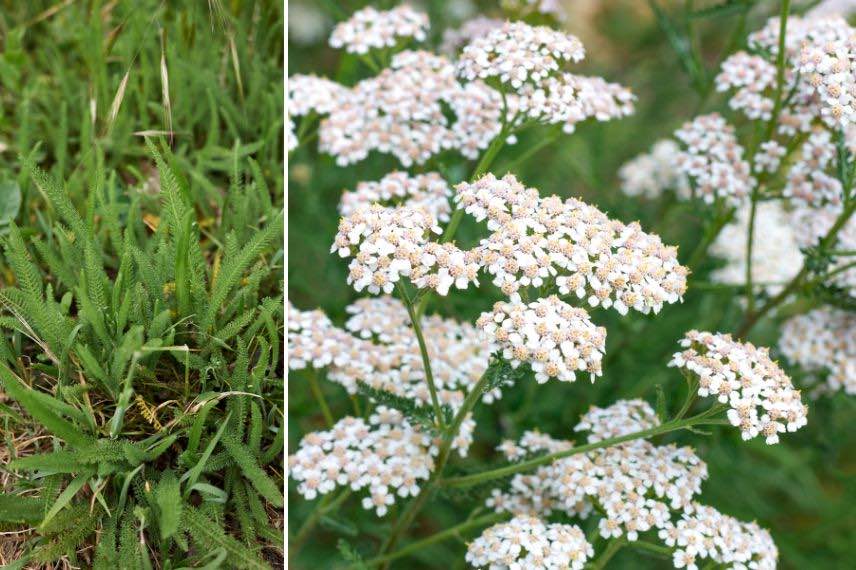
Yarrow (Achillea millefolium)
Yarrow is a plant with thread-like, deeply dissected leaves and white flowers in umbels. The thread-like leaves and the flowers grouped in characteristic corymbs aid in its identification. The leaves alone can be mistaken for other toxic plants.
This plant is renowned for its astringent and anti-inflammatory properties. It can aid digestion and wound healing.
Young, raw leaves can be added to salads to impart a slightly bitter flavour or can be used as a herb or garnish in dishes. Flowers can be consumed as an infusion. It is used more for its properties than for its flavour.
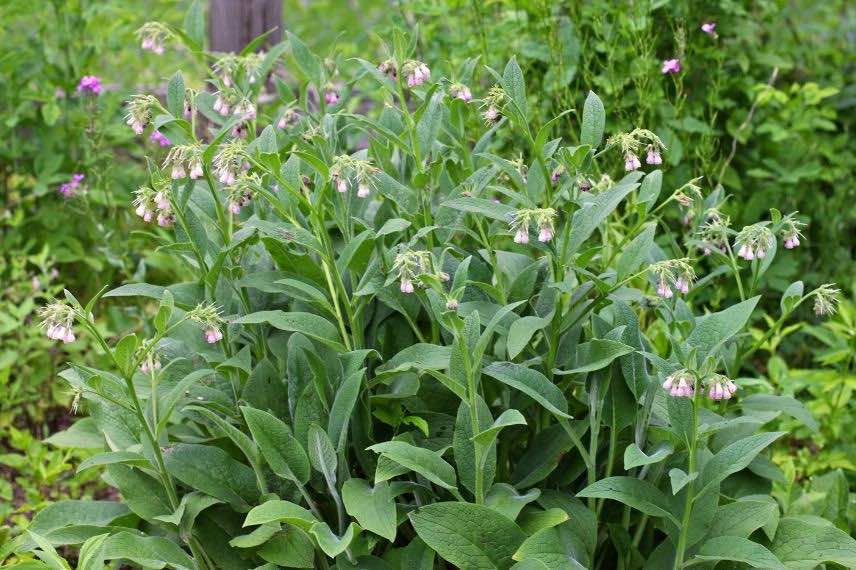
Comfrey (Symphytum officinale)
Comfrey has large, rough leaves and bell-shaped flowers in blue, white or pink. The broad, hairy leaves, as well as pendant tubular flowers, distinguish comfrey.
Comfrey leaves are rich in nutrients, particularly vitamins B12 and C, as well as minerals such as potassium and calcium. It has traditionally been used to promote healing and as an anti-inflammatory.
Young leaves can be eaten, but due to their high alkaloid content, they should be eaten in moderation—occasionally. They can be cooked and incorporated into dishes as you would with spinach. However, due to the presence of alkaloids, blanching before cooking is recommended.
Be careful not to confuse it with Digitalis purpurea, and with Verbascum nigrum.
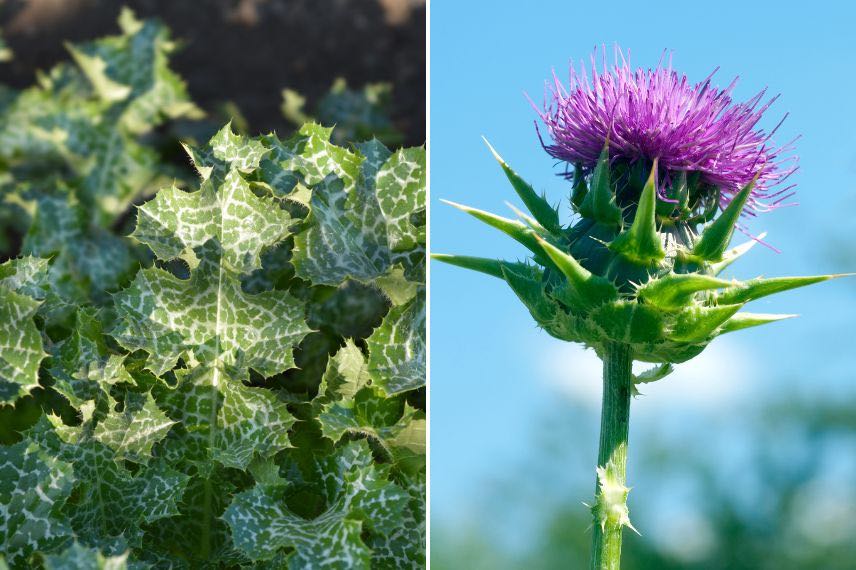
Milk thistle (Silybum marianum)
Milk thistle has spiny leaves and purple or pink flowers. The dark green leaves marbled with white, edged with spines, and the characteristic flowers, resembling artichoke flowers, make this plant easy to identify.
Milk thistle is renowned for its liver health benefits. It contains active compounds called silymarin, which can help protect the liver.
Milk thistle is difficult to harvest due to its spines, but highly prized for flavour. The stems are eaten in the same way as cardoons. Young leaves can be eaten after removing the spines. They can be added to salads or to stir-fried dishes after blanching to remove bitterness. The flower heads are eaten like artichokes.
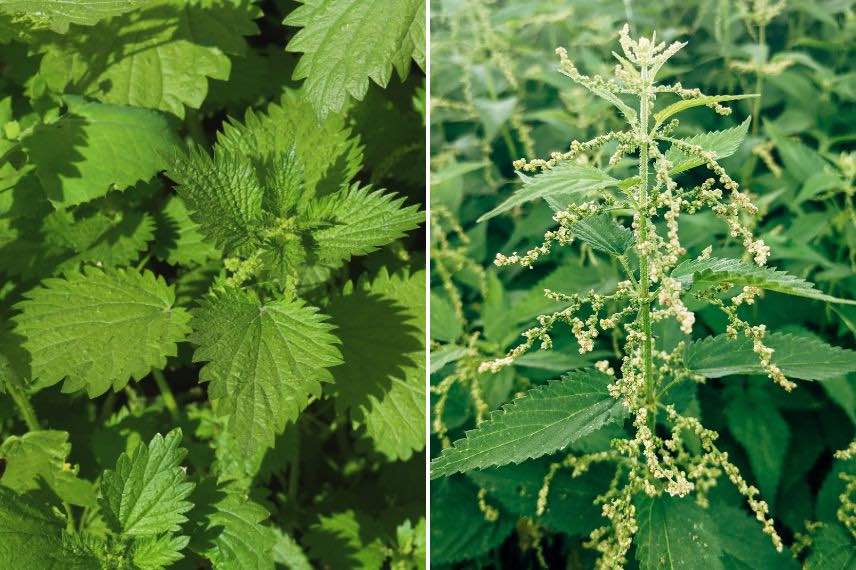
Nettle (Urtica dioica)
Nettles have serrated, hairy leaves, as well as rhizomatous and very spreading roots. The hairy, stinging leaves cause a burning sensation on contact. The small white flowers are found along the stems.
Nettle is an excellent source of iron, calcium, vitamin C and other essential nutrients. It has anti-inflammatory properties and can help support the immune system.
Young, tender leaves are the most commonly eaten, but the upper parts of older plants can also be used. They can be made into a nutritious soup, into pesto or simply blanched and added to dishes. It is also consumed as an infusion for its remineralising properties.
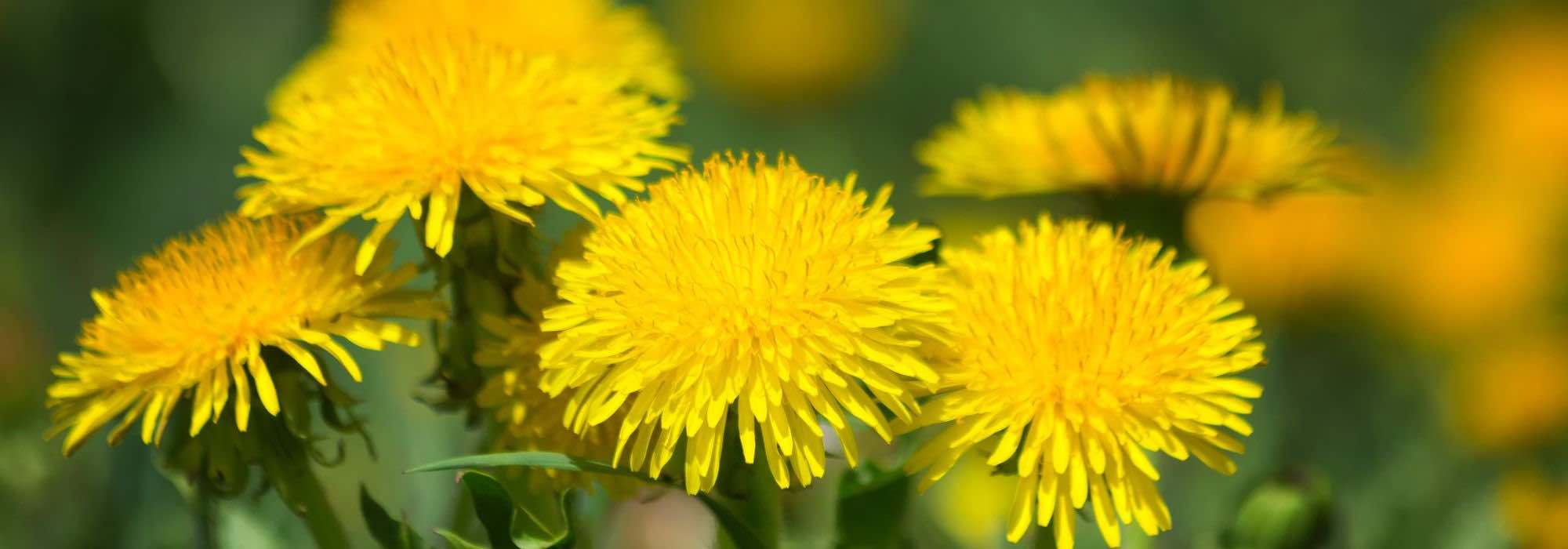
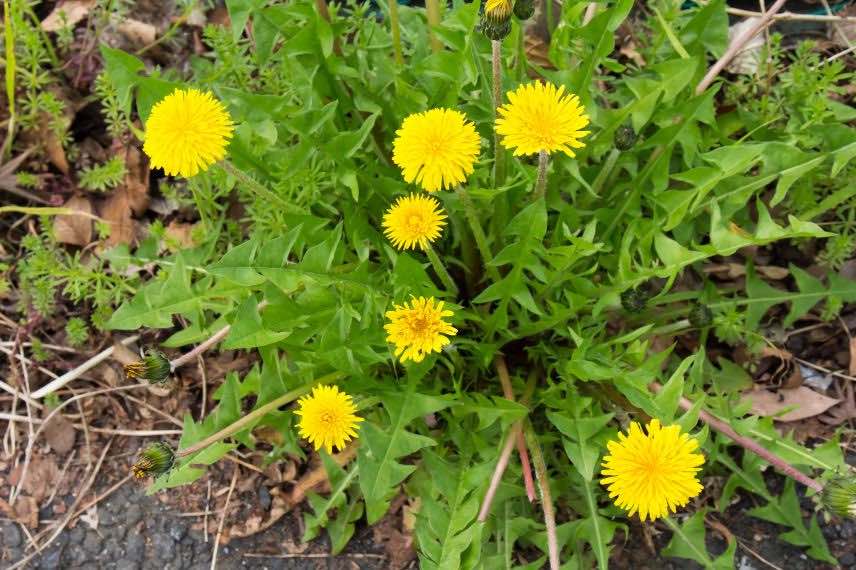
Dandelion (Taraxacum officinale)
Dandelions have lobed leaves and bright yellow flowers. The rosette leaves and characteristic yellow flowers make identification easy.
Dandelions are rich in vitamins A, C and K, as well as minerals such as iron and potassium. They have diuretic properties and can support digestive health.
Leaves and flowers are edible. The roots can be roasted to make a coffee substitute. Dandelion leaves can be used in salads to add a pleasantly bitter note. The flowers can be used for garnish or to make syrups.
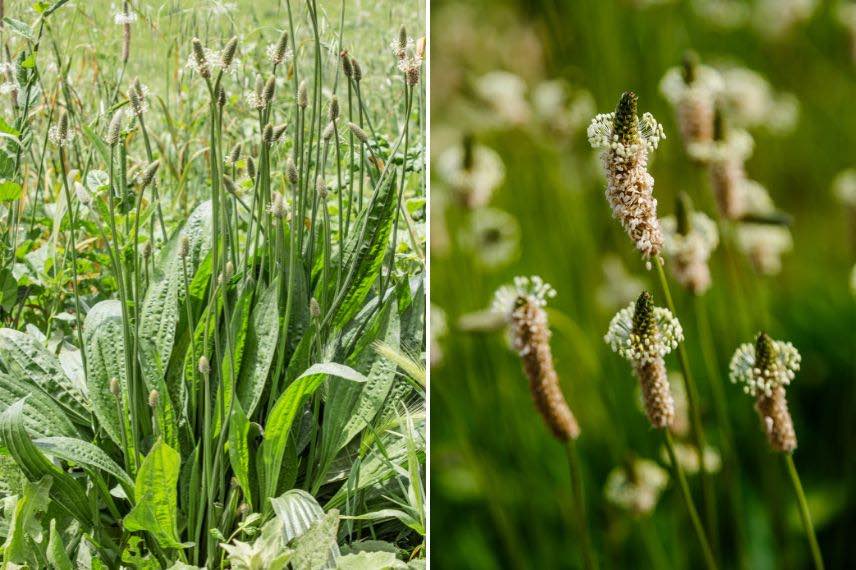
Leafy plantain (Plantago lanceolata)
Plantains have broad basal leaves and slender flowering spikes. The lanceolate leaves and the elongated flowering spikes distinguish plantain.
Plantain is traditionally used to soothe skin irritations and respiratory problems. It has anti-inflammatory properties.
Young, tender leaves can be eaten in salads or cooked as vegetables. They can be added to stir-fries or soups. They can also be used to make poultices to soothe insect bites.
Read also
Dandelion jelly recipeResponsible, risk-free picking.
When foraging wild plants, it is crucial to follow sustainable practices. Only take a small amount to avoid disturbing the ecosystem. Respect local regulations and avoid harvesting rare or endangered species.
Learn to correctly identify plants and carry a flora to avoid potentially dangerous mistakes. A photo isn’t enough; a flora lets you study the different parts of the plant properly to confirm your identification.
Harvest only in areas free from pesticidal residues and heavy metals: avoid road verges or fields, opt for wilder foraging spots.
As we venture into the world of edible wild plants, let’s not forget the importance of protecting our ecosystems. Biodiversity is fragile, and our actions can have a profound impact. Responsible foraging goes hand in hand with a duty to preserve these habitats for future generations.
Further reading
- Consult the works of François Couplan, a specialist in the field.
- Also consider fruit-bearing plants such as elder, whose berries or flowers can be used to make delicious jellies and syrups. Don’t miss blackberry picking in late summer; it’s a lovely countryside stroll.
- Subscribe!
- Contents

Comments