


This year, the flowering of the Oriental Hellebores (Helleborus orientalis or Helleborus x hybridus) is a good month ahead of the usual schedule. I won't complain about that... "I fell into the pot when I was little," and I have been collecting the various colours and flower shapes that breeders create and renew each year for years. My oldest Oriental hellebore plants are now over 10 years old and still bloom abundantly without requiring much maintenance: here are 5 simple tips from my experience in my garden in northern France.
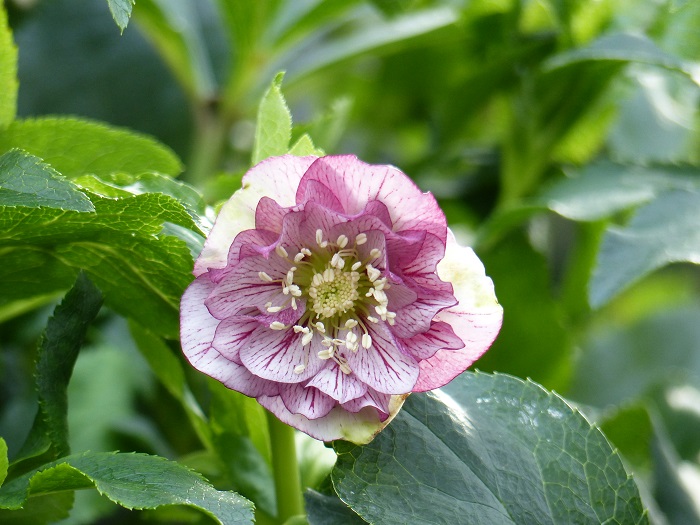
The double picotee Oriental hellebore, a true jewel flower from the Promesse de Fleurs nursery
1- Pruning the foliage
Cutting the leaves of Oriental hellebores highlights the flowering. When to prune? Just as the flower buds are emerging 5-10 cm above the ground, between December and mid-February depending on the year and region. This is the ideal time to avoid damaging the flower stems, but you can prune the foliage until the end of April. By May, the plant will completely renew its foliage. Use a sharp pruning shear, disinfecting the blade with alcohol or flame after pruning a group of 4 to 5 plants.
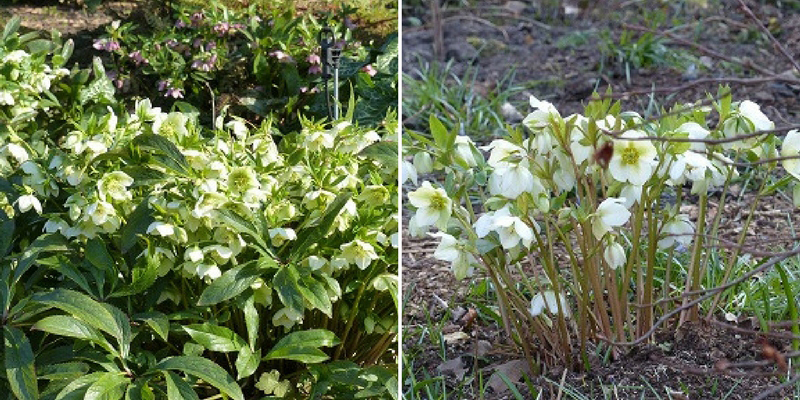 Before: Hellebores with foliage - After: Hellebores without foliage
2- Preventing aphid attacks
When winter is mild like this year, aphids do not die and like to settle on hellebore flowers. They are not always visible unless you turn the flowers over to look closely... but they are there and may spread diseases and viruses that can affect the otherwise robust hellebores. Affected plants show black necrotic spots on the flowers and leaves that spoil the display, even if the plant will not die from it. The virus cannot be treated, hence the importance of good prevention.
To combat aphids, provide shelters for ladybirds, such as piles of hollow wood, shards of pottery, and also evergreen bushes! In case of a severe infestation, a generous spray of diluted black soap works very well: however, ensure that each insect is thoroughly covered.
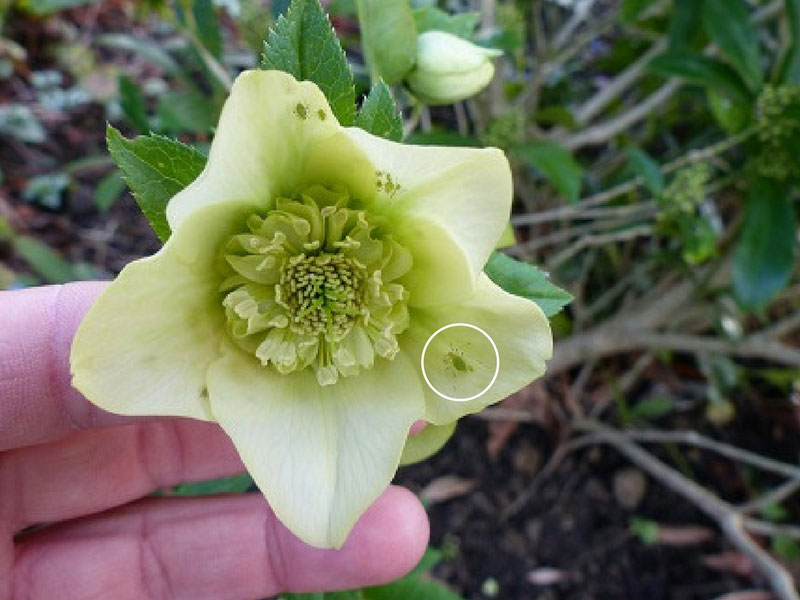 Aphids love to settle on hellebore flowers; they must be eliminated to prevent the spread of viruses
3- Mulching
After cutting the leaves of the hellebores, spread a good mulch of leaves collected in autumn, shredded and already semi-decomposed, mixed with garden compost. Besides its decorative aspect of covering the soil, the mulch, as it decomposes, will lighten and enrich the soil with mineral elements thanks to the work of earthworms on one hand, and maintain a relative coolness of the soil in summer on the other.
The nutrient supply from the decomposition of the mulch is generally sufficient to nourish the hellebores, which are not very demanding plants, and excess fertiliser will only weaken them and cause premature ageing. Even though I do not do it myself, adding two-year-old wood ash at the base of the clumps is often recommended to prevent excessive soil acidification, as hellebores prefer a neutral to slightly alkaline soil.
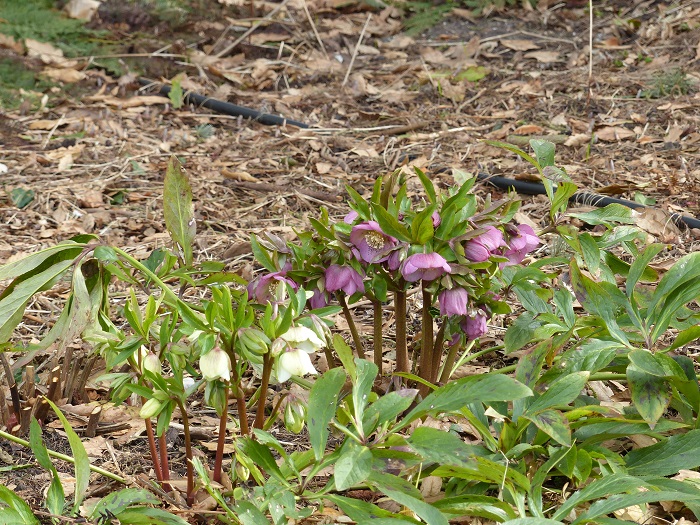 Mulching the base of hellebores with good mulch provides humus, which lightens and enriches the soil
4- Cutting faded flowers
Oriental hellebores self-seed very easily. The seeds, ripe in June, fall to the ground and germinate six months later in December. By April, the first true leaves appear, and it is a bright green lawn that sometimes appears at the foot of hellebore colonies in gardens. This allows you to give them to friends and neighbours in abundance! However, the seedlings are rarely true to type, and once they reach flowering age, after 2 to 3 years, they may spoil the effect of a carefully chosen and selected hellebore planting.
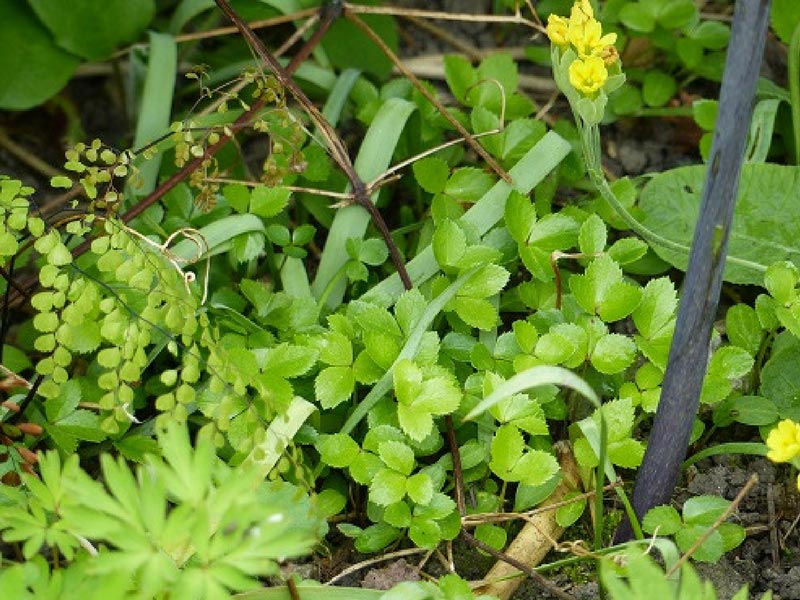 Appearing at the same time as the flowering, in January-February, spontaneous Oriental hellebore seedlings can form a dense carpet at the base of established plants
If, like me, you collect them, I recommend cutting the faded flowers in May, which is sometimes a shame as the flowers are still decorative, particularly the light colours. But this is the most important maintenance act for me as it prevents me from having to weed out hellebore seedlings a year later. It will also allow the plant to concentrate its energy on its growth and the preparation for the next flowering. Additionally, some seedlings have a habit of settling right in the middle of the mother clumps... which creates competition and confusion in the beds!
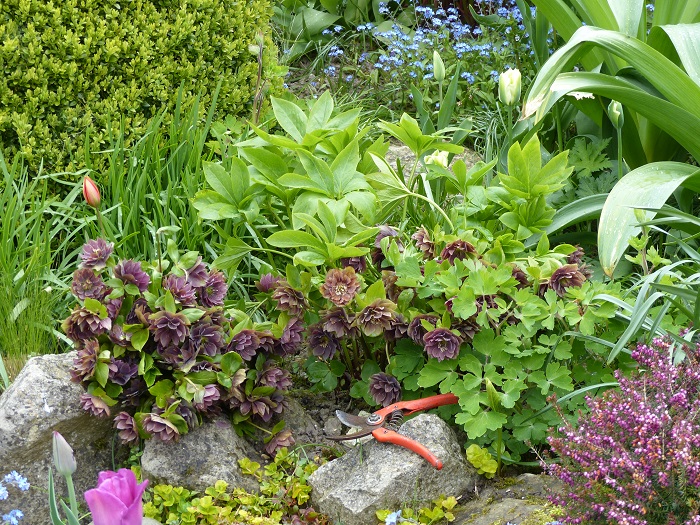 Cutting faded hellebore flowers prevents them from exhausting themselves producing seeds that reseed in the centre of existing clumps
5- Do nothing in summer
After renewing its foliage in May, the Oriental hellebore enters dormancy for the summer. It enters a phase of almost complete vegetative rest, which allows it to withstand drought and summer heat. Do not disturb it; only water in case of extreme drought, without wetting the leaves. It is only in September that the plant will resume its activity by making new roots, which are essential for drawing water and nutrients to nourish the upcoming flowering. If you ever need to divide or move a hellebore, this is the right time to do it, as the plant will be able to settle immediately in its new location thanks to these new roots. This is rarely necessary because, unlike many "horticultural" perennials, the hellebore does not exhaust quickly and does not require renewal by division to ensure the continuity of its flowering.

Comments