


Let’s continue our summer journey with travelling plants. This week, we head to tropical America in search of the origins of Ipomoea batatas, more commonly known as "sweet potato". We will follow this great traveller on her journey from America to China, passing through the islands and our European continent. Recently acclimatised, she is becoming increasingly present in gardens as well as on our plates. Let’s discover her journey and history.
The origins of the sweet potato
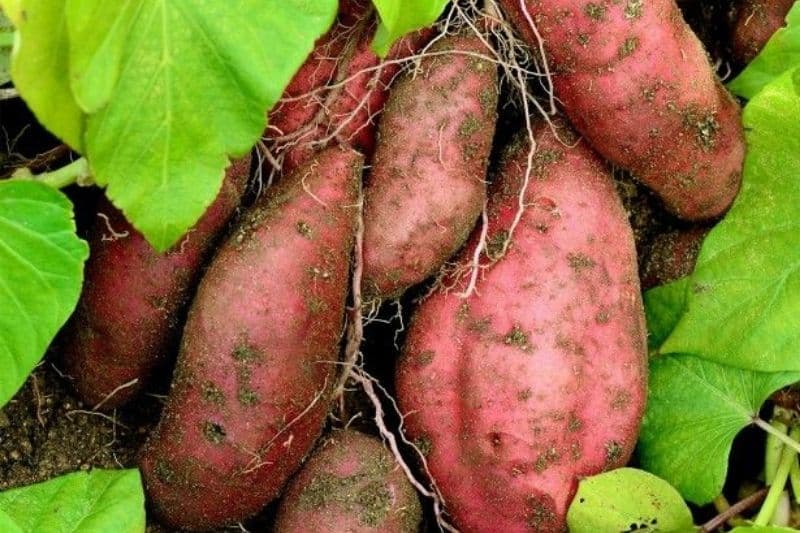
Unknown in the wild, the origin of Ipomoea batatas has long been debated. Scientific and archaeological studies have established that it is likely native to tropical or subtropical America. A great diversity of Ipomoea can be found from southern Mexico, in the Yucatán Peninsula, to the Orinoco basin in Venezuela. Given this large number of varieties, scientists believe this is its cradle of origin.
Thanks to archaeological excavations, we also know that this tuberous plant was present in Peru 8,000 to 6,000 years BC. Evidence of its intentional cultivation dates back to 4500 BC, but it is highly likely that it was used in agriculture long before that.
The journey of the sweet potato
Between the years 1000 and 1100, the sweet potato is believed to have set off to conquer Polynesia alongside travellers. It then continued its journey to New Zealand, Easter Island, and Hawaii.
The sweet potato arrived in Europe following the expeditions led by Christopher Columbus in 1492. It was primarily cultivated in the Mediterranean regions. Next, the Philippines discovered its flavour in the 16th century thanks to Spanish traders. It enjoyed great success there, which then led it to China in 1594, and to Japan around 1605. Portuguese merchants introduced it to Africa around the same period.
In France, it was not until 1750 that it garnered some interest, thanks to Louis XV, who appreciated its sweet flesh. However, its cultivation in France remains shaky and it has struggled to establish itself up to the present day.

The origin of its name: Ipomoea batatas
The genus name Ipomoea is composed of "ips", meaning "worm" in Greek, and "homoios", which means "similar". It can be translated as "worm-like plant", referring to its creeping stems.
The term "batatas" was the name given to it by the "Tainos", the people of the Caribbean island where Christopher Columbus landed in 1492.
Where does the term 'sweet potato' come from?
The origin of this name is uncertain, but here is the explanation that seems most plausible to historians: shortly after the discovery of "batatas", Spanish conquistadors brought back the potato from Peru, which was then called "papa" by the indigenous peoples. Since both plants are tuberous and come from the same continent, it seems that Spanish traders referred to them as "patata", a contraction of the two names. In France, "patata" translates to "patate". However, to avoid confusion, the adjective "sweet" was added to distinguish the sweet potato from the common potato.
Sweet potato in the garden
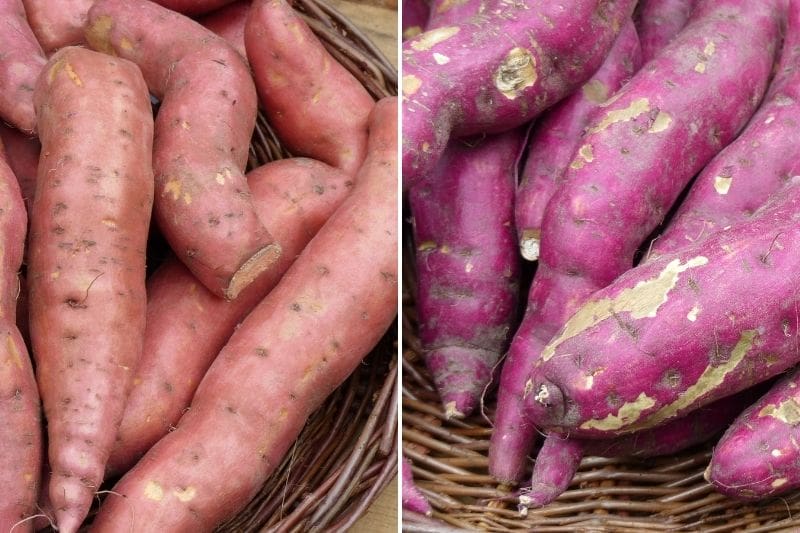
In our latitudes, the sweet potato is primarily grown in the garden for its unique flavour. Preferring warmth and humidity, it thrives especially in southern regions, in open ground, where its yield will be better. Elsewhere, it prefers cultivation in greenhouses or pots. Farmers in northern regions even achieve excellent harvests in open ground by protecting its tuberous roots with a black tarp placed over the soil. The sweet potato grows in most soil types, but particularly enjoys loose, sandy, rich, never dry, and well-drained soils.
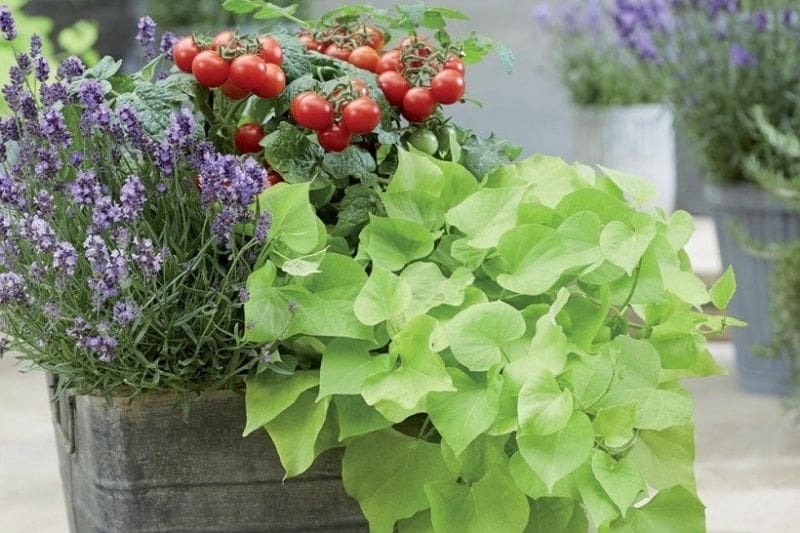
Its creeping stems and attractive foliage mean that the sweet potato is now invited into pots and window boxes, alongside annuals. It can be paired with the blue of lobelias and the bright pink of pelargoniums.
Cooking sweet Potato
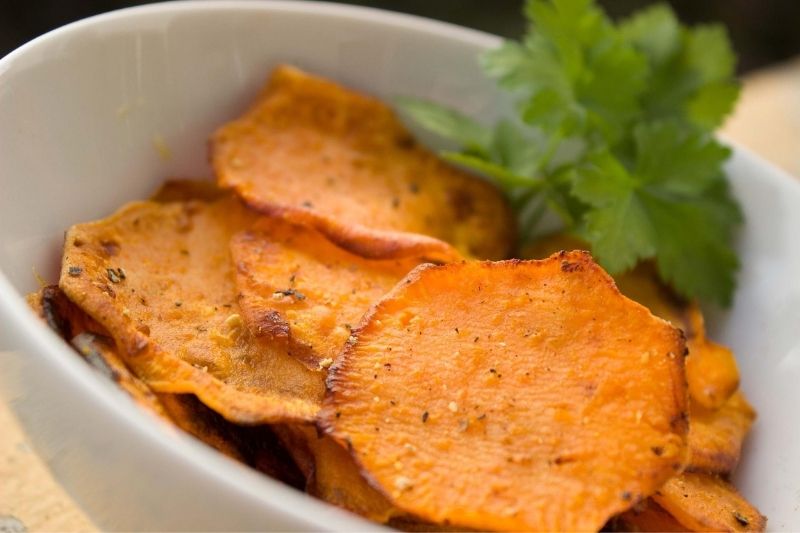
Although they are not from the same family, sweet potato tubers can be cooked like those of the common potato. You can prepare them in gratins, purées, soups, stir-fries, and even fries or chips. Their slightly sweet taste is also suitable for desserts, such as cakes, tarts, and jams. Even their leaves are edible and can be cooked like spinach. The sweet potato appears to be rich in beta-carotene, vitamin B6, and minerals (copper and manganese).
Further reading
- Discover all our varieties of sweet potato
- To learn everything, explore our complete guide on sweet potato: planting, cultivation, and harvesting in the garden

Comments