





























If there is one plant that is the subject of tons of misconceptions, it is the climbing ivy or Hedera helix. It all seems to have started with Pliny the Elder in the first century AD, who saw this charming climber only as a destroyer of walls and trees, even going so far as to label it a “tree executioner.”
He must have been in a bad mood the day he came up with such nonsense... because, I assure you, ivy, this beautiful native climbing plant, does not deserve this ire, this categorical rejection.
So let’s debunk 5 misconceptions about ivy!
1) Ivy is a parasitic plant that kills trees
The only notion that is not false in this phrase, which we hear or read everywhere, is: “ivy is a plant.”
It is not a parasite, as the tree merely serves as a support. Ivy does not “suck” nutrients from your tree because its climbing roots are only used to cling on. It has its own roots and performs its own photosynthesis. Therefore, it does not need to parasitise anyone to survive.
And ivy does not kill your trees!
When I lead nature walks, as soon as we pass under old picturesque trees, I am often told: “Yes, but sir, my tree died just after being invaded by that ivy pest!”
I then reply: “ivy only used your tree as a support because it was no longer growing in width as it was itself at the end of its life or at least quite old.”
In reality, ivy can live for many years, sometimes several hundred, so it often survives after the death of its support. This is why people think that ivy has killed the tree when, in fact, the tree has simply died of old age and ivy has outlived it.
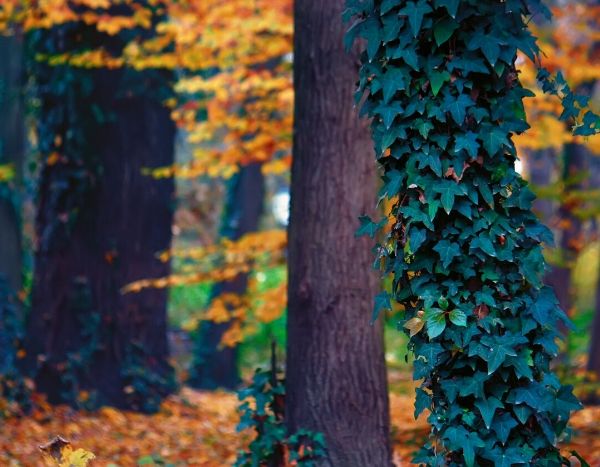
Ivy protects the trunk from frost, excessive moisture, and even some nibblers like deer. Some compounds produced by ivy even have fungicidal properties, which helps reduce the risk of fungal disease for the tree. Moreover, ivy flowers at a different time than its support: there is therefore no competition for pollination. The leaves of ivy fall and enrich the soil at a different time than the foliage of the supporting tree, which is another benefit for the latter. Ivy will not “take the sun” from the tree either, as it will only grow on the main trunk and some large branches. In short, this is not parasitism but rather mutualism, as both parties benefit.
Did you know? Ivy continues to grow after the death of the tree. While this combines two extremely rich environments for biodiversity: ivy + standing dead wood, it can become a source of danger as ivy will provide a foothold for the wind while the dead wood can break at any moment. It’s up to you to decide whether such an association is worth keeping in the garden or if it should be pruned back.
2) Ivy eats houses
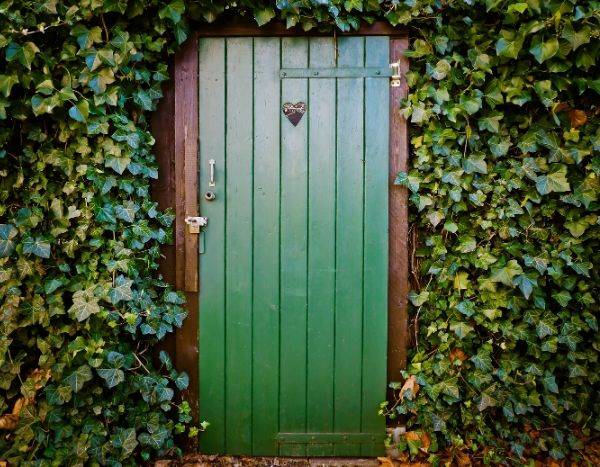
No. Ivy does not damage sound walls. Even on walls in poor condition, all it will do is slightly degrade the joints. But above all, it provides physical protection against moisture and will improve the base of the walls. It offers thermal insulation during winter and summer, which is not insignificant, as it can gain (or lose) two to three degrees for our interiors.
However, two caveats: do not let ivy climb too high to your tiles. They could be displaced by vines passing underneath them. Also, be cautious with earth walls; ivy may take this for “true” earth and allow its roots to grow inside.
3) Ivy attracts spiders
And? Did you know it also attracts a host of insects, particularly the last pollinators of the season, as ivy is one of the last to flower, around October, in nature or the garden? The insects associated with or living off ivy are extremely numerous: wild bees, hymenoptera, hoverflies, flies, rose beetles, and even butterflies. The Clouded Yellow, a butterfly in sharp decline, enjoys hibernating within ivy, and it is not alone. It’s no surprise, then, that spiders are also very present...
Ivy also provides shelter and food for many birds: sparrows, blackbirds, tits, thrushes... The berries are particularly rich in lipids and help frugivorous and omnivorous birds survive in winter. Ivy also serves for the nesting of the Wren, kinglets... and as roosts for some raptors like the Tawny Owl or the Long-eared Owl.
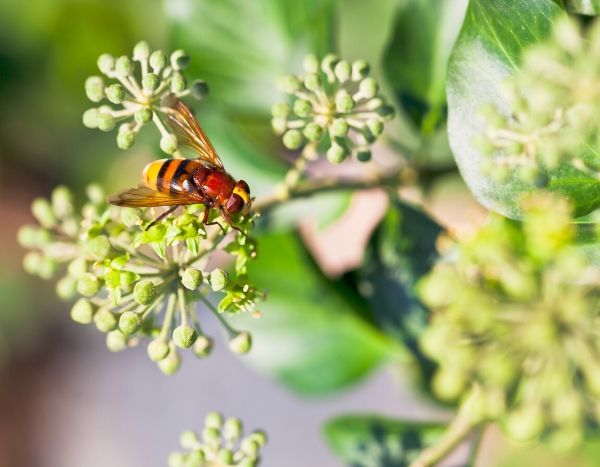
Ivy also nourishes certain mammals such as dormice, martens, the hazel dormouse, and even... provides shelter for some bats.
Removing ivy means eliminating an entire ecosystem!
4) Ivy is sad
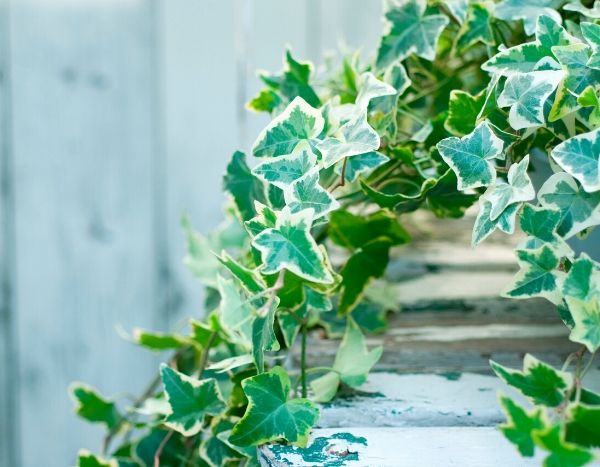
No. Or perhaps we have different definitions of sadness... Ivy, as we have seen above, is teeming with life but is also a plant that remains attractive all year round thanks to its evergreen foliage. Ivy is cheerful because there are superbly coloured varieties: variegated with cream, white or yellow or with more or less lobed foliage. It can be used as ground cover, in topiary, to dress up unsightly elements or fencing... Ivy has a thousand and one uses in the garden.
5) Ivy is useless
Come on... In addition to everything we have already discussed, ivy serves many purposes:
- It protects the soil in forests or your garden by creating a cover that maintains moisture and a certain coolness. It thus helps reduce soil erosion and protects soil fauna.
- It is a medicinal plant known since ancient times: antitussive, antispasmodic, purgative, and used in anti-cellulite ointments. However, be careful not to ingest the berries, which are toxic.
- Ivy is capable of purifying the air, particularly by capturing dust or other large particles.
- You can even make laundry detergent from it thanks to the saponins contained in the leaves.
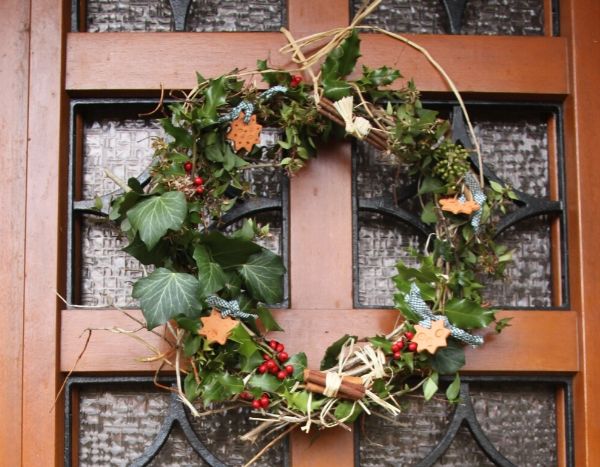
- ...or crowns to adorn the heads of our children.
Conclusion
Therefore, ivy is much more than just a simple climber. It has numerous aesthetic and ecological benefits. It can be planted as ground cover, to dress up unsightly elements, or to brighten up a wall. It proves to be a resilient plant, grows quickly in the shadiest spots, and is very easy to propagate. In short, let your ivy thrive, or better yet, plant some! A symbol of longevity among the Celts, it is certain that ivy will outlive you...
Finally, discover our complete guide on ivy!

Comments