





























There are many good reasons to grow your own vegetable garden, and the ability to cultivate unique vegetables that are not easily found in shops is one of them. Among these are Asian vegetables as well as aromatic plants, which, unless you live in the 13th arrondissement of Paris, are a rare commodity at greengrocers!
However, these Chinese vegetables, as well as Japanese ones, sometimes curious, can thrive quite well in our latitudes... and here is a small list that will delight all lovers of exotic cuisine... as well as those who enjoy more traditional dishes.
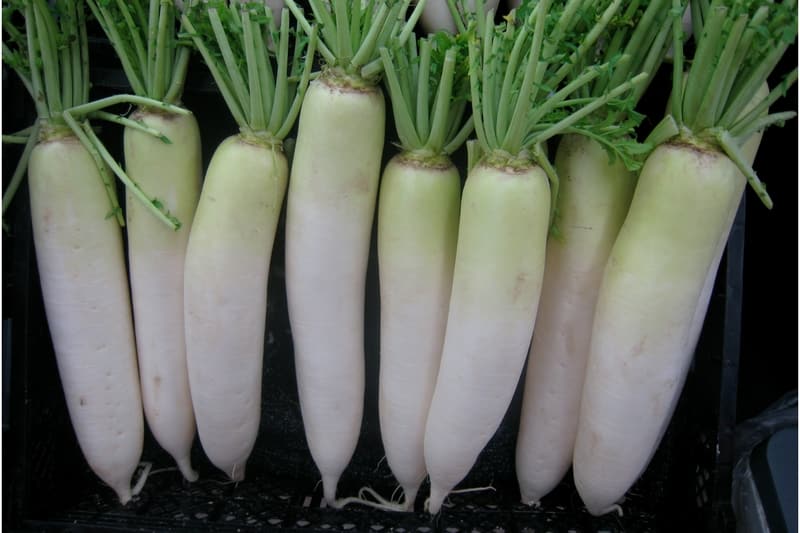
1) Daikon or white radish
The Daikon (raphanus sativus longipinnatus) is a large winter white radish. A cousin of the black radish, it offers a sweet, juicy flesh and stores very well.
In Japanese cuisine, it is consumed raw, in salads, much like grated carrots. It is sometimes pickled or cooked by steaming or stir-frying. Diuretic and draining, it is often regarded as a true health food.
Its cultivation in the vegetable garden poses no difficulty if you ensure the soil is well loosened beforehand.
2) Pak choi or Bok choy
The Pak Choï, also known as Bok choy (Brassica rapa chinensis), is a Chinese cabbage with tender heads, composed of light green leaves with white bases. This cabbage offers a flavour that evokes both chicory, classic cabbage, and turnip.
You can prepare it raw or cooked, quickly stir-fried in a wok or braised. Its flavour pairs well with ginger, as well as with shiitake mushrooms, if you are lucky enough to find them near you (no need to search in the wild, these Japanese mushrooms do not grow spontaneously here!).
3) Pe-tsai or Napa cabbage
The Pé-Tsaï, also known as Napa cabbage (Brassica rapa pekinensis) is another type of Chinese cabbage, quite different from Pak choi. A bit closer to our traditional white cabbages, it produces beautiful dense, elongated heads. Its shiny green leaves are equipped with large midribs.
You will enjoy its sweet and delicate flavour by tasting it raw in salads, but also cooked in a wok with crunchy vegetables. This Chinese cabbage can also serve as a base for less exotic recipes, accompanying sausages and other charcuterie.
In the vegetable garden, these two cabbages are grown somewhat like classic cabbages but require a bit more warmth. For all you need to know about their cultivation, feel free to consult our advice sheet: Succeeding in growing Chinese cabbages.
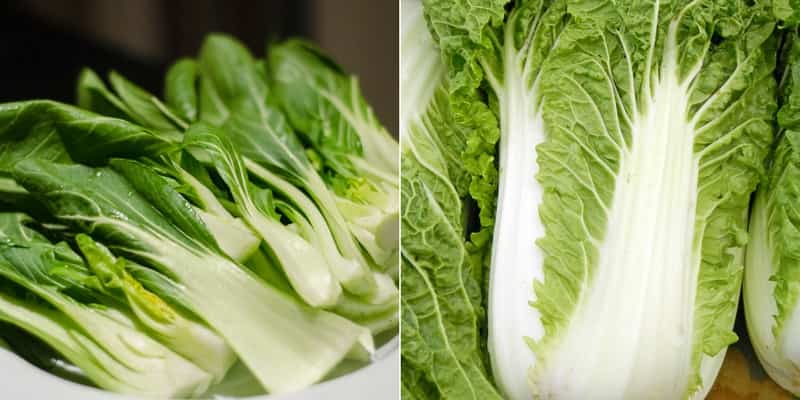 Pak choi and Pe-tsai: two very different Asian cabbages
4) Japanese crosnes
The Crosnes du Japon (Stachys affinis) belong to the category of perpetual vegetables. These are rhizomatous vegetable plants grown not for their aerial parts, but for their tubercles, which remind me of the roots of the oat with a necklace.
If crosnes are so renowned, it is for their fine flavour, somewhere between artichoke and Jerusalem artichoke, but also because they are sold at a premium price as their harvest cannot be mechanised.
In the garden, they thrive best in fairly rich and sandy soil. And since they need to be dug up with a fork, harvesting is made easier. Be careful, they look a bit like mint, so avoid planting them nearby to prevent having to "untangle" them before harvest!
Introduced to France in the 19th century, crosnes have already made their place in our kitchens where they are generally consumed, French-style, sautéed, fried, or mashed.
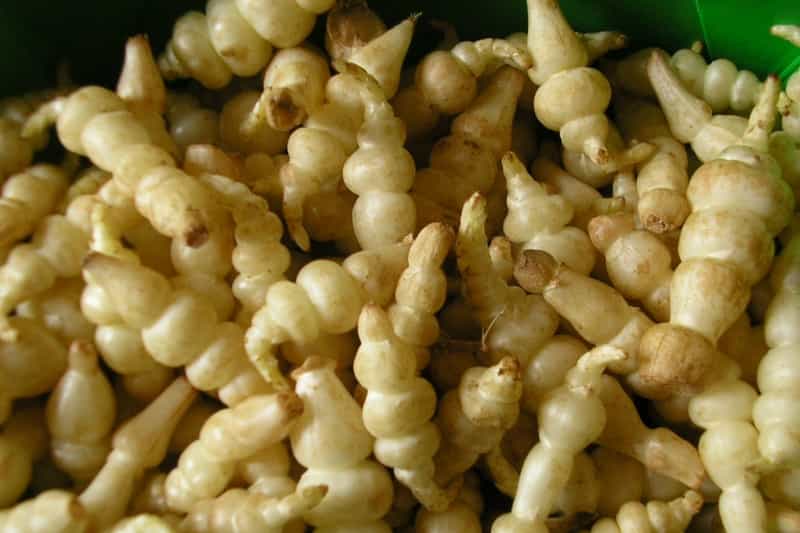 Japanese crosnes: a root vegetable of Asian origin
5) Mizuna or Japanese mustard
The Mizuna (Brassica rapa nipposinica), like rocket, belongs to the large family of brassicas. It is a pleasant little salad with fine laciniate leaves. This Japanese vegetable offers a rather mild flavour with a peppery note that works wonders in salads.
In the garden, mizuna cabbage is very easy to grow, it can be sown directly in the ground or under cover (greenhouse, frame) from May to September. It has the advantage of growing and regrowing quickly, offering its delicious leaves even in winter.
In the kitchen, it is highly appreciated in salads but can also serve as a base for pesto, decorating and accompanying all sorts of Asian dishes. Cooked, mizuna is consumed much like spinach: quickly sautéed or even in soup.
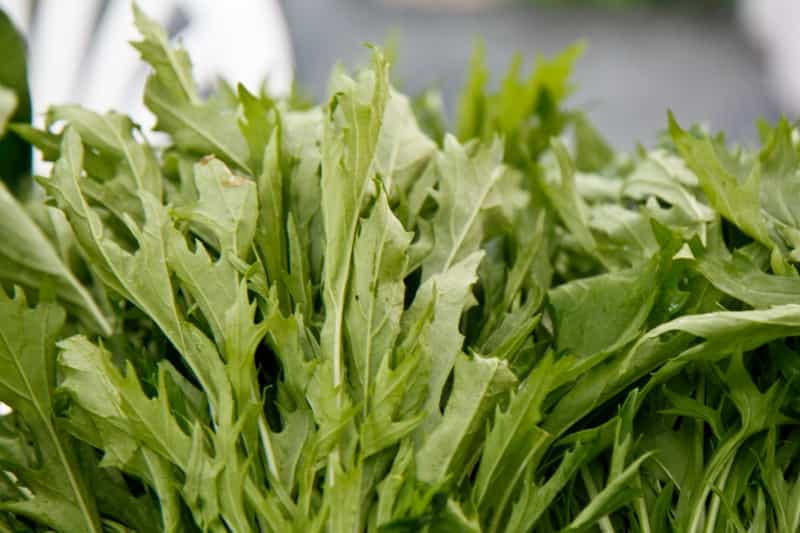 Mizuna: a Japanese salad to discover!
Discover all our tips for succeeding in growing Mizuna.
6) Japanese burdock or Gobo
The Japanese burdock (Arctium lappa) is a large plant cultivated for its long root, which resembles and tastes like salsify. It is a biennial, but you won’t have to wait long to harvest it as it can be extracted just 3 months after sowing.
The burdock root, rich in vitamins, is also known for its many properties (purifying, antiseptic, antifungal…).
I won’t sugarcoat it, burdock is not an easy plant to grow in the vegetable garden. It is quite demanding regarding soil, which it prefers to be loose and deep, as well as on watering, which must be regular and abundant throughout the growing period. If you have good soil... and a reliable automatic watering system, go for it!
Its long brown root can be consumed raw or cooked. Extremely rare in France, this root vegetable, a bit fibrous, is finely grated for salads or cut into julienne and then stir-fried.
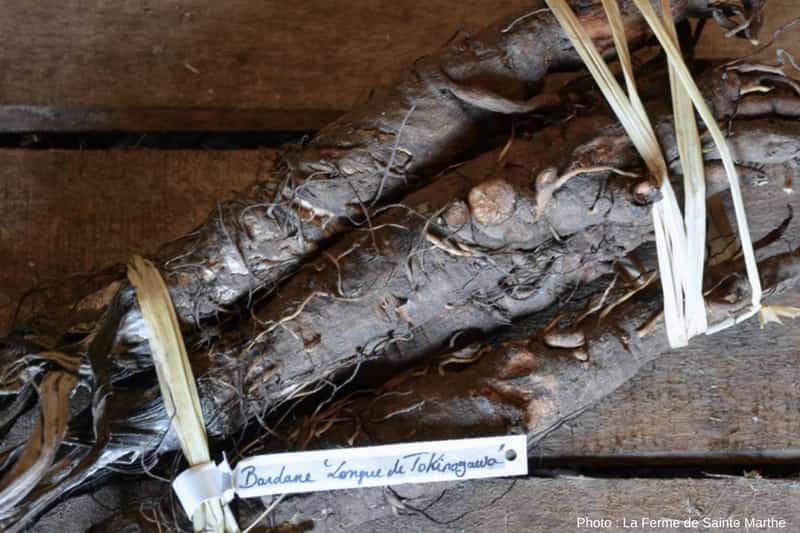 Japanese burdock, an Asian root vegetable almost impossible to find in France
7) Lemongrass
The lemongrass (Cymbopogon citratus), not to be confused with lemon balm or lemon verbena, is a herbaceous plant also known as Madagascan lemongrass. And if English speakers call it "lemongrass", it is because it is indeed a grass and exudes a delightful lemony fragrance. It is widely found throughout Southeast Asia, and all those who have discovered it during a trip to Vietnam or Thailand cherish wonderful memories.
In the garden, lemongrass prefers rich soils, warmth, and water, especially during its growing period. It is a tender plant, not hardy, often grown in pots and sheltered during winter. Its cultivation is possible in a cold greenhouse in regions with mild winters (successfully tested here in Brittany).
Note that lemongrass (both the plant and essential oil) is reputed to repel mosquitoes.
In the kitchen, the bases of its stalks are consumed. Once peeled, they are chopped to flavour sauces for white meats (the famous "chicken with lemongrass"), fish, broths, and marinades. It pairs very well with ginger, curry, and coconut milk.
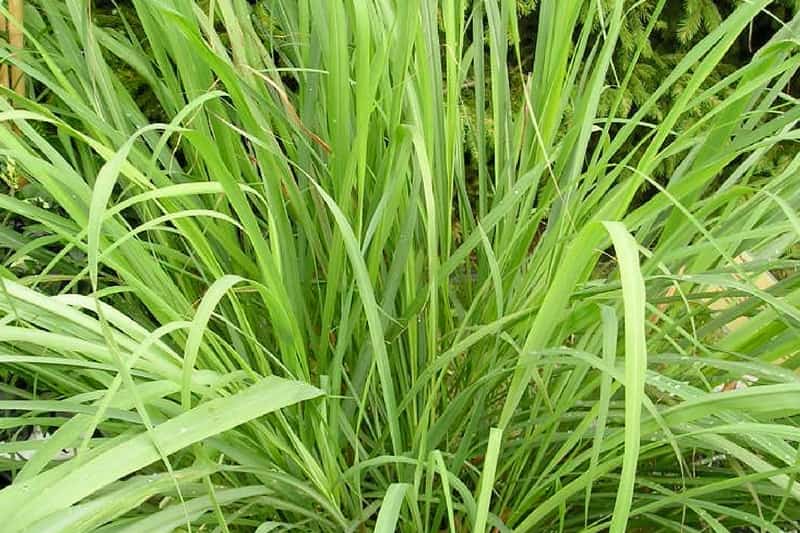 Lemongrass: an aromatic plant that will take you on a journey!
This list of Asian vegetables is, of course, not exhaustive. If you are curious, enjoy exotic flavours, and have a taste for travel, even just gastronomically, I invite you to discover our selection "World Flavours" which features a lovely range of fruits, vegetables, and herbs from all five continents... to cultivate in your garden!

Comments