





























Planting trees to combat climate change may seem like a very simple solution. Fortunately, it is!
At a time when more trees are being cut down than planted, every tree you can plant in your garden will prove beneficial in various ways.
One of the causes of climate change is the excessive release of carbon dioxide (CO2), so the most obvious solution that comes to mind is to plant trees, as they absorb this CO2.
Why planting trees?
Plants in general, but trees in particular, have an incredible capacity to absorb CO2. This is simply a result of photosynthesis. The tree absorbs CO2 from the air and transforms it into carbon and oxygen. The oxygen is released into the air for our benefit, while the carbon is stored and gradually released. Forests thus represent the second largest carbon sink after the oceans.
But that's not all; trees are also useful for:
- regulating temperature and humidity: they are true living air conditioners;
- filtering wind and dust, thereby improving air quality;
- fixing certain pollutants such as pesticides or heavy metals;
- improving soil by adding biomass (wood, leaves...) and combating erosion.
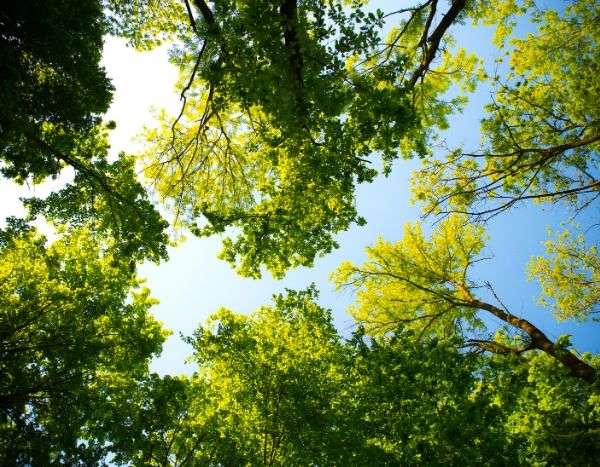
Which trees to plant to combat climate change?
1) Native trees first
There are two huge advantages to planting native species:
- they are perfectly adapted to the climate and soil
- they nourish and provide shelter for local wildlife
The list of native trees is long, but here are a few examples:
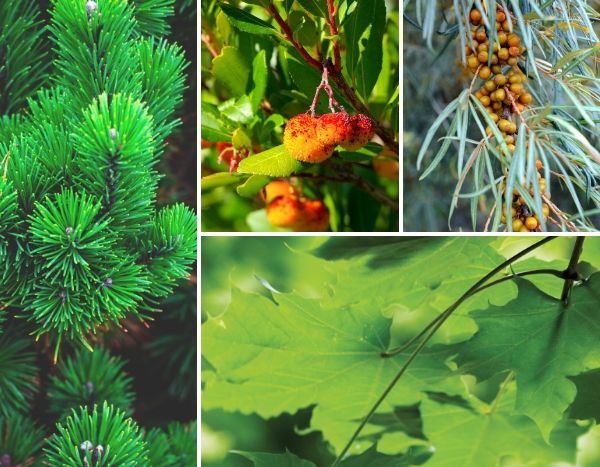
- For the North: Field Maple, Glutinous Alder, Downy Birch, Common Hornbeam, Male Dogwood, Common Ash, Holly, Trembling Aspen, Field Elm...
- For the South: Strawberry Tree, Montpellier Maple, Corsican Alder, Chestnut, Olive, Holm Oak...
- For the mountains: Hop Hornbeam, Mountain Elm, Mountain Pine...
- For the Coast: Tamarisk, Sea Buckthorn, Bohemian Olive, Maritime Pine, Field Maple...
2) Natives, but not only...
Some natives are suffering from climate change while others, more exotic or southern species, seem to be making their way north. For instance, Pines, across all species, are suffering from repeated attacks by Pine Processionary caterpillars. Meanwhile, Common Beech, spruces, and even Pectinate Fir can no longer withstand our hot and dry summers. All these trees have also become less resistant to diseases.
On the other hand, some trees are seeing their original range shift. This is not surprising: it has always been the case! Plants grow where they thrive best. This is why we have issues with certain invasive exotic plants that turn out to be more suited than natives in some natural environments. Or the fact that oak forests are regaining ground over beech forests as they did... only two thousand years ago.
Some examples of trees that have adapted to climate change
- Holm Oak - Quercus ilex: once confined to the Mediterranean climate, it is now moving further north. It now thrives along the Atlantic coast up to Brittany and will continue its progression towards the centre.
- Turkey Oak - Quercus cerris: previously only found in the southeast of the country, it is now moving categorically north, even reaching Belgium...
- Pubescent Oak - Quercus pubescens: a species particularly adapted to drought that has been thriving in recent years.
- Montpellier Maple - Acer monspessulanum: often found in nature alongside Holm Oak, it is following the same trend, progressing up to Vendée.
- Flowering Ash - Fraxinus ornus: a cousin of Common Ash but significantly less sensitive to ash dieback, it is gradually moving away from its native Corsica and Maritime Alps to further north.
- Pride of India - Koelreuteria paniculata: native to China and Korea, this tree proves to be perfectly resistant to drought and urban pollution.
- Maritime Pine - Pinus pinaster: originally found around the Mediterranean and along the coast, it continues its spread westward and northward.
- Black Locust - Robinia pseudoacacia: this exotic tree is gradually becoming the "king of the forest". It withstands heat, drought, and flooding and is adapted to poor soils as it has the ability to fix nitrogen. It is thus gradually taking the place of other tree species.
For your information: the National Forestry Office is currently conducting trials of Bornmuller Fir (Abies bornmuelleriana) in forests, a species more suited to drought than Pectinate Fir. Meanwhile, in Belgium, trials are being conducted in forests with Turkey and Pubescent Oaks and even... Corsican Pines.
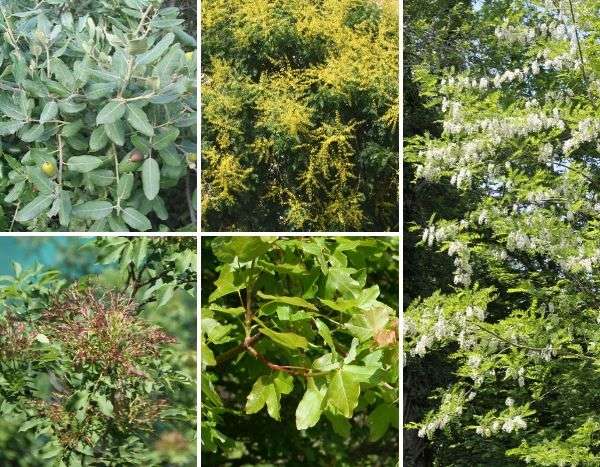
General characteristics of trees resistant to climate change
Trees that exhibit natural resistance to drought and high summer temperatures often share common characteristics:
- Small and numerous leaves: the larger the leaf, the more water evaporates. Small leaves are thus a result of adaptation to drought;
- Waxy and/or fuzzy foliage: if the leaf is thick or equipped with small hairs, it will retain water more effectively;
- Next, it is important to check the tree's region of origin: if it originates from the Scandinavian taiga, it is likely to suffer in summer... Conversely, mediterranean and central European species will be particularly well-suited.
In conclusion
Due to the accelerating climate changes in recent decades, we will need to reassess our approach regarding native species adapted to regions. Some, whose survival requires moisture and distinct seasons, will disappear in favour of less water-demanding species that do not require harsh winters. In any case, planting trees will be beneficial as long as we choose species that can thrive optimally with minimal care. So in conclusion: let’s plant trees!
To learn more
Some researchers express doubts about the effectiveness of tree planting to combat climate change. In reality, it is mainly the notion that CO2 is the sole culprit of climate change that they question, as well as the belief that we will (according to them) need even more agricultural land to feed the population. The ideal would also be to stop deforestation rather than just replanting a few trees here and there. If you wish to learn more and form your own opinion on the matter, read this article (in French): Forests: a solution to the climate crisis?
And if you haven't seen it yet, here are the main results of our survey on climate change and gardening.

Comments