


The French Observatory of Apidology is organising this year the fourth edition of the "Flowers for Bees" campaign, which runs from 20 May to 21 June 2022. Like Promesse de Fleurs, many plant professionals are committed to the preservation of bees, providing billions of flowers for these precious insects and raising awareness among the public about the issues of pollination.
For each of us must today realise that the future of humanity is linked to that of these irreplaceable pollinators.
Why are bees threatened with extinction?
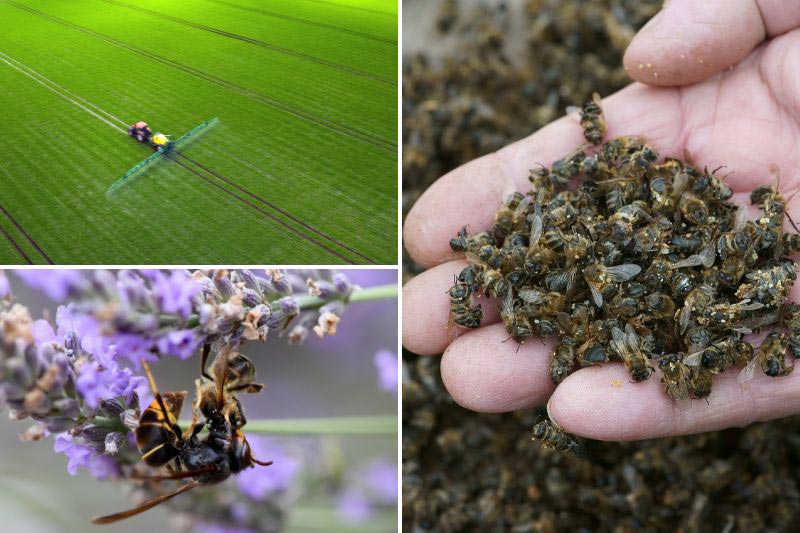
They have lived on Earth for 50 million years and through our actions, in just a few decades, they are now threatened with extinction to the point that their populations are collapsing worldwide, with a mortality rate of 30 to 80% depending on the regions of the globe. We are responsible for:
- pesticides spread over crops, poisoning insects,
- the destruction of biodiversity drastically reducing their habitat and food resources,
- the transport of parasites such as Varroa, a mite from Asia responsible for the collapse of honeybee colonies,
- bee-killing predators circulating due to globalisation such as the well-known Asian hornet...
It seems as if humanity is intent on bringing together all the elements leading to their eradication. However, their disappearance will lead to ours, as our fate is linked to that of these precious hymenopterans.
What are the consequences?
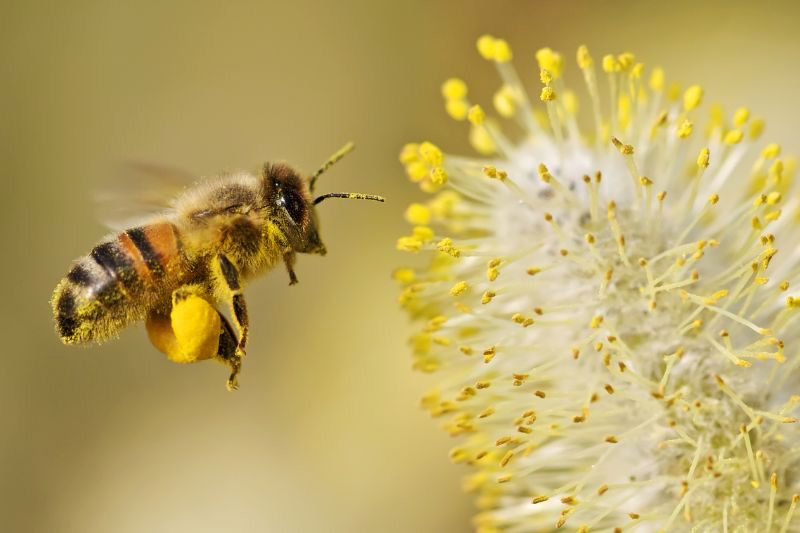
As the main pollinating insect (a bee can visit 250 flowers per hour), bees unknowingly bear the responsibility for the reproduction of 80% of plant species and the production of a third of our food. Whether wild or domestic, of 100 plant species that are part of our food resources, they pollinate more than 70 on their own... This makes one think, as we must go beyond the "simple" act of protecting an admirable species, a miracle of evolution and the most elaborate model of society among insects.
These organised societies, which have survived thanks to the adaptations they have developed and have traversed several glacial periods, work quietly to pollinate flowering plants and thus produce the fruits and vegetables we eat every day.
Simply put: without this essential function of transferring pollen from one flower to another, human life could not exist on Earth due to a lack of food resources. We are guilty and will be victims of their extinction; it is therefore doubly our duty to help them.
How to help bees?
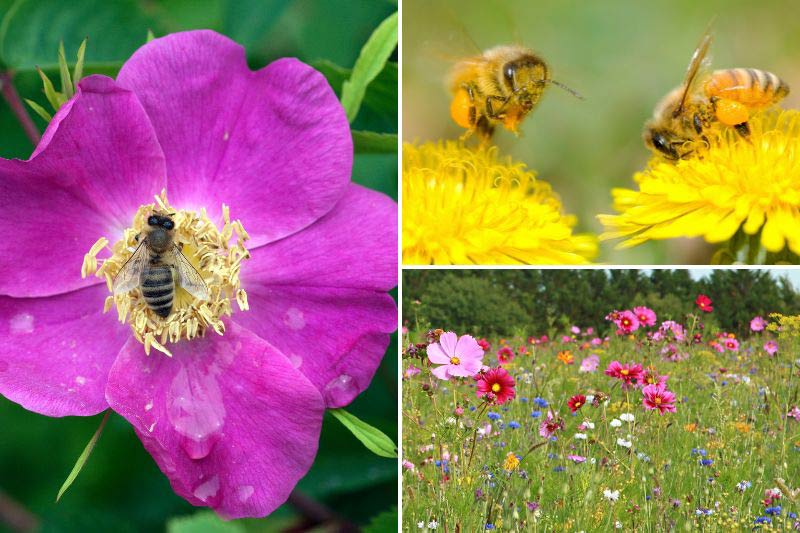
In the face of the diminishing food resources for pollinators, as biodiversity spaces shrink and concrete replaces the flowers of the fields, everyone can - and must! - plant and sow melliferous plants in their garden, on their balcony or terrace.
We have plenty of choices: from melliferous hedges to surround the garden, to bushes and melliferous perennials to insert in numbers into the flower beds, to melliferous climbing plants to adorn our walls.
→ Follow the advice in our article to help you select the best melliferous plants by season
And to replace the mown lawn which will turn yellow anyway this summer, let dandelions and wild herbs grow, and you will enjoy seeing bees, butterflies, and all kinds of insects reappear. Less chore for gardeners and abundant shelter and food for wildlife, what could be better?
I also recommend flowering fallows, some of which are composed of perennial or annual, nectariferous and melliferous flowers, to attract bees and other equally precious pollinating insects!
Also ban any use of pesticides in the garden as well as at home. Not only will you preserve your health, but you will also contribute to protecting bees.
Consider installing small shallow containers that you will fill with water in summer; we get thirsty, insects do too and can suffer from dehydration during dry periods.
Your garden can also become a refuge for biodiversity: plant, do not over-maintain, and install insect hotels wherever you can! This will be an opportunity to raise children's awareness of these issues that will soon concern them closely.


Comments