





























Only those who have had the pleasure of living in a house with a garden for the first time can understand the immense joy felt when walking on "their" lawn... Wow! This pleasure is soon accompanied, after a week, by a worried furrowed brow (usually just one), as the grass in question grows at lightning speed and one must find a way to trim it, a mower... And when it comes to choosing a mower, faced with the dozens and dozens of brands and models available on the shelves, it must be acknowledged that the novice gardener is not having an easy time.
So, to enlighten you, we asked a professional who is also a gardener: Philippe Asseray, author, journalist, and gardening expert for the brand Honda.
What criteria should be considered when choosing a mower?
So, THE criterion to consider when choosing is the seller! Not their dazzling smile or Rambo-like muscles, but the geographical proximity of their shop and workshop. Common sense dictates that one should go to a specialist in garden machinery. There is a good chance that their expertise in mowers is broader than that of a supermarket seller. Plus, in case of an issue with your machine, they might be able to come to your home and even lend you a mower while yours is being repaired...
Petrol mower or electric mower?
A petrol mower operates with a petrol engine, while an electric mower obviously runs on an electric motor, powered by household electricity via a cumbersome extension lead (the famous extension), or by a built-in battery.
The petrol mower is ideal for large areas (over 1000 m2) or gardens with many trees and flower beds to navigate around. No issues with autonomy, just refill and off you go, and no risk of getting tangled up in the extension lead, or even cutting it. However, it is a heavy machine that requires handling hydrocarbons, is noisier, and starting it by pulling a starter cord can deter some (even though it has greatly improved over the past decade).
Equally effective, the electric mower is lighter, quieter (ideal for maintaining good neighbourly relations), and starts with no effort at the push of a button (two, in fact, for safety!). However, its range is limited by the length of the extension lead or the battery life. It is therefore more suited to modestly sized lawns.
Discover the Selectos selection: A comparison of the best electric lawn mowers.
Push mower, self-propelled... What's the difference?
Very common in the mower world, these two terms are often misused...
A push mower is actually a "push" machine. This means that its engine drives the rotation of the blade, period. You have to push the machine to make it move. This is not a problem with an electric mower, but it quickly becomes so with a heavy mower, especially if the terrain is sloped or uneven.
A self-propelled mower, on the other hand, is a machine whose engine drives not only the rotation of the blade but also two of the wheels of the device, like most cars. You do not have to push the mower, as a handle control activates the forward motion. It goes without saying that these mowers are much easier to use, especially if they have a variable speed control to adjust the speed based on the shape or layout of the garden... And thus the term is often misused, as it is usually the rear wheels that are driven. It would be more accurate to say self-propelled...
Is cutting width important?
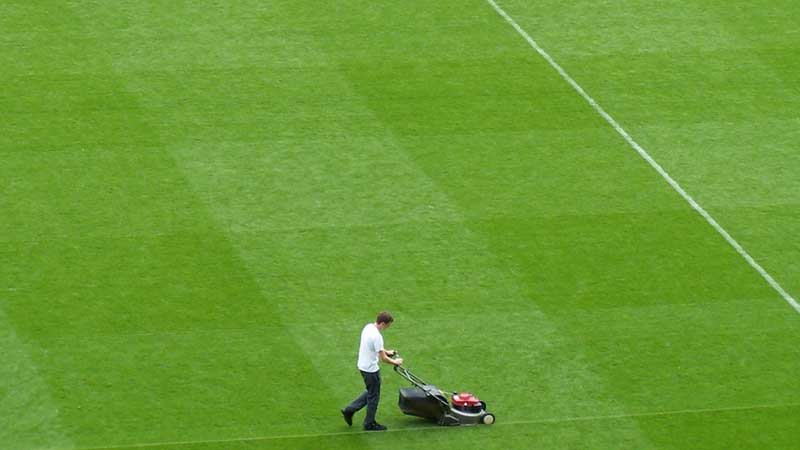
Yes and no... The smallest mowers work with a cutting width of 28 to 30 cm, while the largest have a cutting width of 53 to 56 cm. Besides the fact that you need to choose a mower that can fit and navigate throughout your garden, you should know that, for the same area, you will spend much less time mowing with a wide mower than with a tiny machine. But nothing prevents you from mowing a lawn the size of a football pitch (Go Blues!) with a very small mower, even if it means spending your weekends doing so, just as nothing prevents you from mowing a small garden with a large self-propelled mower, even if it means spending a lot of time manoeuvring... A matter of compromise that depends on the individual.
Collection, ejection, mulching?
Once the grass is cut, mowers offer several ways to handle it:
- collecting it in a bag or basket at the back of the mower (ideal for those who, like me, practice the art of home composting with green waste);
- ejecting it to the back or side (great for mowing quickly without worrying about the cut grass, and therefore particularly suitable for areas treated like a meadow);
- or even shredding it on the spot according to the principle of mulching (no waste to manage and no unsightly clumps on the lawn).
Some mowers only offer one of these options. This inevitably limits their use. I cannot recommend enough those that offer all three, or at least collection and mulching. Models that allow switching from one mode to another with a simple lever are my preference, as there is no obturator to find and set up. Versatility guaranteed!
What are the main innovations in mowers?
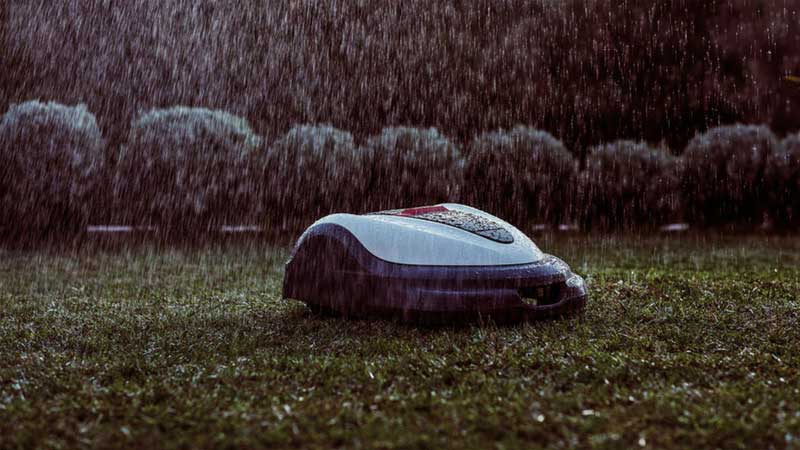
Robots are invading our gardens! Not those from Star Wars, but rather those strange devices that, like flies on a window, move randomly across a lawn as flat as a carpet. I am, of course, referring to robotic mowers. Not really an innovation, as I was trying out the first models in the 1990s, but it must be acknowledged that these mowers are becoming increasingly popular. They are certainly not cheap, like robot vacuums for the home, but with the advantage that there is nothing to empty on the mower...
Grin is an Italian mower brand that offers another innovation in conventional machines: a specific deck and blade that shred the grass and eject it onto the ground... Mulching then? Not at all, as with Grin mowers, it is not necessary to mow often to only cut a small part of the grass blades. You can mow once a week like with your usual mower... and even on wet grass. So, you are not obliged to mow more frequently...
What precautions for a hassle-free mower?
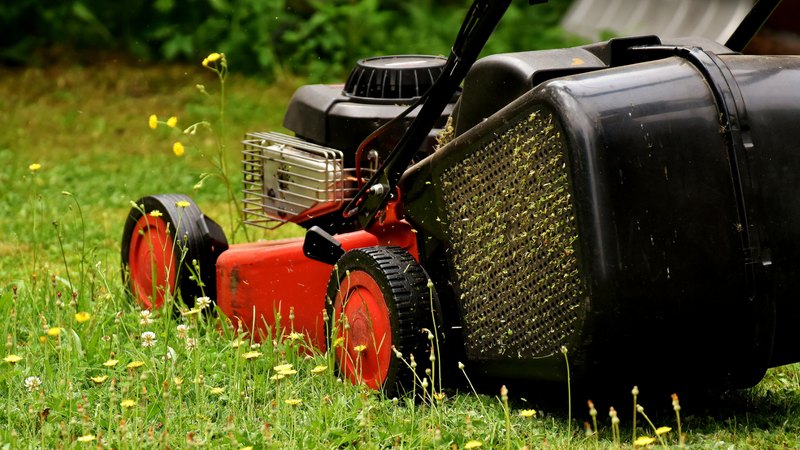
Regardless of the mower used, and whatever method of handling the cut grass is chosen, it is essential to clean the deck of your machine after each use (brushing and/or water jet) to remove all the debris stuck to it, which can disrupt the grass ejection and even completely block the ejection port (this is referred to as clogging). If using a collection bag or basket, it is important to clean the vents well, as this is the sine qua non condition for optimal filling.
Also, discover our other articles:
- 5 good reasons to adopt a manual mower
- Mower breakdown: the benefits of letting the grass grow
- The robotic mower: for or against?


Comments