





























My lawnmower is out of action... and the after-sales service at my DIY superstore, overwhelmed with emergencies, is slow to get it back in working order. My garden currently resembles a little wild meadow: it is neither more elegant nor more unsightly than the banks and verges lining the roads in my department. It was while observing this little patch of nature that the idea came to me to address a topic that divides garden enthusiasts like us: can we let the grass grow and for how long?
When I lived in Lot, I was surprised to see the edges of country roads being "cleaned" late in the season by the highway services. I later learned that this practice of late mowing adhered to local regulations aimed at preserving biodiversity. Among the wild grasses, I recall several species of wild orchids (Ophrys and Orchis), a lovely bindweed named Convolvulus cantabrica, the 'cuckoo' primrose, the scabious, the small periwinkle, the Krakow vetch, the Agen tulip, and many other beautiful wild plants.
The benefits of late mowing
Late mowing is an interesting technique for two reasons, increasingly adopted by municipalities: it allows for both budget savings and a reduction in our environmental impact. Studies conducted in some of our regions (notably in the North and East) have shown that this reasoned management of grassy strips has a very positive impact on the richness of local flora and fauna.
Overall, late mowing involves allowing wild plants to go to seed before cutting them back late in summer or even early autumn. It is not limited to road verges and can be perfectly implemented in gardens, on a scale that best suits their size.
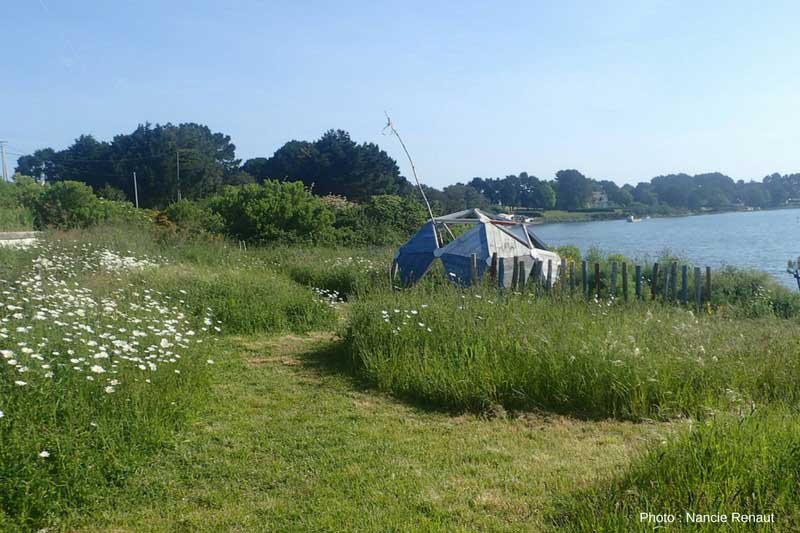
This wild vegetation, often dominated by grasses, sometimes presents a neglected appearance that not everyone appreciates. However, these tall grasses provide a safe shelter and a significant food source for certain insect species, allowing them to complete their life cycles. Present in our regions for millennia, these plants and small creatures are indispensable to the natural balance.
Among these little critters along the roads are many allies for the gardener. In the grassy strips and under the plant debris hide and live ground beetles and the odorous rove beetle. The former is a predator of leafhoppers and the weevil. It is the latter that disfigures the leaves of our favourite bushes by cutting the edges of their leaves at night. The second, the all-black rove beetle, is a fan of "caviar" from slugs and snails, also hunting insect larvae (mites, scale insects, flies) in the soil litter. Syrphid flies and lacewings feed on wild flowers as adults, but their voracious larvae are the terror of aphids, particularly those neglected by ladybirds, such as the cabbage grey aphid. The banks are the realm of ladybirds, who need no introduction. There is no need to elaborate on the fabulous work done by bees and bumblebees in our vegetable gardens and orchards. Some caterpillars sometimes depend on a single wild plant growing in the verge bordering your garden for nourishment.
We sometimes wonder why we are literally overrun by certain insects; this uncontrolled proliferation often stems from the disappearance of their predators... to which we are not strangers.
Selective mowing: another technique to apply in the garden
Selective mowing is an alternative technique that involves cutting high in early summer: it primarily aims to eliminate the inflorescences of grasses to promote the development of lower wild flowers. Once dried late in the season, the plants are cut back to 10-15 cm above the ground. It is not difficult to implement in our gardens on small areas, for example along a hedge or on a difficult slope, in hard-to-reach places that are truly complicated to mow regularly. And well, you can very well let that inaccessible corner grow freely and only intervene when necessary. The insects will thrive in this little Eden. A shear will quickly remove the spikes of grasses if needed and allow the flowers to benefit from the light.
I have unknowingly applied this technique in my garden. Let me explain: when I took possession of the place, four years ago this summer, there was only hard, dry, and desperately sterile beaten earth. A desert likely due to the passage of glyphosate, a true chemical Attila lurking at the back of the garage. The previous owner had a dog. You will understand that this detail is significant.
I first allowed this mistreated soil to regain its composure, observing without touching for a year. Unsurprisingly, the first colonisers were grasses whose dried spikelets are formidable enemies for our dogs and cats: they are called "spigaous" in Provence. So what to do? Treat every year with herbicide? That is the scorched earth policy, of incredible brutality.
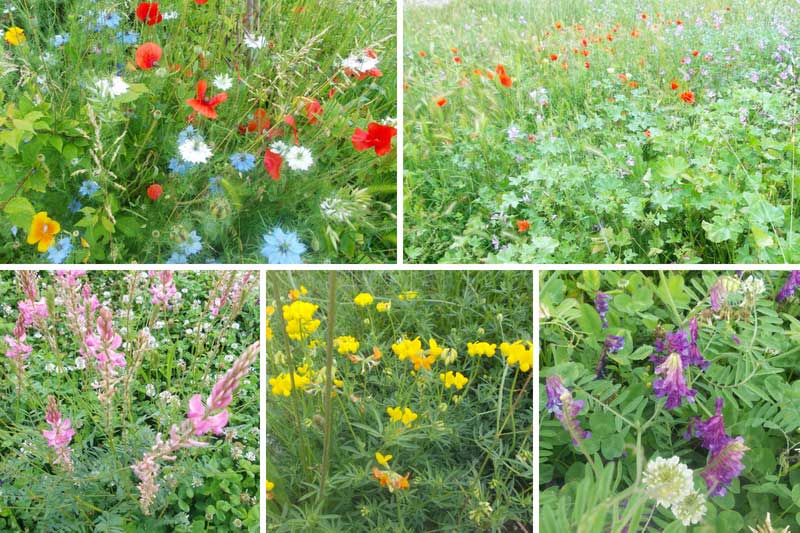
Here, no water in summer, so no real lawn, which is quite expensive to water and requires a lot of work for mediocre results. So I systematically mowed down the unwanted grasses for my animals without remorse. I allowed those with soft, harmless inflorescences to bloom instead. I then simply raked the soil and in autumn scattered a bag of "special dry soil lawn" and mixes of "flowering meadow for dry soil" and "green fertiliser". And then I let nature take its course. For three years now, I mow high, late, and not everywhere. I target the areas where the malicious spikes still appear. Today, there are still some "spigaous", but they are being overwhelmed by the plants I have sown and wild flowers like various clovers, dead nettle, muscari, plantain, vetches, phacelia, wild carrot, and various asteraceae like dandelion... nothing exceptional, you might say, but don't these 'weeds' already represent a small victory?
How long has it been since we saw fireflies?
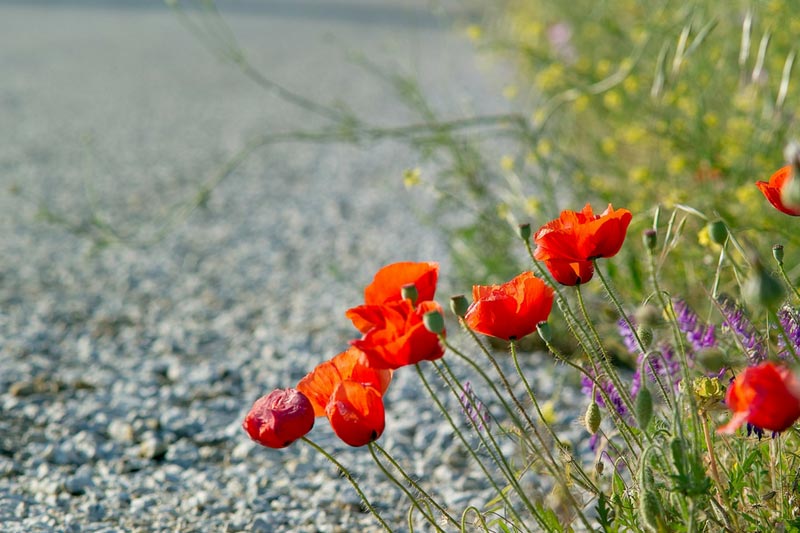
Don't think I'm stuck in rigid nostalgia. Far from radical activism, nostalgia sometimes leads me to painful questions that echo distant memories: how long has it been since we saw fireflies (I'm not talking about those found, once upon a time, in packets of Bonux...)? My mother tells me that in the past, during evening walks, her mischievous brothers would place these harmless glowworms in the hair of the youngest sibling, crowning his head with phosphorescent stars. What has become of the blue centaury, the white daisy, and the scarlet poppy, emblems of our national flag? What about the lovely soapworts that our grandmothers used to gather from the damp ditches?
After a hot summer day, I miss the hypnotic chirping of crickets in my village in Bouches-du-Rhône, surrounded by orchards and market gardens. I am surprised to see so few butterflies visiting the buddleias in my garden today: I remember the butterfly trees of my childhood, overwhelmed with fluttering, multicoloured wings...
Let this sentimental wandering not prevent us from remaining optimistic: for some, now rare, all these animal or plant creatures are nonetheless making a comeback in our gardens and along roadsides managed with discernment.
And finally, the new regulation limiting speed to 80 km/h may have a positive side: it will likely allow us to spot them more easily at the edge of our departmental roads...
For further reading:
- There are many interesting publications: for example, this one, which discusses mowing.
- Also read our article: 5 good reasons to adopt a manual mower

Comments