





























Once relatively unknown, Yuzu or "Yuzu Lemon" is currently experiencing a true surge in popularity. This is hardly surprising, as it is essential in Asian cuisine; this small Japanese lemon with its aromatic flavour is now used by top chefs and renowned pastry chefs alike.
And as is often the case with vegetables and fruits from Japan, buying fresh fruit is almost an impossible mission. But if you accept this challenge... and succeed, be prepared to pay the price: over 50 euros per kilo!
The best solution (after the black market or a friend who pilots for Japan Airlines) is, therefore, to plant your own Japanese lemon tree.
But before you dive in, let’s take stock of its uses, the taste of its fruit, its benefits, and how to cultivate it in our climates.
What is Yuzu?
The term Yuzu refers to both the fruit, the Yuzu lemons, and the small tree that bears them.
This Japanese lemon tree (Citrus junos, family Rutaceae) appears as a large bush with very thorny branches and evergreen foliage. It is believed to be the result of hybridization between the wild mandarin and Citrus ichangensis, or Ichang lemon.
From its parents, Yuzu has retained a remarkable vigour and hardiness, around -10 to -12 °C, which is uncommon for a citrus and allows it to be cultivated in our climates.
The Yuzu fruit, although often likened to a lemon, resembles more a large mandarin. About the size of a tennis ball, it is covered with a thick, slightly bumpy skin, which is green and turns yellow-orange at ripeness. Its flesh contains many seeds and produces relatively little juice.
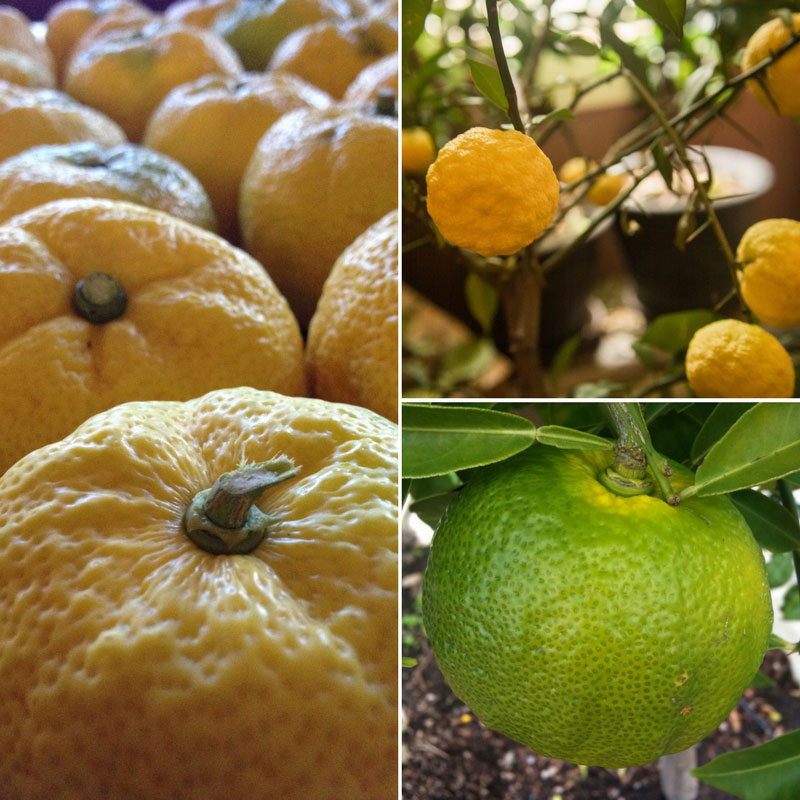 Yuzu lemon fruits - Photos: Seahill, Edsel Little
What does Yuzu taste like? How to use it in cooking?
The flavour of Yuzu is unique and powerful. Very tangy, it can be described as a subtle blend of grapefruit, mandarin, and lime, with spicy notes of bergamot.
In cooking, Yuzu is suitable for both savoury and sweet preparations:
- the zest of Yuzu is used as a condiment to flavour fish and shellfish, as well as to enhance butter or add an original touch to a chocolate tart.
- the juice of Yuzu is used to marinate meats and fish, as well as to make exquisite sorbets. In pastry, it elevates fruity mousses and other creams, such as the delightful Yuzu curd.
Is Yuzu good for health?
Like all citrus fruits, Yuzu is known to be very rich in vitamin C. It is invigorating and may boost immunity. It is also believed to have anti-inflammatory and antioxidant properties.
By the way, did you know that a popular belief in Japan suggests taking Yuzu baths at the winter solstice to ward off colds for the entire year!
Look, it seems very fun!
Is it possible to grow Yuzu in your garden?
But before you can indulge in a Yuzu bath, you need to grow them… and, as I mentioned earlier, it is entirely possible in France.
Although hardy, Yuzu prefers warm and sheltered situations. Its cultivation in open ground is therefore mainly recommended in mild climates or in the area known as "the olive zone", which corresponds to the Mediterranean basin. Elsewhere, we advise you to install it in a large pot and move it to a cool place when a cold snap is forecast.
Vigorous but with a somewhat slow growth in the first few years, the Japanese lemon tree typically bears fruit after reaching the age of 4. The harvest occurs in autumn, from September to December.
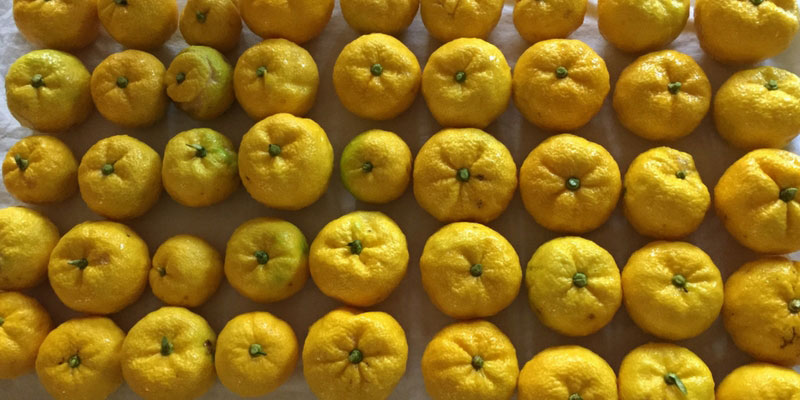
This does require a bit of patience, but it will be rewarded with a harvest of delicious, rare, and original fruits!

Comments