





























Like many households, we are gradually but surely moving towards zero waste.
At home, we are still far from being exemplary (try explaining to a teenager that solid shampoo shouldn't be stored in stagnant water), but in the garden, I can boast a little because we are almost there!
Don't run away; I'm not part of any green brigade, and the idea is not to deliver yet another moralising speech, but rather to explore practical ways to reconcile gardening and ecology.
Green waste: biodegradable, but not without impact
First, let's clarify: green waste is biodegradable, that goes without saying. Collected at waste disposal sites or even at home in some municipalities, it may seem harmless. When recycled, it is valued, which is generally positive. However, it is important to know that all this comes at a cost. Besides transport (ouch, the carbon footprint!), large-scale green waste recycling requires the installation of composting platforms that comply with current regulations to avoid any risk of pollution. In short, it is expensive, and we all foot the bill!
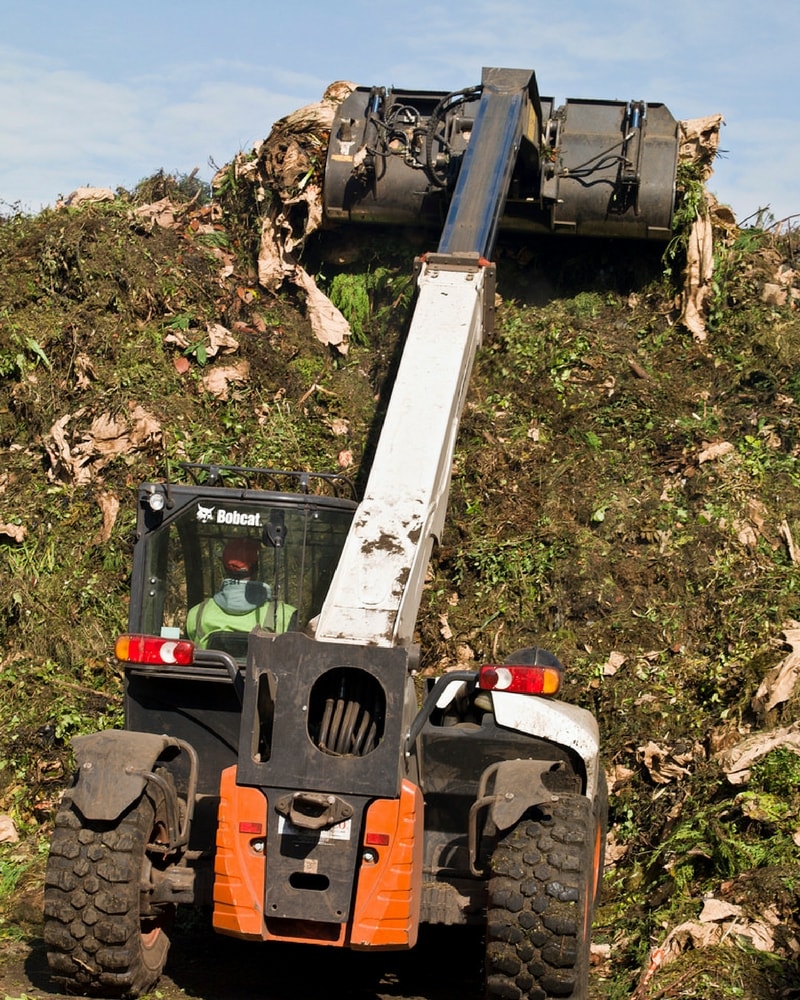 Little streams make big rivers... Here, in a composting platform - Photo: Jean Weber
Let’s also remind ourselves that in most of France, it is now forbidden to burn green waste…
To the question: “Can you have a garden and never go to the waste disposal site?”, I answer yes. Better yet, I even recycle my neighbour's grass clippings! How? By adopting the mulching method for my lawn and using my neighbour's grass as mulch for the vegetable garden. The prunings from the bushes go through the shredder and join the perennial beds or are left in small pieces at the foot of the hedges. Excess green waste and kitchen scraps go to the compost… or feed the chickens. But, as we've often discussed, I won't dwell on that!
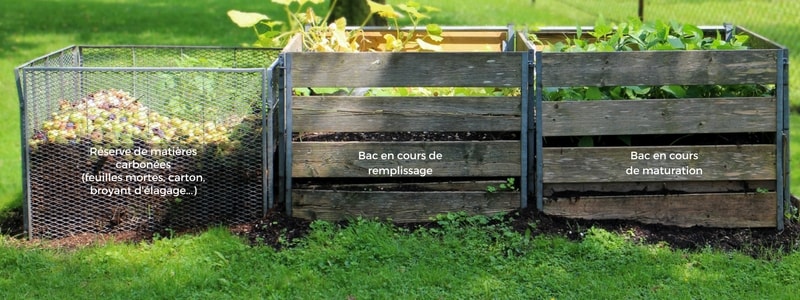 A well-organised composting space allows for effective treatment of excess organic waste.
The best waste: the one we don't produce
The best waste (even green) is the one we don't produce. This must therefore be considered in advance, anticipated. By the way, do you know why many housing regulations now prohibit the planting of Thuja and Laurus nobilis? Because they grow quickly, require frequent pruning, and, most importantly, their waste decomposes very slowly.
The solution lies in the problem: avoid fast-growing plants, prune less, or not at all! Knowing that most of the time, pruning is intended to limit the growth of the tree or bush, try to reserve the necessary space for their natural growth at each planting. Another option is to turn to dwarf varieties (their names often include "nana", "nanum", "compactum"... or "dwarf"). For example: Betula nana Golden Treasure, Pittosporum tobira Nanum, or even Viburnum opulus compactum.
Who has never complained about a lawn that grows too quickly and dreamed of a lawn with less "dynamic" growth? Well, know that slow-growing grass does exist. Some seed mixtures are designed for this. Keep this in mind if you ever need to redo your lawn!
Zero waste: no to disposables, yes to durability! And long live the biodegradable!
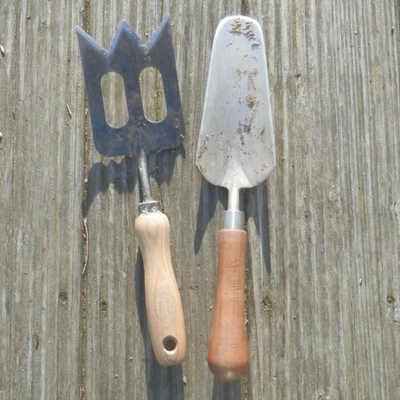 Solid, these tools are definitely durable
The garden is a market where disposables haven't really taken off. We could celebrate this if the poor-quality gardening tools weren't so numerous. For less than 3 euros, you can buy a trowel. Although it isn't labelled as disposable, it will last half an hour if your soil is like mine. Repeat the operation with the entire perfect gardener's toolkit, and you will have filled your bin while emptying your wallet.
Poorly designed, fragile, and non-repairable (unlike good traditional tools), this type of equipment should be avoided. Instead, check out Le Bon Coin or a recycling centre, buy second-hand, and refurbish. If you opt for new, invest seriously: you'll benefit in the end, and so will the planet!
For consumables, focus on natural, biodegradable materials like jute and raffia for twine. The idea is to eliminate plastic! For clearing, I have made it a habit to use the blade whenever possible instead of the line. (Be careful, there are now oxo-biodegradable lines, but they seem not to have proven themselves yet).
Regarding mulching, absolutely avoid tarps or woven polypropylene mulch fabric (I discuss this here): they degrade over time and form microplastics that end up in the sea.
For sowing, I have a few trays that I've had for many years. And for salads, I sow in mini clumps, made using a… mini clump maker! But it is entirely possible to use toilet paper rolls or make small pots from newspaper. I won't insult you by pointing out that you can sow in a yoghurt pot or in a cut milk carton... and in reused pots, of course!
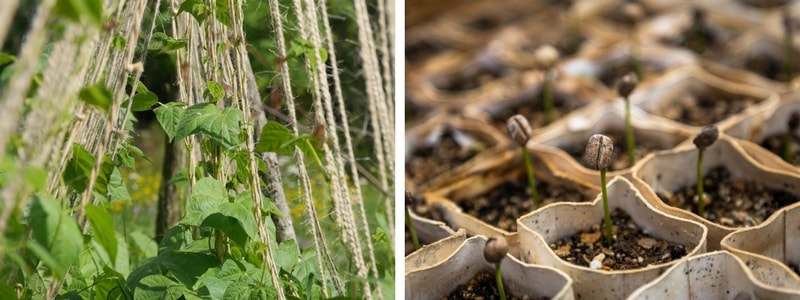 Natural twine for climbing beans or cardboard rolls: all biodegradable!
Treatments: make them yourself!
Effective, decoctions and manures are natural and ecological. Like household products, you can make them yourself. The raw materials are found in your garden and return there without generating any waste. If you use Ferramol, sulphur, or Bordeaux mixture: always opt for powder to dilute (the cardboard packaging will join the compost once cut into small pieces) rather than a ready-made preparation sold in plastic bottles. And if you tend to be a bit of a nuisance or a militant (I hear that often goes hand in hand), suggest to your garden centre to offer bulk options!
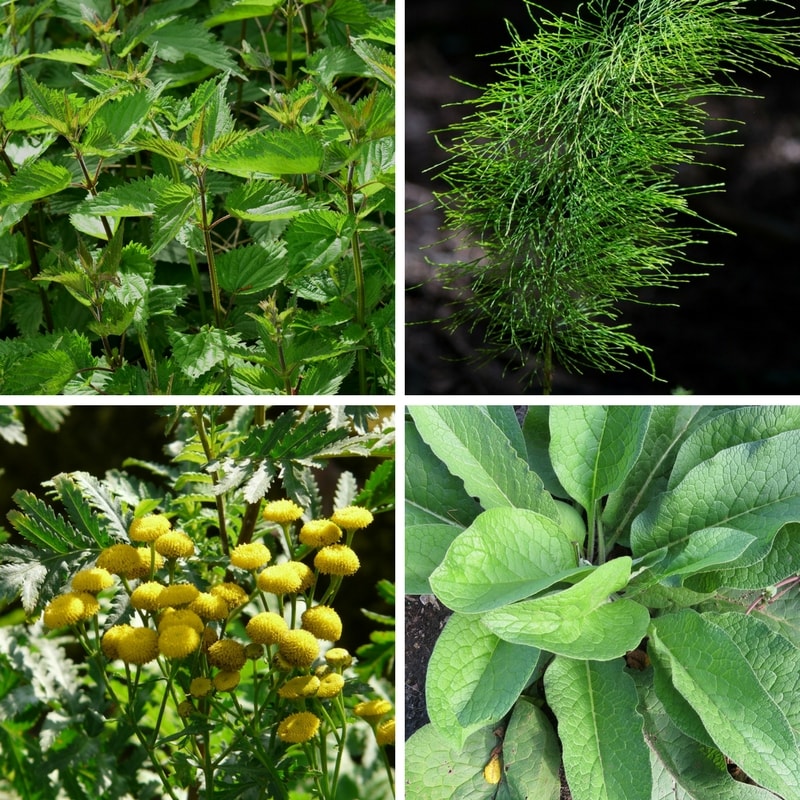 Nettle, Horsetail, Tansy, Comfrey: plants for making natural treatments in the garden.
In conclusion, know that at Promesse de Fleurs, we also do our best to minimise plastic waste. To learn more about our journey, I invite you to read Pascal's article: "Promesse de Fleurs, plastic and chemistry: a long story of disaffection".

Comments