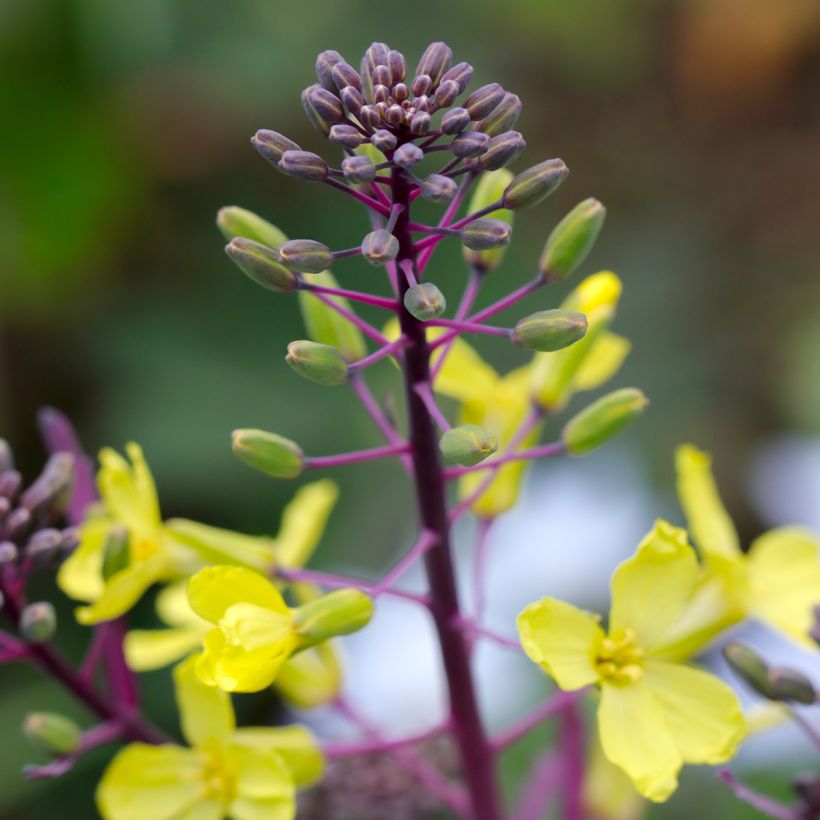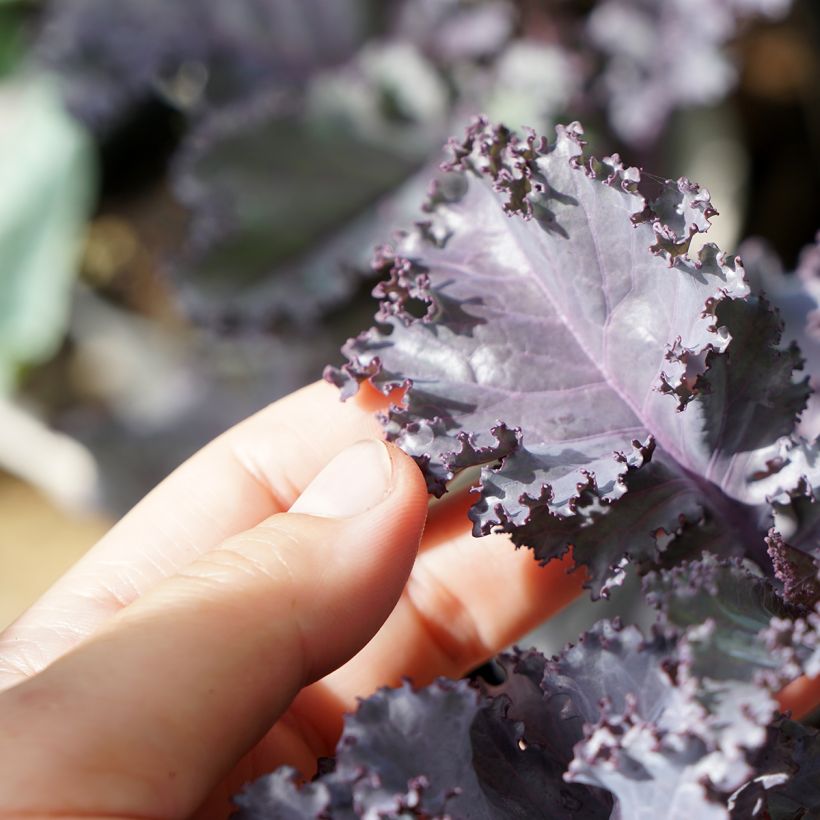





























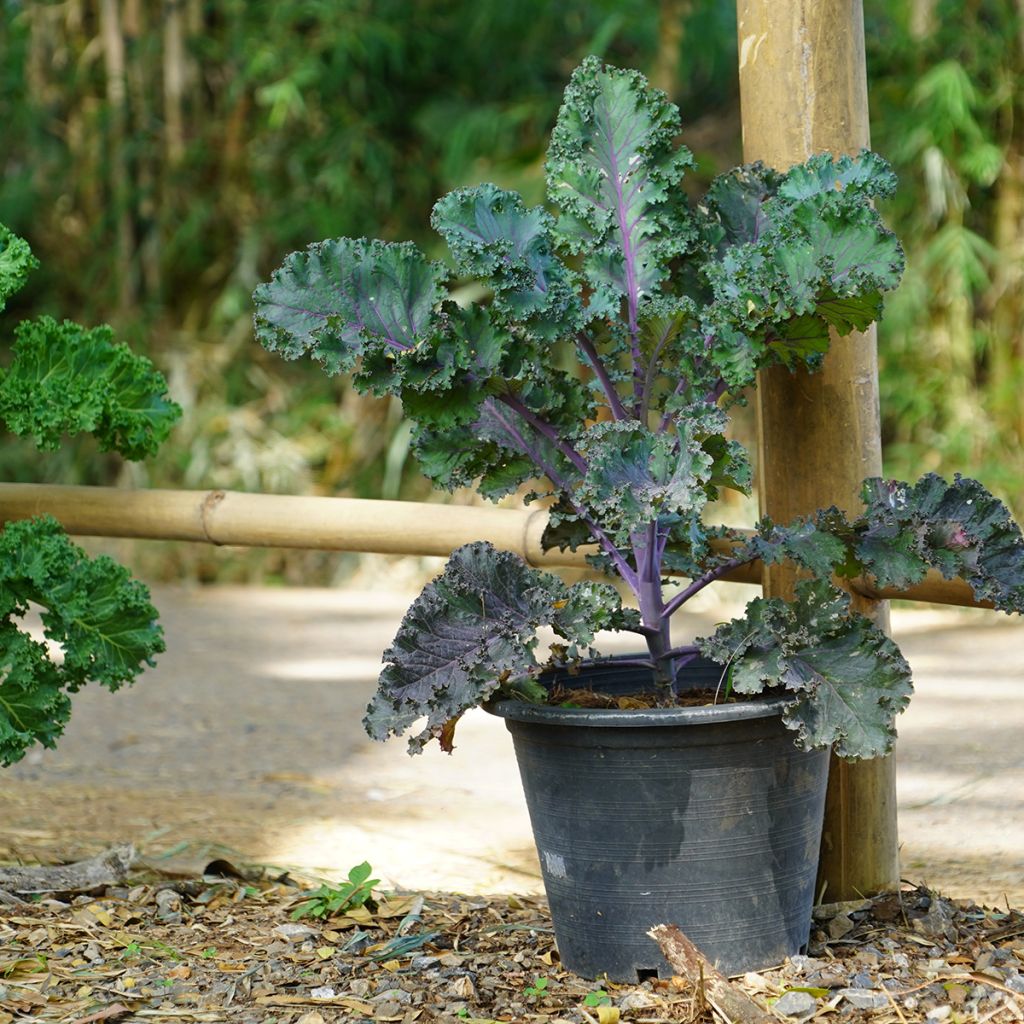
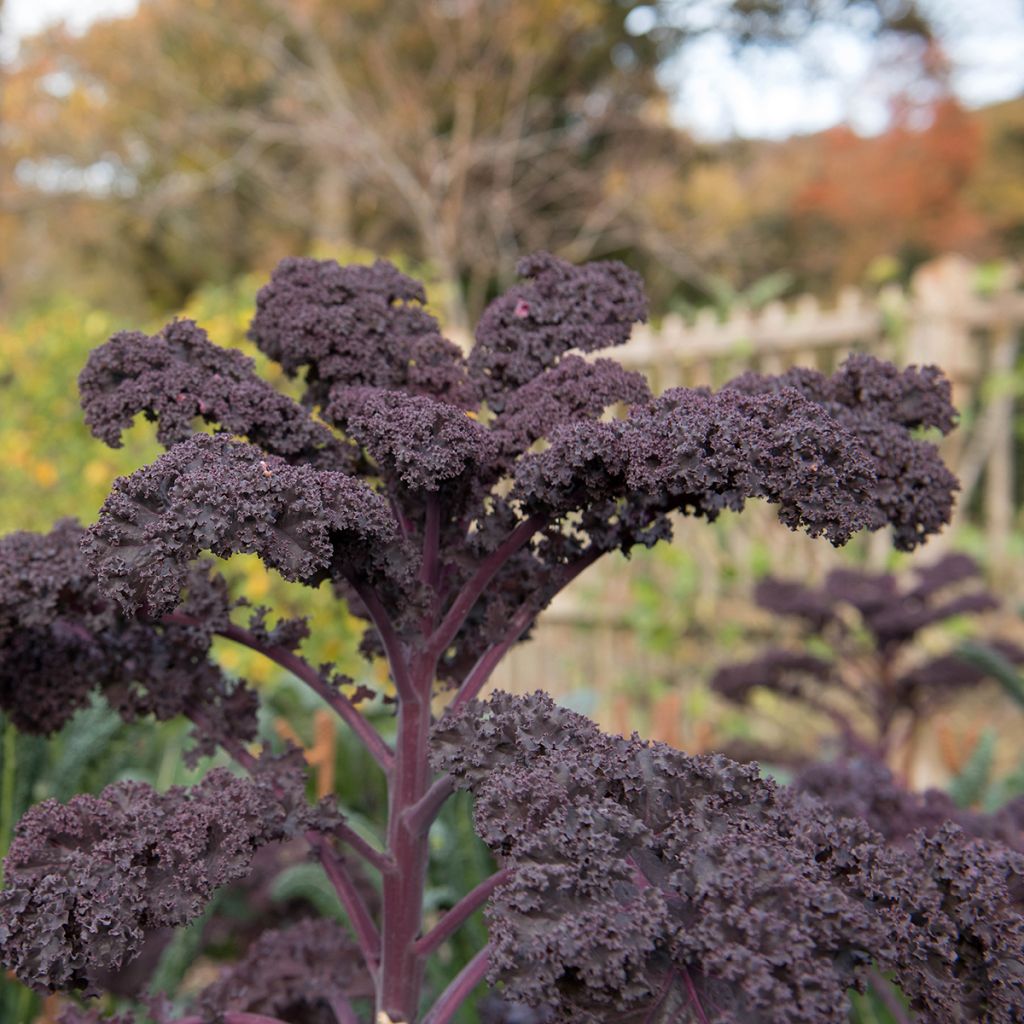
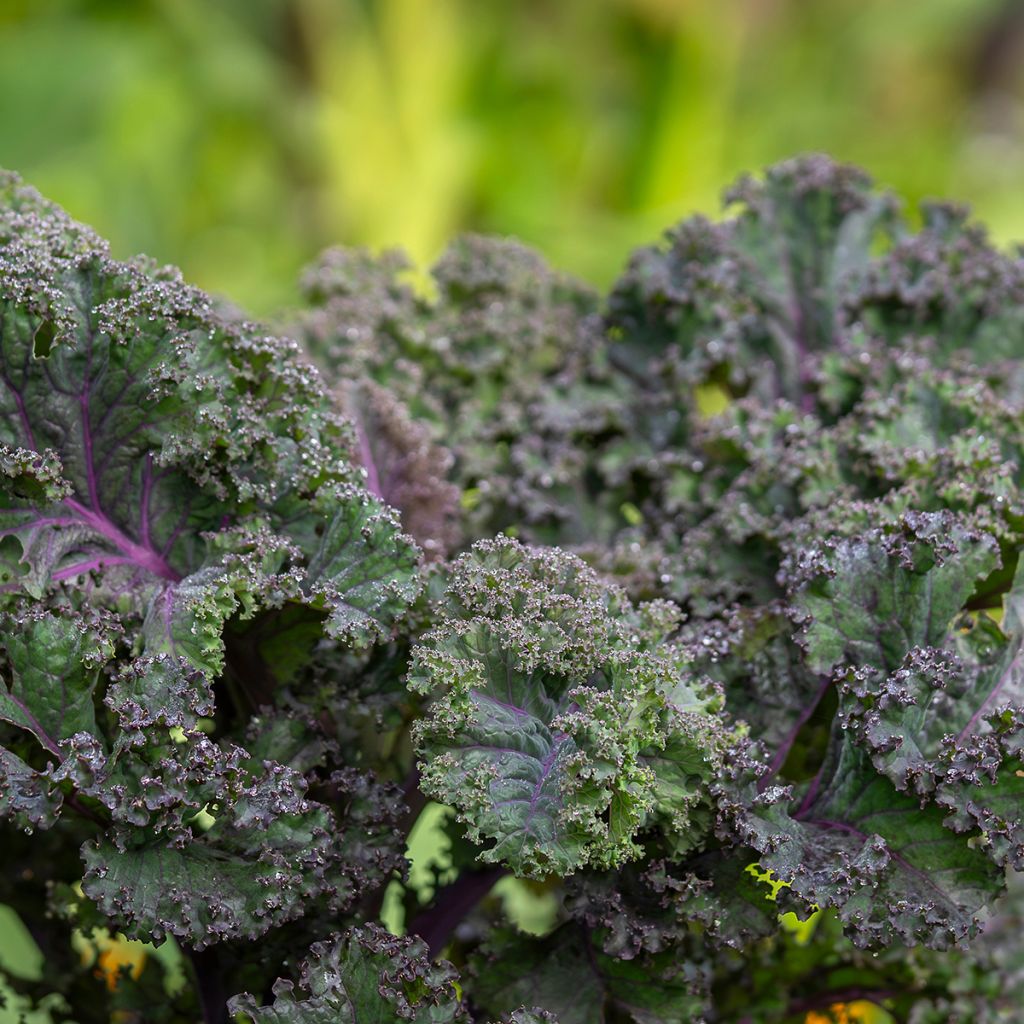
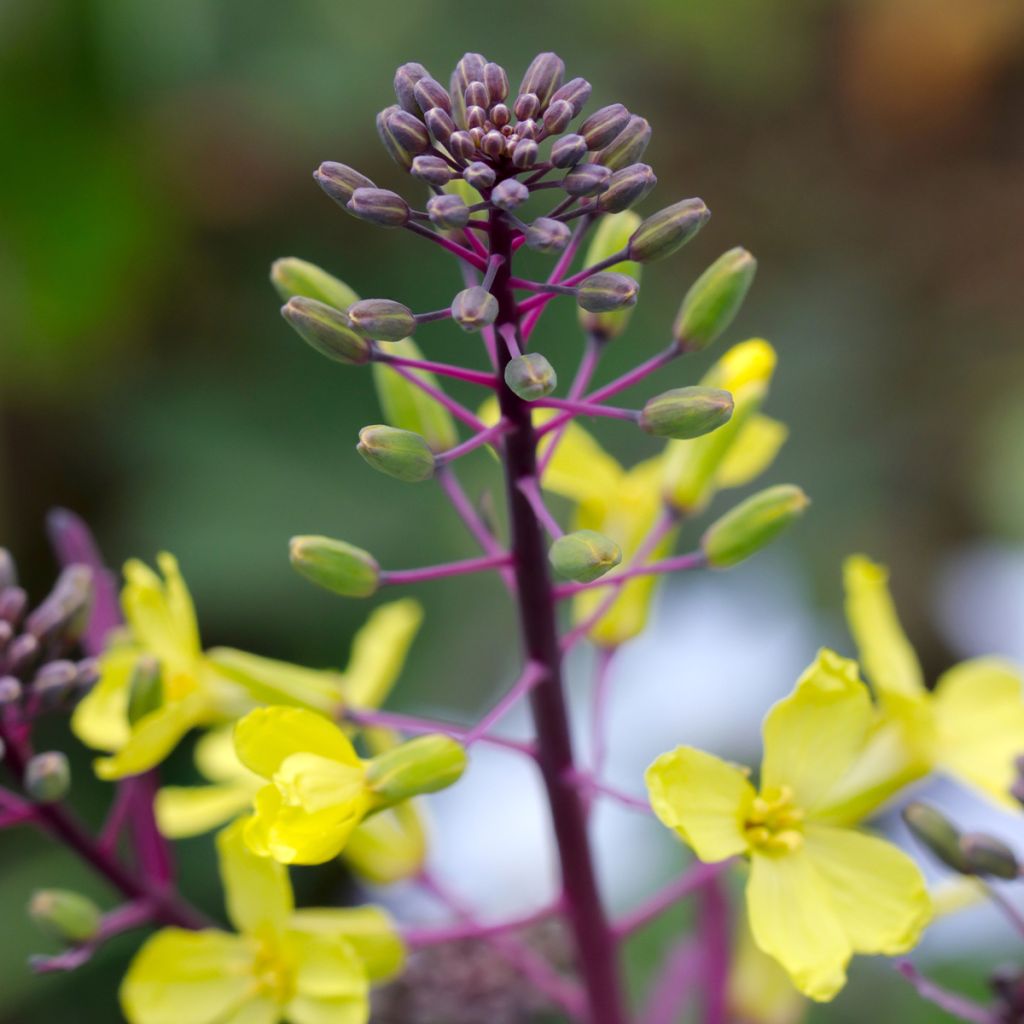
Brassica oleracea (Acephala Group) ‘Scarlet’ belongs to the Brassicaceae family and the Acephala group (non-heading cabbages). The ‘Scarlet’ cultivar is a selection with very curly, purple-violet leaves, whose colouring intensifies under the effect of cold through the accumulation of anthocyanins. This cultivar is comparable to ‘Redbor’ F1, but is non-hybrid.
Origin & History. Curly kales derive from Mediterranean populations of B. oleracea cultivated well before the Middle Ages; the "curly" types belong to the acephala var. sabellica group. ‘Scarlet’ is a curly red line disseminated by North American and European seed companies around the turn of the 2000s–2010s (e.g., Johnny’s, High Mowing).
The kales of the Acephala group are distinguished by edible leaves without a head, suited to winter cultivation. They tolerate frost, and the cold alters their composition (increase in soluble sugars, variations in glucosinolates depending on the cultivar), which sweetens their flavour.
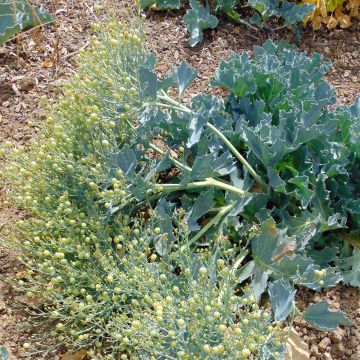
‘Scarlet’ kale is an erect plant, reaching 60 to 90 cm in height (up to ~1 m at the end of its cycle), first forming a dense rosette, then a trunk if the lower leaves are picked. Its leaves are intensely curly, purple to burgundy on a bluish-green background with prominent veins; this colour darkens with the arrival of cold nights.
Harvest Period & Method.
For young leaves, pick about 30 days after sowing; for mature leaves, 55 to 60 days. Leaf-by-leaf harvest from early autumn to spring, first picking the healthy peripheral leaves.
Post-Harvest Storage.
-
In the fridge: whole leaves, unwashed and dry, in a perforated bag + absorbent paper → 5–7 days (sometimes up to 10).
-
Ready to use: washed/spun dry in an airtight container → 3–4 days.
-
Tip: place the stems in a glass of water in the fridge, and place a loose bag over the top. Limp leaves? Place them in cold water for 10–15 minutes.
-
Freezing: remove stems, blanch the leaves for 2–3 min, cool, drain, portion → 6–8 months.
-
Express freezing: chopped raw, frozen flat (perfect for smoothies).
-
Anti-waste: kale chips (in an airtight jar for 1 to 2 weeks), pesto/velouté or pickles to freeze/ferment.
Culinary Uses.
The young leaves can be eaten raw (in salads or smoothies), or cooked (sautés, soups, stews, kale chips). They are very rich in vitamins (K, C, A).
In the garden, plant ‘Scarlet’ curly kale in the sun (or light partial shade) in rich, loose, well-drained soil, enriched with compost.
Gardener's Little Trick.
To intensify the colouring of the leaves and sweeten their flavour: plant in summer to expose the plants to the cool autumn nights and harvest after a light frost. Applying an organic mulch maintains soil moisture and limits flea beetle proliferation. Place a fine net over your seedlings as soon as they emerge.