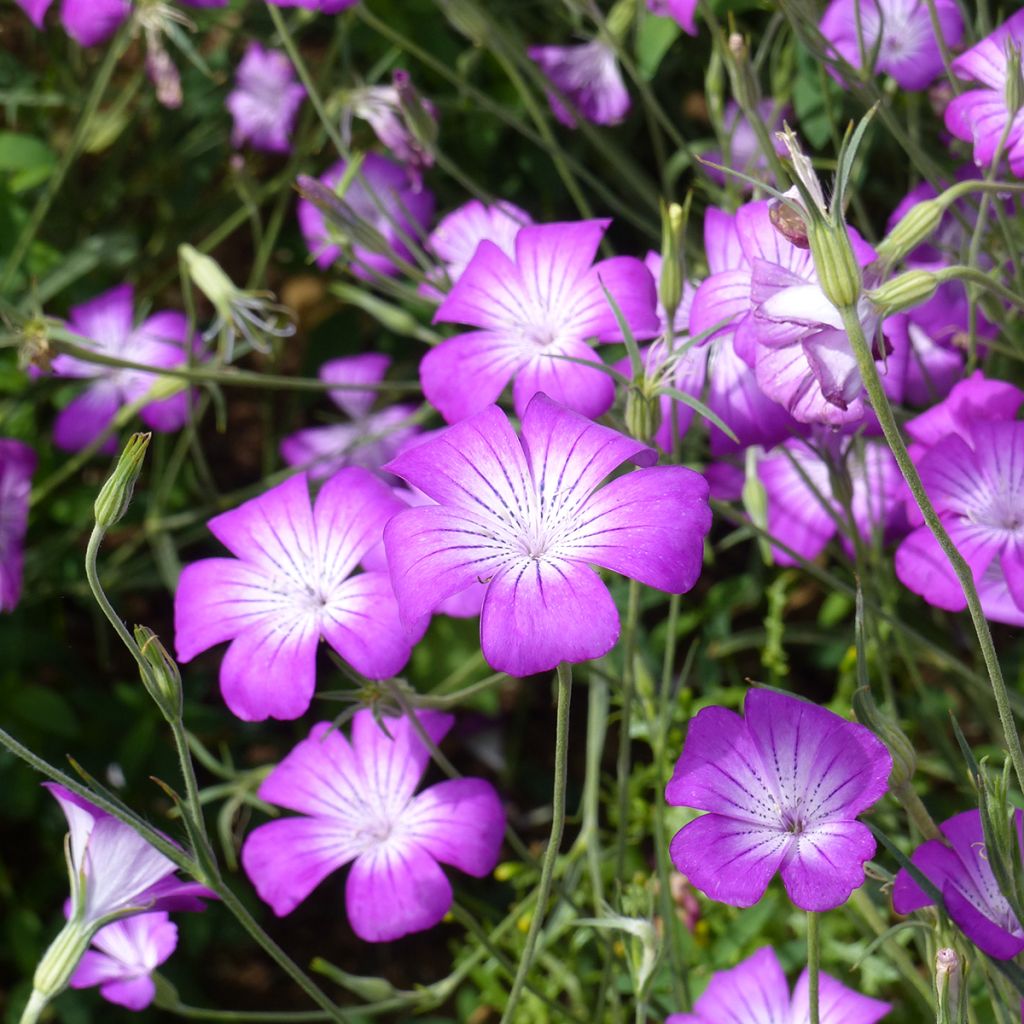
Corncockle Purple Queen Seeds - Agrostemma githago
Corncockle Purple Queen Seeds - Agrostemma githago
Agrostemma githago Purple Queen
Corncockle
Back-to-school special offer!
Get €10 off for every €50 you spend! And get up to €40 off on a single order.
How does it work?
1. Shop your favourites
Add your favourite plants to your basket. For every €50 you spend (excluding delivery charges, store credit and the plastic-free option), you’ll receive a €10 voucher.
€50 spent = €10 voucher
€100 spent = €20 voucher
€150 spent = €30 voucher
€200 spent = €40 voucher
2. Place your order
Once your basket reaches one of the spending thresholds, place your order. You can even choose your delivery date!
3. Receive your voucher
As soon as your order has been shipped, you’ll receive an email containing your personal voucher code and its value.
4. Use it on your next order
Your voucher is valid for 90 days from the date you receive it. It can be used once only, on a new order worth at least the value of the voucher, excluding delivery charges.
Please note: Vouchers can be combined with other offers, but cannot be split or refunded.
Home or relay delivery (depending on size and destination)
Important: You may be charged customs duties by your country’s customs authorities upon delivery.
Schedule delivery date
and select date in basket
This plant carries a 6 months recovery warranty
More information
We guarantee the quality of our plants for a full growing cycle, and will replace at our expense any plant that fails to recover under normal climatic and planting conditions.
Would this plant suit my garden?
Set up your Plantfit profile →
Description
Les graines de nielle des blés 'Purple Queen' permettent de cultiver cette plante annuelle aussi appelée Agrostemma githago. Au port élancé et souple, elle se distingue par sa floraison délicate et aérienne. Ses grandes fleurs fuchsia veinées de violet, à cœur blanc, portées par de longues tiges fines, ont un charme champêtre idéal pour les jardins naturels et les prairies fleuries. Rustique en sol bien drainé, elle se plaît en plein soleil et supporte les terrains secs, bien qu’un arrosage modéré favorise une floraison plus abondante. Elle s’intègre parfaitement en massifs légers, bordures ou potées champêtres, où elle crée un effet de mouvement avec ses tiges dansantes. Sensibles au vent, ses tiges peuvent être tuteurées pour éviter qu’elles ne se couchent.
La nielle des blés appartient à la famille des Caryophyllacées. C'est une plante herbacée annuelle originaire d'Europe, d'Asie tempérée et d'Afrique du Nord, qui s'est répandue sur presque tous les continents par l'intermédiaire de ses graines jadis mélangées aux récoltes de blé. Autrefois considérée comme une adventice envahissante et nuisible aux cultures céréalières, la nielle des blés est aujourd’hui une plante devenue rare, et sans doute l’une des plus élégantes fleurs sauvages de nos régions. Elle développe rapidement des tiges dressées, fines et peu ramifiées, oscillant entre 50 cm et 1 m de hauteur lorsqu’elle est en fleurs. Son feuillage et ses tiges sont recouverts d’un fin duvet soyeux, particulièrement dense à proximité des inflorescences. Ses feuilles allongées, étroites et linéaires, sont parcourues par une nervure centrale bien marquée. La floraison s’étale de juin à août. Les fleurs, regroupées en cymes, émergent d’un calice velu renflé à la base et se dressent sur des pédoncules fins. De couleur rose fuchsia, elles mesurent entre 3 et 5 cm de diamètre et présentent cinq nervures sombres formant des stries plus ou moins marquées. Elles attirent les insectes pollinisateurs qui assurent leur reproduction. Après la floraison, entre juillet et septembre selon les conditions climatiques, la plante produit une capsule ovoïde et coriace, renfermant entre 30 et 40 graines noires, cabossées et rugueuses, comparables à des grains de blé, mais hautement toxiques.
La nielle des blés 'Purple Queen' insuffle un charme sauvage aux jardins naturalistes, où ses tiges souples et ses fleurs semblent flotter parmi les herbes. Elle trouve sa place dans une prairie fleurie, où ses teintes vives se mêlent aux mouvements légers des graminées comme Stipa tenuifolia accentuant l’effet de flou et de légèreté. En massif champêtre, elle dialogue avec la délicatesse des pavots annuels, notamment Papaver rhoeas ‘Shirley Mix’, dont les pétales froissés créent une harmonie subtile avec ses corolles veinées. Pour un contraste marqué, l’éclat argenté du Lychnis coronaria ‘Alba’ met en valeur la profondeur de son fuchsia, tandis qu’un fond de Salvia nemorosa ‘Caradonna’ apporte une verticalité structurante, renforçant son aspect aérien et gracile.
Au sujet de la disparition de cette espèce : Bien que des études aient montré qu'il existe un accroissement de la taille du blé de 20 à 50 %, lorsqu'il y a une symbiose entre ce dernier et la nielle des blés, la toxicité de ses graines, pour la consommation humaine ou animale, due à la présence de saponine, a conduit à l'éliminer de nos paysages. Aujourd'hui, les désherbants sélectifs ainsi que le tri mécanique des grains l'ont peu à peu éliminée de nos cultures. Cependant, utilisée à faible dose, les saponines peuvent être utilisées en phytothérapie pour leurs vertus anti-hémorragiques, expectorantes, vermifuges et diurétiques.
Report an error about the product description
Flowering
Foliage
Plant habit
Botanical data
Agrostemma
githago
Purple Queen
Caryophyllaceae
Corncockle
Cultivar or hybrid
Planting and care
Sowing:
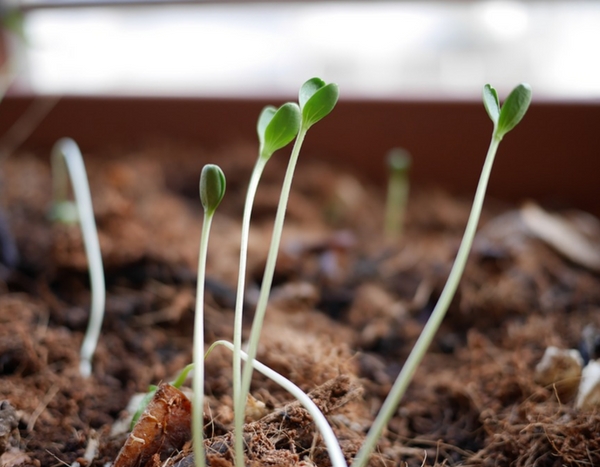
Sow the seeds of 'Purple Queen' corncockle from March to May directly in open ground or in pots, trays, without covering the seeds (light is beneficial for their germination). Maintain at a temperature of 18°C.
Transplant into open ground as soon as the young plants are manageable. Sowing can be done directly in situ once all risk of frost has passed. Sow broadcast, quite thinly, and thin out every 20 to 25 cm. Sowing spacing: 25 to 30 cm between young plants. Recommended minimum sowing temperature: 18°C to 20°C.
You can also sow at the end of summer in not too cold regions, in September, for flowering the following year, at 16°/21°C.
Prick out into pots, followed by planting in situ at 30 cm distance between each young plant.
Cultivation:
Corncockle is an undemanding plant, which adapts to any ordinary soil, preferably fertile and well-drained. It should be sown in situ, in a very sunny position. In poor, dry soil, it will certainly be smaller, but it will still manage to flower abundantly.
Sowing period
Intended location
Planting & care advice
-

-
-
-
-

-
-
-
This item has not been reviewed yet - be the first to leave a review about it.
Recently viewed products
Haven't found what you were looking for?
Hardiness is the lowest winter temperature a plant can endure without suffering serious damage or even dying. However, hardiness is affected by location (a sheltered area, such as a patio), protection (winter cover) and soil type (hardiness is improved by well-drained soil).

The flowering period indicated on our website applies to countries and regions located in USDA zone 8 (France, the United Kingdom, Ireland, the Netherlands, etc.)
It will vary according to where you live:- In zones 9 to 10 (Italy, Spain, Greece, etc.), flowering will occur about 2 to 4 weeks earlier.
- In zones 6 to 7 (Germany, Poland, Slovenia, and lower mountainous regions), flowering will be delayed by 2 to 3 weeks.
- In zone 5 (Central Europe, Scandinavia), blooming will be delayed by 3 to 5 weeks.
In temperate climates, pruning of spring-flowering shrubs (forsythia, spireas, etc.) should be done just after flowering.
Pruning of summer-flowering shrubs (Indian Lilac, Perovskia, etc.) can be done in winter or spring.
In cold regions as well as with frost-sensitive plants, avoid pruning too early when severe frosts may still occur.
The planting period indicated on our website applies to countries and regions located in USDA zone 8 (France, United Kingdom, Ireland, Netherlands).
It will vary according to where you live:
- In Mediterranean zones (Marseille, Madrid, Milan, etc.), autumn and winter are the best planting periods.
- In continental zones (Strasbourg, Munich, Vienna, etc.), delay planting by 2 to 3 weeks in spring and bring it forward by 2 to 4 weeks in autumn.
- In mountainous regions (the Alps, Pyrenees, Carpathians, etc.), it is best to plant in late spring (May-June) or late summer (August-September).
The harvesting period indicated on our website applies to countries and regions in USDA zone 8 (France, England, Ireland, the Netherlands).
In colder areas (Scandinavia, Poland, Austria...) fruit and vegetable harvests are likely to be delayed by 3-4 weeks.
In warmer areas (Italy, Spain, Greece, etc.), harvesting will probably take place earlier, depending on weather conditions.
The sowing periods indicated on our website apply to countries and regions within USDA Zone 8 (France, UK, Ireland, Netherlands).
In colder areas (Scandinavia, Poland, Austria...), delay any outdoor sowing by 3-4 weeks, or sow under glass.
In warmer climes (Italy, Spain, Greece, etc.), bring outdoor sowing forward by a few weeks.
Shipping country and language
Your country of residence may be:
Your country of residence is:
For a better user experience on our website, you can select:
Your shipping country:
-
 Austria
-
 Belgium
-
 Bosnia & Herzegovina
-
 Bulgaria
-
 Croatia
-
 Cyprus
-
 Czechia
-
 Denmark
-
 Estonia
-
 Finland
-
 France
-
 Germany
-
 Greece
-
 Hungary
-
 Iceland
-
 Ireland
-
 Italy
Italy
-
 Latvia
-
 Liechtenstein
-
 Lithuania
-
 Luxembourg
-
 Malta
Malta
-
 Netherlands
-
 Poland
-
 Portugal
-
 Romania
-
 Serbia
-
 Slovakia
-
 Slovenia
-
 Spain
Spain
-
 Sweden
-
 Switzerland
Language:
-
French
-
 English
-
Spanish
-
Italian
-
German
-
Portuguese
-
Dutch
-
Finnish
My Account
Hello
My wish lists
My cart
Log in / Register
Existing customer?
This form is protected by reCAPTCHA - the Google Privacy Policy and Terms of Service apply.
New customer?
Create an account to track your orders, access our customer service and, if you wish, make the most of our upcoming offers.