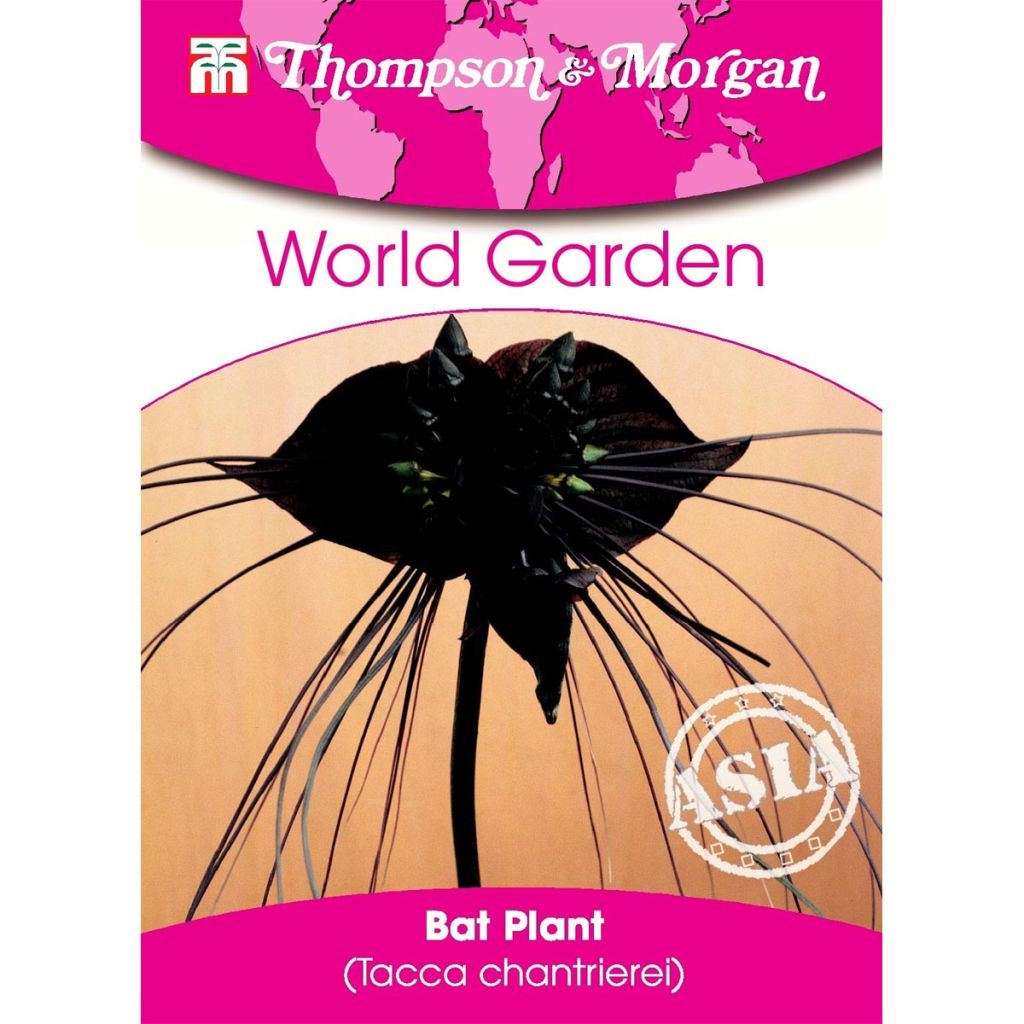
Tacca chantrieri Seeds - Bat plant
Tacca chantrieri Seeds - Bat plant
Tacca chantrieri
Bat flower, Devil flower
Everything is fine, nothing to complain about, fully satisfied, as usual!
Sery G., 02/06/2018
Back-to-school special offer!
Get €10 off for every €50 you spend! And get up to €40 off on a single order.
How does it work?
1. Shop your favourites
Add your favourite plants to your basket. For every €50 you spend (excluding delivery charges, store credit and the plastic-free option), you’ll receive a €10 voucher.
€50 spent = €10 voucher
€100 spent = €20 voucher
€150 spent = €30 voucher
€200 spent = €40 voucher
2. Place your order
Once your basket reaches one of the spending thresholds, place your order. You can even choose your delivery date!
3. Receive your voucher
As soon as your order has been shipped, you’ll receive an email containing your personal voucher code and its value.
4. Use it on your next order
Your voucher is valid for 90 days from the date you receive it. It can be used once only, on a new order worth at least the value of the voucher, excluding delivery charges.
Please note: Vouchers can be combined with other offers, but cannot be split or refunded.
Why not try an alternative variety in stock?
View all →
Available in 1 sizes

Available in 1 sizes
Available in 1 sizes
Available in 1 sizes
Available in 1 sizes
Available in 1 sizes
Available in 1 sizes

Available in 1 sizes
Available in 2 sizes
Available in 2 sizes
This plant carries a 6 months recovery warranty
More information
We guarantee the quality of our plants for a full growing cycle, and will replace at our expense any plant that fails to recover under normal climatic and planting conditions.
Would this plant suit my garden?
Set up your Plantfit profile →
Description
Tacca chantrieri, also called Bat plant, produces a strange but fascinating, mysterious-looking inflorescence of a very sombre hue of brownish-purple. It spreads out its bracts like a bat in flight, revealing under its 'wings' a bouquet of small, drooping flowers accompanied by a cluster of long filaments that gracefully hang down. The bloom is carried by a stem emerging from a basal clump of elegant, elongated, shiny green foliage. Native to the tropical regions of Asia, this tender plant should be grown in a hot, humid greenhouse, in a bright place without direct sunlight.
Tacca chantrieri belongs to the Taccaceae family which is composed of the single genus Tacca. It is a rhizomatous perennial species native to Thailand, Burma (in Myanmar) and regions close to China, and is naturalized and grown in many parts of tropical Asia. In the wild, they are found growing in forests, valleys, along rivers, from 200 m to 1300 m altitude, on acid, humus-rich soil. In ideal growing conditions, it reaches 40 to 50 cm in height (foliage) and then 75 to 90 cm when in bloom.
The plant grows from thick rhizomes. It forms a clump of basal leaves borne on petioles that measure 10 to 30 cm long, and are made up of simple, oblong leaf blades measuring 20 to 50 cm (sometimes 60 cm) long and 7 cm wide. The leaves resemble those of Spathiphyllums. They are glabrous or pubescent, cuneate and feature pointed tips. The foliage is bright green, shiny and are deeply veined. In our climates, they bloom from June to August, then sporadically until December. Only plants that are 2 or 3 years old produce inflorescences. The 'Nivea' variety is a rare form of Tacca integrifolia. This 'batflower plant' owes its name to its very peculiar inflorescence whose shape and colour is reminiscent of this small mammal. The flowers are purplish black, formed of 5 petals and are grouped in clusters (of up to 25 flowers) at the centre of four purplish-brown bracts, two of which are placed in an outward facing position and are particularly developed. Each flower stem produces long, purplish black filaments, measuring 25 cm long, that look like the tails of shooting stars. The fruits are berries that contain many small, kidney-shaped seeds.
Bat flower is a plant for the more experienced gardener and is a curiosity to be closely admired, protected from the cold and scorching sun in a heated greenhouse or conservatory without direct sunlight. It is adorned with beautiful foliage and has one of the most interesting flowers in the plant realm. As such, it is bound to fascinate and hold the interest of the beholder. However, it is sometimes capricious and demanding in terms of growing conditions. When its environment is well suited, this plant grows well, blooms plentifully and even produces baby bat flowers. When a key element is missing, it slowly tires itself out and eventually disappears. Unfortunately, the only way to find out whether you can provide it with good growing conditions is to try growing it. Keep in mind that this plant originates from the hot and humid tropical zones of Asia, and that it undergoes a period of drought during its resting period, which corresponds to the winter season in our latitudes.
Report an error about the product description
Flowering
Foliage
Plant habit
Botanical data
Tacca
chantrieri
Taccaceae
Bat flower, Devil flower
Southeast Asia
Planting and care
Sow Tacca seeds as soon as you receive them.
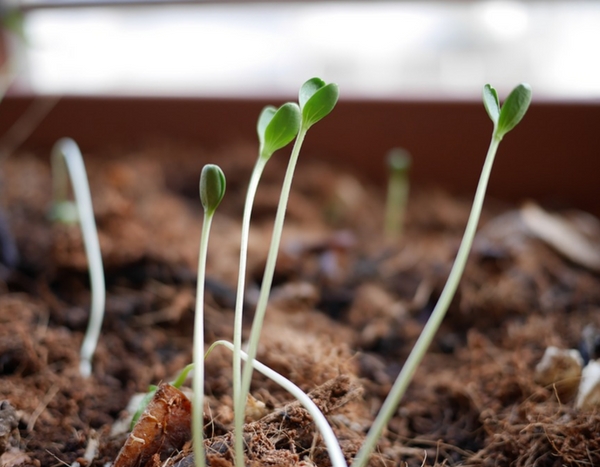
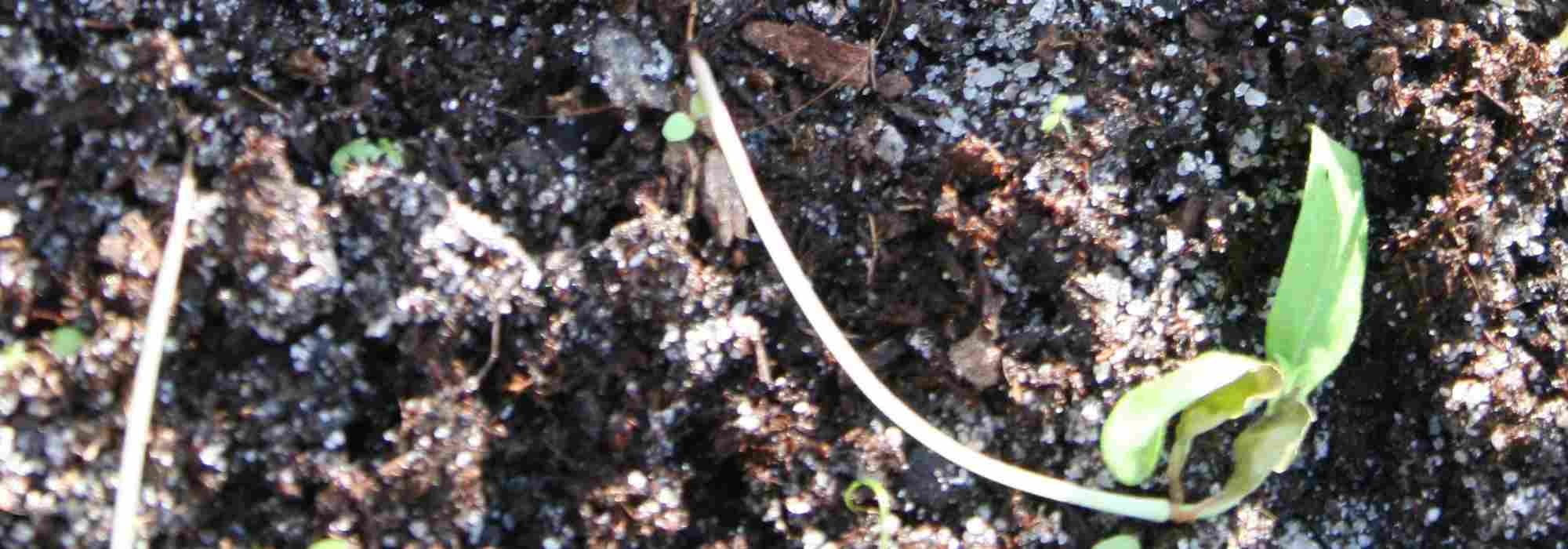
Soak Tacca integrifolia Nivea seeds for 24 hours in warm to hot water. Use a thermos to maintain water temperature. Sow at a depth of 1.5 mm in trays, pots, etc. using a moist, good quality, special seed starting mix, and place in a propagator or a warm place in order to keep at an optimal temperature of 27-30 °C. It is essential that the soil temperature remains warm and constant. You can use containers equipped with clear plastic domes (with a microwave effect), or you can seal in a plastic bag. Place the pots or trays on a heat mat to heat the bottom of the containers. Germination usually takes 1 to 9 months, so be patient, do not throw away your seedlings thinking they will not germinate.
Transplant seedlings when they are large enough to handled, into 7.5 cm pots in a well-drained mixture, preferably a peat-based medium or peat-rich compost. During the growing season (spring to late summer) the plants will need to be watered very regularly and the soil should be well drained and regularly fertilized with a fertilizer for acid-loving plants. Prick out in a 10 cm pot and then in a 20 cm pot. Reduce watering significantly in winter. Keep the plants at a temperature of 15-18 °C in the winter and 25-29 °C in summer.
These plants require a peat soil, a bright shaded position and a humid atmosphere.
In order to comprehend what the ideal growing conditions for the Bat Flower are, it helps to know more about the climate of its country of origin:
Myanmar has three seasons: a temperate season from October to February with average temperatures between 20 and 24 degrees, a hot season from March to May with temperatures between 30 and 35 degrees and finally a rainy season from June to September with temperatures between 25 and 30 degrees.
Sowing period
Intended location
Planting & care advice
-
-
-
-
-
-

-

-

-
, onOrder confirmed
Reply from on Promesse de fleurs
Recently viewed products
Haven't found what you were looking for?
Hardiness is the lowest winter temperature a plant can endure without suffering serious damage or even dying. However, hardiness is affected by location (a sheltered area, such as a patio), protection (winter cover) and soil type (hardiness is improved by well-drained soil).

The flowering period indicated on our website applies to countries and regions located in USDA zone 8 (France, the United Kingdom, Ireland, the Netherlands, etc.)
It will vary according to where you live:- In zones 9 to 10 (Italy, Spain, Greece, etc.), flowering will occur about 2 to 4 weeks earlier.
- In zones 6 to 7 (Germany, Poland, Slovenia, and lower mountainous regions), flowering will be delayed by 2 to 3 weeks.
- In zone 5 (Central Europe, Scandinavia), blooming will be delayed by 3 to 5 weeks.
In temperate climates, pruning of spring-flowering shrubs (forsythia, spireas, etc.) should be done just after flowering.
Pruning of summer-flowering shrubs (Indian Lilac, Perovskia, etc.) can be done in winter or spring.
In cold regions as well as with frost-sensitive plants, avoid pruning too early when severe frosts may still occur.
The planting period indicated on our website applies to countries and regions located in USDA zone 8 (France, United Kingdom, Ireland, Netherlands).
It will vary according to where you live:
- In Mediterranean zones (Marseille, Madrid, Milan, etc.), autumn and winter are the best planting periods.
- In continental zones (Strasbourg, Munich, Vienna, etc.), delay planting by 2 to 3 weeks in spring and bring it forward by 2 to 4 weeks in autumn.
- In mountainous regions (the Alps, Pyrenees, Carpathians, etc.), it is best to plant in late spring (May-June) or late summer (August-September).
The harvesting period indicated on our website applies to countries and regions in USDA zone 8 (France, England, Ireland, the Netherlands).
In colder areas (Scandinavia, Poland, Austria...) fruit and vegetable harvests are likely to be delayed by 3-4 weeks.
In warmer areas (Italy, Spain, Greece, etc.), harvesting will probably take place earlier, depending on weather conditions.
The sowing periods indicated on our website apply to countries and regions within USDA Zone 8 (France, UK, Ireland, Netherlands).
In colder areas (Scandinavia, Poland, Austria...), delay any outdoor sowing by 3-4 weeks, or sow under glass.
In warmer climes (Italy, Spain, Greece, etc.), bring outdoor sowing forward by a few weeks.
Shipping country and language
Your country of residence may be:
Your country of residence is:
For a better user experience on our website, you can select:
Your shipping country:
-
 Austria
-
 Belgium
-
 Bosnia & Herzegovina
-
 Bulgaria
-
 Croatia
-
 Cyprus
-
 Czechia
-
 Denmark
-
 Estonia
-
 Finland
-
 France
-
 Germany
-
 Greece
-
 Hungary
-
 Iceland
-
 Ireland
-
 Italy
Italy
-
 Latvia
-
 Liechtenstein
-
 Lithuania
-
 Luxembourg
-
 Malta
Malta
-
 Netherlands
-
 Poland
-
 Portugal
-
 Romania
-
 Serbia
-
 Slovakia
-
 Slovenia
-
 Spain
Spain
-
 Sweden
-
 Switzerland
Language:
-
French
-
 English
-
Spanish
-
Italian
-
German
-
Portuguese
-
Dutch
-
Finnish
My Account
Hello
My wish lists
My cart
Log in / Register
Existing customer?
This form is protected by reCAPTCHA - the Google Privacy Policy and Terms of Service apply.
New customer?
Create an account to track your orders, access our customer service and, if you wish, make the most of our upcoming offers.