





























10 plants to protect in winter
The least hardy plants, to be protected from the cold
Contents
Unless you live in a region with a very mild climate (such as the Mediterranean coast or the Atlantic coastline, where the risk of frost is low), if you are growing non-hardy plants in your garden, you will need to protect them from the cold in winter. This includes, for example, banana plants, certain palms, citrus trees, cordylines, and pelargoniums. These are generally exotic plants, valued for their lush foliage or exuberant flowering. They originate from regions of the world with a warm climate (South Africa, Central America, etc.), which explains why they are poorly suited to remain outdoors all year round in our latitudes. Depending on the species, you can either bring them indoors, winter them in a frost-free greenhouse, or simply cover them with fleece. Discover which plants need winter protection!

Agapanthus
Although native to South Africa, the hardiness of agapanthus varies significantly depending on the species. The evergreen species are the most tender: generally, they are sensitive to temperatures around –5 °C. The deciduous species, on the other hand, are much more resistant to cold (down to –15 °C, or even –18 °C), as they grow in higher altitudes in the wild. These two groups of agapanthus can be distinguished by their foliage: the leaves of deciduous agapanthus are much finer than those of evergreen agapanthus. Some examples of agapanthus to protect in winter include: Agapanthus africanus (A. umbellatus), Agapanthus ‘Full Moon’, ‘Back in Black’, ‘Polar Ice’…
Therefore, if you are growing evergreen agapanthus, we recommend planting them in pots and bringing them indoors as soon as the first frosts occur, placing them in a bright, unheated room. Also, reduce watering during winter. You can take them outside again in spring.
Discover our advice sheet: “How to protect Agapanthus for winter?”
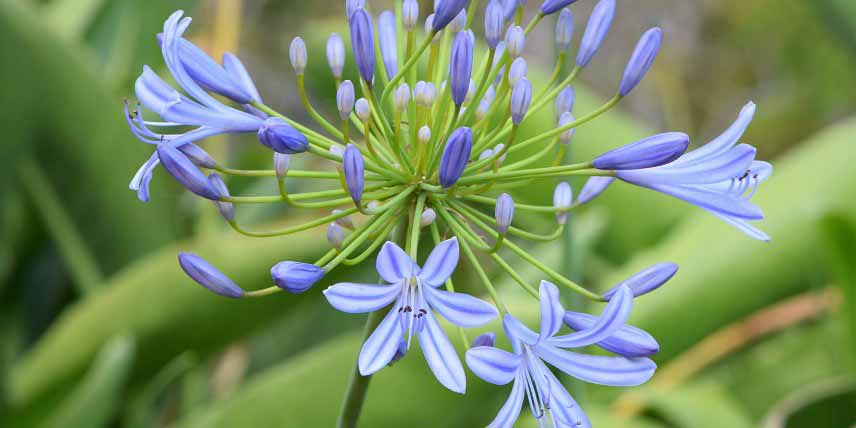
The African Agapanthus, Agapanthus africanus (photo: Krzysztof Ziarnek)
The banana plant
The banana tree is a tropical plant primarily originating from the warm and humid regions of Southeast Asia, which explains its sensitivity to cold. Its lush foliage is appreciated for bringing an immediately exotic style to the garden! While the Japanese banana tree Musa basjoo withstands cold fairly well (down to –12 / -15 °C), this is not the case for other species, such as the stunning Abyssinian banana tree (Ensete ventricosum), which is distinguished by its purplish leaves, or the pink-flowered banana tree Musa velutina. They tolerate brief frosts of around –5 °C. If you are growing one of these banana trees, we recommend planting it in a large pot, to be brought indoors for the winter. In a mild climate, or if you are cultivating a more hardy banana tree, a simple fleece may suffice.
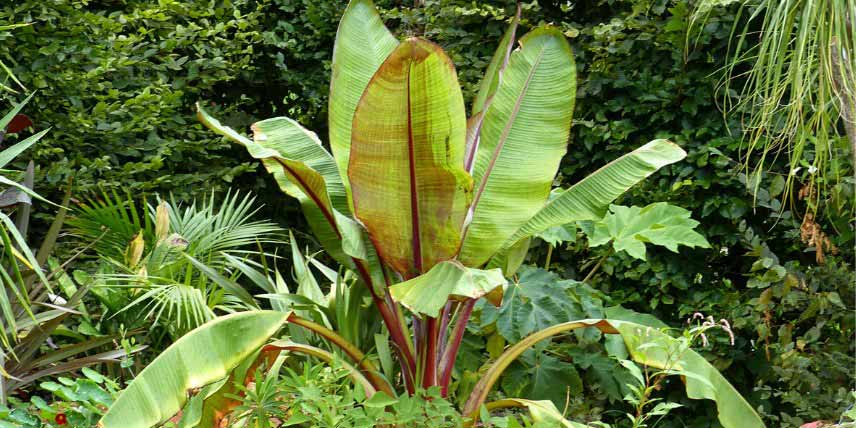
The red banana tree Ensete ventricosum ‘Maurellii’
Discover other Exotic shrubs
View all →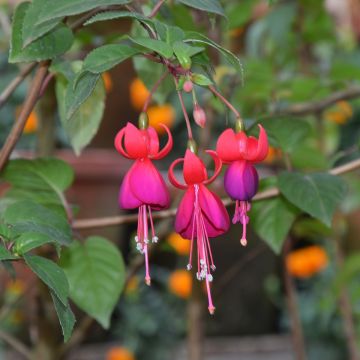
Available in 1 sizes
Available in 1 sizes

Available in 2 sizes
Available in 0 sizes
Available in 1 sizes
Available in 1 sizes
Available in 1 sizes
Available in 1 sizes

Available in 1 sizes
Available in 1 sizes
Canna
Canna or Indian Shot is a stunning rhizomatous plant with a tropical style! It features large leaves reminiscent of banana plants, sometimes beautifully coloured, and offers bright, warm flowers in summer: yellow, orange, red… It is a tender plant, sensitive to temperatures dropping between 0 °C and – 5 °C, depending on the species. However, some are a bit more resilient: Canna indica, for example, is hardy down to – 15 °C.
To protect them from the cold, we recommend digging up the cannas in autumn (October-November), before the first frosts. Cut the foliage to 10 cm above the stump, then dig up the rhizomes using a fork. Place them in a box filled with sand, which you should keep in a dry, airy place, sheltered from frost. You can replant them in spring, as soon as there is no longer a risk of frost.
If your Cannas are grown in pots, simply bring the pot into a greenhouse or conservatory.
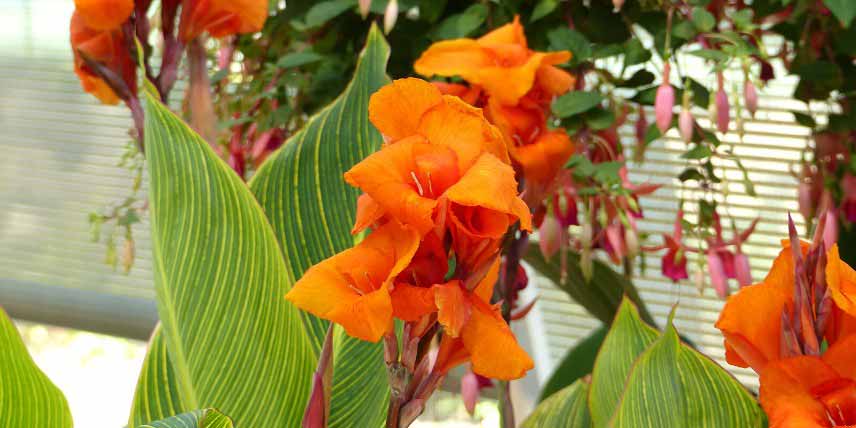
Canna ‘Striata’
Cordyline
Cordyline is a stunning plant resembling a palm with a graphic silhouette, native to Southeast Asia, Australia, New Zealand, and the Pacific. Over time, it develops a single, upright trunk that may eventually branch out, topped with a tuft of long, slender leaves in various colours: they can be green, striated with yellow, pink, red, or bronze… It is sensitive to temperatures below –5 °C / –8 °C.
If you are growing Cordyline in a pot, simply bring it indoors at the first signs of cold to a conservatory, greenhouse, or a bright, unheated room. Also, remember to reduce watering during this wintering period. If your Cordyline is in the ground, we recommend placing a thick layer of mulch at its base and wrapping the aerial parts in fleece.
To learn more, check our advice sheet: “Wintering Cordyline”
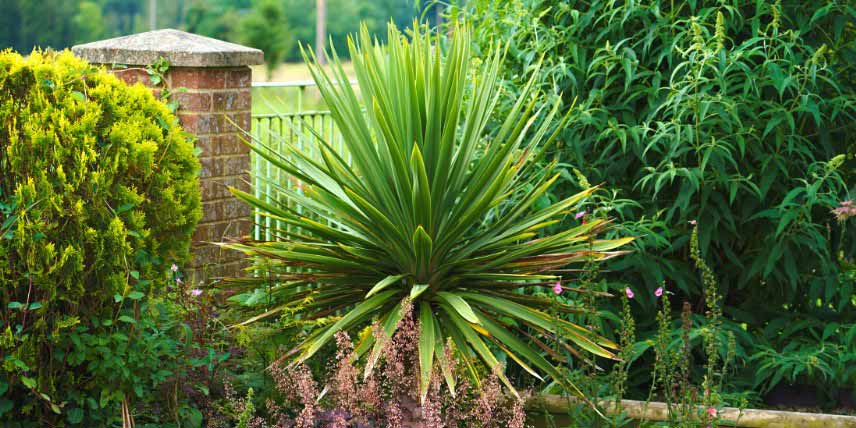
Cordyline australis
The olive tree
An iconic tree of Mediterranean landscapes, the olive tree is valued for its superb nodose trunk, its grey-green foliage, and the olives it produces. It requires a sunny location sheltered from cold winds, as well as well-drained soil, as it is sensitive to excess moisture. Once well established, it can withstand short periods of frost down to -10 °C.
If you live in a cold region and are growing it in a pot, we recommend bringing it indoors from October and placing it back outside in spring. Position it in a greenhouse or a lightly heated conservatory. If it is in the ground, wrap it in fleece. Keep in mind that young olive trees are more sensitive to cold than mature, well-established specimens.
Feel free to consult our article : “Protecting Mediterranean shrubs in winter”
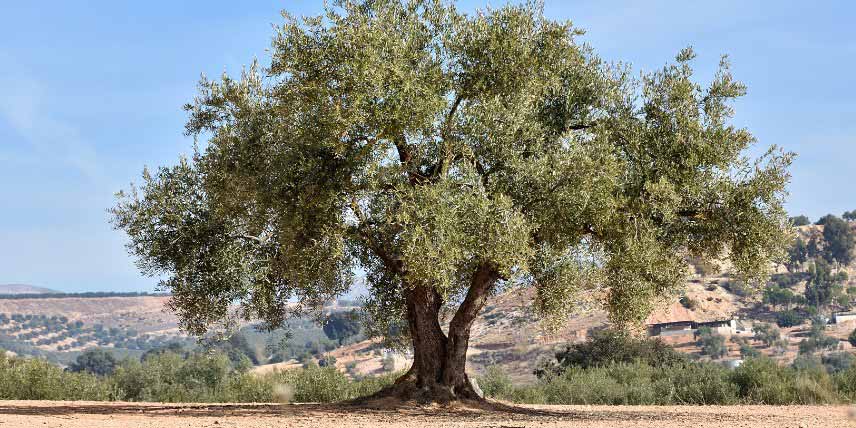
The Olive tree, Olea europaea
Pelargonium
Pelargoniums, also known as “balcony geraniums”, are plants native to South Africa, valued for their long and generous flowering, often in vibrant colours: red, bright pink, white, mauve… They have fragrant foliage that deters mosquitoes. These include ivy-leaved and zonal geraniums, unlike hardy geraniums which are perennial. They are typically planted in hanging baskets or window boxes to enhance balconies, window sills, and terraces. Although they are perennial plants, they are usually grown as annuals because they are frost-sensitive… However, as they are small plants grown in pots or containers, it is very easy to bring them indoors for the winter to preserve them from one year to the next! In autumn, before the first frosts, move them to a greenhouse, conservatory, or a bright, unheated room. They can continue to flower throughout the winter if kept at a temperature of 7 to 10 °C. Also, limit watering: once a month should suffice. You can take them outside again in spring.
Discover our guide: “Successful overwintering of Pelargoniums”
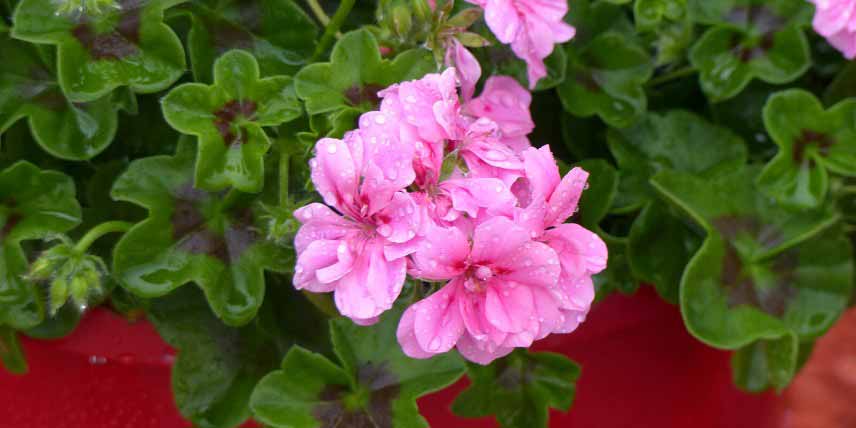
Ivy-leaved geranium Pelargonium peltatum ‘Big 5 Light Pink Soft’
Tree ferns
Tree ferns, Dicksonia and Cyathea, are majestic plants forming an upright, fibrous, dark stipe, at the top of which unfolds a crown of large, finely divided fronds. Their silhouette resembles that of palms, but with much finer and more luxuriant foliage. The fronds can measure up to 2-3 m long. These are tender plants, although the hardiest can withstand temperatures down to –7 °C (Dicksonia antarctica, D. fibrosa…), and even down to –10 °C for Cyathea australis. They are primarily native to Tasmania, New Zealand, and Australia.
If you are growing a tree fern in a pot, we recommend bringing it indoors for the winter into a conservatory, greenhouse, or a bright, unheated room. If it is in the ground, we advise placing straw or dead leaves on top of the stipe, then lifting and tying the fronds all around. The idea is to protect the top of the stipe and the terminal buds. Then wrap everything in fleece, and cover the soil with a thick layer of mulch.
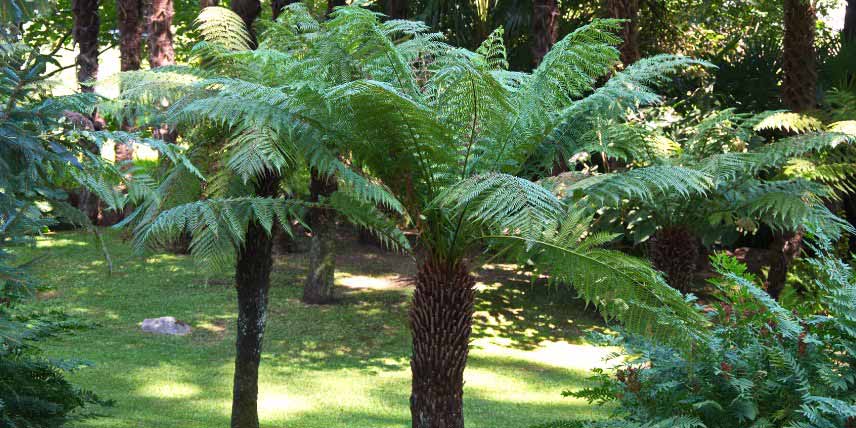
The tree fern Dicksonia antarctica (photo: Stefano)
Palms
Palms are the ideal plants to bring a touch of exoticism to the garden! Their silhouette evokes holidays by the sea, travel, and the tropics. They form a beautiful, upright stipe, very straight, with a crown of large palmate or pinnate leaves at the top. The hardiness of palms varies greatly: some are quite resistant to cold (for example, Rhapidophyllum histrix can withstand temperatures as low as -20 / -25 °C, and Trachycarpus fortunei tolerates down to -18 °C), but most are tender, as they mainly originate from regions with tropical, subtropical, or Mediterranean climates.
To protect your palm in winter, make sure to research the species you are growing and its hardiness, and keep in mind that young palms are more tender than mature ones. Some will only require a simple winter cover, while others will need to be grown in pots and brought indoors for the winter, in a greenhouse, conservatory, or bright room.
For more information, feel free to check our article “Palm: how to protect it in winter?”
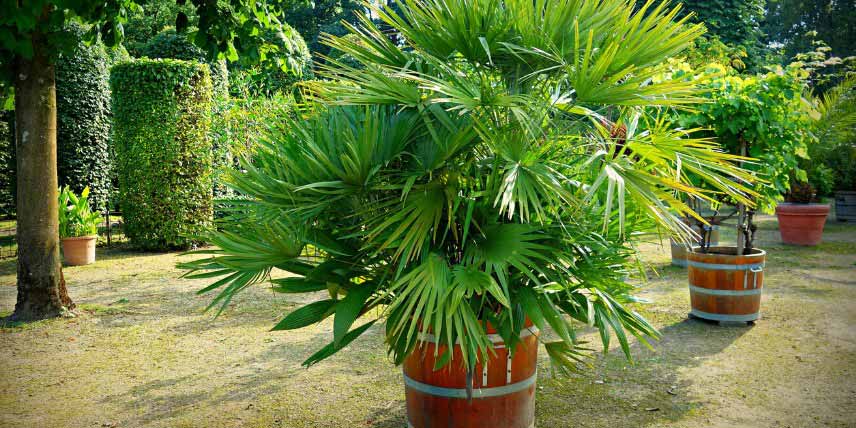
The palm Chamaerops humilis
Citrus trees
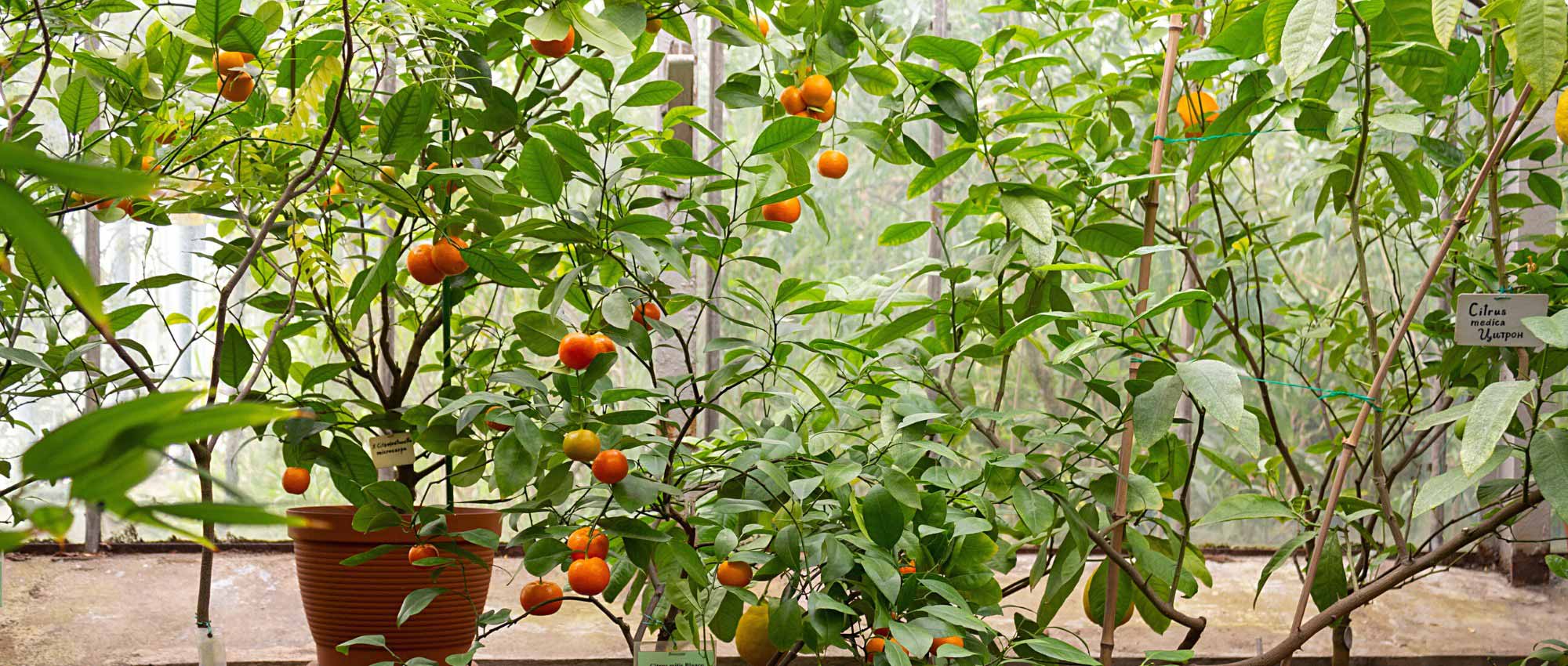
Citrus trees are valued for their tangy and juicy fruits, rich in vitamin C. They form bushes with simple, glossy leaves, usually evergreen, and bear fragrant white flowers, followed by highly aromatic and fragrant fruits: lemons, oranges, clementines, grapefruits, kumquats… Generally not hardy, citrus trees do not tolerate temperatures below -5 °C. While they can be planted in the ground in Mediterranean regions, in other areas, they should be grown in a large pot to easily bring them indoors for the winter. Ideally, they should be placed in a conservatory, an unheated greenhouse, or any other frost-free but bright and relatively cool shelter. The ideal temperature is between 8 and 10 °C.
Discover our dedicated sheet: “Overwintering orange trees, lemon trees, and other citrus trees”
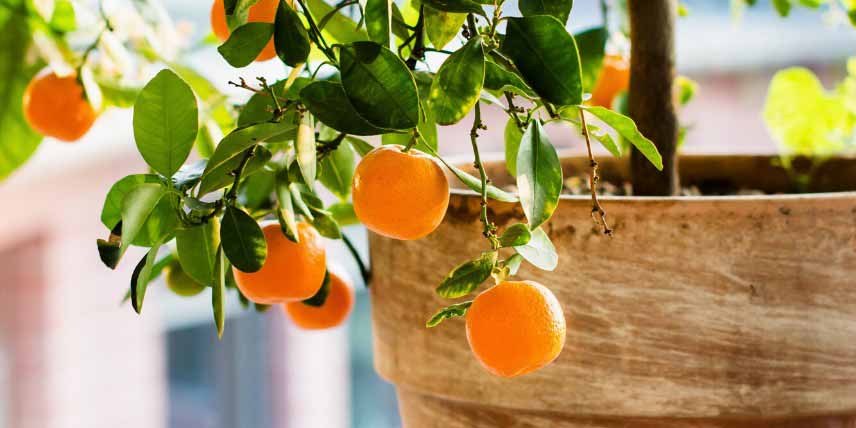
A potted orange tree, Citrus sinensis
Fuchsias
Fuchsias offer a beautiful and long summer flowering, in the form of trailing bell-shaped flowers that are often bicoloured, available in various shades: red, pink, purple, white… The flowers are slender and elongated, with the stamens protruding from the tube of the corolla. Some varieties feature double flowers, with multiple rows of petals forming a sort of frill. Mainly originating from Central and South America, most fuchsias are tender, although some are notable for their cold resistance (Fuchsia magellanica…). The trailing varieties are very decorative when hung.
As fuchsias are often grown in pots to enhance a terrace or windowsill, it is easy to bring them indoors for the winter. In October, prune the stems to about one-third of their length, then move the pot into a greenhouse, conservatory, or a bright, unheated room. The ideal temperature is between 5 °C and 8 °C. You can take them out again in spring, as soon as there is no longer a risk of frost.
For more information, feel free to consult our dedicated sheet “Fuchsia: how to overwinter it?”
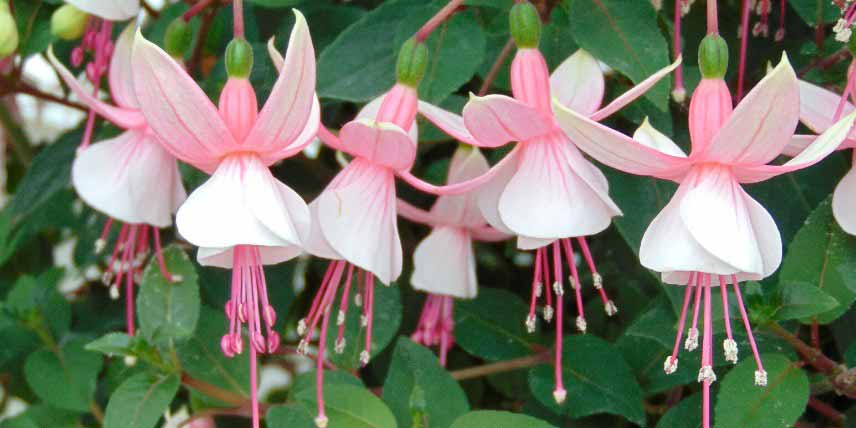
Fuchsia ‘Elma Hendricks’
- Subscribe!
- Contents
Comments