





























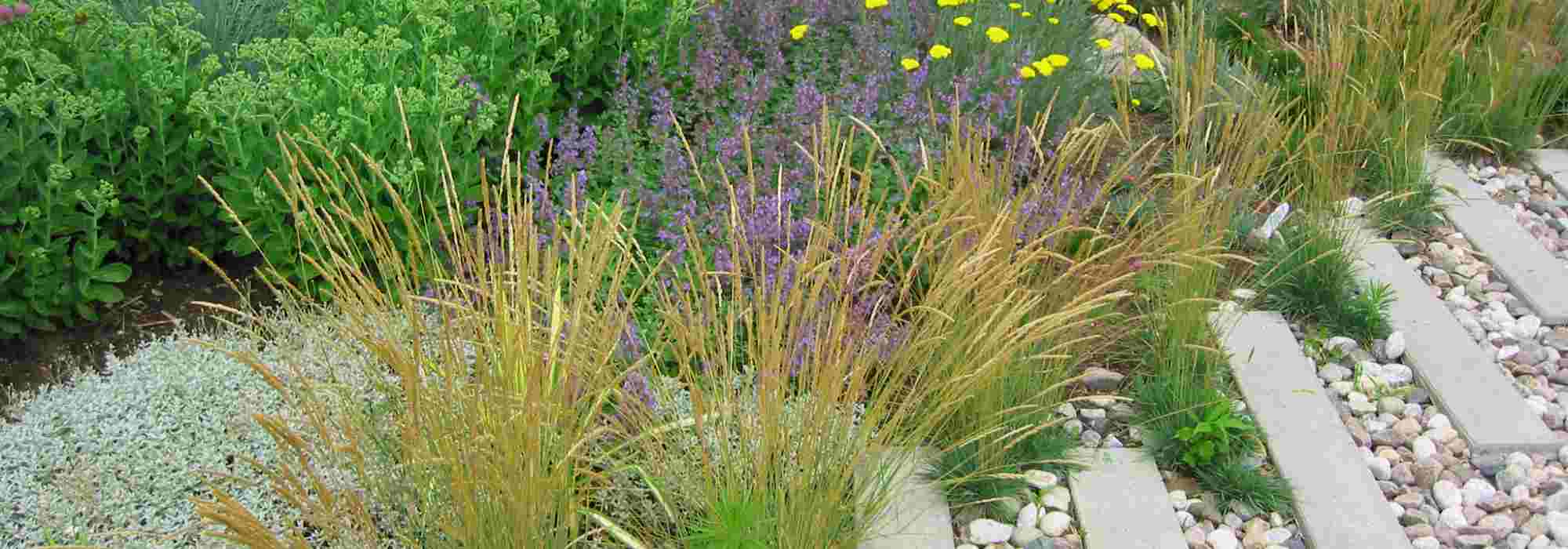
15 pioneer plants for a garden better able to cope with climate fluctuations
Plant species that colonise degraded ecosystems
Contents
A resilient garden is a garden that can overcome the traumas nature is now facing. It is talked about more and more, because our outdoor spaces are regularly subjected to recurring events that weaken them: climate change with repeated episodes of heatwaves or devastating rainfall, the spread of invasive species, the occurrence of destructive fires, or soil pollution.
To meet these challenges and repair the damaged ecosystems, pioneer young plants prove their worth.
What are they and how should they be used? A tour of the garden is in order!

The importance of pioneer plants
We use the term pioneer plant to describe wild, native plants to a given environment that are the first to colonise, before all others, a space that has become hostile or sterile after a natural disaster (a wildfire, a flood, etc.). They therefore have robust characteristics and are able to grow on soil that is often bare, poor and apparently destroyed. But above all, they prepare the ground, so to speak, for the establishment of a more specific flora, as they gradually modify the litter layer with their organic matter, and ultimately allow strata of increasing size, such as trees, to thrive.
More generally, in gardening jargon, pioneer species are commonly used to refer to very hardy and robust species that will be able to cope with climate change. Gorse and birch are species that are, for example, often and rightly described as pioneer species.
→ Learn more in our feature Spotlight on pioneer plants, valuable for biodiversity.
Which pioneer plants should you choose for a resilient garden?
As humans cope with crises, some plants prove better at withstanding climatic extremes, thereby reducing the shock to soils by aiding their regeneration or restoration. In the face of record temperatures or rainfall, here are the ones we favour for our gardens, resilient in many regards:
Perennials
- Grasses: Many grasses thrive on poor soils, or conversely are not deterred by waterlogged substrates (Carex, Iris pseudoacorus.)
- Silene (Silene vulgaris): a wildflower with a typical swollen calyx, producing a small white and mauve bladder, and flowering from late spring to summer, well known as a pioneer plant. It tolerates poor and damaged soils. Perfect in a naturalistic or countryside garden, as it readily self-seeds. Noted for its nectariferous habit.
- Helichrysum (Helichrysum): like wormwood and rockrose, some immortelles are among the first perennials to grow on soils after a volcanic eruption in Europe, even before gorse. They have very fine, silvery foliage that allows them to withstand recurring heat. A well-drained soil is essential, ideally stony. Considered as undershrubs, their yellow flowering is nectariferous and polliniferous.
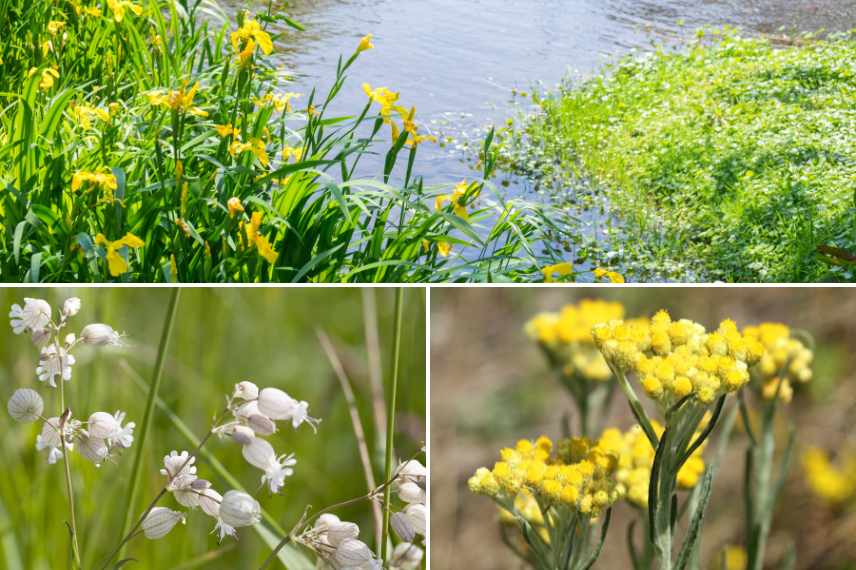
Iris pseudoacorus, Silene vulgaris and Helichrysum
Annuals
- Helianthus: Helianthus debilis, from the large Asteraceae family, is a tall annual reaching up to 2 m. This annual sunflower, entirely yellow with a dark heart, fears neither poor soils, nor drought, nor sandy or saline substrates. But other wild sunflowers exist among the some 80 species of Helianthus. Beware some of them can become invasive…
- The teasel (Dipascus fullonum and Dipascus sylvestris): The Dipascus is a biennial with a taproot. Itflowers in June–July, in mauve, then dries and remains for a long time, offering its tall stature (1–2 m) and its spiny heads that take on a brown colour. Its leaves retain water for birds, making it a plant useful for biodiversity, and it grows quickly. Use it in a wild meadow or along woodland margins, and close to the vegetable garden or fruit trees to benefit from its nectariferous and melliferous qualities. It needs sun. Pair it, for example, with mullein (Verbascum thapsus).
Shrubs
- Heather (Heathers): several are considered pioneer plants, including Erica australis (Spain’s heath) and the Callunas (such as Calluna vulgaris which improves soils). They love sun, bloom for long periods, and are very hardy. They can colonise poor and dilapidated soils, withstand strong winds, saline soils and drought.
- Hawthorn (aubépine): often used in hedges, the hawthorn (Crataegus monogyna) flourishes in late spring, showing its multitude of white and pink blossoms. It is perfect, too, in natural-style gardens where birds will feed on the red berries. It has a very long life and will outlive you and your descendants!
- Sea buckthorn (argousier) (Hippophae rhamnoides): its fine, silvery foliage and orange berries are assets for planting it in the garden. It is particularly drought-tolerant, adapts to mediocre soils, and tolerates saline soils. It pairs well with hawthorns and blackthorns in a defensive hedge, for example. Because of its suckers and nitrogen-fixing nodules on its roots, this shrub is valuable for recolonising and stabilising sandy or stony soils.
- Dog-rose (églantier) (Rosa canina): a pioneer wild rose; its simple bloom, with five pale pink petals and a centre of golden stamens, grows fairly tall (about 3–4 m) with a bushy habit. It is often planted in a natural hedge or in a border with light grasses. Its hips are prized by birds (and used to make jams). Hardy, vigorous, it thrives in poor soil and under various climates; it is the quintessential pioneer shrub in this group!
- Rockroses (cistes): a garrigue plant, the cistus blooms for a good month between April and June. It is one of the most charming pioneer plants for our resilient garden, as it resists successive droughts perfectly. Its flowers, even if crumpled-looking, range from white to purple. Its evergreen leaves, often velvety and greyish, are the key to enduring the sun. A heliophilous plant par excellence, it is also pyrophilous like the Cistus monspeliensis. They are finally polleniferous and melliferous.
- Red-osier dogwoods (Cornus sanguinea): these shrubs are as beautiful when in bloom and as leafy in summer and autumn as they are bare in winter, revealing their spectacular red stems! They are the very embodiment of a shrub completely indifferent to soil and capable of growing almost anywhere.
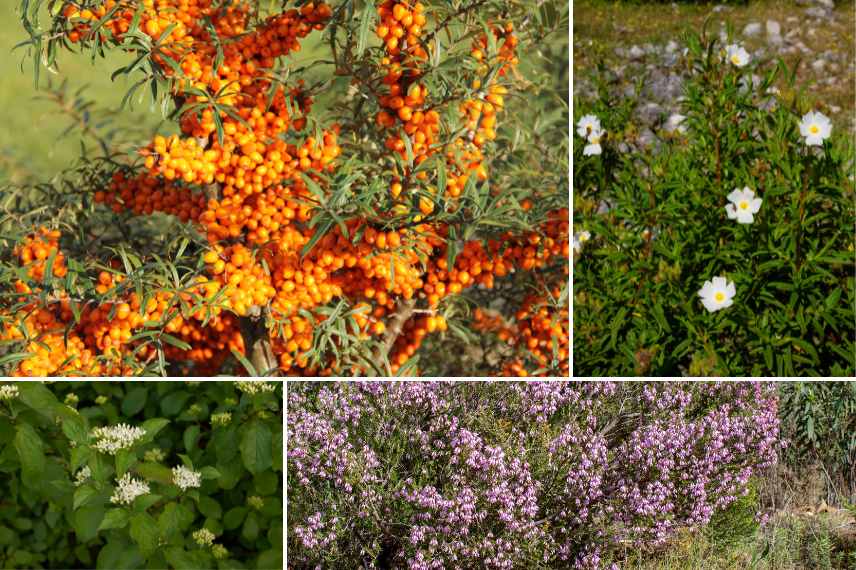
Argousier, Ciste de Montpellier, Cornus sanguinea and Spanish heathers
Trees
These with small, or very small leaves adapt better to warming climates (such as the Holm oak). Those with deep rooting can better access water. However, trees form the highest layer, requiring the most soil restoration. Among the most resilient:
- Birches (Betula sp.): We would group them with willows and poplars, other hygrophilous trees.
- Willows : willows, like birches, quickly colonise new spaces. The goat willow (Salix caprea), rather a large shrub, also interests us for its vigour and rapid growth, its yellow winter flowering in the form of charming catkins (male flowers), and its ability to invade soils in neglect and less moist than most willows.
- Alders (Alnus sp.): alders can develop and live on surfaces yet to be vegetated. They are therefore very useful for helping damaged ecosystems rebuild quickly. They are also useful for stabilising riverbanks and watercourses. Completely hardy, they adopt different shapes depending on the species.
- Pines (Pinus sp.): equally adaptable to coastal or mountainous environments, pines show great robustness and are regarded as pioneers for their capacity to recolonise damaged spaces. Native species are preferred, such as the Aleppo pine, Scots pine, maritime pine, etc.
And of course there are many others, including numerous Fabaceae family plants, nitrogen-fixers in the soil, such as bladder senna (Colutea arborescens) useful for restoring soils, American honeylocust (Gleditsia triacanthos), Lespedeza, etc.
→ Designers of the latest Chaumont-sur-Loire International Garden Festival have worked on the theme of the resilient garden, so vital for the future of our gardens. See my visit from last July in the blog, and in image and detail, all the gardens that took part in the 2023 edition of the Chaumont-sur-Loire International Garden Festival site.
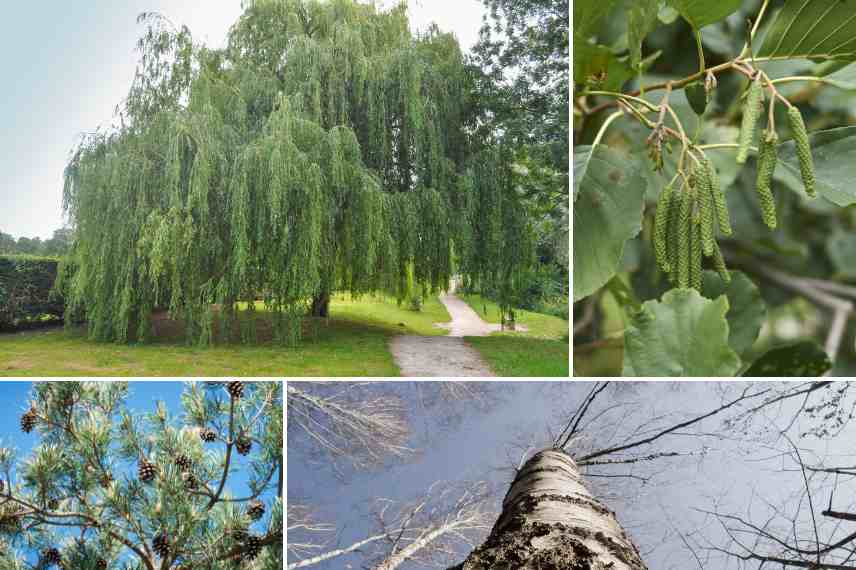
Weeping willow, glutinous alder, Scots pine and birch
What else can I do?
In addition to considering these pioneer and resilient plants, several actions can be taken:
- Observe the nature around you and see which local plants grow spontaneously in your area
- Use the vast palette of the plant world to play with the diversity of species
- Adopt zoning in your garden: watering zones closest to the house, and plants that can tolerate drought conditions further away in the garden
- Plant trees in the garden to provide sufficient shade in summer, and a natural cooling effect
- Let go of (bad) habits of over-watering or over-fertilising
- Give rain garden a try to better manage rainfall and run-off
- Promote the establishment of halophytes to cope with increasingly hot summers.
- Subscribe!
- Contents

Comments