





























5 cold hardy banana trees
A touch of exoticism for the northern regions
Contents
Discover the astonishing hardiness of cold-resistant banana plants or Musa and bring a tropical touch to your garden. In this article, we reveal the secrets of the different varieties of banana plants that defy the cold, their specific needs, and how to grow them successfully. An exotic paradise awaits you, even in our coldest latitudes. Get ready to transform your green space into a true tropical oasis all year round.
→ Discover our selection of the best varieties of banana plants or Musa for cool climates, from the hardiest to those to try with winter protection.

Musa basjoo: the most cold-resistant (-15°C)
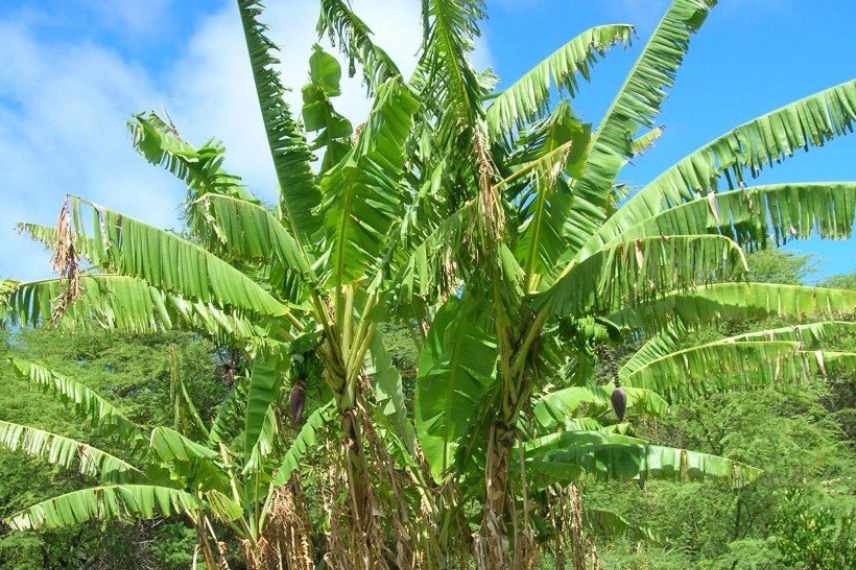
The Musa basjoo, also known as the Japanese banana, is an extremely hardy variety of banana plant that is widely appreciated for its ability to bring a tropical aesthetic to temperate and even cold climates.
Native to southern China and Japan, the Musa basjoo can withstand temperatures as low as -10°C to -15°C, and even lower with adequate protection (mulching) and well-drained soil.
Although it is capable of producing fruit, the Musa basjoo is primarily grown for its lush foliage and large green leaves that can reach several metres in length, instantly creating a tropical atmosphere in any space.
However, despite its cold hardiness, it is advisable to protect the stipe (trunk) of your Japanese banana with mulch or a winter cover. During the growing season, it will appreciate rich, well-drained soil and plenty of water, especially during dry spells. It also enjoys full sun but can tolerate partial shade.
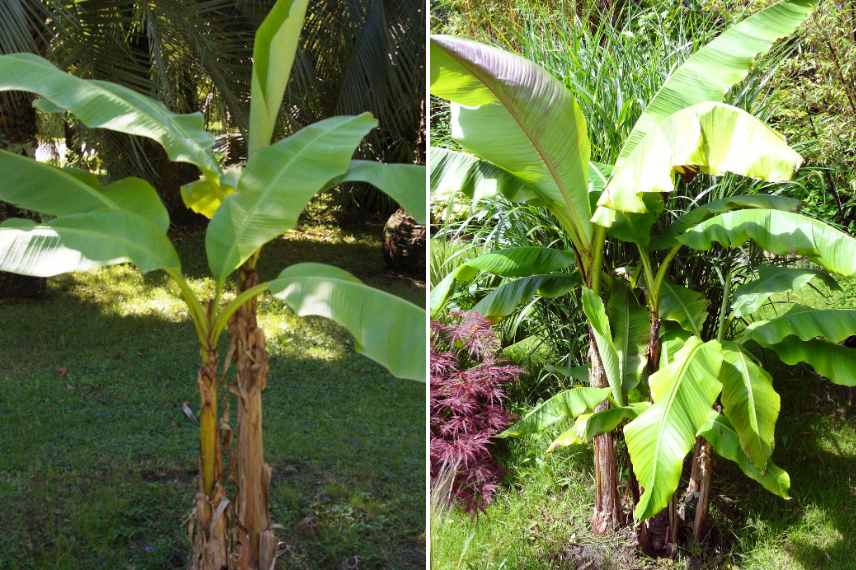
Good to know: varieties of the Japanese banana have been selected. This includes Musa basjoo ‘Sakhalin’, which is smaller than the typical species and even hardier (down to -16°C), found on Sakhalin Island in northern Russia; and Musa basjoo ‘Tchetchenia’, which is even more compact, hardier (down to -18°C), and more wind-resistant.
The Sikkim Banana or Musa sikkimensis (-12°C)
Sikkim Banana ‘Red Tiger’, also known by its botanical name Musa sikkimensis ‘Red Tiger’, is a variety of banana plant whose species originates from the Himalayan region of Sikkim, India, where temperatures can drop below zero. This variety is therefore quite capable of withstanding harsh winter conditions, able to endure temperatures down to -10°C and even -15°C if the base of the plant is well mulched and in well-drained soil.
The uniqueness of Musa sikkimensis ‘Red Tiger’ lies in its remarkable aesthetics! As its name suggests, the leaves of this variety feature a pattern of red and green stripes reminiscent of a tiger’s skin (though one must imagine a red and green tiger…). The leaves can reach up to 3 metres long, adding an impressive visual impact to any garden landscape.
Sikkim Banana ‘Red Tiger’ prefers well-drained soil rich in organic matter and enjoys a full sun location, although it tolerates light shade. While cold-resistant, it is advisable to protect the trunk during winter with mulch or a winter cover to ensure its survival.
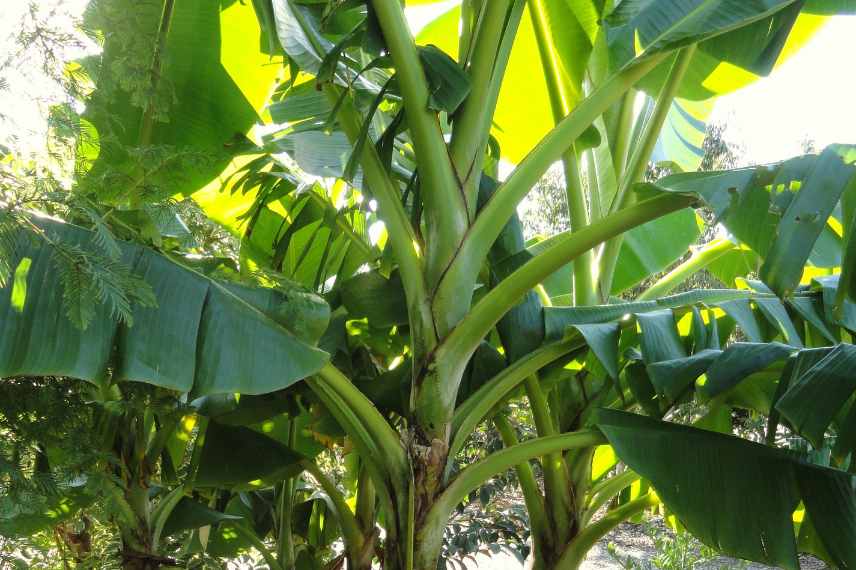
Musa sikkimensis
Dwarf banana or Musella lasiocarpa (-10°C)
The Musella lasiocarpa, commonly known as the dwarf banana, or Chinese banana, is a variety of banana plant particularly valued for its compact size and cold hardiness. This plant is a species related to more traditional banana plants and is distinguished by its smaller form and incredible flower.
Native to China, the Musella lasiocarpa is a robust plant capable of withstanding temperatures as low as -10°C, and even -15°C when the base is well protected. Its ability to survive in colder winter conditions than most other banana varieties makes it a popular choice for gardeners living in temperate climates.
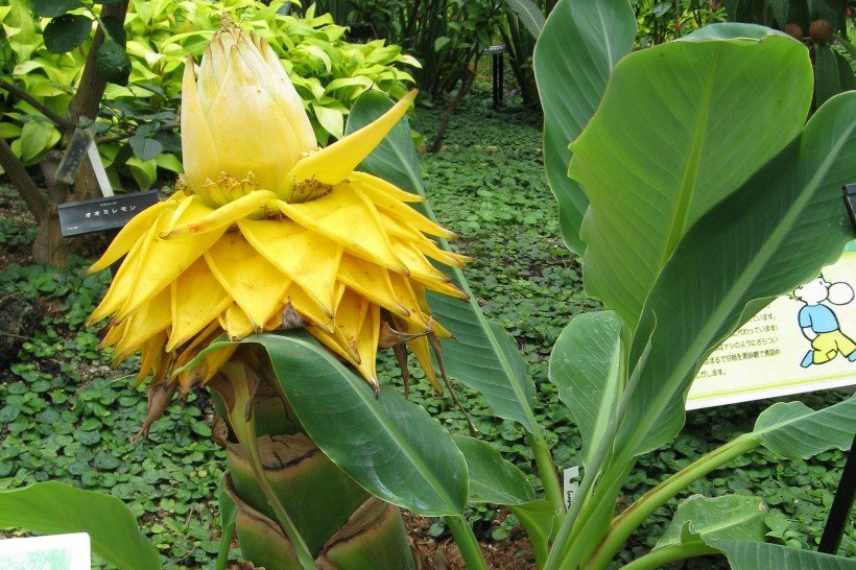
The dwarf banana is characterised by a height that generally does not exceed 1.5 metres, making it an ideal plant for small gardens or even for pot cultivation. However, what most attracts attention with this plant is undoubtedly its flower. The Musella lasiocarpa produces a large, spectacular yellow flower, resembling a lotus, which can last for several months.
In terms of care, the Musella lasiocarpa prefers well-drained, organic-rich soil. It also appreciates regular watering during the growing season and a position in full sun, although it also tolerates partial shade. To help it survive through winter, it is recommended to protect the base of the plant with mulch or a winter cover.
The Traveller's Banana or Musa itinerans (-8°C)
The Musa itinerans ‘Mekong Giant’, commonly known as the Traveller’s Banana, is a variety of banana plant that stands out for its large size and its ability to withstand relatively cold temperatures for a banana plant.
Native to the tropical forests of Southeast Asia, particularly along the Mekong River, from which it derives its name, the Traveller’s Banana is suited to a wide range of climate conditions. It is known for its cold hardiness, capable of surviving temperatures as low as -8°C (even -12°C for short periods), although it naturally prefers a warmer climate.
The Musa itinerans ‘Mekong Giant’ can reach up to 5 metres in height, with large lush leaves that can grow up to 3 metres long. This variety also produces flowers and fruit, although the latter is generally considered inedible.
In terms of care, the Traveller’s Banana appreciates well-drained, organic-rich soil. It requires regular watering, especially during dry periods. For light, it prefers a full sun location, but can tolerate light shade.
To help the plant survive winter in colder climates, it is recommended to mulch around the base of the plant or wrap the stipe in horticultural fleece. It is also possible to grow the Musa itinerans ‘Mekong Giant’ in a pot to bring indoors during winter in regions where temperatures drop below -8°C.
The pink-flowered banana or Musa velutina (-5°C)
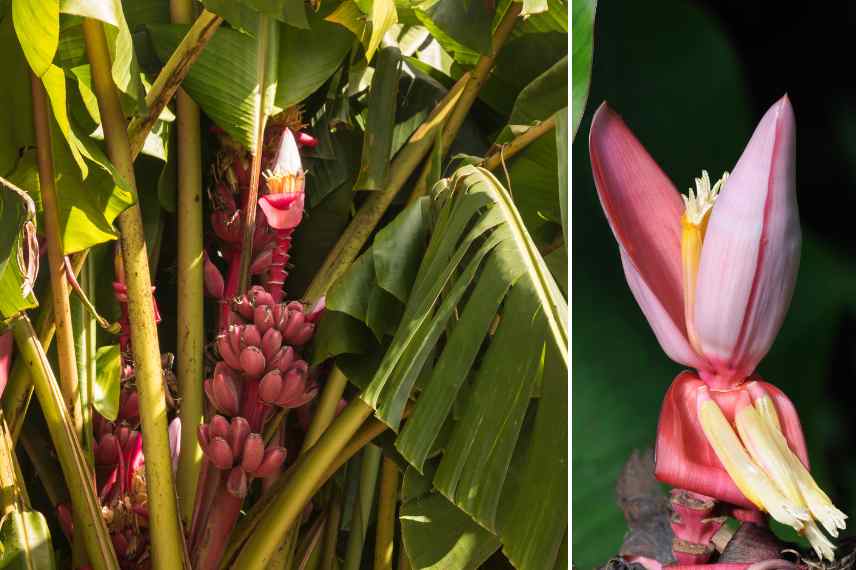
The Musa velutina, also known as the pink-flowered banana or velvet banana, is a variety of banana plant that stands out for its small size and distinctive pink flowers and fruits. This species is often appreciated for its ornamental appeal rather than for its fruits, although they are technically edible.
Native to Southeast Asia, the Musa velutina is more cold-resistant than most other tropical bananas, capable of withstanding temperatures down to -5°C, or slightly lower with adequate protection. This makes it a viable option for those looking to introduce a touch of exoticism to their garden in temperate climates.
The pink-flowered banana is a relatively small plant, typically reaching a height of about 1.5 to 2 metres. What makes it particularly attractive, however, are its pink flowers and fruits. The fruits, which usually appear in summer, are covered with a velvety pink skin that splits open when ripe, revealing black seeds in white pulp. Although edible, the fruits are filled with seeds and are generally not considered particularly tasty.
In terms of care, the Musa velutina prefers rich, well-drained soil and requires regular watering. It enjoys a full sun location but can tolerate some shade. In colder climates, it is advisable to protect the plant during winter by mulching the base or moving potted plants indoors.
- Subscribe!
- Contents

Comments