





























5 groundcover shrubs that flower in summer
A selection of summer-flowering groundcover shrubs
Contents
Summer is the ideal season to enjoy a flowering garden. To add splashes of colour to your outdoor space, what could be better than summer-flowering groundcover shrubs? These remarkable plants offer a striking display of colours and shapes, while gently carpeting the soil. Discover a selection of summer-flowering groundcover bushes to brighten up your beds and borders during the summer season, as well as tips for planting and care to ensure abundant and long-lasting flowering.

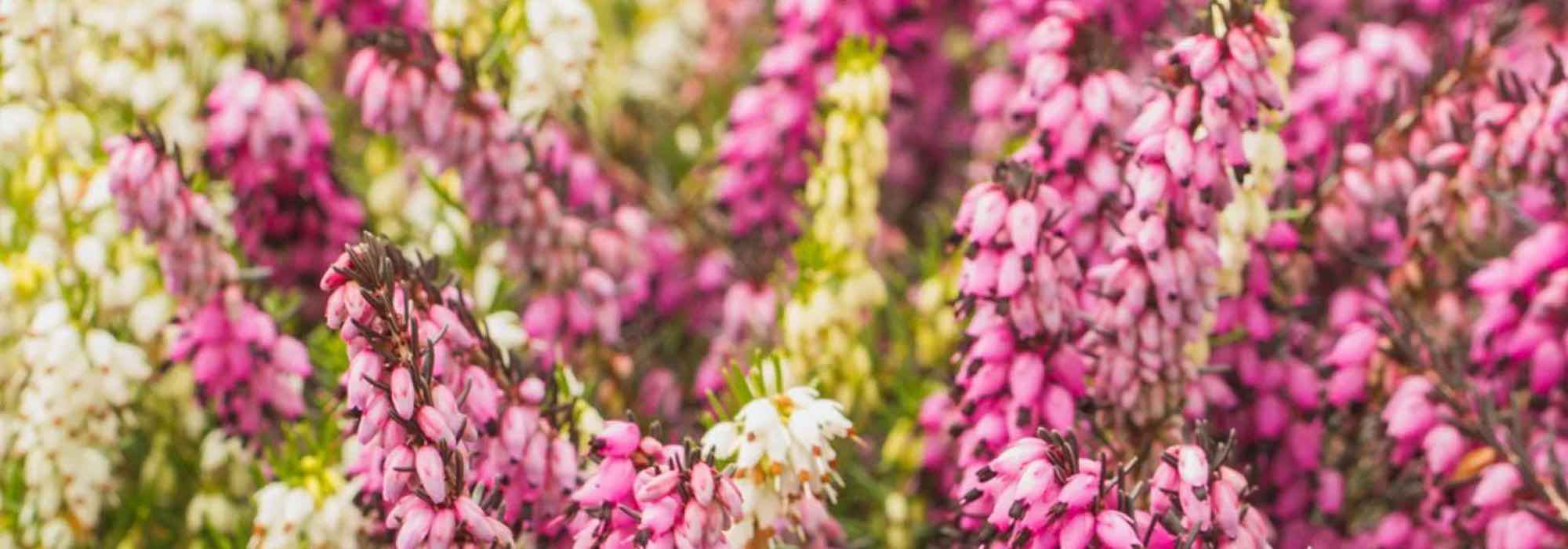
Summer Heather - Calluna vulgaris 'Marlies'
Calluna vulgaris ‘Marlies‘ is a summer heather that forms a low shrub speckled with ruby-red flowers from August to September. Evergreen, even in winter, when other plants are at rest, it maintains its attractive and decorative appearance. Originating from European heathlands, this groundcover plant reaches 30 cm in height and 40 to 60 cm in width. Its ruby-red flower spikes bloom from mid-summer to early winter. Its small linear leaves, scale-like and opposite, add to its charm.
The summer heather ‘Marlies’ is also valued by beekeepers for its nectar containing 25% sugar. It tolerates temperatures down to -15°C and prefers a sunny or partly shaded exposure. For optimal growth, plant it in light, humus-bearing, rich and slightly acidic soil. Used as groundcover, it pairs well with other ericaceous plants, adding a touch of colour and life to your garden all year round.
For more on growing this plant, see our page on heather planting and maintenance.
EMERA® Décorosier rose shrub
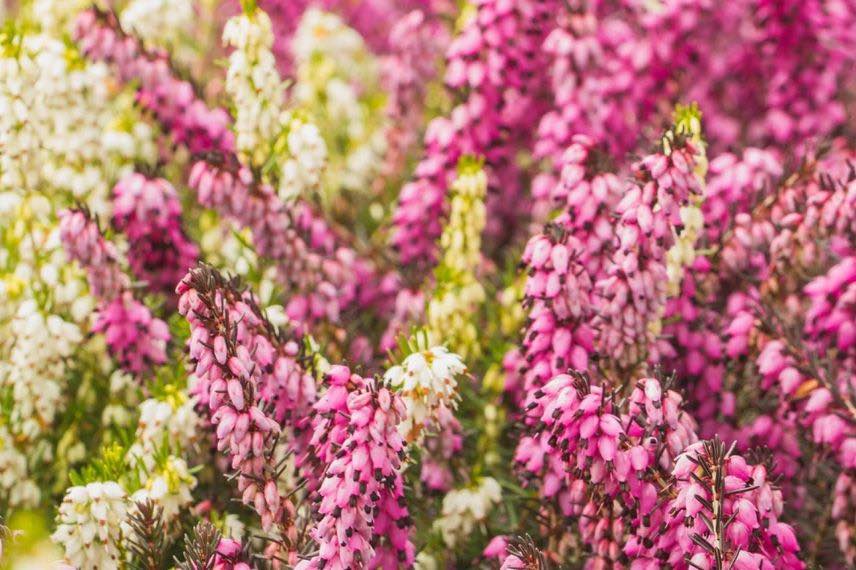
The Decorosier® EMERA® ‘Noatraum’ rose shrub enchants the garden with its small semi-double fuchsia-pink flowers, grouped in clusters of about ten blooms, attracting bees and butterflies. Its flowering begins in late spring and continues into autumn on healthy, glossy green foliage. With dense, ground-covering foliage, it offers an outstanding display requiring little maintenance. The ‘Emera’® rose forms a dense shrub reaching 70 cm in height and 50–60 cm in width. Highly floriferous, it produces semi-double to double flowers 4–5 cm in diameter, in a vivid pink with a dark yellow centre of stamens. Its semi-evergreen foliage, composed of small glossy green leaves, covers thorny stems.
Suitable for all soil types, in full sun or partial shade, this modern shrub and ornamental rose is naturally disease-resistant and requires no treatment. It is hardy down to -23°C and forms part of the famous Décorosier® series. It benefits from the highly selective ADR label, awarded by the German Rosarians’ Federation. Ideal for borders, flower beds and large borders, it adapts to well-prepared soils and to all climates, from the north to the south of France. Pair it with other Decorosier® such as Mareva®, Opalia®, or perennial plants such as hardy geraniums or lavender for a vibrant garden.
To learn more about growing this plant, consult our page dedicated to planting and care of roses.
Japanese Spiraea 'Little Princess' - Spiraea japonica
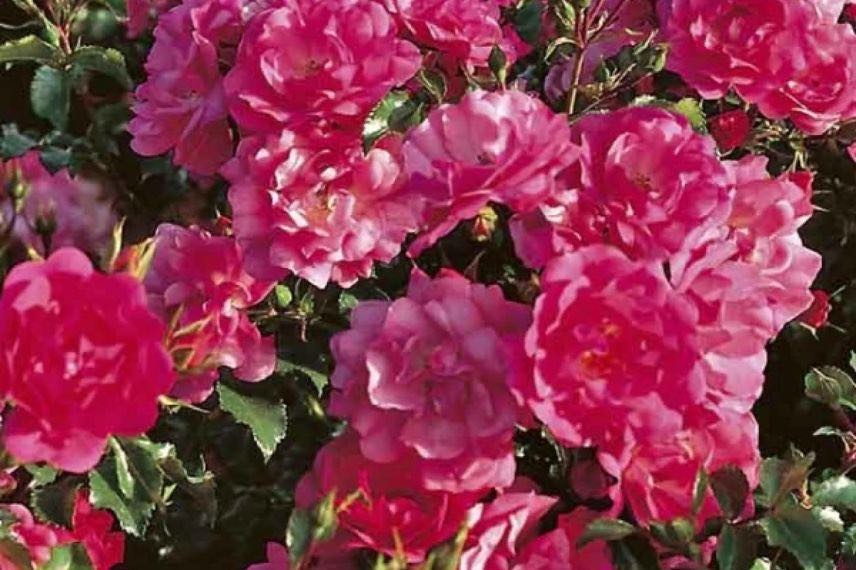
The Spiraea japonica ‘Little Princess’ is a variety of Japanese spirea that forms a dense dome of fresh green foliage and is cloaked with abundant pale pink blooms in summer. This compact bush reaches 40 cm high and 70 cm across. Originating from China and Japan, it belongs to the Rosaceae family. Its small oblong, dentate leaves, bronze-tinged in spring, become light, bright green in summer. The flowering, in velvety terminal cymes of 5 cm in diameter, attracts butterflies, bees and bumblebees. It blooms in June and July and often reblooms in September.
Spiraea ‘Little Princess’ adapts to all climates and soils, but dislikes hot or overly dry conditions. Planted in well-drained, fairly fertile soil, it tolerates partial shade and a little lime. Water well in the first year and prune in February–March to encourage a good flowering. Fertilise in March. A light pruning in summer encourages a second flowering. This spiraea is well suited to perennial borders, edging beds and groundcover. Pair it with ground-cover roses or shrubby potentillas.
For more on growing this plant, see our guide on Spiraea planting and care.

Buddleia alternifolia 'Unique' - dwarf butterfly tree
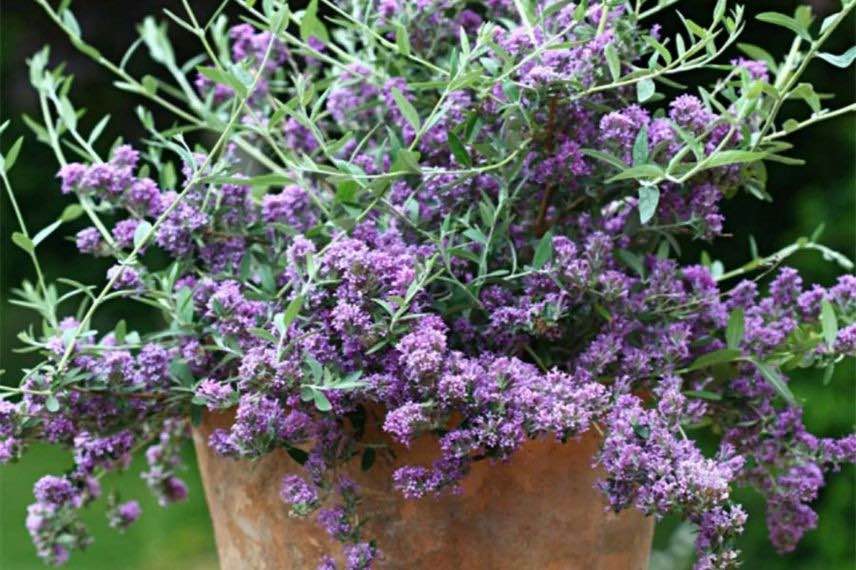
The Buddleia alternifolia ‘Unique’ is a compact and highly floriferous variety of the butterfly bush, ideal for small gardens and patios. This deciduous shrub, reaching 1.2 m in height and spread, is distinguished by its weeping shoots and its small blue-green leaves. This cultivar produces an outstanding flowering from June to October. Its lilac, fragrant flowers, arranged in small clusters along the branches, attract butterflies. The silvery foliage has a pale green upper surface and an almost white underside.
Adaptable to all soil types, the Buddleia alternifolia ‘Unique’ is easy to grow and hardy. It thrives in full sun and is hardy down to -23°C. Plant it in light, fertile soil, not too dry and well-drained. Use it as a specimen to enjoy its weeping habit, or as a hedge, paired with other shrubs such as old roses, or dwarf repeat-flowering lilacs. Named in honour of English botanist Adam Buddle, this nectar-rich shrub will delight butterflies in your garden.
For more on growing this plant, see our guide dedicated to planting and care of Buddleia.
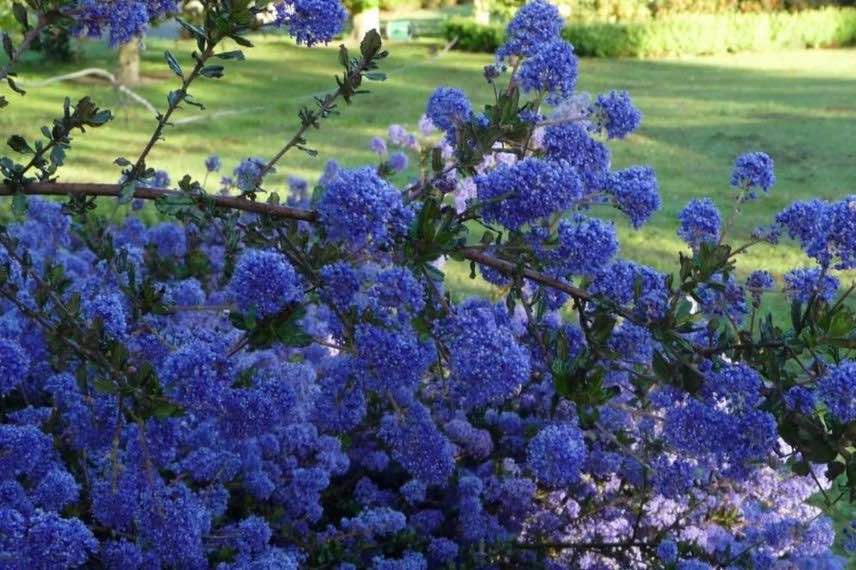
The Ceanothus 'Blue Sapphire'
Ceanothus ‘Blue Sapphire’ is distinguished by its delicate, dark-green, purple-tinged foliage and abundant flowering in small panicles of intense sapphire blue. Its bushy, creeping habit makes it ideal for low hedges, borders, containers and as a groundcover. Its foliage is evergreen. Sapphire-blue flowers appear from April to July, forming panicles 5–8 cm long. The ‘Blue Sapphire’ produces seeds that are released explosively once ripe. It grows quickly, reaching 1 m in height and 1.5 m in width at maturity.
This ceanothus tolerates poor soils, drought and salt spray. It is ideal for seaside and urban gardens. It requires a warm, sunny position, and planting in soil that is not overly calcareous and not waterlogged. Native to North America and Mexico, it tolerates temperatures down to -10°C. It tolerates light pruning that allows removal of spent flowers and any troublesome shoots. This ceanothus, with a lifespan of around ten years, integrates well into borders with Buddleia, Fremontodendron californicum and shrubby rockroses.
For more on growing this plant, see our guide to Ceanothus planting and maintenance.
- Subscribe!
- Contents

Comments