





























5 hot chillies to grow to spice up your dishes!
Chilli peppers that are particularly hot and easy to grow
Contents
Chillies (Capsicum annuum) are fruits of the Solanaceae family, known for their heat. It is their richness in the capsaicin molecule, which helps protect them from external threats, which gives them that sometimes mouth-tingling heat on the palate. Thus, the higher the capsaicin content, the hotter the chillies will be. To help you gauge it, they have been classified by strength according to the Scoville scale. In simplified terms, it runs from 0 to 10.
Note that, while this ranking gives an indication of a chilli’s heat, the heat level can also vary depending on growing conditions (more or less warmth, water, etc.). The scale also does not indicate the inherent flavour of each chilli, which can be more or less fruity or acidic and vary with the ripeness of the fruits.
So here are a few of the hottest chillies, which will undoubtedly elevate your dishes. They should be used sparingly or reserved for the most discerning palates!
And to grow them successfully in the vegetable garden, alongside this, our guide: Peppers and chillies: sowing, growing and harvest

Cayenne pepper
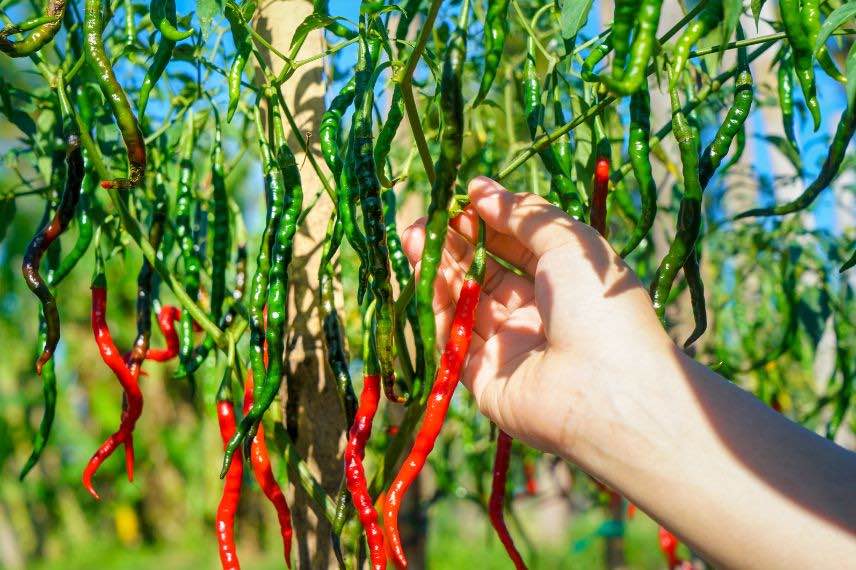
Cayenne pepper (Capsicum frutescens) is a fairly widespread variety, known for its strength. As its name suggests, it originates from South America. If it is also known by the name ‘fiery pepper’, that leaves little doubt about its heat on the palate! It is, in fact, ranked 6/10 on the simplified Scoville scale (some sources even list it as 8/10), corresponding to a fierce heat. It has a reputation for being among the hottest peppers in the world. But its fruity flavour also elevates dishes, hot or cold. However, don’t be too generous—a little goes a long way. This chilli pepper is often used to make sauces and marinades, whether fresh or ground into powder.
Its fruits reach 15 cm in length and have a very pointed shape. As they ripen, they take on the pepper’s characteristic scarlet red colour. At maturity, a Cayenne pepper plant reaches 80 cm in height with a 30 cm spread. Harvest takes place from mid to late summer, depending on the region and weather conditions. The pepper, in fact, needs plenty of sun and warmth to develop well. For the rest, it will tolerate all types of well-drained soils, but will be more productive if the substrate is rich in organic matter.
If grown in a pot and brought indoors to shield from frost over winter, the pepper can be kept for several years.
Read also
Growing peppers and chillies in potsSerrano pepper
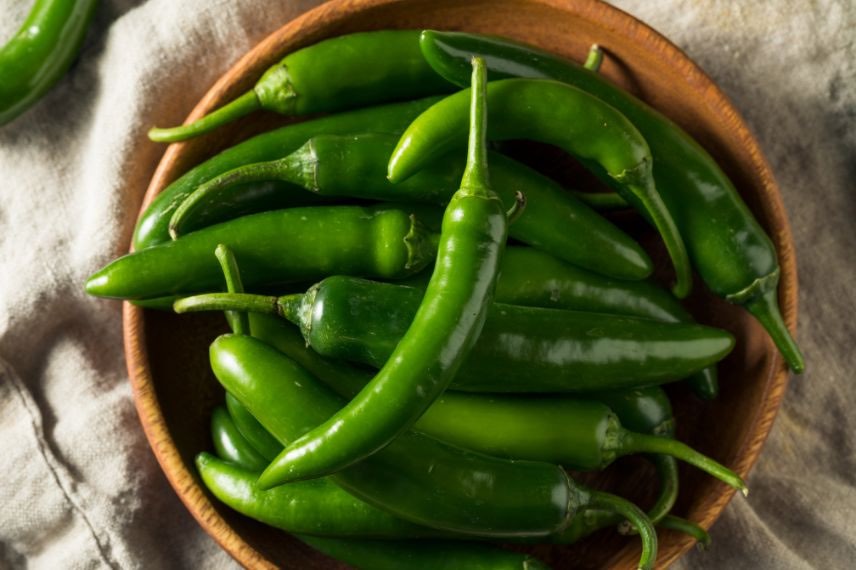
The Serrano pepper, or hot Mexican pepper, graces us with a tidy 7/10 on the Scoville scale, corresponding to fiery heat. It originates from the mountainous regions of Mexico.
Generous, it yields a multitude of small fruits about 5 cm long, maturing to a bright glossy red. In terms of flavour, the pepper’s flavours are rather acidic. It is particularly used for making the famous salsas well-seasoned and also containing tomatoes. It can also be preserved by marinating.
In terms of size, the plant can reach up to 1 metre high with a 40 cm spread.
Tabasco pepper
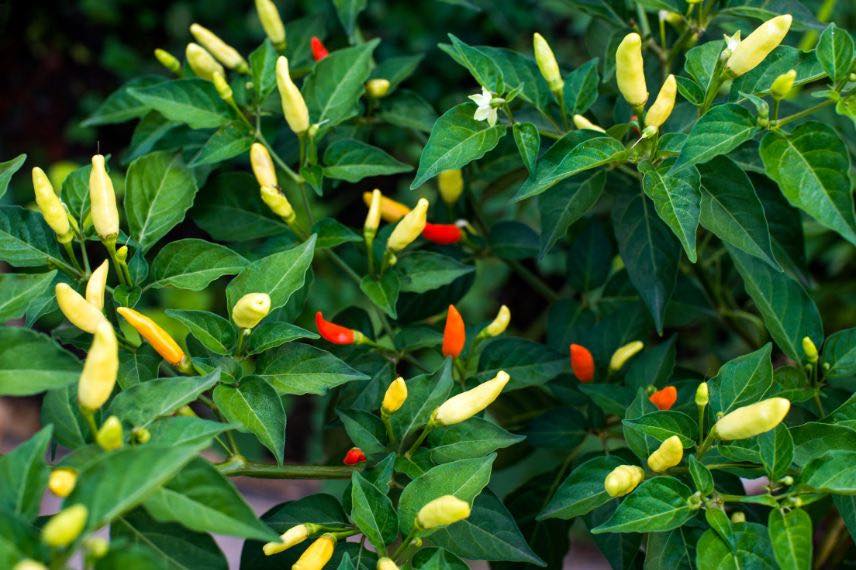
Let’s take it up a notch with the Tabasco pepper, ranked 9/10 on the Scoville scale. It is therefore a pepper with a volcanic temperament! It is the pepper that gave its name to the famous Tabasco sauce, the world’s best-known hot sauce.
Its small fruits are bright red, conical in shape, and measure about 5 cm long. Their flavours are said to be fruity and sweet.
This compact pepper grows to just 40 cm tall with almost as wide a spread when mature, forming a neat little bush. The pepper harvest takes place in July and November.
This pepper can be used in all forms: fresh (raw and cooked), dried or powdered.
In terms of cultivation, it will require plenty of warmth and sun: it is a pepper well suited to growing in our southern gardens.
Read also
Choosing peppers and chillisHabanero pepper
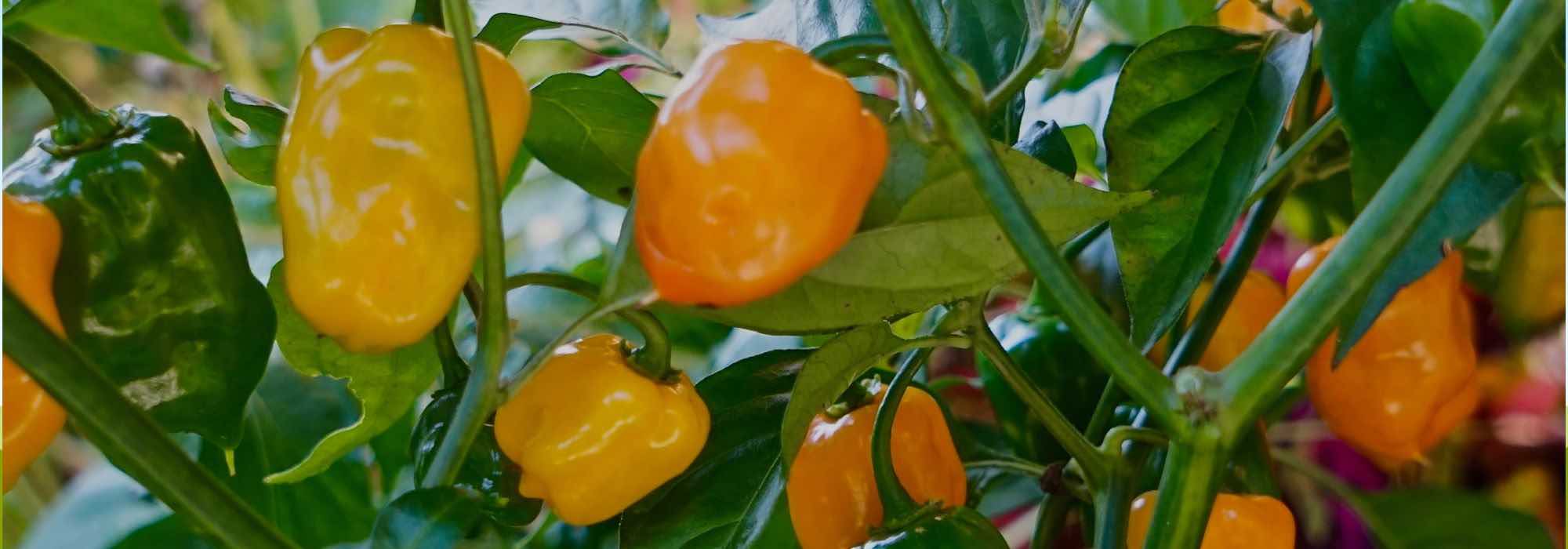
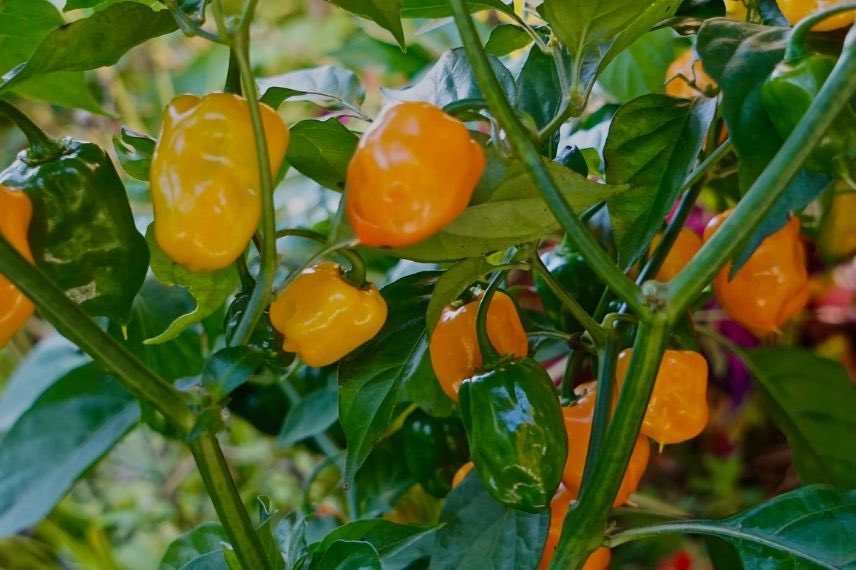
The Habanero pepper(Capsicum chinense), also known as Antillean pepper, originates from South America. It is among the strongest in the world, being rated 9/10 on the Scoville scale (some sources even claim 10/10). So don’t be fooled by its size; it is a pepper that hides its heat! If eaten raw, this exercise will be reserved for the most discerning palates. In terms of flavour, it is said to have lemony and floral notes. In Mexico, it is a pepper particularly used in maceration, for example to flavour tequila or mezcal. Raw, dried or ground to powder, it forms part of many marinades, frying and other dishes with a kick. Note that handling the fruits will require the utmost caution: absolutely avoid contact with the eyes and wear gloves.
Each plant produces numerous small lantern-shaped peppers, reaching 3 to 5 cm in length. They are initially green, before turning red at maturity. Some varieties can also be orange. Each plant grows to a height of 1 metre with a spread of 40 cm.
Like its kin, this pepper will enjoy sun and warmth.
bird's-eye chilli
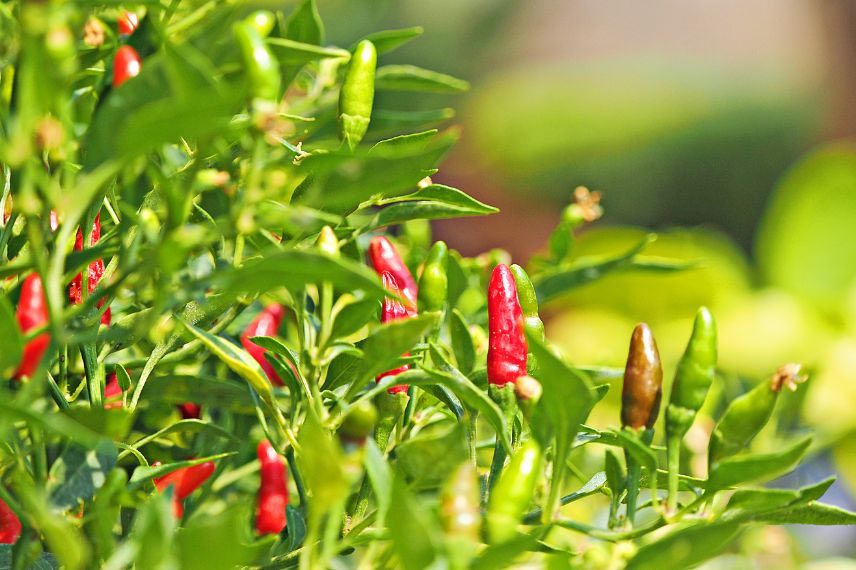
The bird’s-eye chilli, also known as pili-pili, produces small green or red fruits that are elongated in shape, reaching only 2–3 cm in length. Its name is said to derive from the interest birds take in the fruit, helping its spread by dispersing undigested seeds in their droppings.
In terms of heat, this chilli reaches 8/10, a scorching kick in the mouth. It is particularly popular in Réunion dishes, like rougail sausage, or macerated to liven up an oil that is a little too tame. It can be used in its entirety in dishes.
Here again, warmth and sun will be essential for successful cultivation.
- Subscribe!
- Contents

Comments