





























5 inexpensive bushes for a beautiful garden on a budget
Perfect bushes for successful landscaping without spending too much
Contents
When landscaping your garden, the choice of bushes is one of the decisive factors.
Their flowering, foliage or fruiting will provide structure, colour and movement.
Among the thousands of varieties available, the question of price inevitably arises: this item is indeed one of the most expensive when designing a garden. But it is not necessary to spend a lot of money to create a beautiful, welcoming and peaceful outdoor space: some inexpensive bushes make an impact quickly, while proving long-lasting and easy to grow.
Here is our selection of 5 budget-friendly bushes and our tips for landscaping your garden without breaking the bank.

The Photinia fraseri 'Camilvy'
Photinia is one of those versatile bushes, capable of creating as much impact in a pot as in a border or a privacy hedge. Their evergreen foliage, often evolving, remains decorative all year round. But they are also easy-to-grow plants, tolerant and fairly hardy. They do not require much maintenance, which explains their popularity.
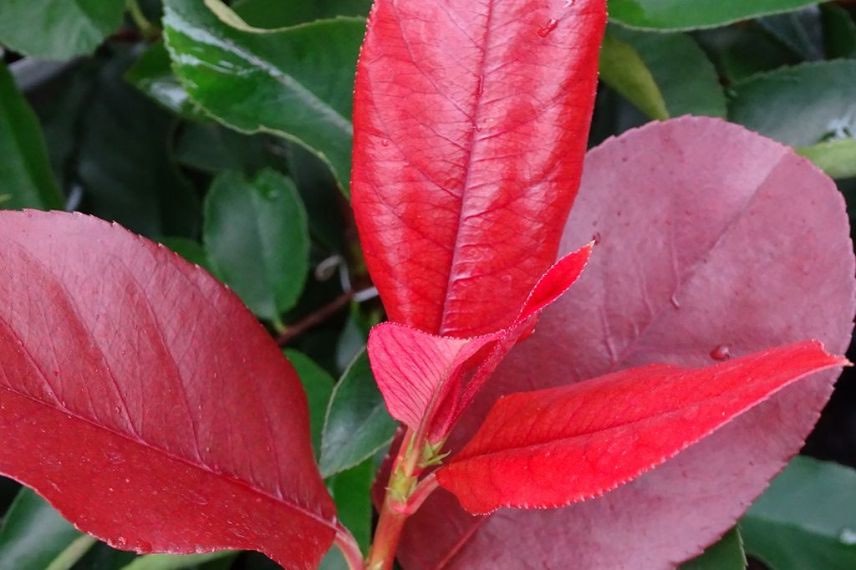
If you are on a small budget, the Photinia fraseri ‘Camilvy’ will allow you to add greenery to the garden quickly, without sacrificing aesthetics. This variety indeed bears intensely coloured foliage, a glossy green. Above all, it is accompanied by young shoots bright red, produced several times throughout the year. In spring, the bush reveals pretty white umbels, adding an extra touch of light and delighting pollinators.
Its dense, compact silhouette reaches 3 metres in height and a spread of 2 metres at maturity.
Plant ‘Camilvy’ in full sun or partial shade, in rather cool (never completely drying out), deep soil, even slightly calcareous. Occasional drought will be tolerated once the plant is established.
This bush is available in a pot for less than €5 on our site.
For more information: Photinia: planting, pruning and maintaining
Read also
Creating a garden on a budgetThe groundcover rose ‘Topolina’
Roses are among the must-have plants in gardens, but can sometimes be expensive to buy. The variety ‘Topolina’ proves fairly affordable and offers many qualities.
Particularly floriferous and colourful, with a subtle fragrance, but above all very resistant to rose diseases, it’s a perfect candidate to brighten the garden without spending too much.
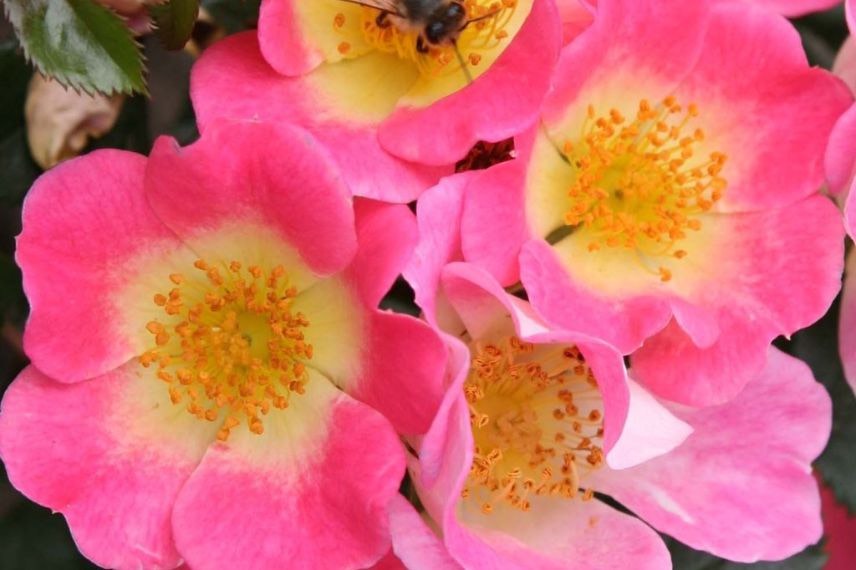
From June until the first frosts, ‘Topolina’ will produce almost continuously lovely single wild-rose flowers. They display a vivid pink, with a white base and a clearly visible golden centre of stamens.
Versatile, this compact rose (35 cm tall with a 60 cm spread) will establish itself equally well at the front of a bed, on a bank, as an edging, in a rockery or in a pot.
Tolerant and hardy, it copes with many growing conditions, in full sun or partial shade. Its robustness and undeniable qualities have even earned it the prestigious ADR label, one of the most demanding awards.
For care, simply make sure it has soil that remains moist. Remove faded flowers and carry out an annual pruning at the end of winter.
Budget under €10 for a bare-root specimen.
To learn more: Roses: the best varieties and how to grow them
The black elder
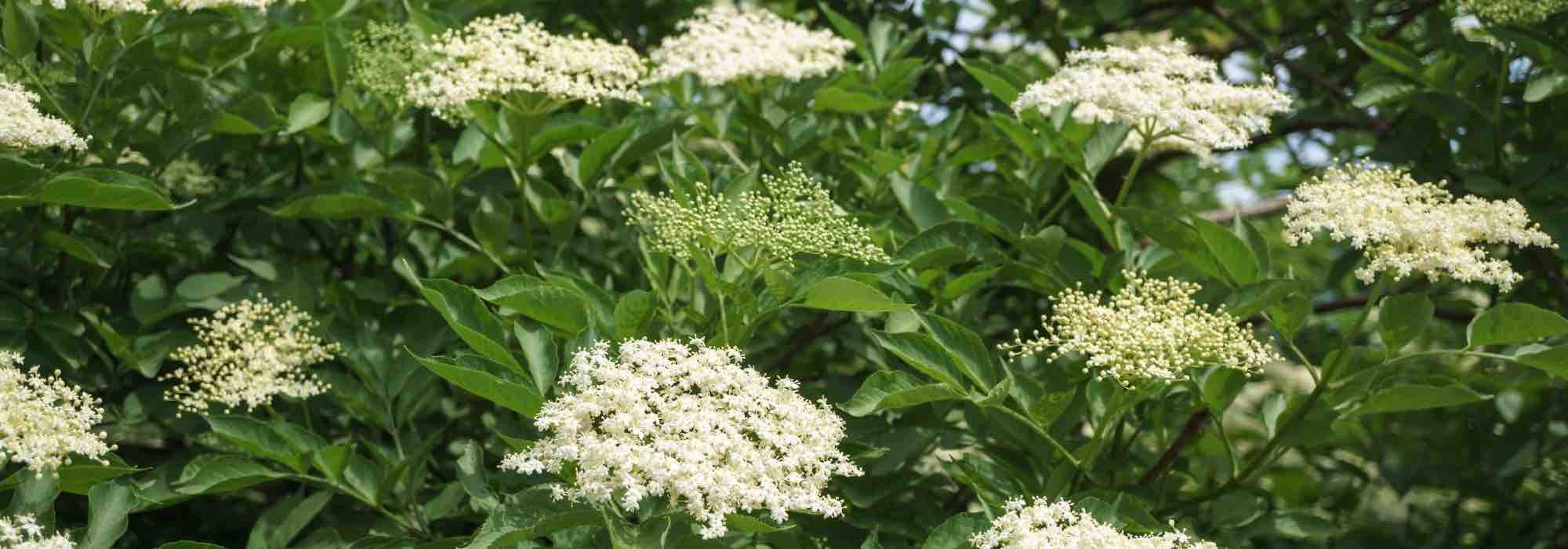
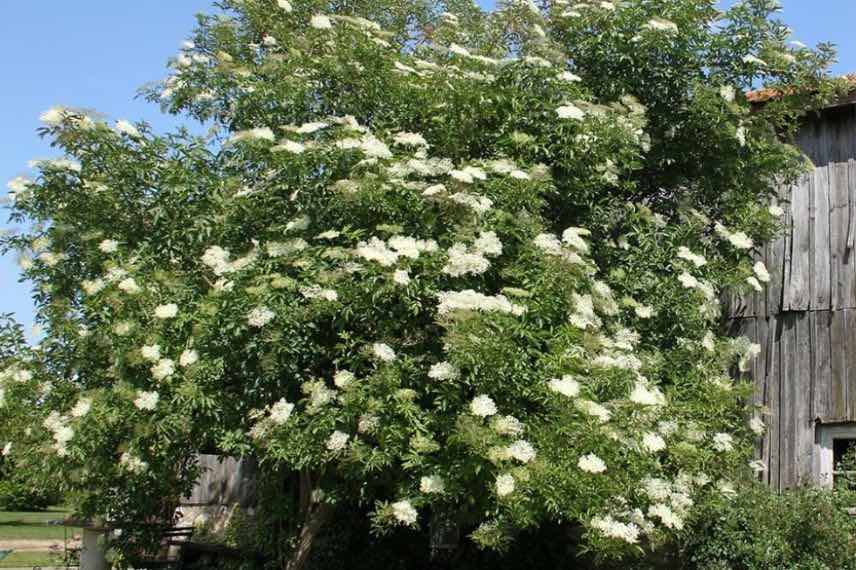
The black elder (Sambucus nigra) is one of those large wild bushes that need little to thrive and quickly add volume to the garden. But these are not its only qualities. In spring, it flowers, revealing large cream-coloured umbels, with a sweet scent that attracts pollinators. The flowering then gives way to small black fruits, which are a treat for birds but can also be used to make jams or chutneys.
Its silhouette will reach about 6 metres in every direction at ripeness.
With rapid growth, hardy and undemanding, the black elder will develop in all types of soil, in full sun or partial shade. Plant it in an informal hedge or at the back of a shrubby border.
Its ornamental assets, its culinary appeal, its role for biodiversity and its ease of cultivation make it a truly multifunctional plant. This low-cost bush will be particularly interesting for large gardens, sometimes difficult to plant. A 50 cm specimen will cost less than €10 in a pot, and even 50% cheaper in bare roots.
For more information: Elder: planting, growing, pruning
Read also
5 Ways to multiply your plants for freeThe Cornus alba 'Cream Cracker'
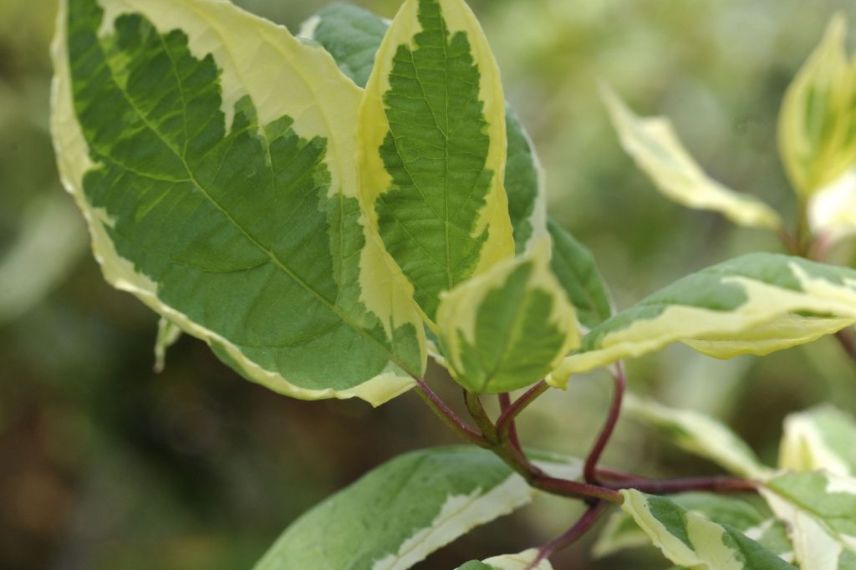
The white dogwood (Cornus alba ‘Cream Cracker’) enchants us with its foliage. Initially variegated with green and golden yellow, it later takes on cream tones, sometimes with silvery hues. Then it becomes particularly striking in autumn before losing its leaves. In winter, it is its purplish-red branches that bring brightness and colour, at a time when the garden is no longer very lush. A bush that enlivens the space easily in every season, offering a display that is never monotonous!
Flowering occurs in late spring, as small cream to pale yellow flowers. It is fairly discreet, but valuable for insects. Then it gives way to small white berries tinged with blue.
This bush has a compact habit, its silhouette reaching 2.5 metres in height with a 2-metre spread.
Vigorous, hardy and easy to grow, it will establish in full sun or partial shade, in fresh to moist soil, preferably rich in organic matter. Plant them at the back of a border or beside a water feature. It is also an excellent bush for hedgerow planting.
Dogwoods are versatile and long-lived, which makes them an economically attractive choice. Expect to pay around ten euros for a specimen 50–60 cm tall.
For more information: Flowering dogwoods: planting, pruning and care
The Snowball Viburnum 'Roseum'
Spectacular flowering and colourful autumn foliage: it’s for these aesthetic qualities that we love the snowball viburnum!
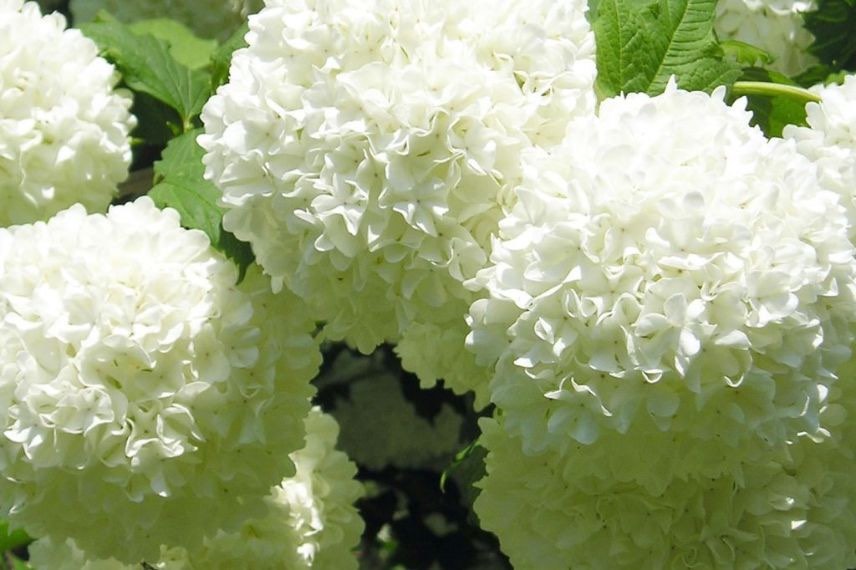
Le Viburnum opulus ‘Roseum’ first treats us in late spring to a generous flowering of white, sometimes slightly pink, spherical blooms. Its shoots bend delicately under the weight of these flower clusters. The flowering gives way to a decorative fruiting in the form of red berries, much prized by birds.
But the foliage of this flowering bush is also ornamental. Initially green, it turns yellow over time, then takes on orange tones before becoming fully red in autumn.
Bush with rapid growth and a bushy habit, it will reach more than 3 metres in every direction at maturity.
Easy to grow, hardy and maintenance-free, it is ideal for all garden styles. Give it a sunny or partly shaded position. Grow it in ordinary, fresh to moist soil, even calcareous and clayey. ‘Roseum’ will be perfect in an informal hedge or at the back of a border.
The snowball viburnum is one of those reliable, very accessible varieties that combine many strengths. You will find this variety for less than €5 each in a pot on our online shop.
For more information: Viburnum, Viorne: planting, pruning and growing
Make further savings in the garden
Here are a few tips to help you save even more, for a low-cost garden layout. Because, while buying inexpensive bushes is important, maintaining the area can also be optimised at little cost.
- Choose your bushes according to your growing constraints. It may seem obvious, but many of us have already fallen for a variety that caught our eye in a store aisle without really knowing its needs. A variety that is not suited to your soil (clay, sandy, calcareous…) or to your climate (harsh winters, drought, constant humidity…) will inevitably struggle to thrive, or will require many additional care measures that are both costly and time-consuming.
- Opt for bare-root bushes, available for sale between October and March. These are plants lifted from the ground during their dormant period. This form is always a good deal: production costs are lower than for container-grown or root-balled bushes, so the purchase price is cheaper. Although bare-root bushes require an extra step before planting (the praline coating), they generally establish reliably and these plants prove to be sturdy and vigorous in the long term.
- Favour bushes that are still young. Even if these specimens will demand a little more patience from gardeners and will be less visually striking at first, they will be easier to acclimatise. Overall, they will establish better than a bush that is already several years old.
- Select plants that combine several assets: evergreen foliage and scented blooms, attractive autumn foliage and decorative berries, edible fruits and a shape that provides shade, etc.
- Optimise watering. Water is a key element in the garden: its management is as important for the budget as it is for the environment. Add an organic mulch at the base of your bushes, try ollas for gentle watering that limits evaporation, collect rainwater, install a drip irrigation system or a microporous hose, etc.
- Consider second-hand when buying your tools, but also upcycling in general (turning waste into a useful new product): pallets repurposed as planters, an old leaking watering can used to make a planter, etc.
- Subscribe!
- Contents
Comments