


5 Mediterranean plants to brighten up a balcony
Our selection of Mediterranean plants to grow in pots
Contents
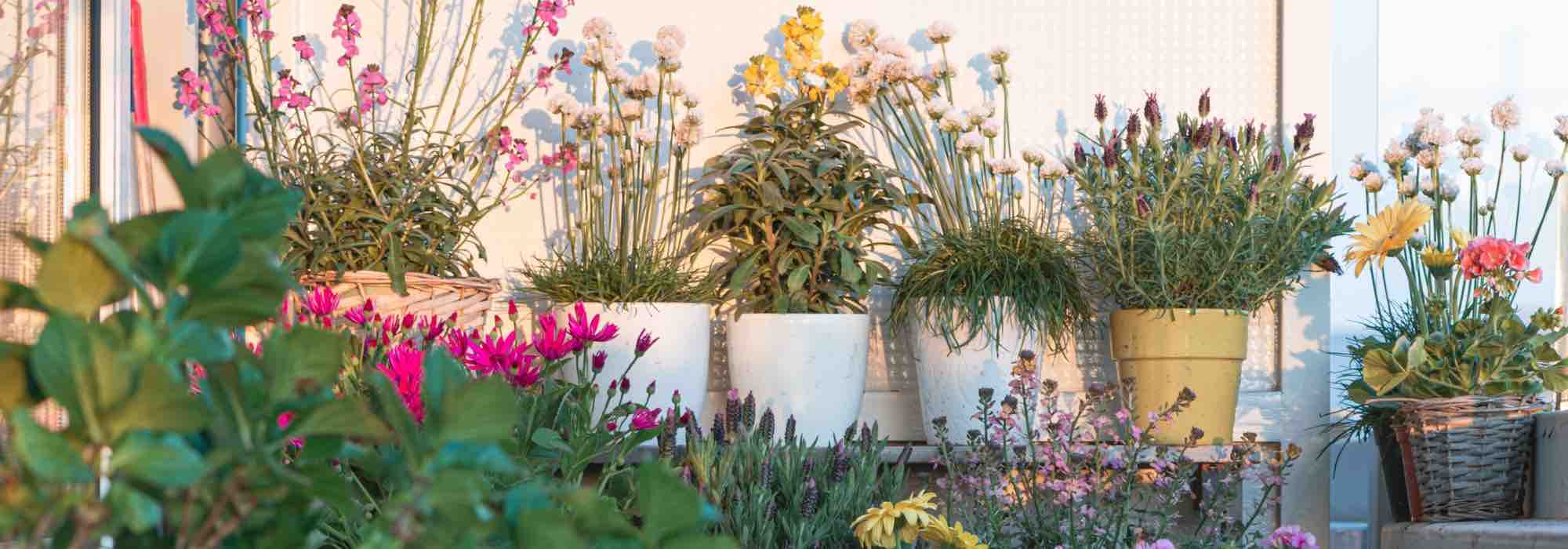
Mediterranean plants can make us dream with their fragrances, beauty, and often vibrant colours. They also have other advantages, such as drought resistance and relatively easy maintenance. Mediterranean plants form a vast group that is not limited to flowers native to the Mediterranean Basin. In a broader sense, they refer to plants that grow in regions of the world where the climate is similar to that of the Mediterranean Basin. These regions can include California, Chile, South Africa, Australia, or New Zealand. This provides a wide selection for those wishing to adorn their balcony with this type of plant. Lavender, santolina, oleander… Discover our selection of potted Mediterranean plants to grow on a balcony.

Lavender, a timeless classic
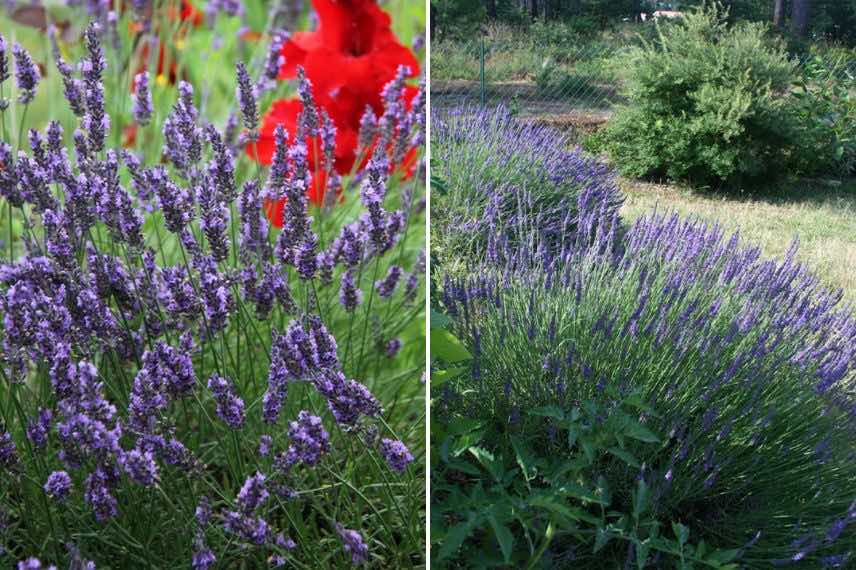
Nothing is more Mediterranean than this fragrant plant with lovely spikes of purple flowers that are dried to be tucked away in your wardrobe among the linen. For pot cultivation, a compact lavender variety is chosen, such as lavandin or Lavandula intermedia ‘Grosso’. With a height and width of 60 cm, this lavender has a bushy and dense habit. From June to August, it produces mauve-blue flowers that will fragrance your balcony or terrace. The foliage is evergreen, grey-green, and aromatic, and the flowers attract melliferous insects. It is also a hardy plant, capable of withstanding temperatures down to -15°C.
To thrive, lavender needs full sun exposure and a very well-drained ordinary substrate, even dry or stony. As lavender does not tolerate heavy soils and excess water, you can add sand and gravel to the soil in which you plant it. In terms of watering, lavender requires very little water, except during the first year after planting. This plant also needs to be pruned each year after flowering to maintain a compact and rounded shape and encourage flowering in the following year. The idea is to cut it back by a third without touching the old wood.
Santolina, a brilliant yellow
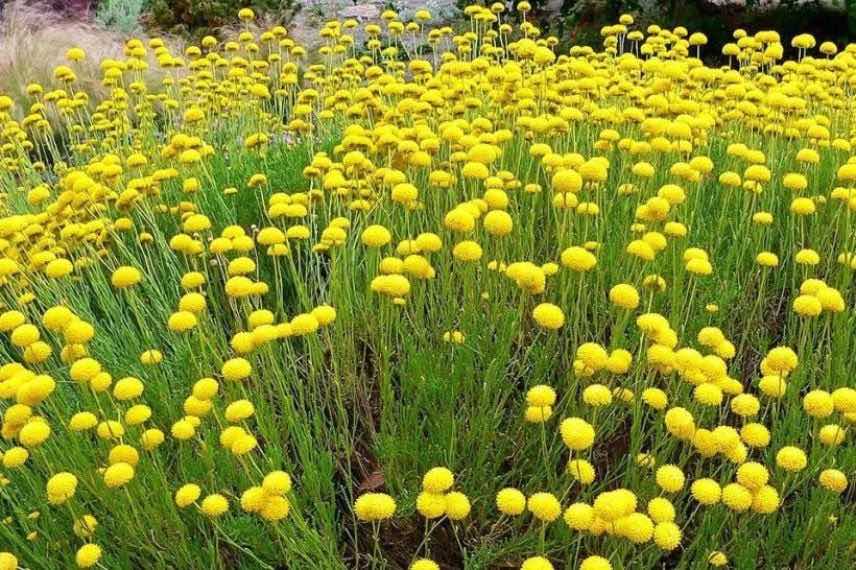
Another Mediterranean plant, santolina is a hardy shrub with evergreen, aromatic foliage. For pot cultivation, you can choose the silver santolina, also known as the small cypress santolina or Santolina chamaecyparissus. It features finely dissected, silver-grey foliage. Highly fragrant when crushed, its scent resembles that of cypress. In summer, from June to August, santolina is adorned with small, bright yellow, round, and domed heads. Native to Spain and southern France, this perennial forms a rounded cushion 20 to 40 cm high and 60 to 80 cm wide.
Easy to cultivate, silver santolina is hardy down to -12 to -15°C. To thrive, it requires full sun and a well-drained substrate, poor, stony, or sandy. It dislikes stagnant moisture and prefers to have its roots kept warm. After flowering, cut back its stems each year to maintain a compact habit. During the first summer, the young santolina plant needs to be watered until autumn to establish its roots well. After that, wait for the soil to dry out between waterings. Tap water, being calcareous, is perfect for watering santolina. To learn more, check out our article on growing santolina in a pot.
Oleander, a typical shrub of Mediterranean gardens
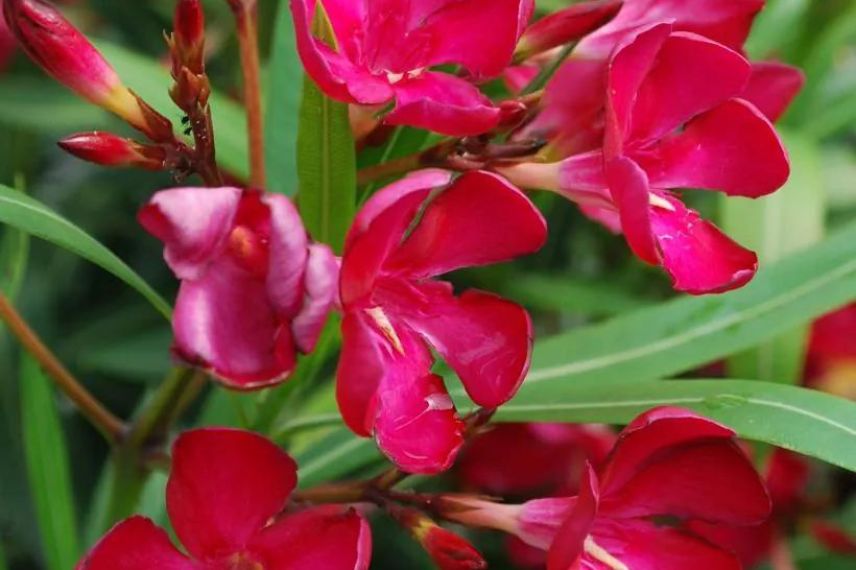
Oleander is an evergreen shrub often seen in Mediterranean gardens. Perfect for recreating such an atmosphere on your balcony as it can be grown in a pot, like the Red Single Oleander – Nerium oleander. It offers a bushy habit and a generous flowering of deep red from June to October. Its dark green foliage, lighter underneath, is adorned with clusters of single flowers measuring 4 cm and slightly fragrant. This oleander can reach a height of 3 metres and a width of 3.5 metres at maturity in the ground. In a pot, its growth will be slower.
Easy to grow, the Red Single Oleander – Nerium oleander is drought-resistant and tolerant of sea spray, provided it is given well-drained soil that remains moist to encourage flowering. Its only weakness is that it is sensitive to cold during the first few years. Once established, it can withstand short frosts down to -8°C. Growing it in a pot allows you to bring it indoors to protect it from the cold and frost in winter. It enjoys sunny or partially shaded positions in warm climates. During the first two years, be sure to water it in summer while avoiding wetting the foliage. Oleander appreciates a supply of compost and mulching at the base to keep the soil cool in summer and protect it from the cold in winter. For everything you need to know about pot planting, check out our article How to Grow Oleander in a Pot?
Read also
Which plants for an exotic balcony?Delosperma, a carpet of colourful flowers
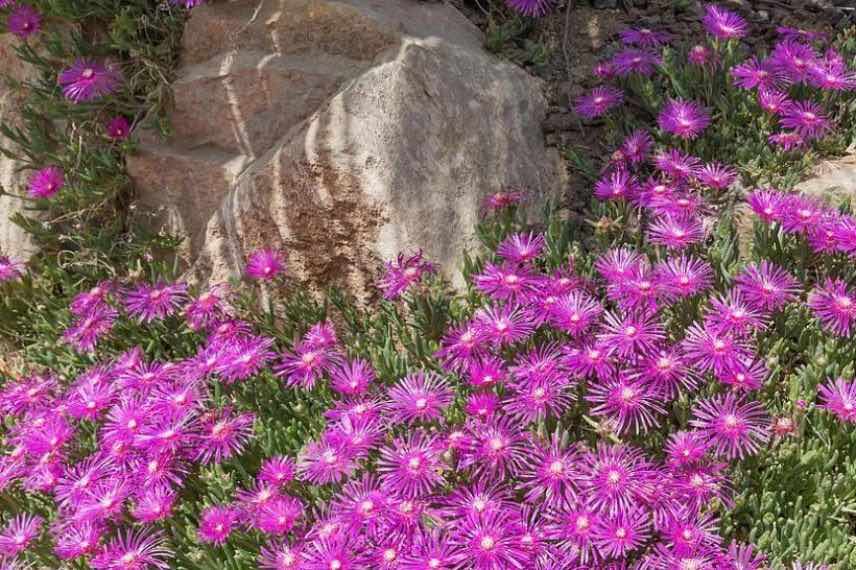
Native to South Africa, the Delosperma is a small perennial groundcover plant identifiable by its small succulent green leaves and bright star-shaped flowers. The Delosperma cooperi or Cooper’s Purslane features soft green foliage with a silvery sheen and is semi-evergreen. From June to September, it is adorned with vibrant mauve flowers with a white centre. A lovely cheerful and colourful scene to create in a hanging pot, where it can slightly overflow. At maturity, Delosperma cooperi reaches 10 cm in height and 30 cm in width.
The Delosperma cooperi thrives in full sun and should be planted in dry, well-drained soil, even sandy or gravelly. Stagnant water should be avoided, as it may cause the plant to rot. Water only once a week and keep it dry in winter. The Delosperma cooperi can be grown in regions where temperatures do not drop below –8°C. Growing it in a pot is practical for bringing it indoors during the winter period. To encourage flowering, remove faded flowers as they appear. After a few years, dividing the stump may become necessary. To learn more, check out our guide on planting Delosperma.
Bougainvillea, a vibrant climbing plant
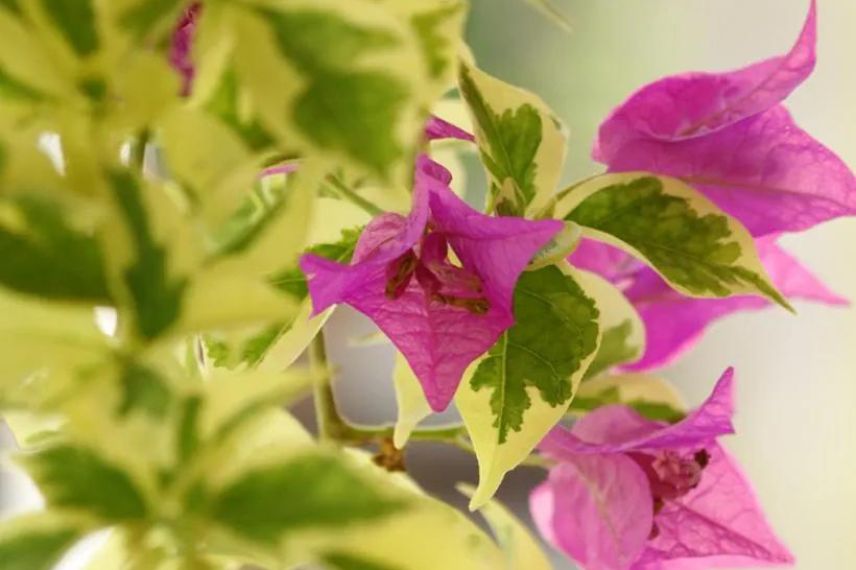
On a balcony, certain spots are ideal for installing climbing plants to conceal a wall or serve as a green screen, providing more privacy. Bougainvillea is a climbing plant with bright, cheerful colours often seen in the streets of Mediterranean villages, such as in Andalusia. To recreate this joyful and colourful atmosphere on your balcony, you can choose the Bougainvillea glabra ‘Variegata’, spectacular with its colourful flowering and evergreen foliage variegated with white. Its flowers bloom as bright violet-pink bracts from May to September. The bracts surround a tiny white flower. It tolerates drought well but is not very hardy, resisting frost only down to –1°C. Growing it in a pot allows you to bring it indoors during frost if necessary. In the ground, it can reach 4 metres in height at maturity, but it will be much less if planted in a pot. It can be trained as a bush or trained against a support.
To thrive, Bougainvillea needs sunlight and well-drained soil without excessive lime. Water regularly during the growth period and allow the soil to dry out between waterings. In winter, reduce watering. You can provide low-nitrogen fertiliser during its growth and flowering, from spring to the end of summer. Pruning Bougainvillea should be light and done at the end of winter, when vegetation starts to resume. By bending the branches horizontally or downwards, you stimulate branching.
For further reading
Many other Mediterranean plants are worth growing on a balcony, such as the Polygala myrtifolia, which is easy to grow and has a long purple flowering period lasting from May to October. Another option is the Russelia equisetiformis, charming with its weeping habit and coral-red flowers that spread from May to November.
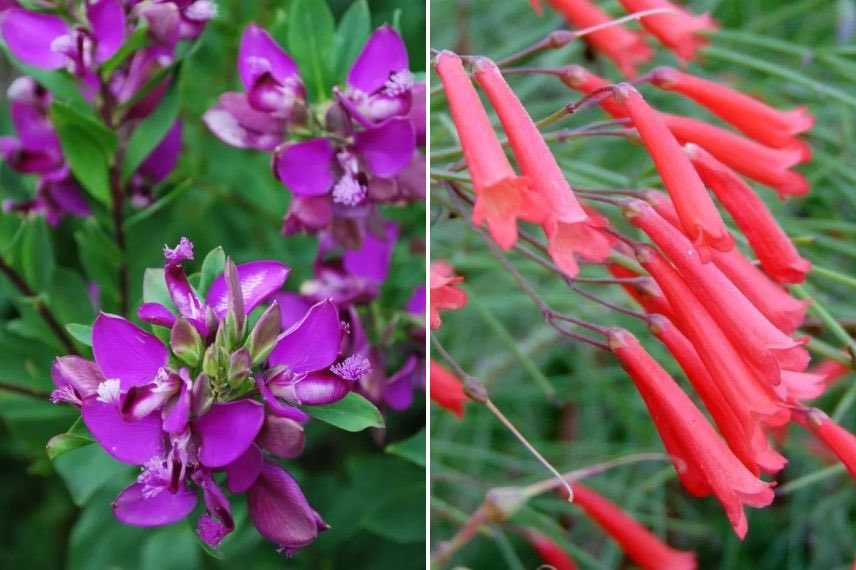
Polygala myrtifolia, Russelia equisetiformis
- Subscribe!
- Contents
Comments