





























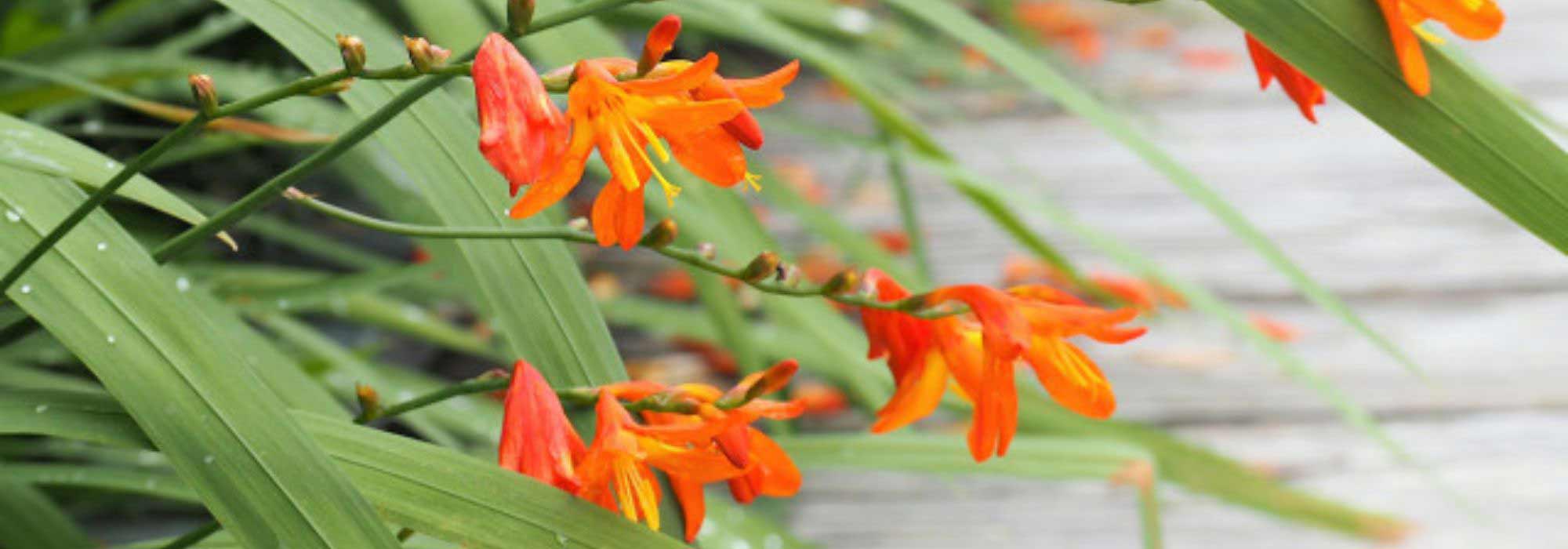
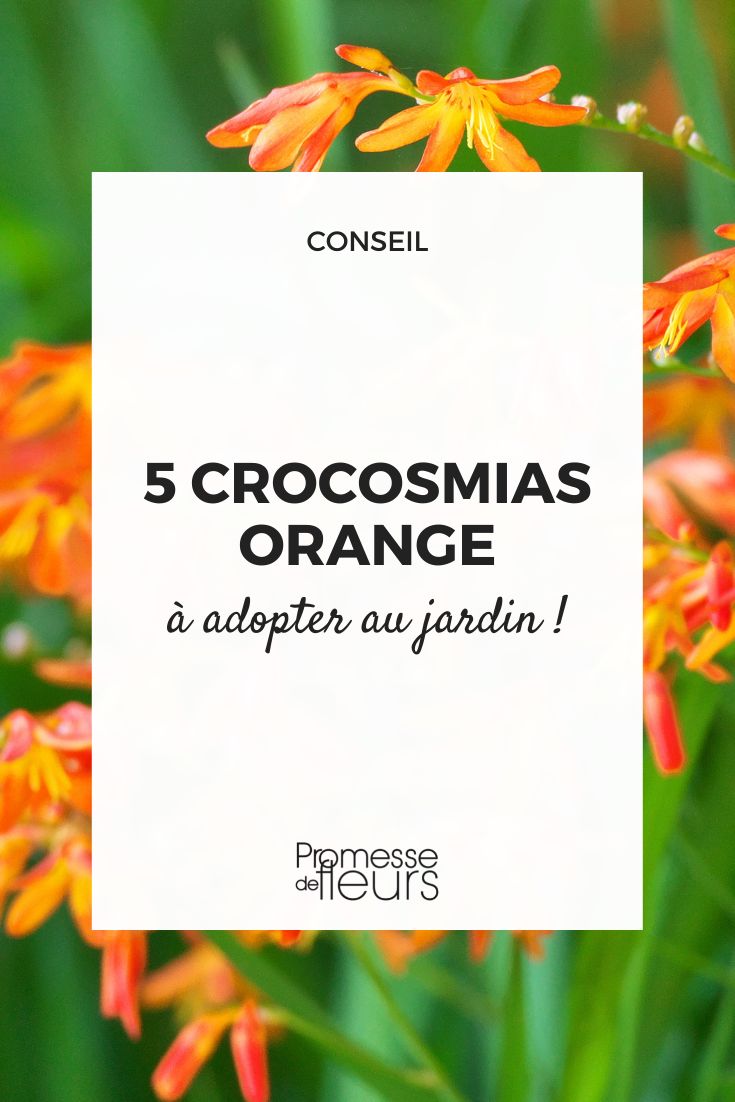
5 orange Crocosmias to discover
Selection of crocosmias to adopt in the garden or in pots
Contents
With their vibrant colours and graphic appearance, Crocosmias, also known as montbretias, enchant the garden throughout the summer.
Whether in borders, rockeries, or pots, these young plants are easy to grow. Their only requirements? Well-drained soil that remains moist during flowering.
The orange varieties are among our favourites: they bring light and a touch of exoticism to the garden, terrace, or balcony. Discover our selection of 5 orange Crocosmias to adopt!
For everything you need to know about cultivating these young plants, head to our dedicated section: “Crocosmia or montbretia: planting, growing, and care.”

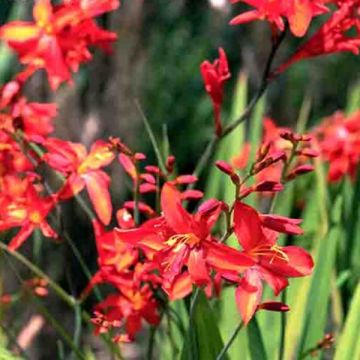
Crocosmia masoniorum: one of the hardiest
The Crocosmia masoniorum is a particularly interesting botanical species that is unfortunately undercultivated. Most Crocosmias are only moderately hardy, tolerating temperatures of -5 to -10 °C at best. However, the masoniorum is capable of withstanding frosts of up to -15 °C, provided its soil remains well-drained, without stagnant moisture in winter.
In terms of colour, the flowers offer a stunning bright orange that almost turns red, illuminated by a golden throat. The flowering occurs abundantly between July and August: the flower spikes gracefully bend under the weight of these beautiful 5 cm long corolla-shaped flowers.
The foliage forms a dense, upright tuft that is very slender, adding a touch of elegant graphic appeal.
Easy to cultivate, this Crocosmia is also a bit less demanding in water than its relatives, tolerating occasional dryness in its soil. A variety that will find its place in most of our regions.
Our bulbous plant reaches 80 cm in height and 50 cm in spread at maturity. In garden combinations, play with contrasts by cultivating beautiful blue-violet agapanthuses or sages in similar tones.
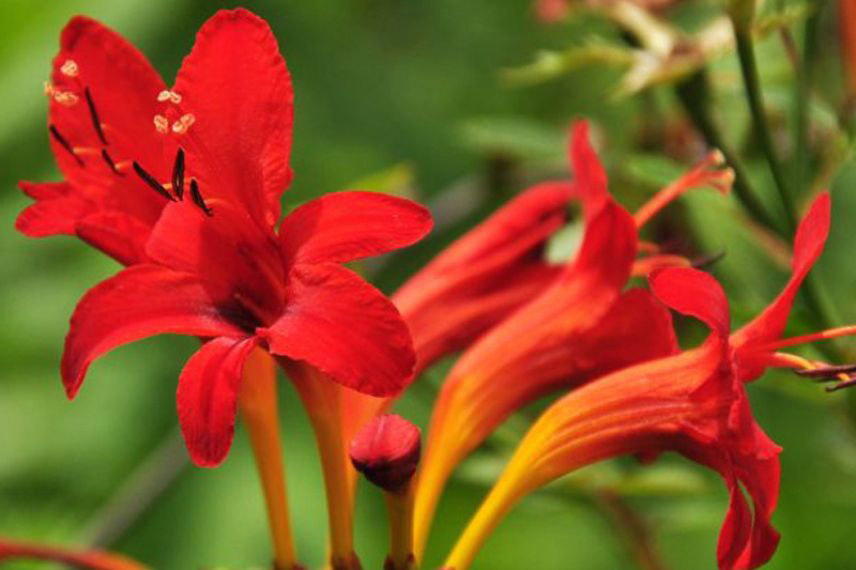
Crocosmia masoniorum
Crocosmia crocosmiflora ‘Carmine Brillant’: an avalanche of orange flowers throughout summer
‘Carmine Brillant’ offers one of the most abundant flowerings throughout the summer, from July to September. Each of its flower stems can indeed bear up to 100 delightful flowers. True little paintings, they display an apricot-orange with delicate strokes of red and reveal a yellow throat. Particularly warm hues that will undoubtedly bring vitality and cheer to the garden!
The foliage, like a setting, consists of long lanceolate and veined leaves, a lovely dark green. They tend to spread over time, forming a fan that perfectly showcases the abundant flowering of this variety.
The plant measures approximately 70 cm in height and 30 cm in spread.
You can use these flowers to create summer bouquets, which will last for several days. Pair them with the round, bluish foliage of an eucalyptus, the magnificent inflorescences of a purple or blue ornamental garlic, or even bracteate immortelles.
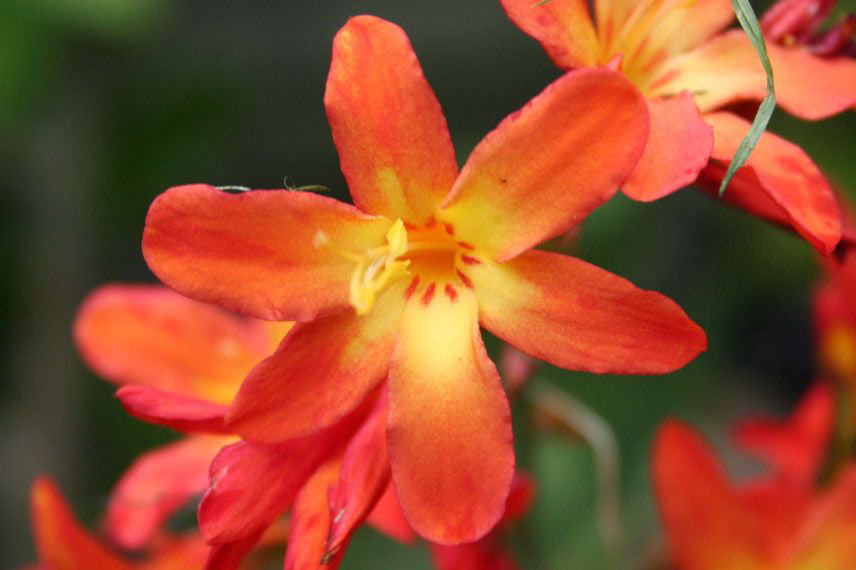
Crocosmia crocosmiflora ‘Carmine Brillant’
Discover other Crocosmia
View all →
Available in 0 sizes
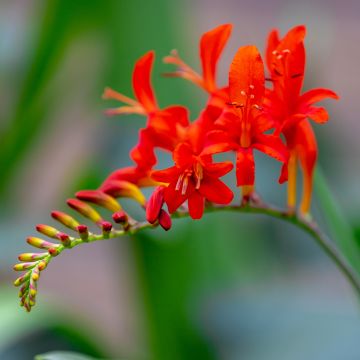
Available in 3 sizes
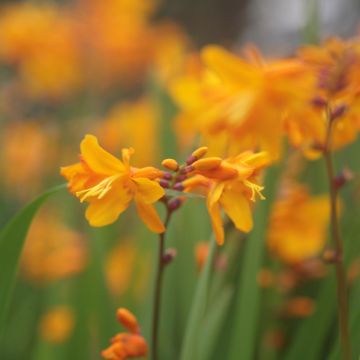
Available in 3 sizes
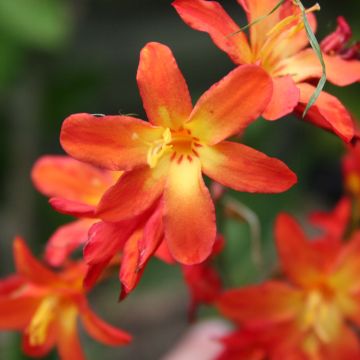
Available in 2 sizes
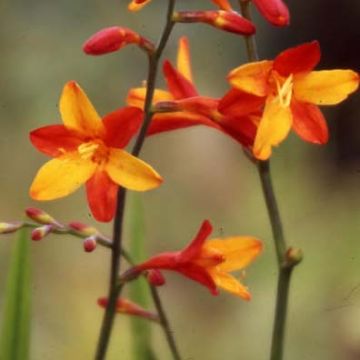
Available in 3 sizes
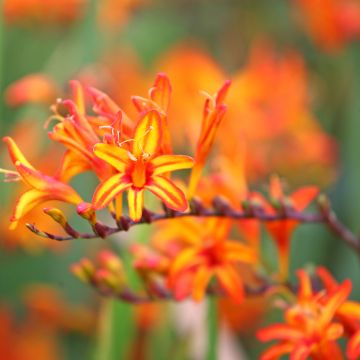
Available in 1 sizes
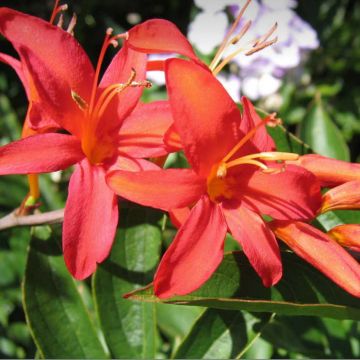
Available in 1 sizes
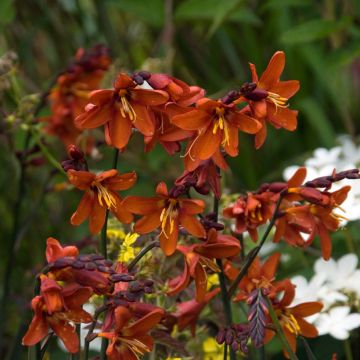
Available in 1 sizes
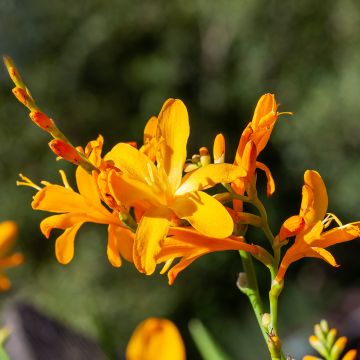
Available in 1 sizes
Available in 1 sizes
Crocosmia crocosmiflora ‘Fire King’: a stunning bicolour variety
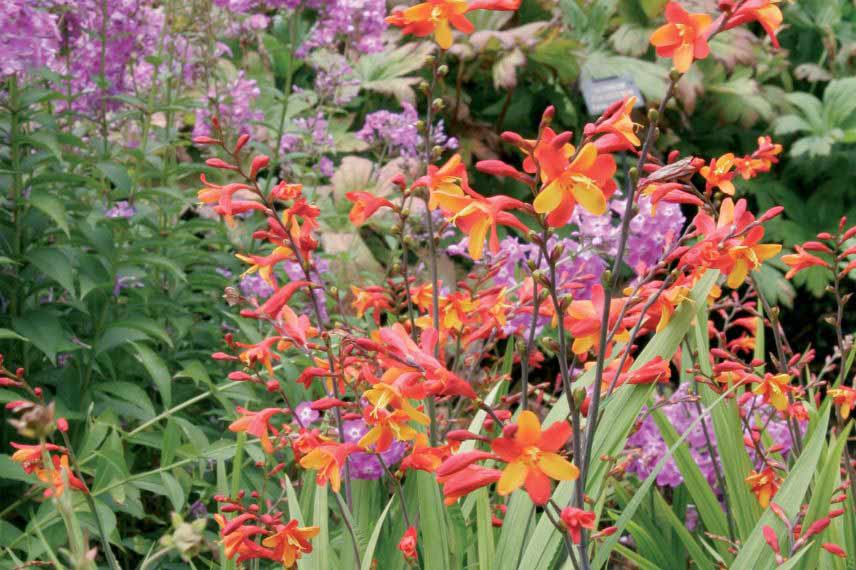
In the old variety ‘Fire King’, the flowers display two alternating colours on the petals, giving it a remarkable charm. On its small funnels, a bright scarlet and a very vivid orange indeed coexist, offering a true fireworks display of colours throughout the summer.
This generous flowering occurs between July and September and is enhanced by the very graphic foliage, as seen in all Crocosmias. It consists of long, slender, bright green leaves. Initially, they form a dense tuft before taking on a more spreading posture over time.
Quite compact, this variety reaches a height of 60 cm and a spread of 40 cm.
In a hot border, a bed of warm colours, it will shine beautifully alongside annuals or perennials, such as the Cosmos sulphureus, Rudbeckia, or Alstroemeria in shades of yellow-orange.
Crocosmia crocosmiflora ‘Fire King’
Crocosmia crocosmiflora ‘Star of the East’: a large variety with later flowering
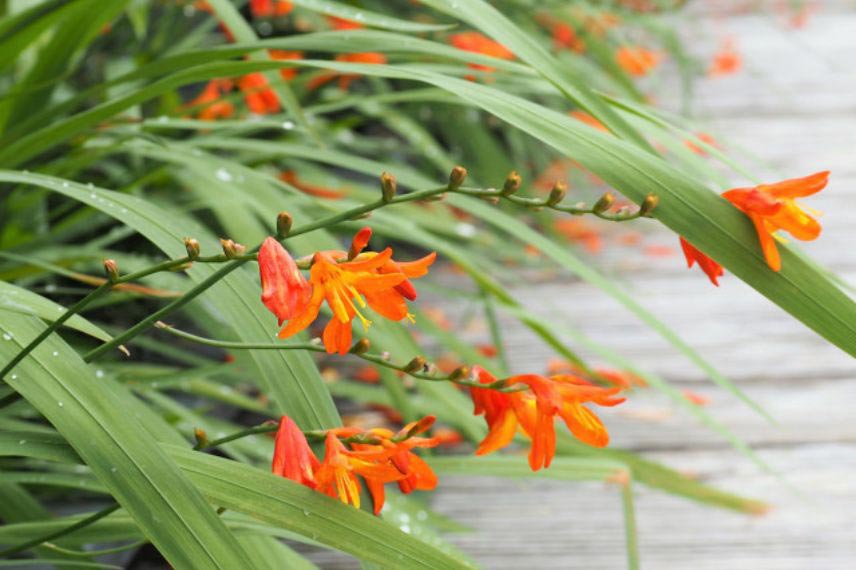
‘Star of the East’ is somewhat different from other Crocosmias. It belongs to the vigorous varieties, reaching up to 1 metre in height and 40 cm in spread. Furthermore, its flowering period is later than that of its relatives. It occurs between August and September for about 5 to 8 weeks. This allows it to mingle with the first autumn foliage, with which it pairs perfectly.
Its large flowers, measuring 7 cm across and fully open, reveal a bright orange, which approaches a burnt orange on the reverse of the petals. At the centre, a lighter orange speckled with burgundy catches the eye. The flowers appear atop pendulous, flexible, and airy spike-like stems. The light green foliage forms a true clump from which the flower spikes gracefully rise.
‘Star of the East’ is an old variety that remains a reliable choice today. It has even been awarded in England for its garden performance.
For a very warm exotic style, plant this Crocosmia in a bed alongside magnificent Cannas, stunning Kniphofias, or beautiful Hedychiums.
Crocosmia crocosmiflora ‘Star of the East’
Crocosmia crocosmiflora ‘Babylon’: a long and vibrant flowering
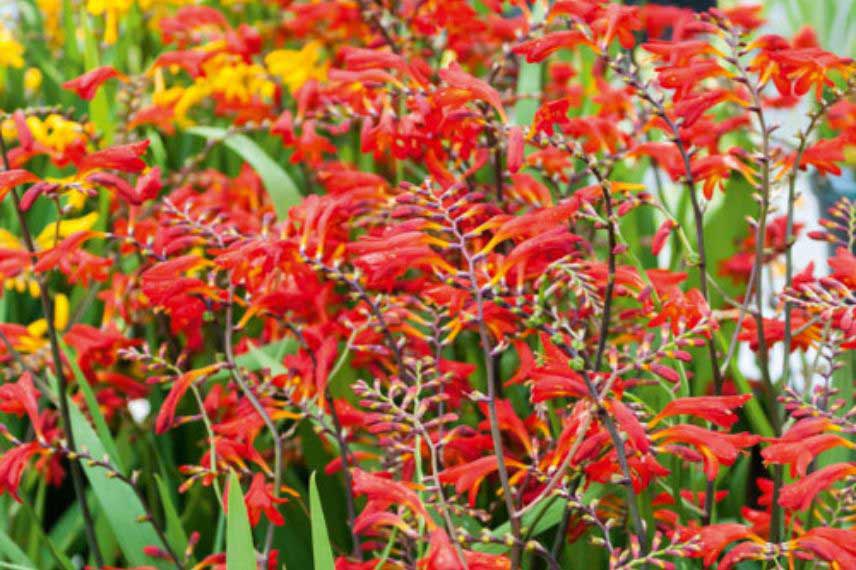
If all orange Crocosmias delight us with their brilliant flowering, ‘Babylon’ plays with different shades to please our eyes. Its numerous small flowers are grouped in trailing clusters. They offer a vibrant and intense orange, with almost red tones, revealing a mahogany red eye and a yellow throat.
The flowering, particularly long-lasting, lasts almost all summer from July to October.
The foliage, a beautiful dark green, consists of sword-shaped leaves that are long and narrow, resembling grasses.
Its modest silhouette (70 cm in height and 40 cm in spread) is well-suited for pot cultivation, to brighten up sunny terraces or balconies. This way, you can enjoy the ornamental qualities of this bulbous plant even without a garden.
Plant several clumps spaced 10 to 15 cm apart in a deep container, at least 40 cm in size. Add for example a small Nepeta, whose purple flowers will be perfect with our orange montbretia. Complete with light grasses: Carex, Japanese grass, or a beautiful Ophiopogon in purple tones.
Crocosmia crocosmiflora ‘Babylon’
- Subscribe!
- Contents
Comments