


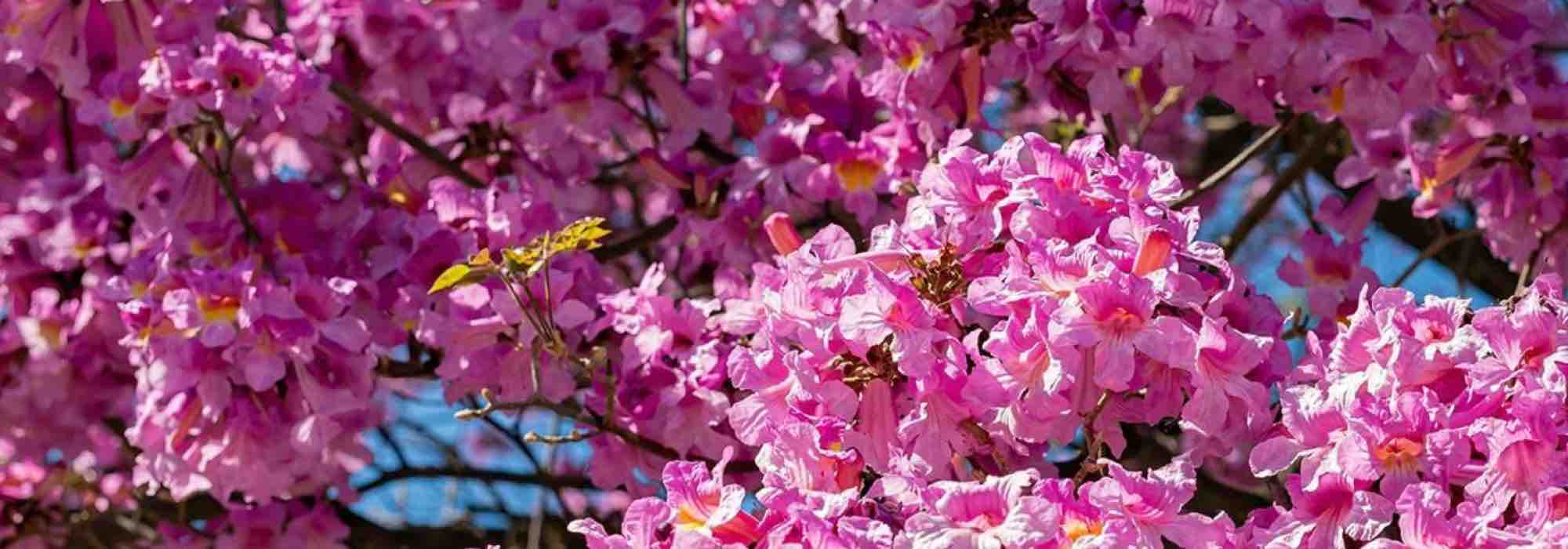
5 pink-flowering trees for a radiant garden!
Selection of pink-flowering trees
Contents
Pink-flowering trees enhance the garden with their flowering, offering colours that can be soft and soothing or bright and joyful, making them ideal for beautifying a garden. Whether you’re a beginner gardener or an experienced one, incorporating trees such as Magnolia, Japanese cherry, or Albizia will transform your outdoor space into a true living tableau. Our guide offers a selection of pink-flowering trees, and outlines the qualities of each, as well as maintenance tips and ideas for pairing to create a harmonious and colourful garden.

Magnolia 'Galaxy'
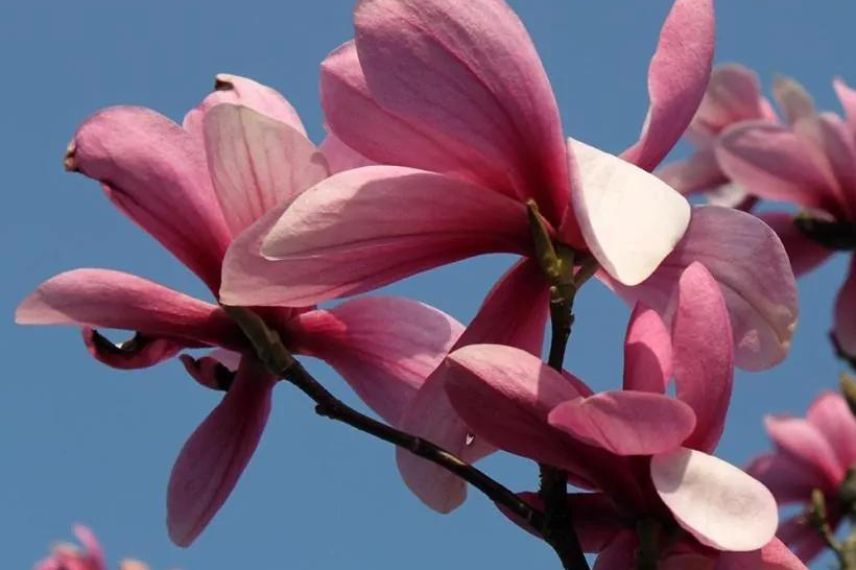
Magnolia ‘Galaxy’ offers spectacular spring flowering. From March to May, its bare shoots are covered with blossoms in a very bright pink, 11 cm across, reminiscent of narrow, upright lily-flowered tulips. like lily-flowered tulips. They open in a star-shaped, semi-double form, revealing a pale pink centre and are fragrant. The flower comprises 10 to 16 pointed, waxy and thick petals. In the centre are yellow stamens and a large greenish pistil. Flowering may resume irregularly through summer and into September. This tree can reach a height of 7 metres at maturity after ten years and spread to 5 metres in width. It has a regular oval crown, whereas younger trees form a crown that resembles an arrow. The oval leaves measure 20 cm long by 10 cm wide and are dark green with a lighter, velvety underside. They appear after flowering, then turn yellow-brown in autumn before dropping.
Plant this Magnolia in a sunny or partly shaded position, sheltered from winds, in fresh, well-drained, rich soil and lime-free. Very hardy, it tolerates temperatures down to -20°C. Young trees, however, should be protected from frost during the first few years. It makes a striking feature in a garden, planted as a solitary specimen on a lawn or in a bed of heather soil beside tall rhododendrons and camellias.
Brachychiton discolor
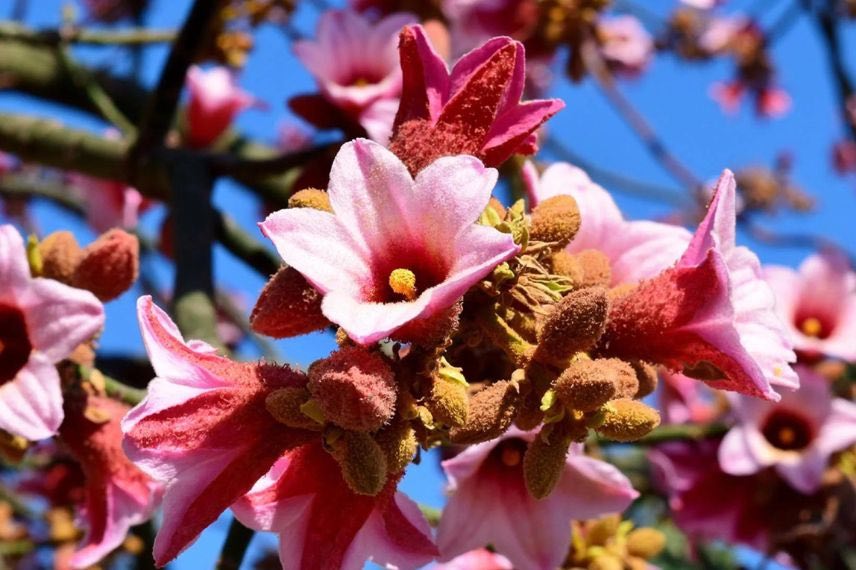
Brachychiton discolor, also known as lacebark tree, white Kurrajong or Sterculia is a tree native to Australia with spectacular pink summer flowering. The large green, palmately lobed leaves may drop in summer before flowering. From July to September, its bare branches become covered with pendulous clusters of 3 to 10 flowers, pink inside and darker on the outside. The flowers are bell-shaped and measure 5 cm in diameter. They give way to brown fruits about 15 cm long, reminiscent of cacao-pods. The bark shifts from greenish to grey, and the trunk becomes slightly swollen at the base, enabling it to store water. It reaches a height of 7 metres at maturity and a width of 5 metres. It has a pyramidal habit.
Not very hardy, this tree is suited to cultivation in regions with a Mediterranean climate. Otherwise, it can be grown in a pot and overwintered indoors. Plant it in a sunny position, sheltered from cold winds, in ordinary, deep and very well-drained soil, fertile and not too stony. Prefer neutral to acidic soil; this tree does not like calcareous soils. In the first two years after planting, it is necessary to mulch the base properly to protect it from the cold. It can be paired with rockroses and a Viburnum lucidum – Shiny Viburnum.
Albizia julibrissin 'Rosea' - Pink silk tree
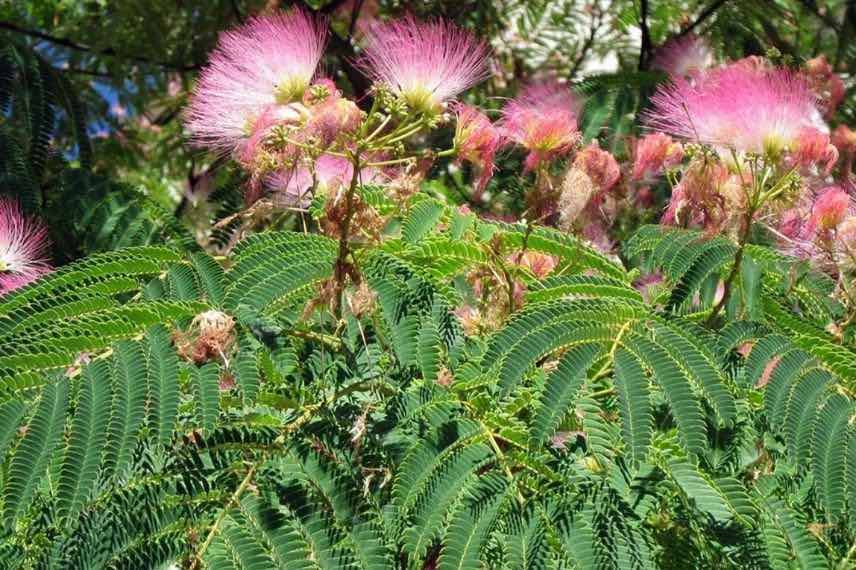
L’Albizia julibrissin ‘Rosea’ – Pink silk tree is a charming tree with its finely cut foliage and its original, fluffy flowers in a bold pink. It yields an airy flowering resembling pom-poms of fragrant stamens in a deep pink in summer, in the months of July and August. These plume-like, silky and scented inflorescences appear against a backdrop of light-green, finely cut foliage, 15 to 40 cm long. The foliage is deciduous. The flowers give way to fruits in the form of flat pods 8 to 20 cm long, green, then brown. The bark, smooth, takes grey-green to grey tones, and appears speckled with whitish lenticels.
Fast-growing, this tree can reach a height of 6 metres with a 4 metre spread at maturity. It has a taproot and does not take kindly to being moved. Hardy to –15°C, Albizia likes full sun, in well-drained soil and sheltered from cold winds. It is ideal for providing light shade in the garden and a surprisingly exotic touch. This is a reliable choice that has been awarded the RHS Award of Garden Merit. To showcase its airy silhouette, plant it as a specimen in your garden and enjoy its pleasant shade in summer.
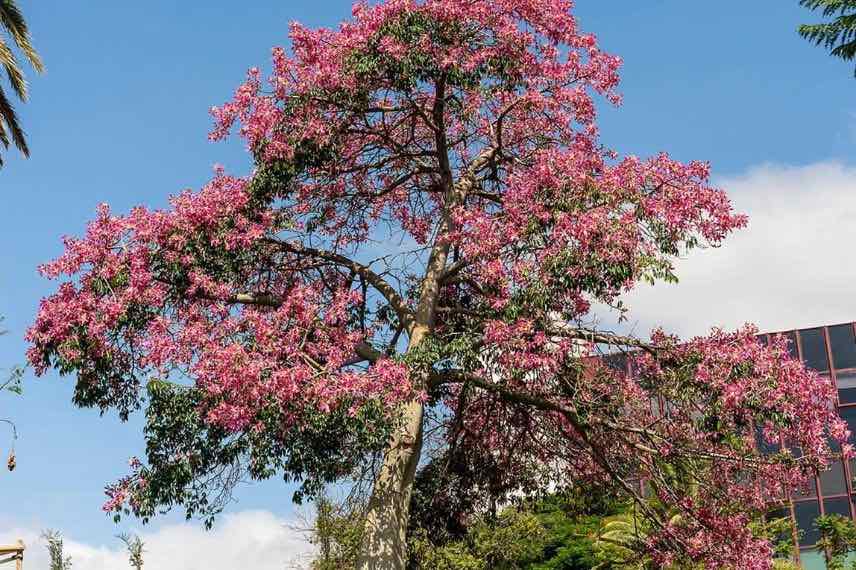
Chorisia or Ceiba speciosa - False kapok tree, bottle tree
Ceiba speciosa, also known as Chorisia, is a tropical tree with attractive palmate leaves and autumn flowering of large pink flowers. Its semi-evergreen leaves precede an abundant flowering from October to December, offering a spectacular display with pink flowers bearing white and yellow centres. The following fruits, green and elliptical, contain seeds surrounded by a white fibrous material. Native to South America, this frost-tender tree fits into mild-climate regions, notably on the Côte d’Azur and certain areas along the Atlantic coast. Its green bark on young trees becomes grey with age, and its trunk, adorned with massive thorns in a striking silhouette, takes on a bulbous form reminiscent of a bottle. This species, belonging to the Malvaceae family, can reach 12 metres in height at maturity with a width of 8 metres and presents a spreading habit.
Adapted to neutral to acidic, well-drained soils, Ceiba speciosa loves full sun and tolerates cold poorly, with hardiness down to -5°C for well-established specimens. Although outdoor cultivation is limited to the mildest regions, it is possible to grow it in a pot for cooler zones, thereby enjoying its tropical look by bringing it indoors during winter. Alongside other exotic plants, such as Syagrus romanzoffiana – Queen Palm, it creates a striking tropical ambience, ideal for gardens seeking a unique character.
Cercis siliquastrum - Judas tree
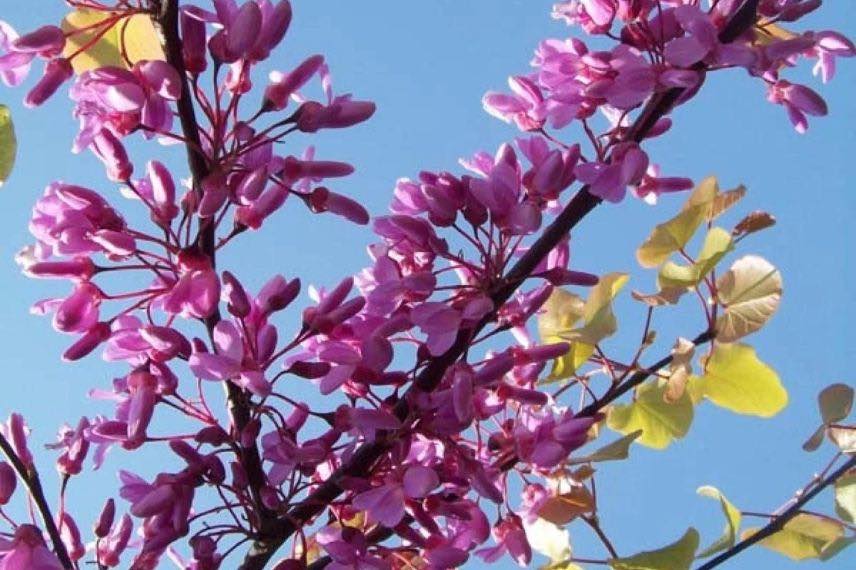
The Cercis siliquastrum – Judas-tree is a small tree that can reach 10 metres in height and boast abundant pink-lilac flowering in spring. In April and May, its bare branches are clothed with flowers grouped in bouquets and resembling the shape of tiny butterflies.The Judas-tree’s defining feature is that it is cauliflorous, meaning that its flowers grow directly on the branches and trunk. They are tightly packed against one another, fragrant and dress the naked wood of the tree with pink-lilac clusters. They are followed by the appearance of flattened pods, enjoyed by titmice. The foliage takes heart shapes. It is initially bronze and changes colour, turning blue-green and then golden-yellow in autumn, before shedding. The bark is grey and darkens with time, becoming almost black.
This tree prefers a sunny position and can be planted in any soil type, even dry and poor soil, provided it is well-drained. It is frost-sensitive when young, but becomes hardy to -15°C once mature. Water it during dry spells. Plant it as a solitary specimen or within an informal hedge, accompanied by winged euonymus and smoke tree.
Many other pink-flowered trees exist, such as the Tamarisk, Japanese quince, almond tree, or smoke tree.
- Subscribe!
- Contents
Comments