





























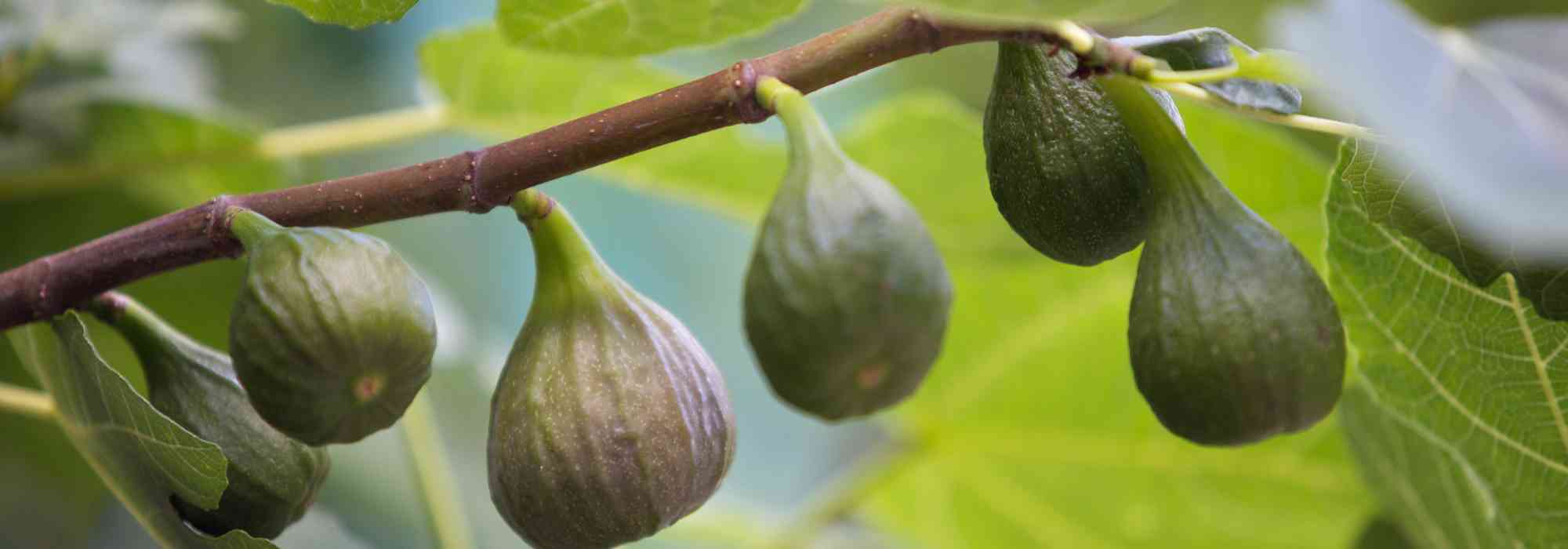
6 Fig trees for the Southern half of France
Fig varieties adapted to a mild climate
Contents
If you have always dreamed of growing figs in your garden and sampling sun-drenched fruits, you’re in the right place. The mild climate offers ideal conditions for growing fig trees or Ficus carica. In this care sheet, we present a careful selection of the most promising varieties of fig trees, such as ‘Marseillaise’ or ‘Ronde de Bordeaux’, renowned for their adaptability to the specific climatic conditions of the southern half of France. Types of figs, yield, characteristics and origin of the variety, you’ll learn everything there is to know about the best fig trees for the southern regions of France.

Growing fig trees south of the Loire
The cultivation of fig trees in the south of the Loire requires particular attention, given the climatic and geographical variations between the different regions. The choice of fig tree types is therefore essential for successful cultivation. First, it is important to decide between single-harvest and two-harvest fig trees. Single-harvest fig trees produce a single harvest per year, generally in summer or autumn. By contrast, two-harvest fig trees offer two harvest periods, one in spring and the other in autumn. It is considered that if your region is prone to late frosts (-5°C in April), it is better to choose a single-harvest variety, as the flowers are produced later. However, even in the northern part of France, many biferous varieties (‘Ice Crystal’, ‘Brown Turkey’, ‘Goutte d’or’…) fruit well with a little spring protection. In short, if around you winters and springs are rather mild, you can choose either single-harvest or two-harvest varieties.
Another crucial factor is to determine whether the fig variety you choose is self-fertile or not. Self-fertile fig trees can produce fruit on their own, while others require the proximity of another fig tree for pollination, with the help of a pollinating insect, the blastophaga. This insect is present only in the Mediterranean basin. Elsewhere, you will need to plant self-fertile varieties.
Fig trees prefer well-drained soils rich in organic matter. Be sure to avoid soils that are too heavy and clayey, which can cause waterlogging. Sun exposure is essential for healthy growth of fig trees. They thrive under abundant sunshine, which is often abundant in the southern half of the Loire.
Drought is also a challenge to consider. In southern regions, hot and dry summers can affect the health of your fig trees. It is important to maintain regular watering during very dry periods to guarantee good fruit production.
Lastly, it is crucial to note the disparities between the different regions of the southern Loire. Climatic conditions vary considerably from the Atlantic coast to Provence and the southwest. The fig varieties that succeed in one of these regions may not be suited to another due to differences in temperature and humidity. It is recommended to consult local gardeners or gardening experts in your region for advice specific to your location.
→ Want to know more about fig cultivation? Read Fig tree – Ficus carica: planting, pruning and maintenance.
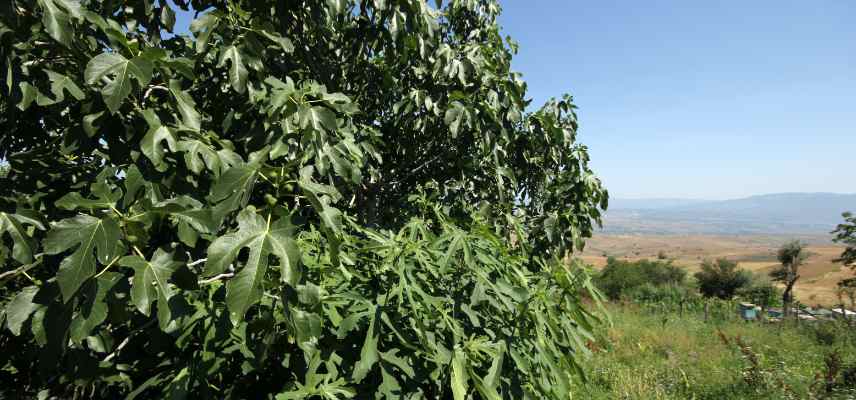
The fig tree: emblematic of the southern regions
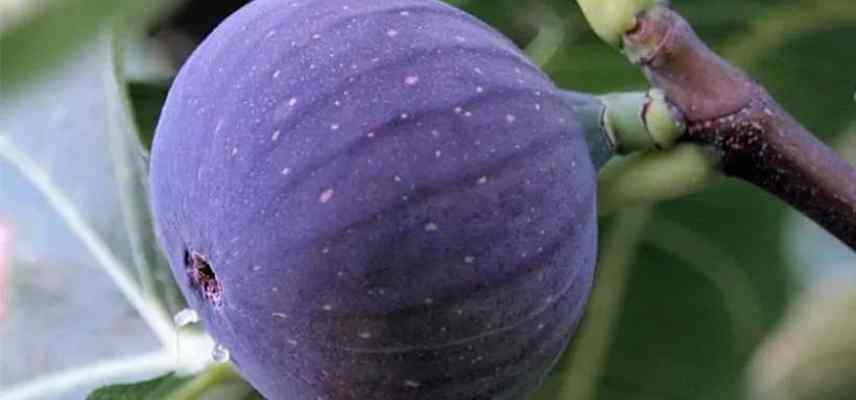
Fig tree 'Violette de Solliès' (or 'Bourjasotte noire')
The fig tree variety ‘Violette de Solliès’ is a self-fertile fig tree variety well known, originating from the Solliès-Pont region, located in the Var, in Provence, southern France. It is a single-harvest fig tree, which means it produces a single harvest of figs per year. This harvest typically occurs in late summer or early autumn. The ‘Violette de Solliès’ fig trees can reach a mature height of around 3 to 4 metres. They have vigorous growth and dark green, lobed leaves. These fig trees develop a spreading habit and flexible branches.
The ‘Violette de Solliès’ figs are valued for their high-quality fruit. The figs are medium to large in size, with a dark purple skin characteristic. The flesh is sweet, juicy and particularly tasty, offering a delicious tasting experience. The ‘Violette de Solliès’ figs are often eaten fresh, but they can also be used for jam or cooking.
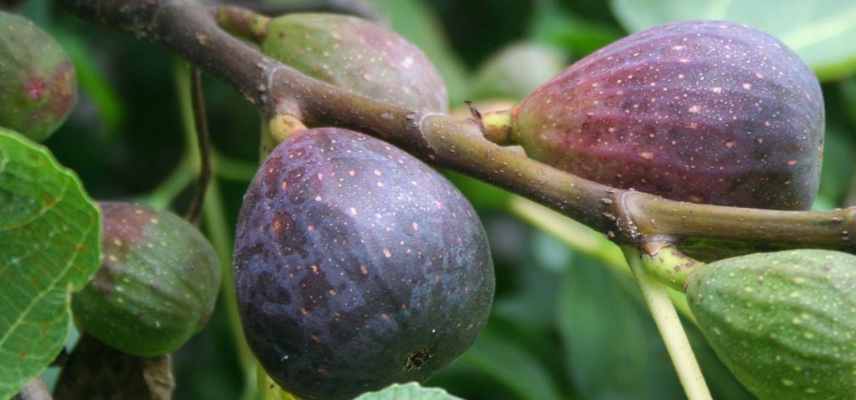
Fig tree 'Ronde de Bordeaux' (or 'Précoce de Barcelona')
The fig tree ‘Ronde de Bordeaux’ variety is a popular and well-regarded cultivar, renowned for its sweet flavour and its ability to withstand the high temperatures of southern France. The fig tree ‘Ronde de Bordeaux’ is self-fertile and generally regarded as a single-crop fig tree, which means it produces one harvest of figs per year. The harvest takes place in late summer or early autumn. The fig trees ‘Ronde de Bordeaux’ tend to reach a mature height of around 3 to 4 metres. They have a spreading habit with flexible branches. The leaves are lobed, dark green in colour, and the ripe figs are easy to spot thanks to their characteristic colour.
The figs of the variety ‘Ronde de Bordeaux’ are highly prized for their excellent quality. The fruits are medium to large in size and have a slightly flattened shape, hence the name “Ronde”. The skin of the figs is dark purple to black, while the flesh is sweet, juicy and delicious. The figs ‘Ronde de Bordeaux’ are often eaten fresh, but they can also be used for making desserts, jams and preserves.
Read also
Ficus: planting, pruning and maintenanceFig tree 'Figue de Marseille' (or 'Marseillaise')
The Marseille fig tree is a fig tree variety well suited to Mediterranean climates, as it offers good resistance to summer drought. It is a single-harvest fig tree, which means it bears a single harvest of figs per year, and self-fertile. Harvest typically takes place in summer or early autumn. The ‘Figue de Marseille’ fig trees tend to reach an adult height of around 3 to 4 metres. They have a spreading habit with flexible branches. Leaves are lobed, dark green in colour, and give the tree a lush green appearance.
This fig variety is prized for the quality of its figs. The fruits are medium to large in size, with green to pale yellow skin and a flesh that is sweet, juicy and sugary. The ‘Figue de Marseille’ figs are typically eaten fresh, but they can also be used to make jams, desserts and pastries.
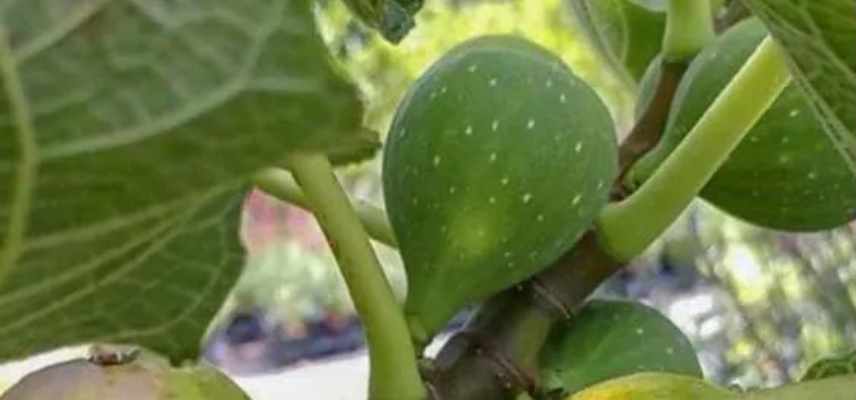
Fig tree 'Noire de Caromb'
The fig tree variety ‘Noire de Caromb’ originates from the Caromb region, located in the Vaucluse department in Provence. This fig tree is self-fertile and produces a single crop per year. The harvest typically takes place in summer or early autumn. Figs of the ‘Noire de Caromb’ variety reach an adult height of around 3 to 4 metres. They have a spreading habit with flexible branches. The leaves are lobed, dark green, and the ripe figs are easy to spot thanks to their distinctive colour, almost black.
The figs of the ‘Noire de Caromb’ variety are highly prized for their exceptional quality. The fruits are medium to large in size and have a skin that is a dark purple, almost black, hence their name. The flesh is sweet, juicy and particularly delicious. The figs ‘Noire de Caromb’ are often eaten fresh, but they can also be used for desserts, jams and preserves.
Please note: the fig tree ‘Noire de Caromb’, if its flower buds are well protected in winter and at the beginning of spring, can bear fruit well even north of the Loire.
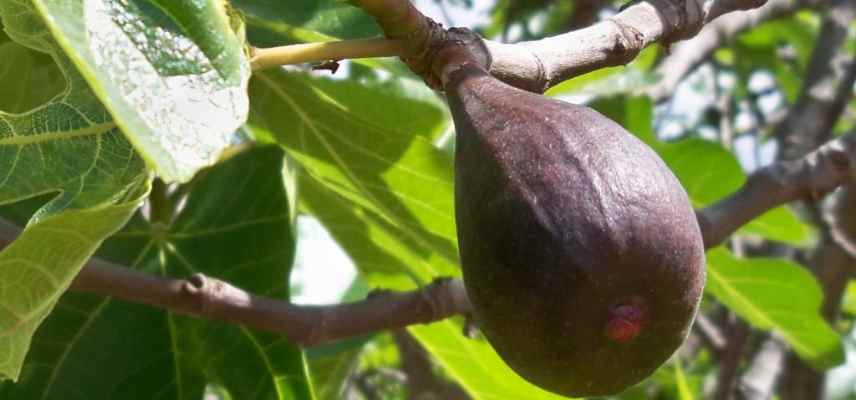
Fig tree 'Précoce de Dalmatie'
Fig variety ‘Précoce de Dalmatie’ is a fig tree variety named after the Dalmatia region in Croatia. It is a self-fertile and single-harvest fig tree, meaning it produces a single harvest of figs per year. The harvest generally takes place in early summer, hence its name “Précoce”. Figs ‘Précoce de Dalmatie’ reach an adult height of 2.50 metres with a spreading habit and flexible branches. The leaves are lobed, dark green.
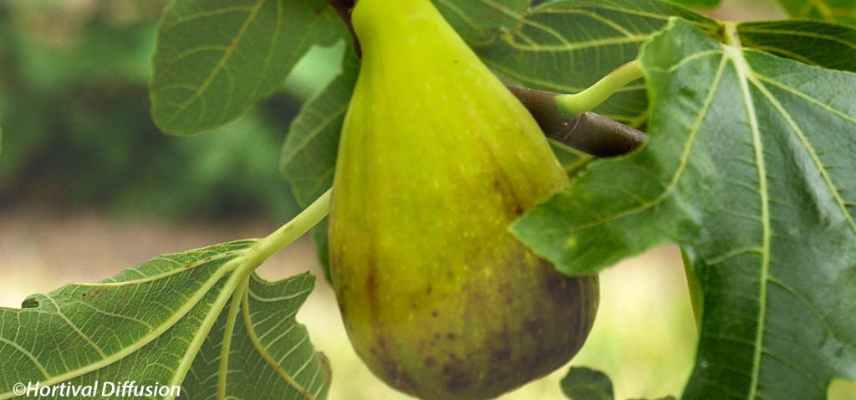
Fig tree 'Grise de Tarascon'
The fig tree variety Fig tree ‘Grise de Tarascon’, also known as ‘Tarascon’, is a fig tree variety originating from the Tarascon region, located in the Bouches-du-Rhône department in Provence. ‘Grise de Tarascon’ is a self-fertile fig tree. Harvest generally takes place in summer or early autumn. The ‘Grise de Tarascon’ fig trees will reach a mature height of around 6 metres with a spreading habit.
The fruits are medium to large, with skin colour ranging from grey to pale purple. The Grise de Tarascon figs are often eaten fresh, but they can also be used in the preparation of desserts, jams and preserves.
- Subscribe!
- Contents
Comments