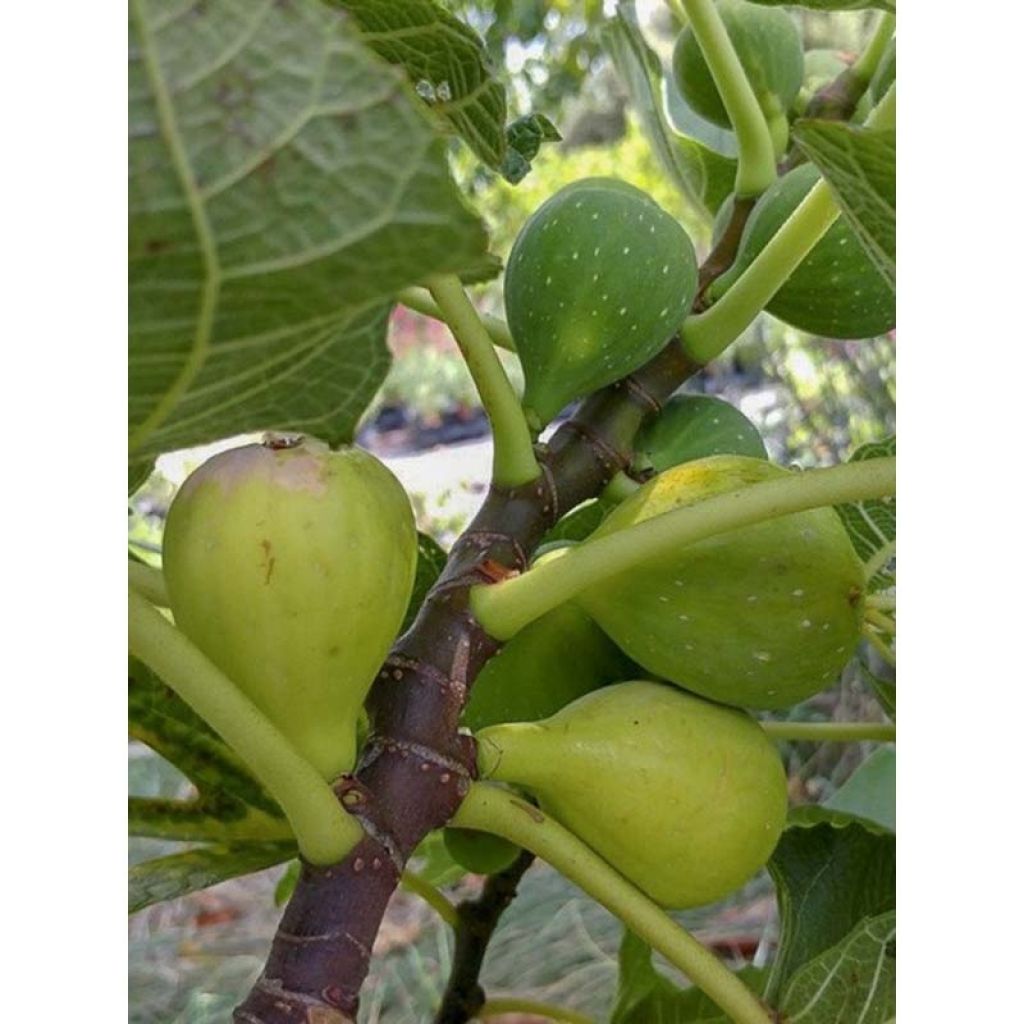
Fig Tree De Marseille - Ficus carica
Fig Tree De Marseille - Ficus carica
Ficus carica De Marseille
Common Fig, Fig Tree
Planter en novembre 2021, tailler,pincer,enlever les figues sauf cinq,les figues ont muri en octobre,elles sont énormes.
Bertrand , 18/10/2022
Back-to-school special offer!
Get €10 off for every €50 you spend! And get up to €40 off on a single order.
How does it work?
1. Shop your favourites
Add your favourite plants to your basket. For every €50 you spend (excluding delivery charges, store credit and the plastic-free option), you’ll receive a €10 voucher.
€50 spent = €10 voucher
€100 spent = €20 voucher
€150 spent = €30 voucher
€200 spent = €40 voucher
2. Place your order
Once your basket reaches one of the spending thresholds, place your order. You can even choose your delivery date!
3. Receive your voucher
As soon as your order has been shipped, you’ll receive an email containing your personal voucher code and its value.
4. Use it on your next order
Your voucher is valid for 90 days from the date you receive it. It can be used once only, on a new order worth at least the value of the voucher, excluding delivery charges.
Please note: Vouchers can be combined with other offers, but cannot be split or refunded.
Why not try an alternative variety in stock?
View all →
Available in 0 sizes
Available in 3 sizes
Available in 3 sizes
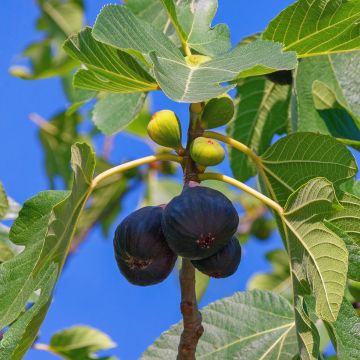
Available in 3 sizes
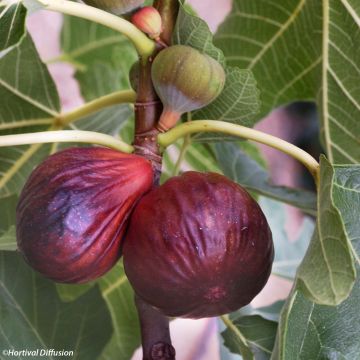
Available in 1 sizes
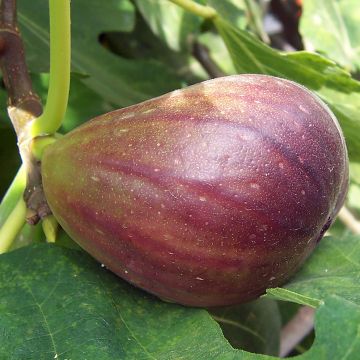
Available in 4 sizes
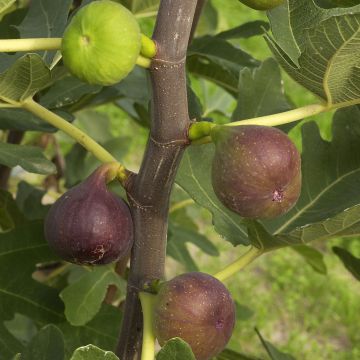
Available in 3 sizes
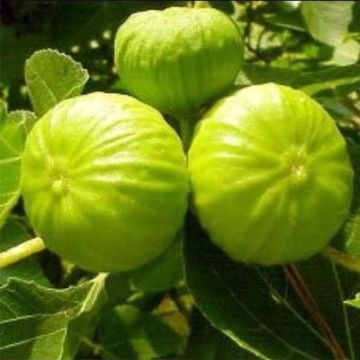
Available in 1 sizes
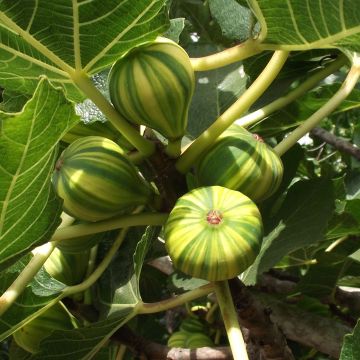
Available in 2 sizes
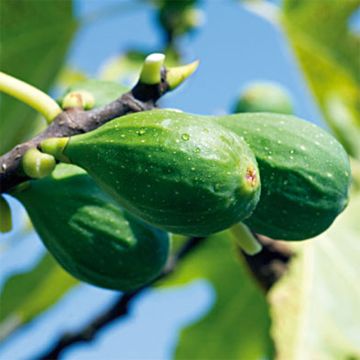
Available in 1 sizes
This plant carries a 12 months recovery warranty
More information
We guarantee the quality of our plants for a full growing cycle, and will replace at our expense any plant that fails to recover under normal climatic and planting conditions.
Description
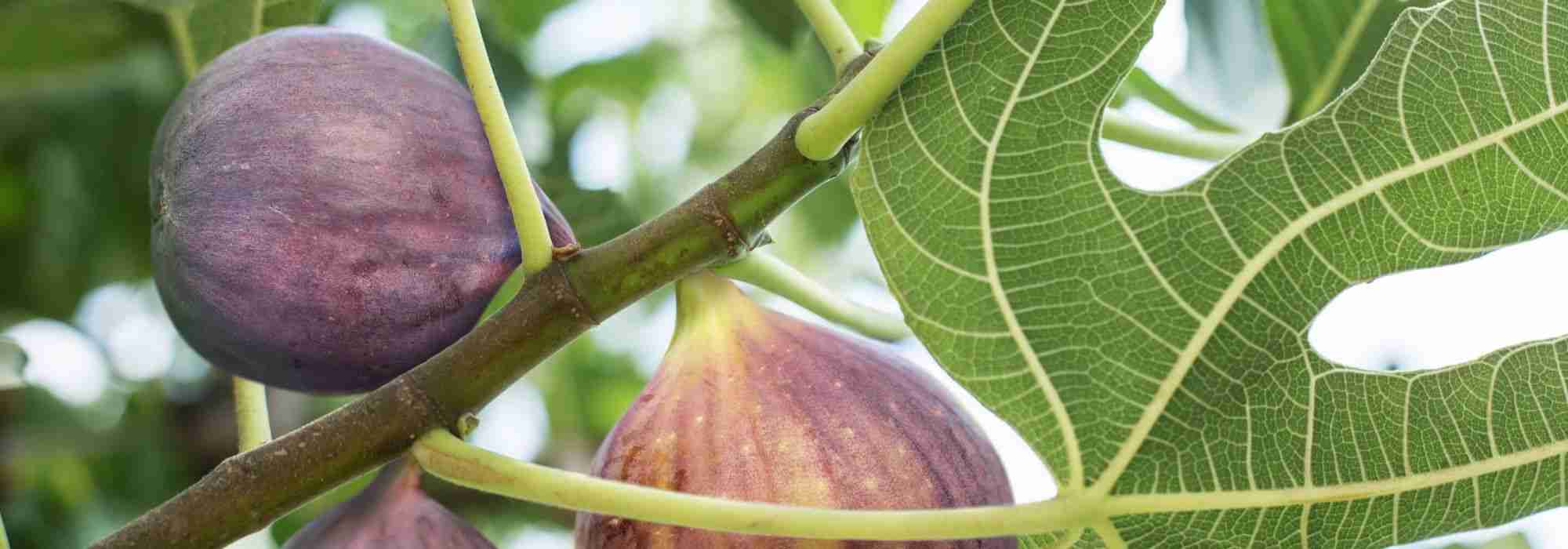
Ficus carica 'Marseille' (also known as Marseillaise and Athens fig) is a very old Provençal variety that is still cultivated and appreciated for its small figs, which are sweet and taste like honey. These figs were traditionally dried to prepare the thirteen desserts of Christmas, according to Provençal tradition. They can be harvested from mid-August. This variety withstands summer drought well but cannot tolerate strong frosts. It is perfectly suited for hot regions.
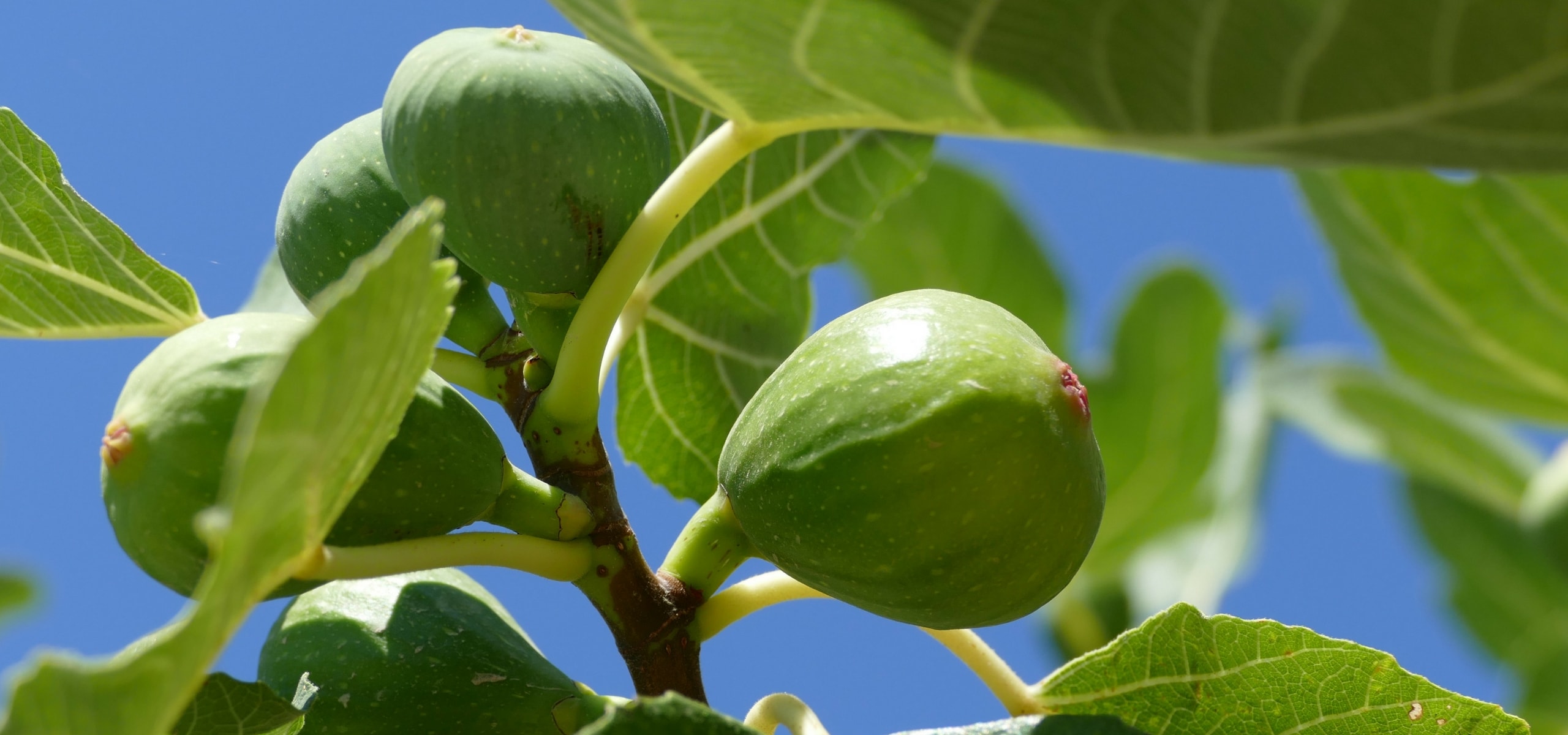
The 'Marseille' fig tree has an initially upright habit, then spreading, reaching about 6m (20ft) in all directions. It is a unifera variety, producing small figs weighing about 25 grams, which are green-golden in colour when ripe. Their pale, almost white flesh is sweet and of good quality. It is delicious when eaten fresh, as well as in confectionery or dried. Figs, in general, are used in sweet dishes (tarts, clafoutis, compotes) or savoury dishes with goat's cheese or dry-cured ham. Refrigeration is not recommended as it alters the fig's aroma and the skin may suffer from humidity and condensation. The best way to enjoy them is at the table, or tasting them under the tree, which will preserve their honey-like fragrance. The harvest is done in several stages, as the figs ripen. This variety is self-fertile and parthenocarpic, allowing fruit to be obtained without fertilisation. It does not require other fig trees. It also does not depend on the intervention of the fig wasp, the only pollinating insect of the fig tree, which is too delicate to survive in cold climates.
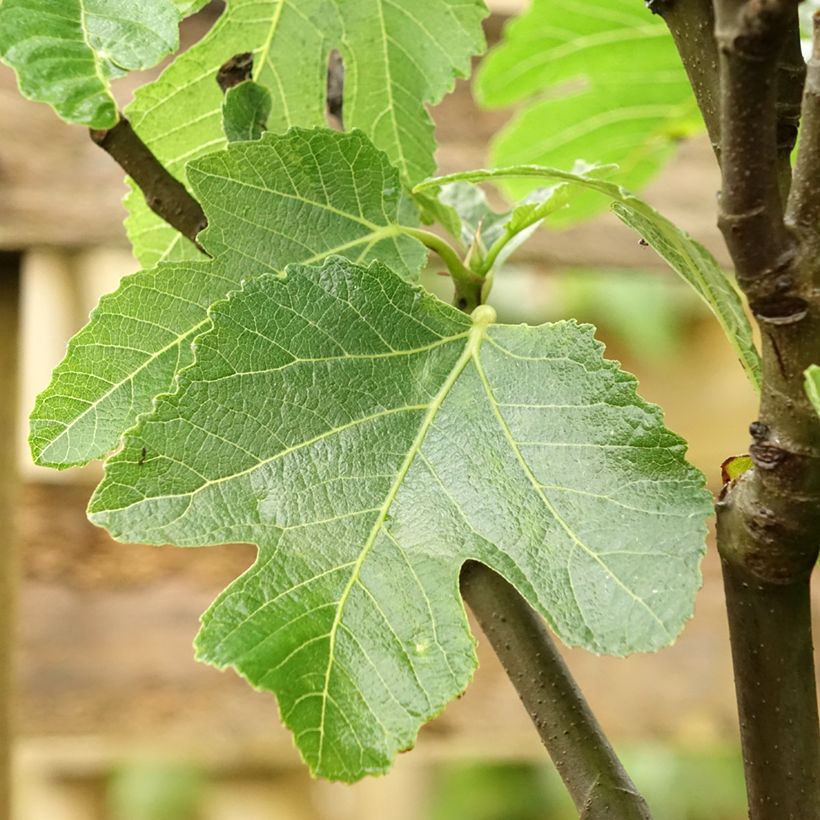
Ficus carica originates from Turkey and Asia Minor. It belongs to the Moraceae family. It is a deciduous small tree with a greyish trunk that is often twisted. The leaves are rough, bright green turning yellow in autumn, finely velvety, relatively large (sometimes 20cm (8in) long) and have a long petiole. The lamina is deeply divided into three to seven lobes, usually five, of variable shape. They have a velvety underside and prominent veins. The wood is soft and spongy, and the bark is grey and smooth. The root system of this small tree is powerful, spreading in all directions.
The fig tree is often considered one of the most beautiful fruit trees. Its unique foliage gives it an ornamental aspect and provides a beautiful shaded space, which is very pleasant during the summer heat. Plant it sheltered by a wall that will protect it from the cold during harsh winters, with a south or southwest exposure, alongside pomegranate, white mulberry, and Japanese loquat. Consider its dimensions when fully grown to determine the distance at which you will plant it. Even though the roots do not cause damage to modern constructions, they can cause damage to walls made of dry stone or with weak mortars.
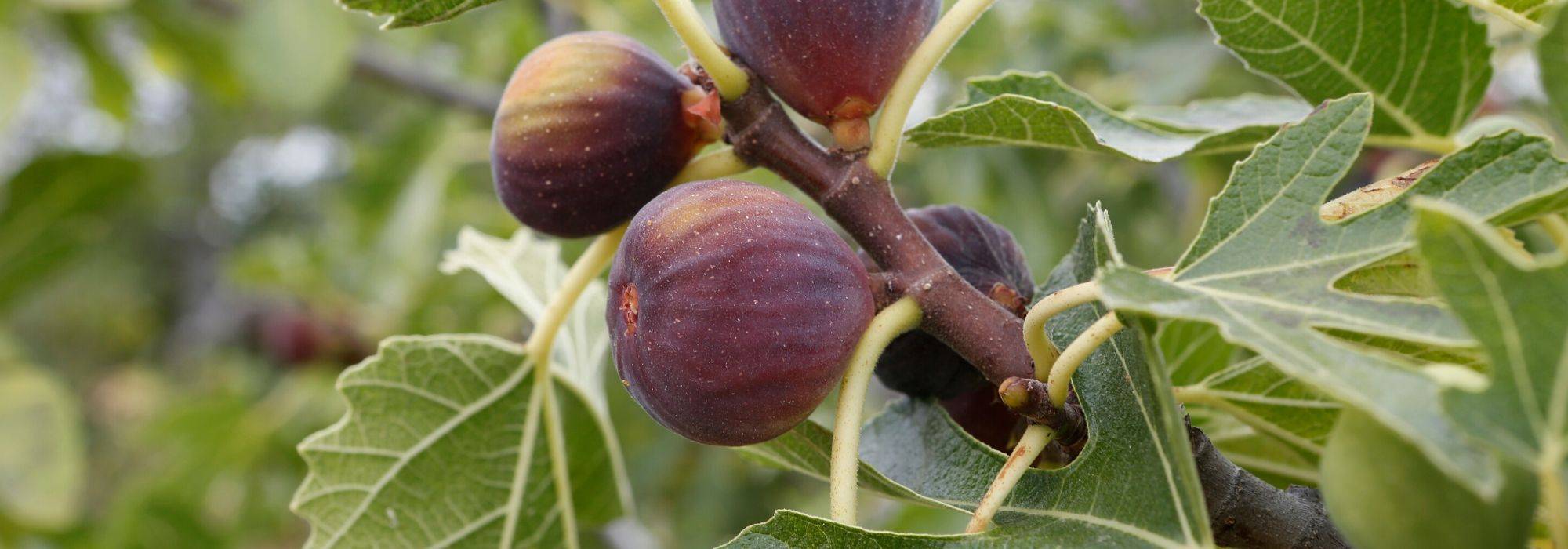
Fig Tree De Marseille - Ficus carica in pictures
Plant habit
Fruit
Foliage
Botanical data
Ficus
carica
De Marseille
Moraceae
Common Fig, Fig Tree
Cultivar or hybrid
Planting and care
It is suitable for warm regions, even ones that are very hot and dry in summer. It adapts to all types of soil, even poor, rocky, and dry. However, it prefers deep, loose soils with a sufficiently high limestone content. It requires a sunny and warm exposure (south or southwest), sheltered from strong winds to fruit well. In summary, the fig tree likes to have its feet in water and its head in sunshine, especially during fruit ripening in summer. When planting, place a layer of gravel at the bottom of the planting hole and add a mixture of garden soil and mature compost or soil conditioner.
Ensure it does not lack water during the first two years after planting, especially in summer. Although its root system can draw water deeply from the soil, it is not sufficiently developed to do this when young. It is not well-suited to mountainous climates, where its success is a challenge. It can be planted from November to the end of March, outside of freezing periods. In colder regions, it is wise to plant early in spring. It is a fairly hardy tree (-12 to -15°C (10.4 to 5°F)). If the above-ground parts are destroyed by the cold, it will regrow from the stump.
It is not very susceptible to diseases and pests.
Planting period
Intended location
Care
Planting & care advice
-
-
-
-
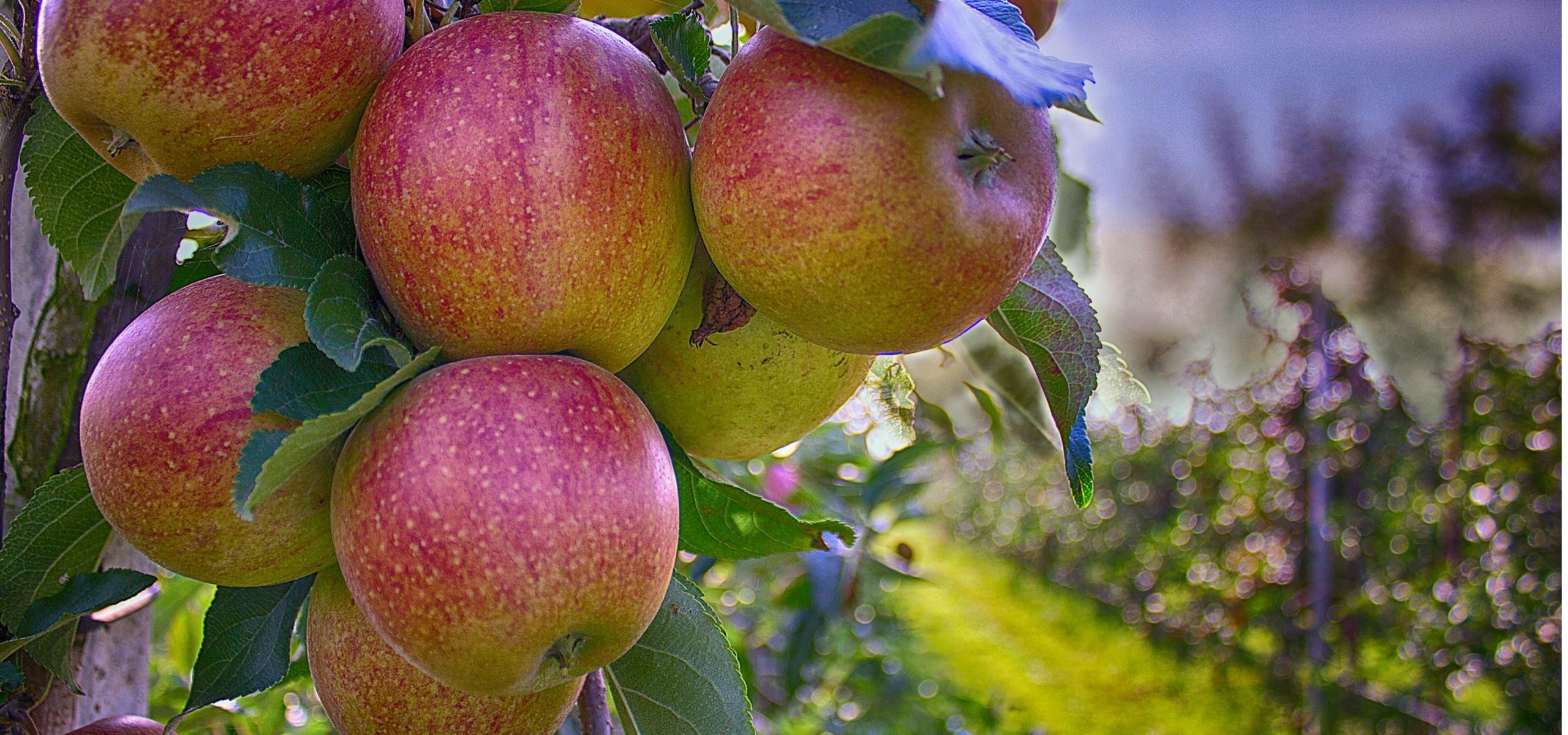
-
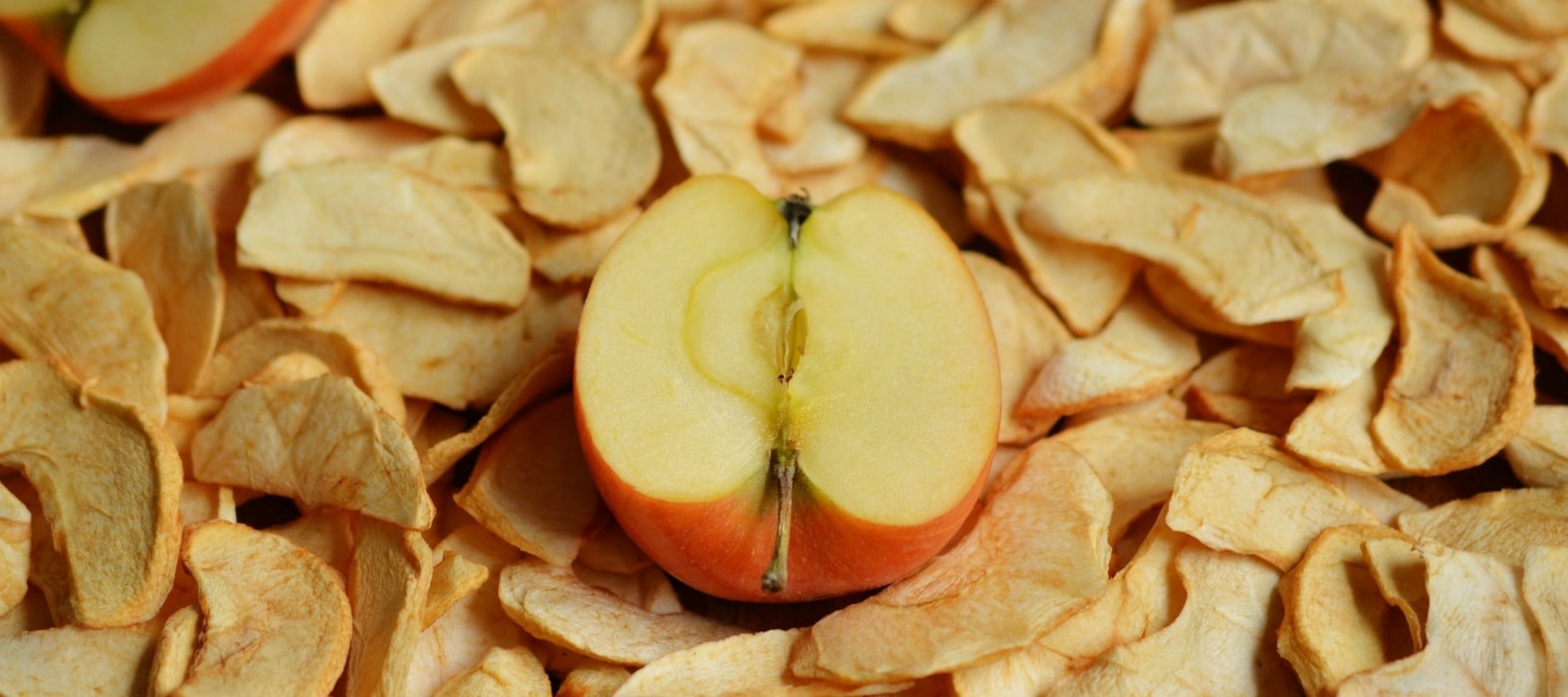
-
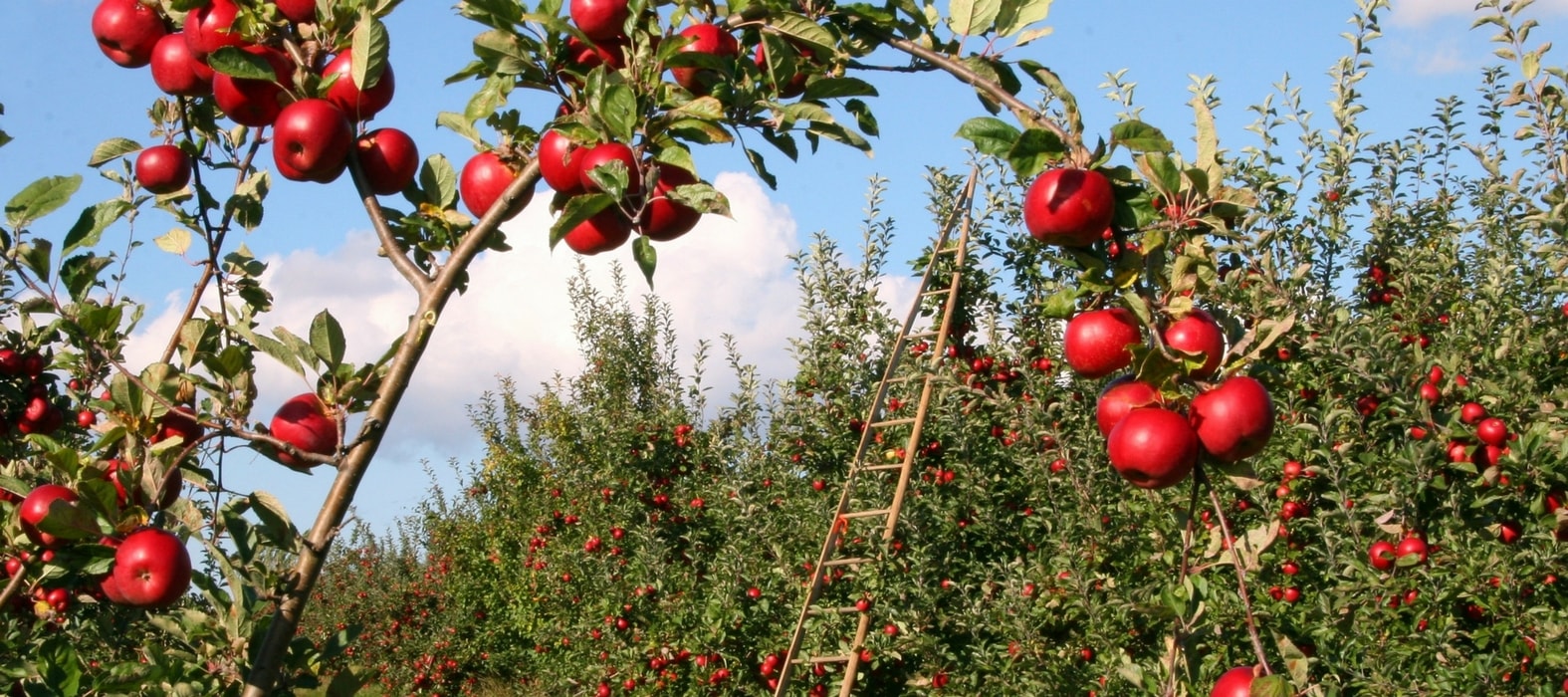
-
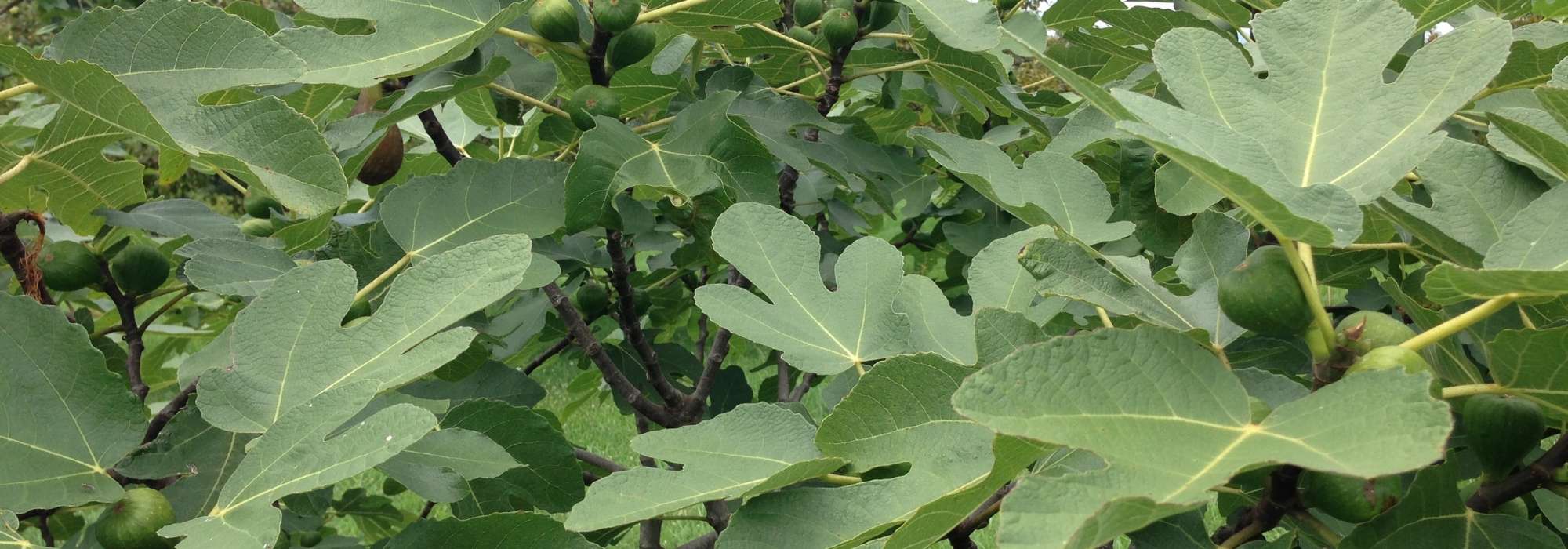
-
-
, onOrder confirmed
Reply from on Promesse de fleurs
Recently viewed products
Haven't found what you were looking for?
Hardiness is the lowest winter temperature a plant can endure without suffering serious damage or even dying. However, hardiness is affected by location (a sheltered area, such as a patio), protection (winter cover) and soil type (hardiness is improved by well-drained soil).

The flowering period indicated on our website applies to countries and regions located in USDA zone 8 (France, the United Kingdom, Ireland, the Netherlands, etc.)
It will vary according to where you live:- In zones 9 to 10 (Italy, Spain, Greece, etc.), flowering will occur about 2 to 4 weeks earlier.
- In zones 6 to 7 (Germany, Poland, Slovenia, and lower mountainous regions), flowering will be delayed by 2 to 3 weeks.
- In zone 5 (Central Europe, Scandinavia), blooming will be delayed by 3 to 5 weeks.
In temperate climates, pruning of spring-flowering shrubs (forsythia, spireas, etc.) should be done just after flowering.
Pruning of summer-flowering shrubs (Indian Lilac, Perovskia, etc.) can be done in winter or spring.
In cold regions as well as with frost-sensitive plants, avoid pruning too early when severe frosts may still occur.
The planting period indicated on our website applies to countries and regions located in USDA zone 8 (France, United Kingdom, Ireland, Netherlands).
It will vary according to where you live:
- In Mediterranean zones (Marseille, Madrid, Milan, etc.), autumn and winter are the best planting periods.
- In continental zones (Strasbourg, Munich, Vienna, etc.), delay planting by 2 to 3 weeks in spring and bring it forward by 2 to 4 weeks in autumn.
- In mountainous regions (the Alps, Pyrenees, Carpathians, etc.), it is best to plant in late spring (May-June) or late summer (August-September).
The harvesting period indicated on our website applies to countries and regions in USDA zone 8 (France, England, Ireland, the Netherlands).
In colder areas (Scandinavia, Poland, Austria...) fruit and vegetable harvests are likely to be delayed by 3-4 weeks.
In warmer areas (Italy, Spain, Greece, etc.), harvesting will probably take place earlier, depending on weather conditions.
The sowing periods indicated on our website apply to countries and regions within USDA Zone 8 (France, UK, Ireland, Netherlands).
In colder areas (Scandinavia, Poland, Austria...), delay any outdoor sowing by 3-4 weeks, or sow under glass.
In warmer climes (Italy, Spain, Greece, etc.), bring outdoor sowing forward by a few weeks.
Shipping country and language
Your country of residence may be:
Your country of residence is:
For a better user experience on our website, you can select:
Your shipping country:
-
 Austria
-
 Belgium
-
 Bosnia & Herzegovina
-
 Bulgaria
-
 Croatia
-
 Cyprus
-
 Czechia
-
 Denmark
-
 Estonia
-
 Finland
-
 France
-
 Germany
-
 Greece
-
 Hungary
-
 Iceland
-
 Ireland
-
 Italy
Italy
-
 Latvia
-
 Liechtenstein
-
 Lithuania
-
 Luxembourg
-
 Malta
Malta
-
 Netherlands
-
 Poland
-
 Portugal
-
 Romania
-
 Serbia
-
 Slovakia
-
 Slovenia
-
 Spain
Spain
-
 Sweden
-
 Switzerland
Language:
-
French
-
 English
-
Spanish
-
Italian
-
German
-
Portuguese
-
Dutch
-
Finnish
My Account
Hello
My wish lists
My cart
Log in / Register
Existing customer?
This form is protected by reCAPTCHA - the Google Privacy Policy and Terms of Service apply.
New customer?
Create an account to track your orders, access our customer service and, if you wish, make the most of our upcoming offers.