


6 Mediterranean perennials
OUR SELECTION OF PLANTS FOR SUN AND DRY SOIL
Contents
To create a Mediterranean garden in well-drained, even very dry soil in summer, it is essential to choose plants that love the sun and can withstand hot, dry conditions. The Mediterranean perennials have physiological characteristics that make them ideal plants for this purpose: undemanding, aromatic, and often very floriferous, they will allow you to create beautiful, easy-to-maintain atmospheres!
Discover our selection of Mediterranean perennials, plants for sunny, dry, and poor soils: true champions of resilience!

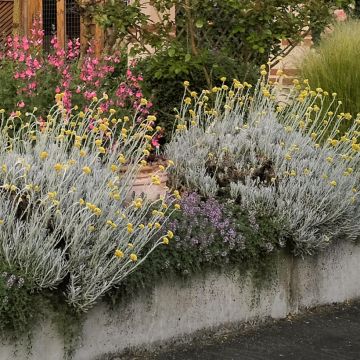
Achillea taygetea: a perennial that stands the test of time
Yarrow is one of the many talented plants, thriving in wild gardens as well as in well-maintained flower beds tended by the most conscientious gardeners. The Achillea taygetea, native to the Mediterranean basin, forms a small, upright, compact bush that is very decorative, reaching about 50 cm in height when in bloom. Its feathery foliage, more or less evergreen, is a beautiful silvery colour. From June to September, the stems are topped with dense pale yellow umbel flowers. Very easy to care for, it will thrive on a sunny bank or in a rockery, alongside Oreganos or Nepetas.
Hardy down to -15°C, as a true Mediterranean plant, it tolerates drought, requires full sun, and well-drained soil, even stony and calcareous.
→ Sophie’s tip: it can be easily multiplied by dividing the clumps in April.
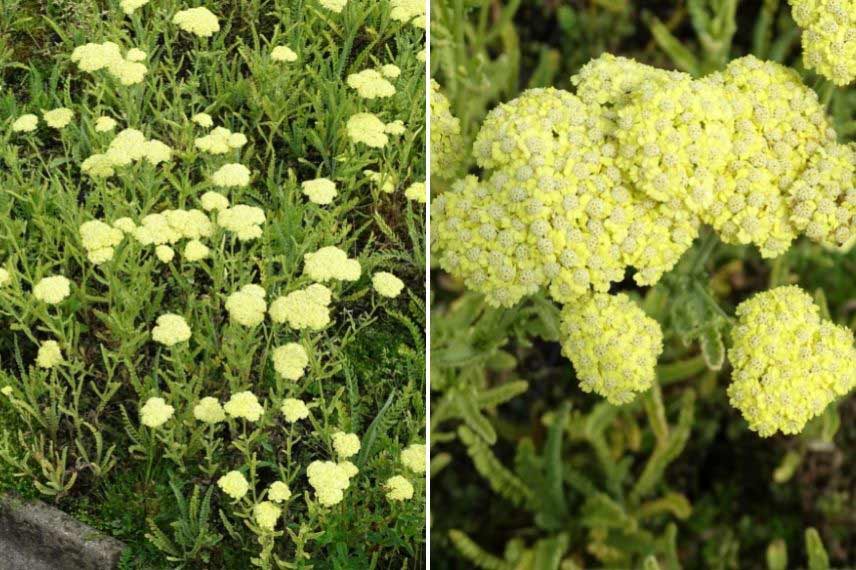 Achillea taygetea
→ For expert tips on growing Yarrow, find Alexandra’s advice here: YARROW – PLANT, GROW AND MAINTAIN
Acanthus mollis: a decoration in its own right
Certain plants have such a presence that they create stunning scenes all on their own. Acanthus is one of them, known for the unique beauty of its foliage and flowers. Well-known for its leaves adorning Corinthian columns, the Acanthus is a beautiful Mediterranean plant that offers remarkable resilience and surprisingly frugal water needs for a plant of such size. Its large, stylised leaves, lush green and glossy, emerge in spring, and its majestic flower spikes laden with long white and purple flowers also make a significant impact in June and July.
It prefers a sheltered position from the sun from midday onwards. Like many Mediterranean plants, especially those with large foliage, the Acanthus protects itself from summer heat by shedding its leaves during the summer. Capable of withstanding brief frosts of around -12 to -15 °C in well-drained soil, it will remain lush and green elsewhere.
Ideal for dressing a wall base economically where the soil is often poor or a slightly bare hedge base, the Acanthus provides an elegant, simple, and quick effect.
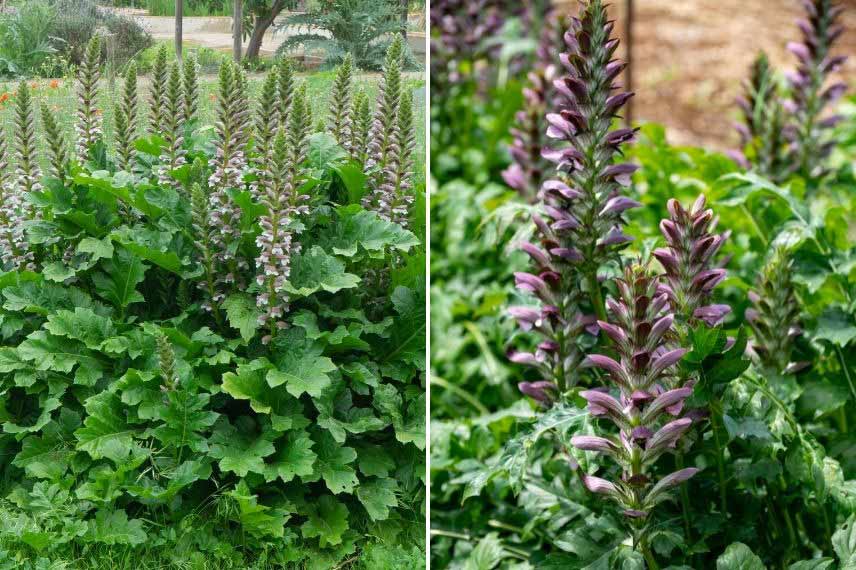
Acanthus mollis
→ Find all the practical advice on this majestic perennial in Virginie’s article: ACANTHUS – TO PLANT, TO GROW AND TO MAINTAIN
Discover other Mediterranean perennials
View all →
Available in 2 sizes
Available in 1 sizes
Available in 1 sizes
Available in 1 sizes
Available in 2 sizes
Available in 2 sizes
Available in 1 sizes
Available in 2 sizes
Available in 1 sizes
Available in 3 sizes
Catananche caerulea: Azure Cupidone
You can find it alongside other garrigue plants that share its love for sunshine and dry soil. Cupidone or Catananche caerulea is a lovely perennial that blooms generously throughout the summer, while other Mediterranean plants rest to protect themselves from the summer heat. Belonging to the aster family, the Cupidone forms a rosette of evergreen, elongated leaves that are grey-green in colour, and its flowers, a beautiful intense blue, are followed by equally ornamental globular fruit. In the south, the Cupidone is nicknamed “cigalou” due to the sound these bracts make when rustling in the wind.
Plant it in light, well-drained soil. Wonderfully adapted to drought, it tolerates limestone very well and temperatures down to -12 to -15 °C.
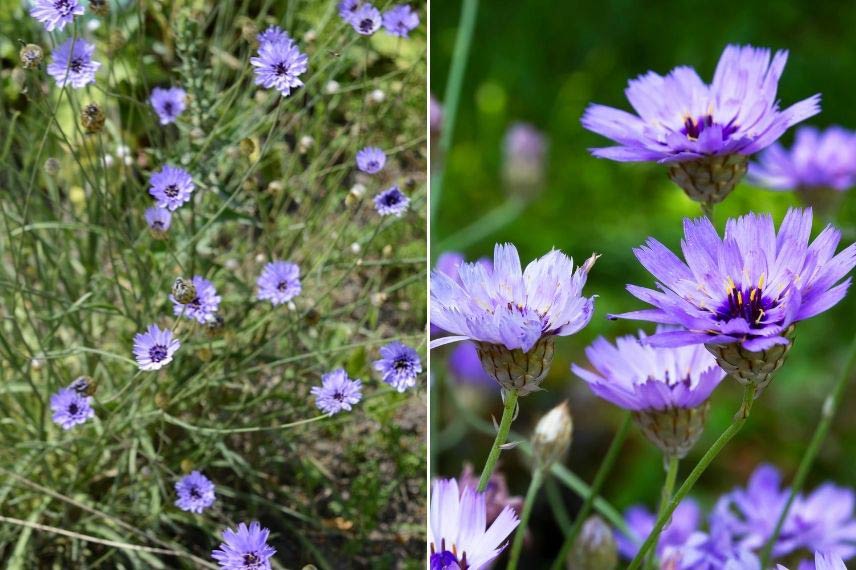
Catananche caerulea
→ To learn all about the Cupidone, check out the article: CATANANCHE, CUPIDONE – PLANTING, CULTIVATION, CARE
Phlomis samia: an original
With their tall floral spikes adorned with flowers arranged in tiered rings, Phlomis, also known as Jerusalem Sage, is unlike any other plant. Here, we are particularly referring to Phlomis samia: a large rhizomatous perennial (height in flower: 1 m) that is semi-evergreen with green foliage and grey undersides. In June-July, it produces tall stems along which each tier of flowers appears to rest on fine thorny bracts. These flowers are a brownish-green to light pink.
Phlomis samia prefers soft, well-drained soils. It can be a great choice for planting in a dry woodland area, as root competition does not bother it.
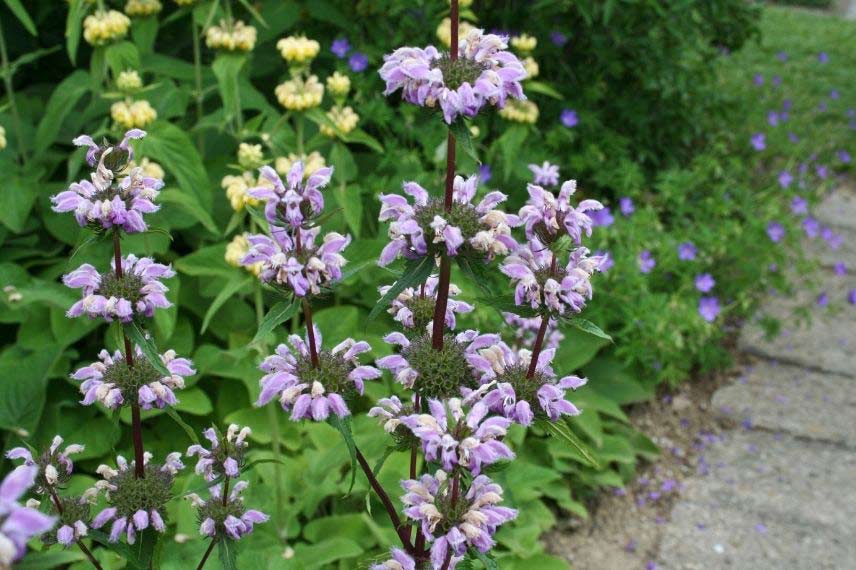
Phlomis samia
→ Are you tempted to grow this beautiful perennial? Find Alexandra’s tips here: PHLOMIS, JERUSALEM SAGE: PLANTING, CULTIVATION AND MAINTENANCE
Lavandula stoechas: a must-have
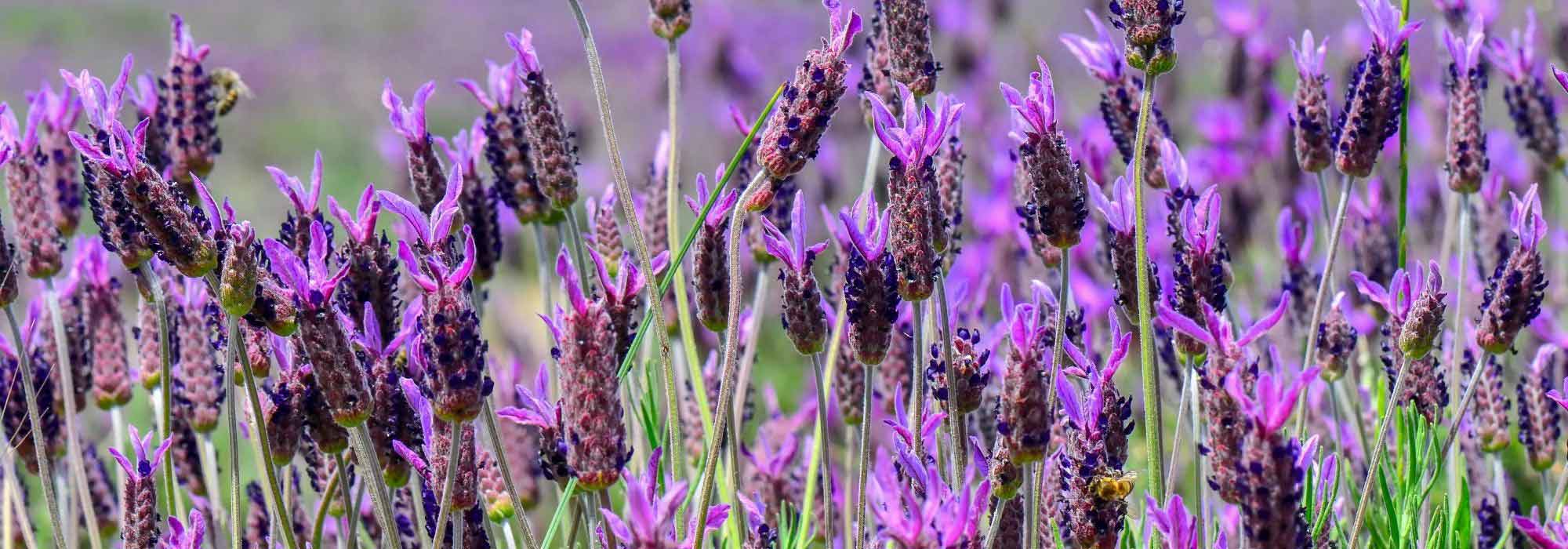
How can we talk about Mediterranean perennials without mentioning Lavender? Here, we will focus specifically on Lavandula stoechas, also known as Butterfly Lavender due to its intense purple flowers that escape like butterflies. It is a true delight for sun-drenched gardens, especially if the soil is stony. But beware, this charming lavender does not behave like the others! It flowers significantly earlier (in April-May), its flowers are distinct from those of other lavenders, which have tightly packed spikes, and it particularly enjoys neutral to acidic soils.
Hardy down to about -10 °C in well-drained soil, its very aromatic evergreen foliage is a lovely silvery grey.
→ Sophie’s tip: As with all lavenders, always prune Butterfly Lavender systematically after flowering: it will maintain a compact habit and produce less old wood. Be careful to always prune above a leaf, as growth will not resume on old wood.
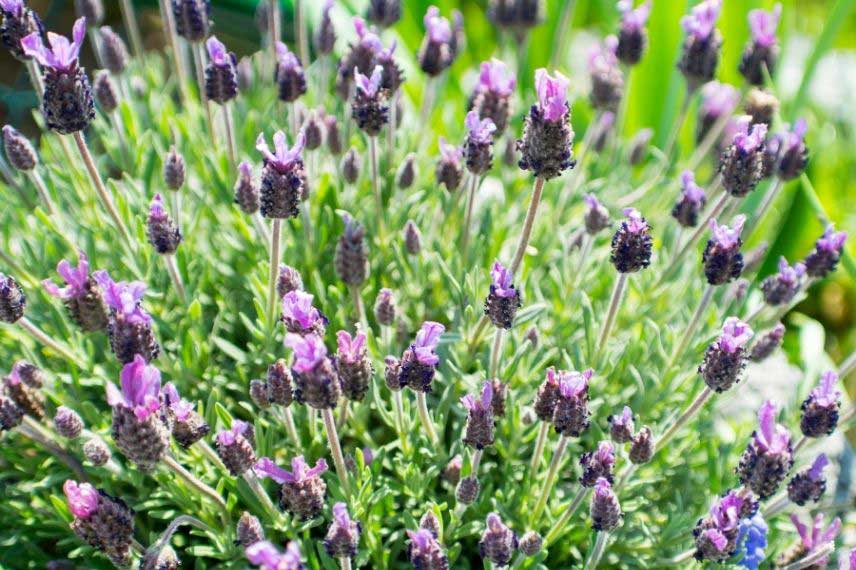
Lavandula stoechas
→ Discover all our tips on how to PLANT, GROW, AND PRUNE LAVENDER
Myrtle spurge: an ultra-resistant groundcover
Spurge are elegant and easy-going perennials. The Euphorbia myrsinites or Corsican Spurge is an essential groundcover plant for dry rockeries, gravel gardens, or the front of Mediterranean borders. Very graphic, it spreads its stems covered with leathery blue-green leaves into lovely cushions about ten centimetres high, spreading approximately 40 cm. The foliage is beautifully arranged in spirals along the stems, a strategy developed by the plant to withstand heat and drought. From March to May, it produces bright yellow-green inflorescences: a delight at the start of spring!
Very robust, Euphorbia myrsinites thrives in well-drained, poor, and stony soil, and it tolerates lime. Its hardiness allows it to withstand temperatures of -15 °C and below.
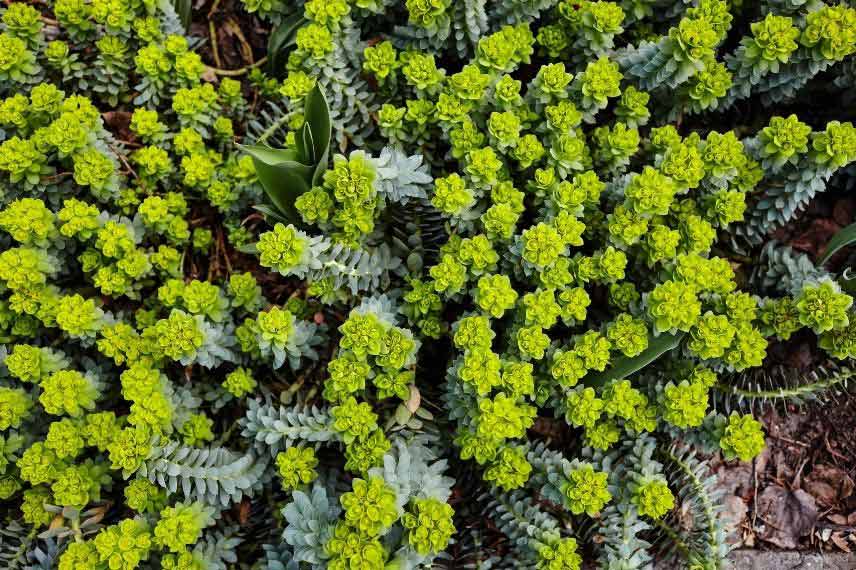
Euphorbia myrsinites
→ Discover the best tips on SPURGES: PLANTING, GROWING AND MAINTAINING

- Subscribe!
- Contents
Comments