





























6 must-have climbing plants to enhance your pergola
Ideal plants for flowering and shading your pergola
Contents
To clad a pergola, the climbing plants are essential choices, providing lushness and shade. They offer a wide diversity of species that enchant us with their flowering, foliage, fruiting or fragrance. They meet most cultivation requirements: you will therefore surely find a variety to suit your tastes and garden! Discover our selection of climbing plants perfect for dressing your pergola in the garden.

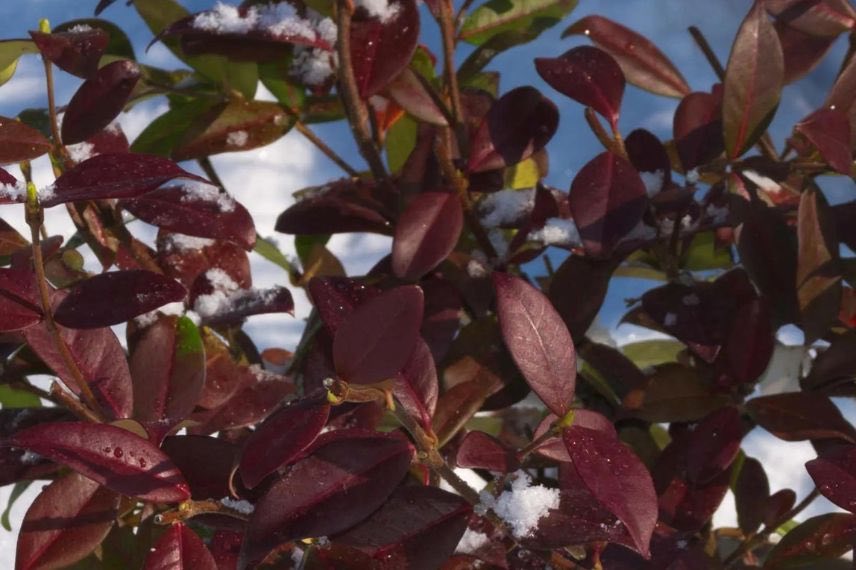
Trachelospermum jasminoides ‘Winter Ruby’ - star jasmine
Jasmines are ideal for decorating a sunny pergola, thanks to their delicate star-shaped flowering and evergreen foliage. These climbing plants are also known for their powerful floral scent, almost heady. They therefore boast many qualities, making them essential in gardens.
The Winter Ruby variety is no exception. Throughout the summer, it produces star-shaped flowers in a pure white. Very fragrant, they give off heady and sugary notes, intensely flowering. But this jasmine is particularly distinguished by the colour of its leaves. Initially bright green, they turn to a purplish red to brighten the cold season, so that the garden does not look colourless during winter.
As for size, expect between 6 and 8 metres in all directions with this vigorous climbing plant, which clings to its support on its own thanks to its twining stems developing aerial roots.
This climbing plant is easy to grow and offers good hardiness for the genus, tolerating down to -12 to -15°C if the soil is well drained, with no stagnant moisture. It will thrive in sun or partial shade and will prove drought-tolerant once well established.
To learn more about jasmine cultivation, read our guide “Jasmine: planting, maintenance, pruning”.
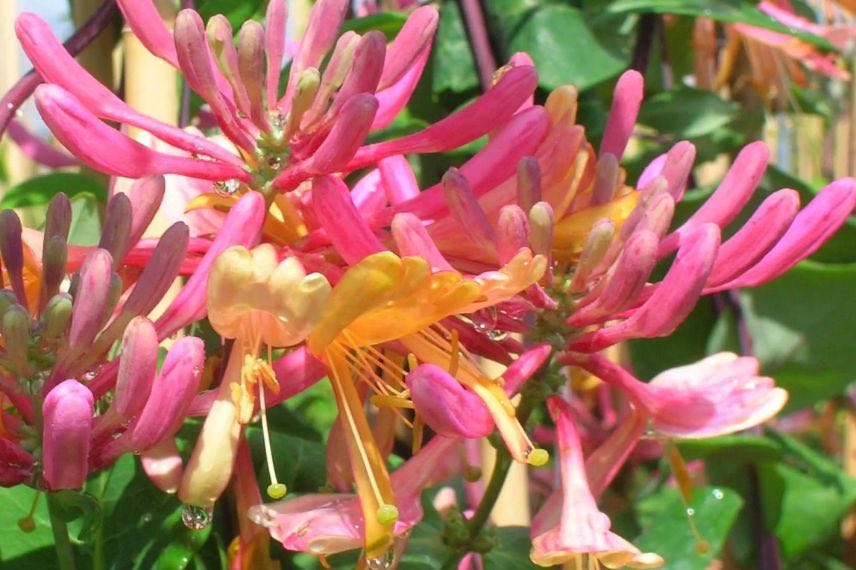
Lonicera heckrotii ‘American Beauty’ – honeysuckle
Honeysuckles are prized for their colourful flowering and their strong fragrance. ‘American Beauty’ is a hybrid variety that flowers for a long period from June to September. It rewards us with a multitude of flowers of around 5 cm in diameter, which continually renew throughout the height of the season. They are tubular, displaying a pink hue leaning toward mauve, contrasting with a yellow-orange throat and long stamens. This cheerful flowering is accompanied by an intense fragrance with spicy notes. It is also melliferous, attracting numerous pollinating insects.
This climber will reach 4 metres in height with a 2 metre spread and will twine itself around your pergola thanks to its twining stems. You can thus enjoy all the beauty of this scented flowering.
Its foliage is semi-evergreen, meaning it may stay on the plant if winter is not too harsh or prolonged. It is reddish in the juvenile stage, then becomes green, subtly tinted with blue.
Easy to grow, this honeysuckle is as tolerant as its peers regarding soil type and climate. It is hardy to -20°C, rarely affected by pests and diseases and grows quickly enough to cover a pergola easily. Plant it in well-drained soil to avoid waterlogging and in a position sheltered from the sun’s harshest rays.
To learn more about growing honeysuckle, read our guide “Honeysuckle: planting, pruning and maintenance”
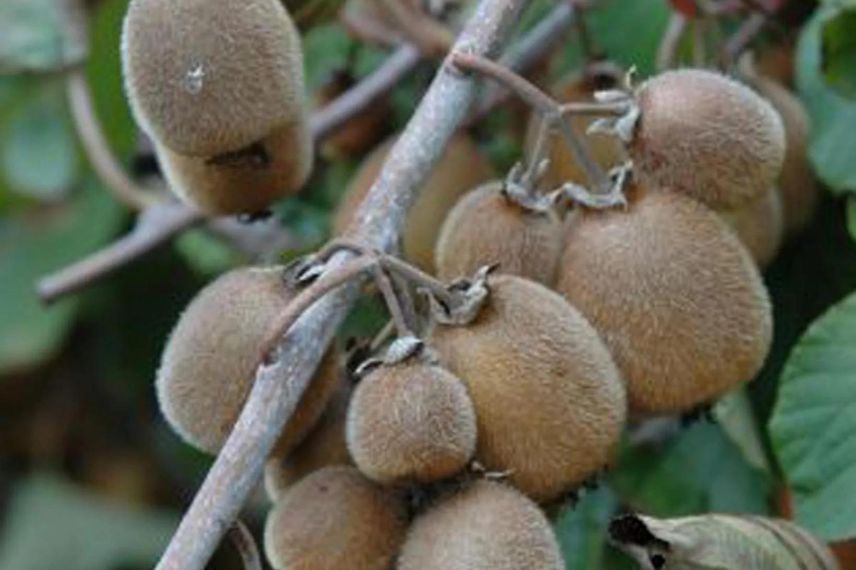
Actinidia deliciosa 'Solissimo' – self-fertile kiwifruit
Combine practicality with pleasure by choosing a climbing edible for your pergola! The kiwifruit plant produces tasty fruits, and its highly ornamental foliage makes it easy to green any support. It’s a climbing plant as ornamental as it is tasty!
TheActinidia deliciosa is in fact a fruiting liana bearing the famous kiwifruits, these fruits with sweet, juicy flesh, rich in vitamin C. ‘Solissimo‘ has the advantage of being self-fertile, which means that it does not necessarily require the presence of a male plant and a female plant to fruit and bear sizeable fruit. The harvest takes place in November. Flowering occurs in late spring. It consists of small white flowers that turn orange at maturity, with a light fragrance. Note that you will need to wait 3 to 4 years before you can enjoy them.
The foliage is ornamental and ideal for providing shade: it comprises large oval leaves in a dark, matte green, lighter on the underside. They are covered with fine red hairs.
Train this climbing plant firmly up your pergola to guide it to around six metres in height. It will grow quickly and can reach nearly 3 metres per year in good conditions. Plant it in ordinary, well-drained soil, rich in organic matter, in a position with light sun or partial shade. Fairly hardy (to around -15°C), though it will still need protection from cold winds.
For more on kiwi tree cultivation, read our guide ‘Actinidia, Kiwi Tree: Planting, Pruning, Harvest’
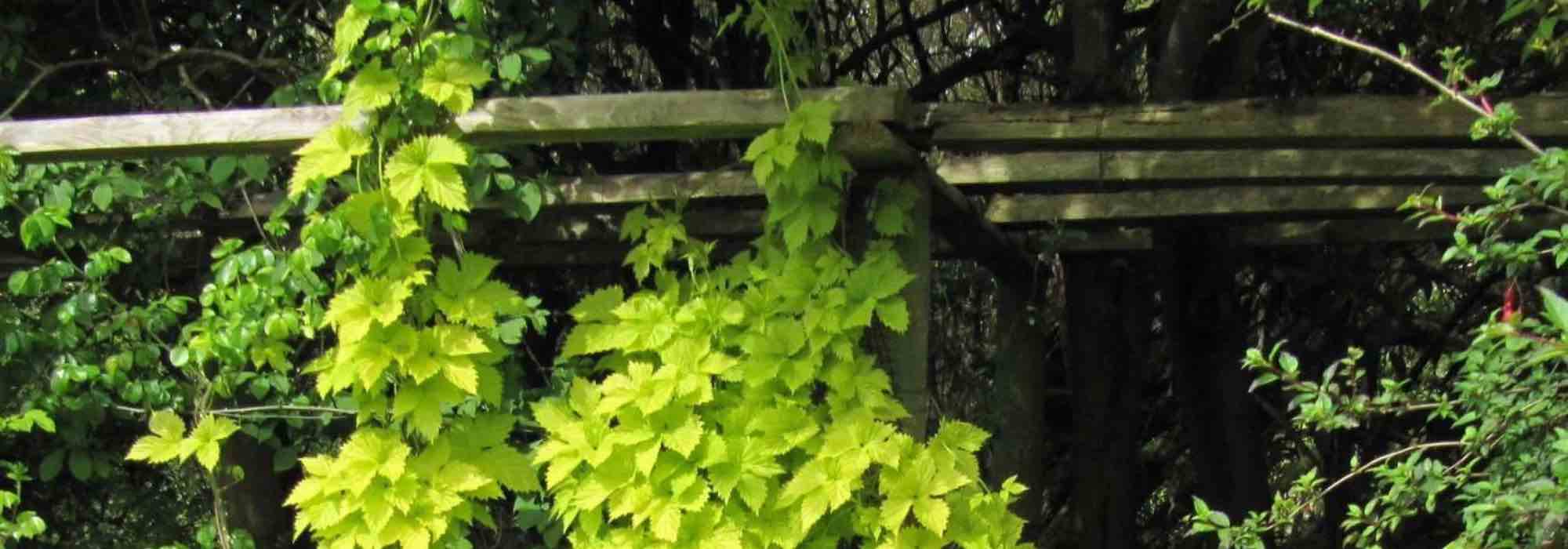
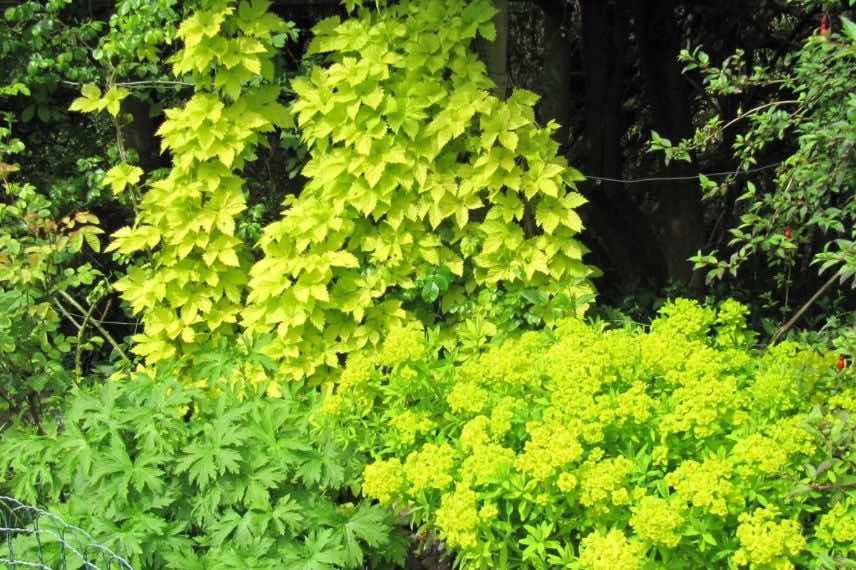
Humulus lupulus ‘Aureus’ – golden hop
Hops are best known for their use in beer brewing, but they remain a very ornamental climbing plant. This golden hop stands out for its particularly bright foliage. The large leaves, around 15 cm long, are initially pale to golden, before turning chartreuse green in summer. Their shape resembles grapevine foliage, cut into crenate lobes.
Luxuriant, this foliage will work wonders for covering a pergola. The plant will cling there on its own, thanks to its long woody climbing stems. With rapid growth, it will reach 5 to 6 metres in height in a single season, as it regenerates each year from its fleshy root.
The inflorescences, in the form of aments, appear in summer. If a female plant is pollinated by a male plant, they will give rise to the famous fruiting in the form of scaly, fragrant cones.
Easy to grow and requiring little maintenance, this climbing plant proves hardy down to -20°C and trouble-free. Grow it in all exposures, with a preference for partial shade. Plant it in deep, cool soil.
To learn more about hop cultivation, read our article Hop, Humulus lupulus: planting, growing and use.
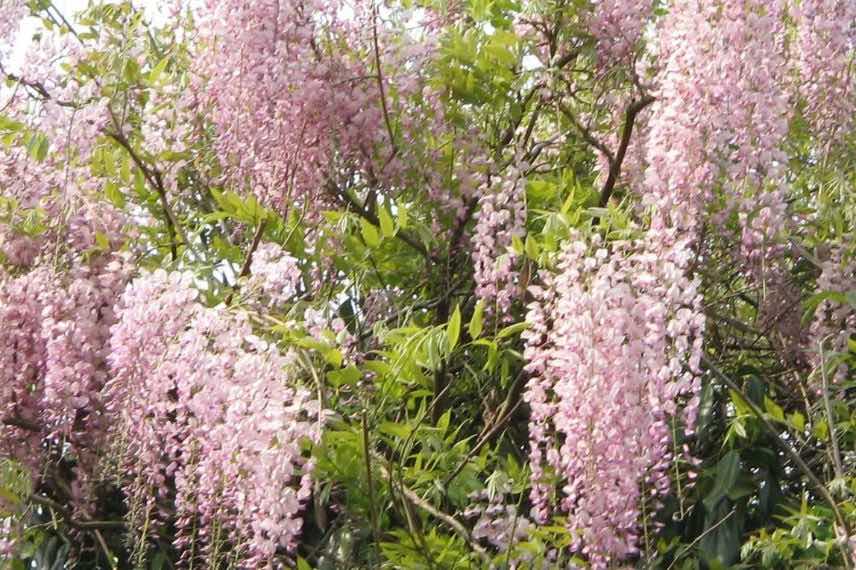
Wisteria floribunda 'Honbeni' – pink Japanese wisteria
Avec sa floraison toujours spectaculaire et son parfum gourmand, la glycine transforme rapidement une pergola en une véritable cascade végétale. Elle apporte immédiatement une touche romantique dans les jardins. The Japanese wisteria ‘Honbeni’ appeals to us for its spring flowering in long clusters of up to about 40 cm, displaying a soft pink. It stands out from the more common mauve or white varieties. Naturally fragrant, it exudes honey-scented notes and will delight pollinating insects.
The foliage is also interesting, with bronze colouring in spring, then green, before taking on yellow hues in autumn. It is very finely divided and light, filtering light delicately.
This vigorous climber will reach 10 metres in all directions. Install it on a sturdy pergola and anchored in the soil, to support its weight and the impressive development of its branches. It will cling easily there thanks to its voluble stems.
Hardy down to -20°C, it will thrive in any well-drained soil, even poor and relatively dry.
For more on growing wisteria, read our guide “Wisteria: how to plant, prune and care?”
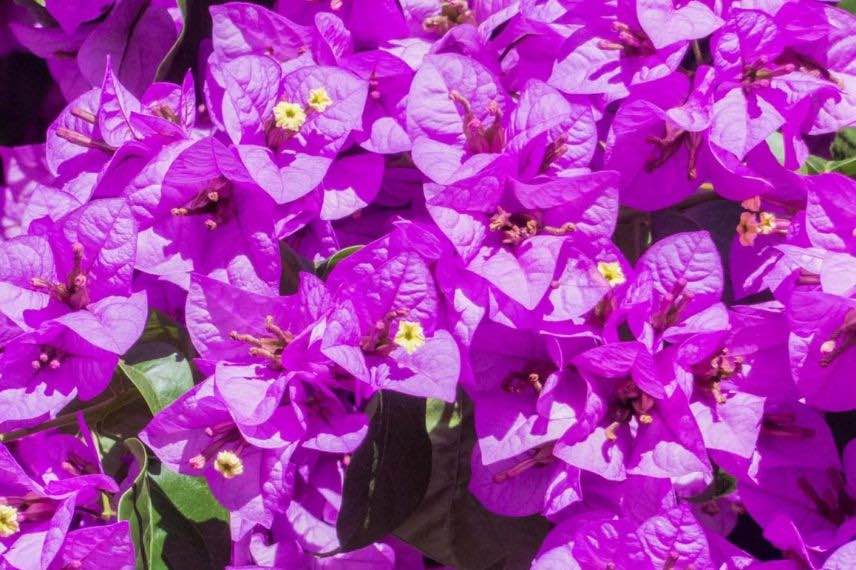
Bougainvillea spectabilis x glabra 'Violet de Mèze' – Bougainvillea
Bougainvilleas are prized for their showy flowering, which brings a holiday atmosphere to the garden. Iconic of the Midi in France, they are sun-loving and heat-loving plants. They are perfect for forming a living tunnel of greenery and bloom, guided along a pergola or between two arches.
For many months, from late spring to the end of summer, the Bougainvillea spectabilis x glabra ‘Violet de Méze’ offers its splendid flowering, consisting of coloured and textured bracts, in the shape of hearts. These are in fact the bracts we admire, and not the white flowers they surround, which are fairly unobtrusive. Their colour is a violet as vivid as it is bright.
Leaves can persist year-round if winters are mild. They are ovate or lanceolate in shape, in a fairly bright green colour.
Its long, thorny, hooked and flexible shoots begin to seize the supports at hand. At maturity, this climbing plant will reach 5 metres in height with a 2-metre spread.
It is often its cold tolerance that is the weak point in most of our regions. But this variety, one of the hardiest of all, has the advantage of being fairly hardy, down to about -8°C approximately. It will nevertheless require a sheltered position and winter protection. This will allow it to be grown in the ground in a wider range of regions. It will enjoy sun, in well-drained, fairly fertile soil.
To learn more about bougainvillea cultivation, read our guide “Bougainvillea: planting, care, growing in pots and in the garden”.
- Subscribe!
- Contents
Comments