


6 plants to cleanse the liver
Natural solutions in your garden
Contents
The liver is an essential organ of the body. Very large, it is part of the digestive system and performs numerous vital functions, including the filtration of toxins, which it subsequently eliminates.
Therefore, it may be beneficial to “cleanse” your liver at regular intervals. Or at the very least, to support it with natural remedies based on plants. Many of them are indeed renowned for their cholagogue and choleretic actions, in particular. But, as always, I can only recommend consulting a healthcare professional before any medication, even if it is natural.
While some are wild, like Milk Thistle, in Latin Silybum marianum, or exotic like Desmodium adscendens from Africa, the good news is that several other plants with interesting effects on the liver can be grown in your garden or even in pots. Here, we will look at 6 that you may already know for other reasons.

Artichoke
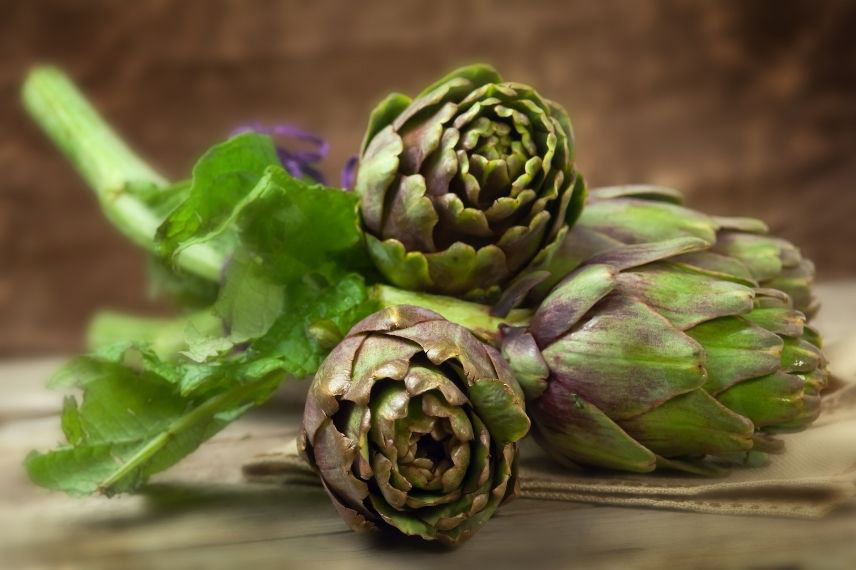
The Artichoke, Cynara scolymus in Latin, is one of the first plants that comes to mind when thinking about liver protection.
While in cooking, we relish the flowers and their unopened petals, for all matters related to phytotherapy, it is the leaves that are of interest. They are traditionally used in capsules or as a herbal tea for the more adventurous, as it has a strong bitterness. For more details on its preparation, check out the article When and how to dry artichoke leaves.
The Artichoke may promote bile secretion as well as digestive and renal elimination. It goes without saying that this natural medicine should be accompanied by a balanced diet and a reduction in fat intake to truly relieve the liver.
You can easily incorporate the artichoke into your vegetable garden, with the classic Gros vert de Laon for example, as well as into your ornamental garden, where you can add a touch of purple by choosing the Violet de Provence. You can even try growing it in a container, provided it is deep enough.
Artichoke, Cynara scolymus
Read also
Succeeding in growing artichokeBlack Radish
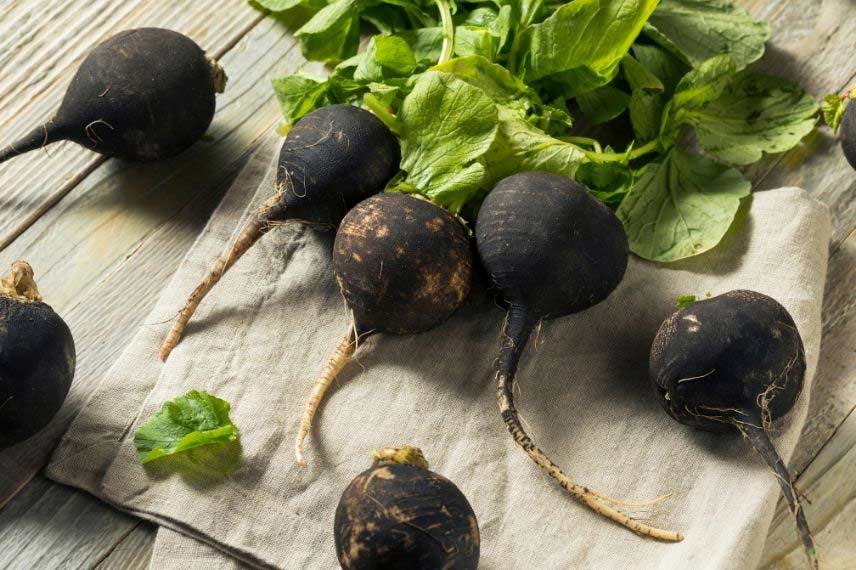
Another plant with a strong reputation for liver issues is black radish, known by the lovely name of Raphanus sativus var. niger.
Here, it is generally the juice of black radish that is used to support liver function. If you do not have a centrifugal juicer, a very simple solution exists. Cut the black radish into thin slices and place them on a plate. Sprinkle with sugar and let them drain for a day. This step helps to attenuate the sharp taste of black radish. This fresh juice is reputed to promote the secretion and elimination of bile.
Black radish certainly has its place in the vegetable garden where it is grown in winter. You can choose from different varieties depending on your tastes and preferences. The names alone are very evocative: Gros rond d’hiver, Gros long d’hiver, or Long Poids d’horloge.
Black radish, Raphanus sativus var. niger.
The Lemon Tree and its Lemons
The lemon tree, Citrus limon, is a beautiful little Mediterranean bush whose fruits are known to all. These are said to have properties that promote bile secretion, which has a positive effect on the liver.
The remedy is quite simple: mix the juice of a lemon with warm water to drink in the morning. This would help stimulate bile production and, therefore, support the liver by accelerating the elimination of toxins.
While the lemon tree can be grown in the ground around the Mediterranean, elsewhere it should be grown in a pot so that it can be sheltered from frost in winter.
In addition to the classic four seasons lemon tree, several varieties are available, such as the magnificent Citrus limon ‘Femminello Carrubaro’ or the Citrus limon ‘Adamo’.

Lemon tree, Citrus limon
Read also
Potted lemon tree: to grow and care forDandelion
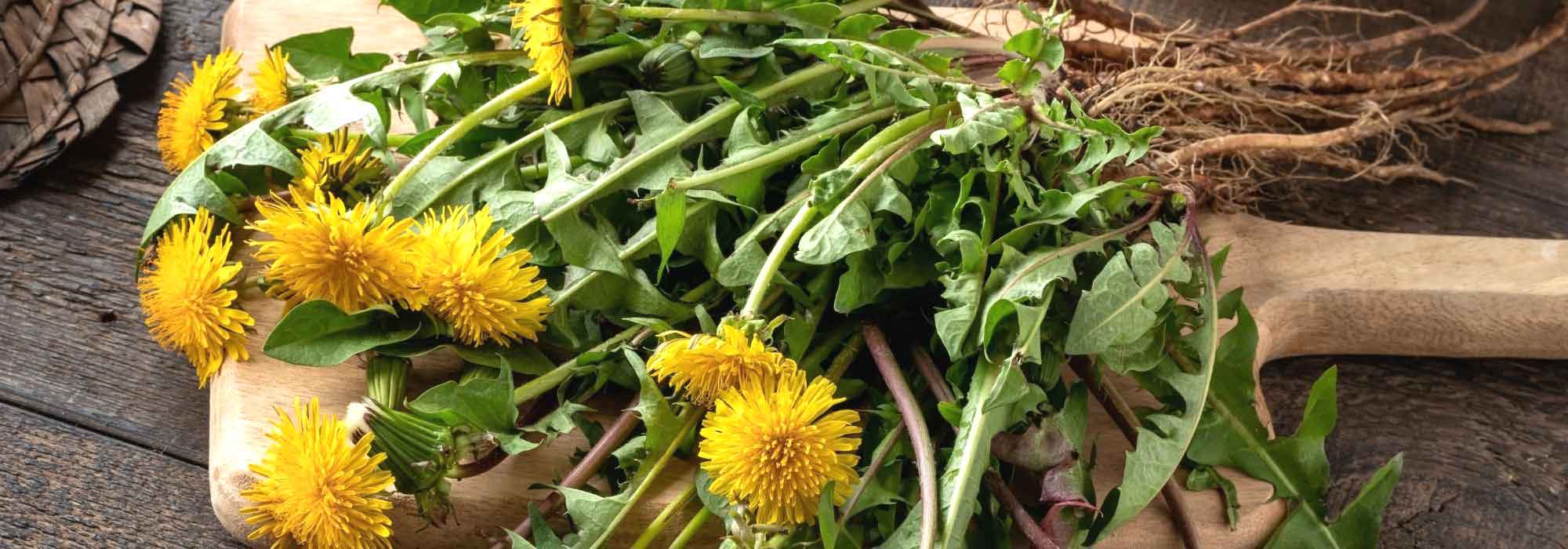
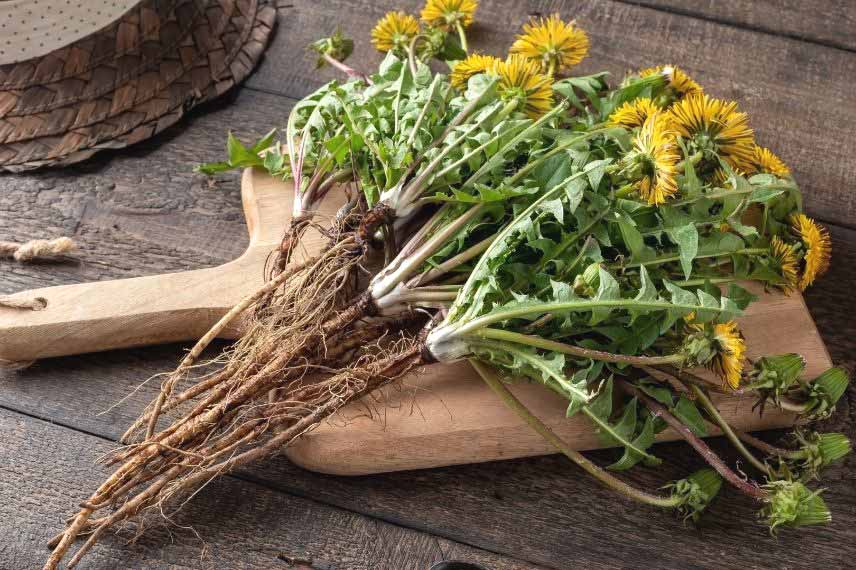
Here is a plant that everyone recognises, even if they don’t necessarily know it well. Dandelion, Taraxacum officinale, which can be found practically everywhere in the wild, is also a medicinal plant used in phytotherapy.
Among its many properties, besides the traditional cholagogue and choleretic actions particularly associated with the liver, dandelion is renowned for its diuretic and depurative qualities. While the leaves are used for these benefits, it is generally the root of the dandelion that is preferred for its effects on the liver.
Although it is abundantly available in nature, be aware that you can also grow dandelions that have been carefully selected over time, such as the Improved Dandelion, valued for its foliage.
Dandelion, Taraxacum officinale
Rosemary
Aromatic and culinary herb used for a long time in cooking, rosemary, Rosmarinus officinalis, is also renowned in herbal medicine for its numerous properties.
Here, we are particularly interested in the digestive properties of rosemary. By promoting the secretion and elimination of bile, rosemary helps to relieve the liver.
Rosmarinus officinalis has the advantage of being easy to use, especially in herbal tea. For more details on this, please refer to our guide Rosemary: how to preserve and use it.
Integrating it into the garden is a breeze. It finds its place in the vegetable garden, where it will attract many pollinators, in a rockery or even in a flowerbed, where it has a presence all year round thanks to its evergreen foliage and beautiful blue flowering that appears early in the season.
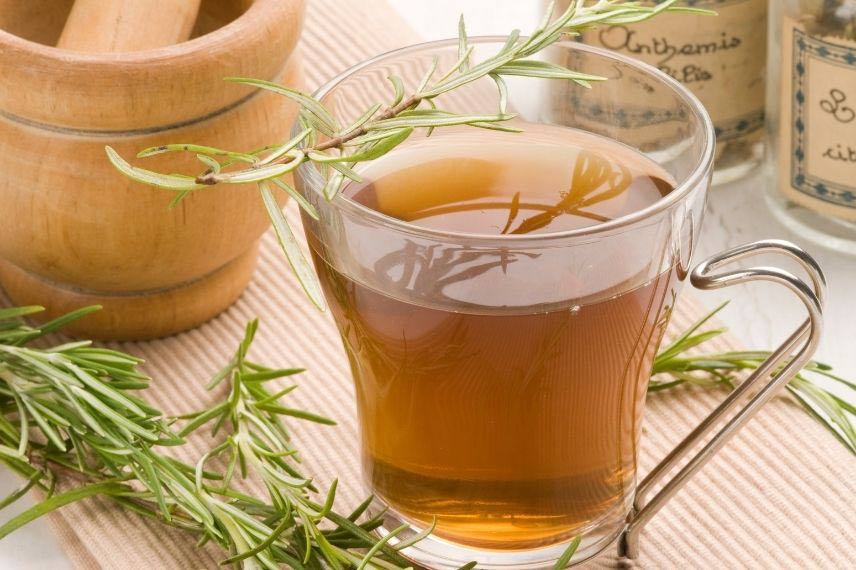
Rosemary, Rosmarinus officinalis
Linden
The linden, this majestic tree, is found in many parks and gardens. The herbal tea with calming properties made from linden flowers is known to many. However, the use of its sapwood – the part beneath the bark – is somewhat less common. Harvesting it is, indeed, more delicate and not within everyone’s reach. That said, it is always pleasant to know the virtues of the plants we have at home.
Back to the point. Linden sapwood is said to aid in the drainage of the entire body and, consequently, the liver. It is possible to make decoctions from it to benefit from these draining properties.
The varieties of linden most commonly used in herbal medicine are Tilia cordata and Tilia platyphyllos.
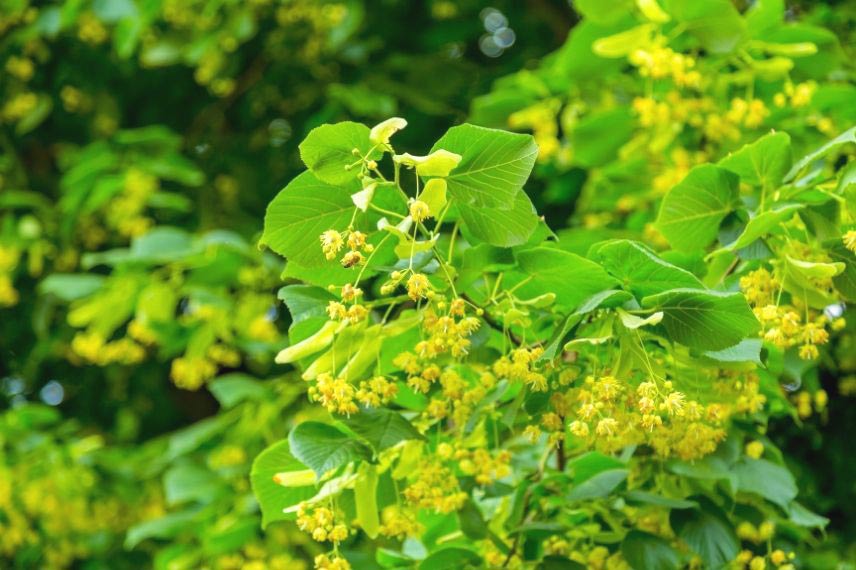
Leaves and flowers of Linden
- Subscribe!
- Contents

Comments