





























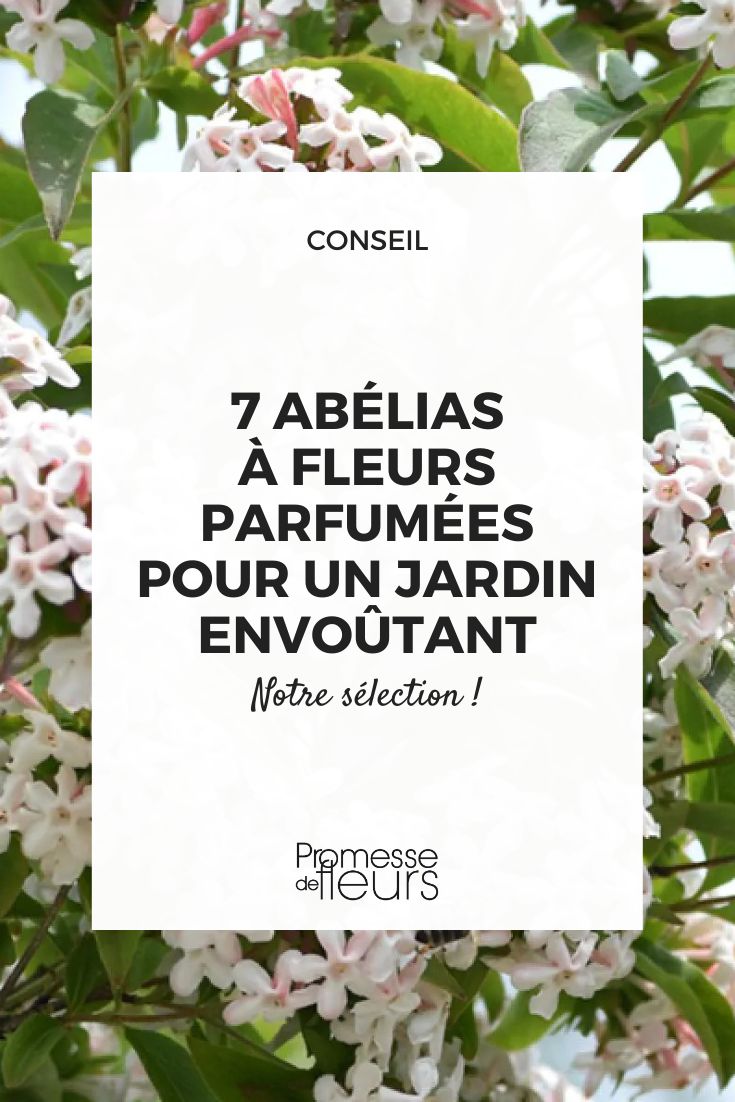
7 Abelias with fragrant flowers for an enchanting garden
Our selection
Contents
Treat your garden to a genuine festival of scents with the Fragrant Abelias, shrubs renowned for their generous flowering and easy cultivation. While many varieties offer a subtle fragrance, some species, such as the Abelia mosanensis, stand out for their ability to perfume broadly from spring. The Abelia chinensis, for its part, is notable in summer for its countless small white flowers with an intense fragrance. Finally, some hybrids of Abelia grandiflora are also quite fragrant. In this article, discover the seven best varieties of scented Abelias to create an enchanting garden, where beauty blends with delicate aromas.

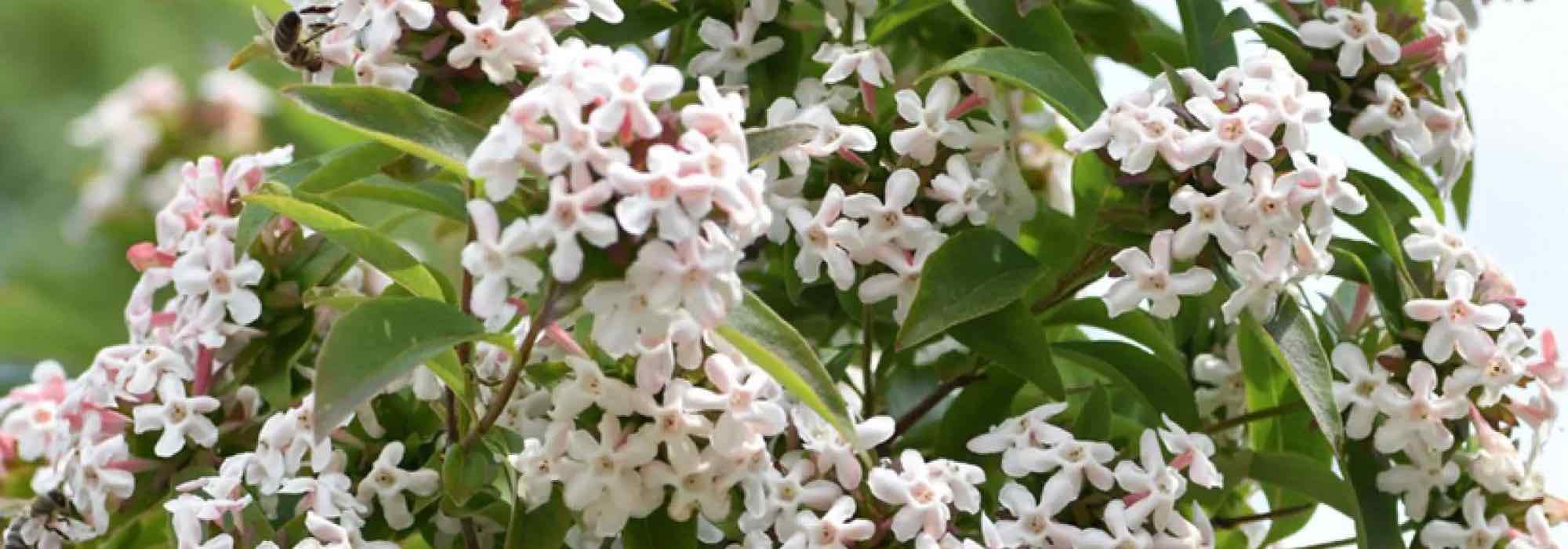
Abelia mosanensis 'Monia'
Abelia mosanensis ‘Monia’ is an improved variety of a Korean botanical species, famed for its early spring flowering and enchanting fragrance. Still relatively uncommon in cultivation, this deciduous bush is one of the hardiest in the genus Abelia. From late May, it unveils a profusion of pink buds that open into tubular white flowers, evoking the scents of lilac, jasmine and hyacinth. The dark, glossy green foliage takes on beautiful red-orange hues in autumn, adding extra appeal. This bush reaches 2 m in height and 1.5 m in spread at maturity, with rapid growth in good growing conditions.
This shrub tolerates frost down to -18°C. It prefers humus-bearing, cool, slightly acidic, well-drained soil. Perfect for structuring a flowering hedge, it pairs well with Buddleias, mock oranges, and Kolkwitzias.
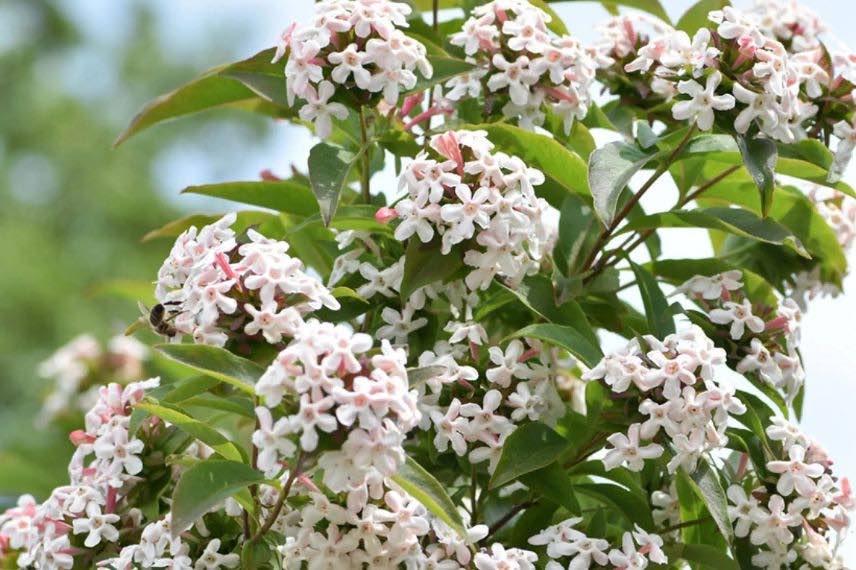
Abelia chinensis 'Raspberry Profusion'
Abelia ‘Raspberry Profusion’ delights with its intoxicating fragrance and generous flowering that brightens the garden for more than six months. This hybrid bush forms a dense, compact dome, covered with clusters of large, fragrant flowers, blending tones of mauve pink and raspberry pink. The bells, perched on coloured sepals, exhale a delicate fragrance inherited from the species Abelia chinensis, irresistibly attracting pollinators. The display begins mid-May and continues through October, even when most other shrubs have stopped flowering. The raspberry-pink sepals persist long after flowering.
‘Raspberry Profusion’ is the result of a cross between Abelia ‘Edward Goucher’, which gives it its compact habit, and the A. chinensis, the source of its subtle fragrance. This compact shrub does not exceed 80–90 cm in height and 1.2 m in width, with moderate growth. Its dark, glossy foliage remains semi-evergreen in mild climates. The oval leaves take on rosy hues as the nights grow cooler, adding an autumn colour note.
This small Abelia is ideal for structuring beds or dressing the edges of borders, and it sits perfectly in large pots to perfume terraces. Pair it with ground-cover roses, Ceanothus repens, or Genista lydia for a successful visual effect. Drought-tolerant once established, it is hardy to -15°C in well-drained soil.
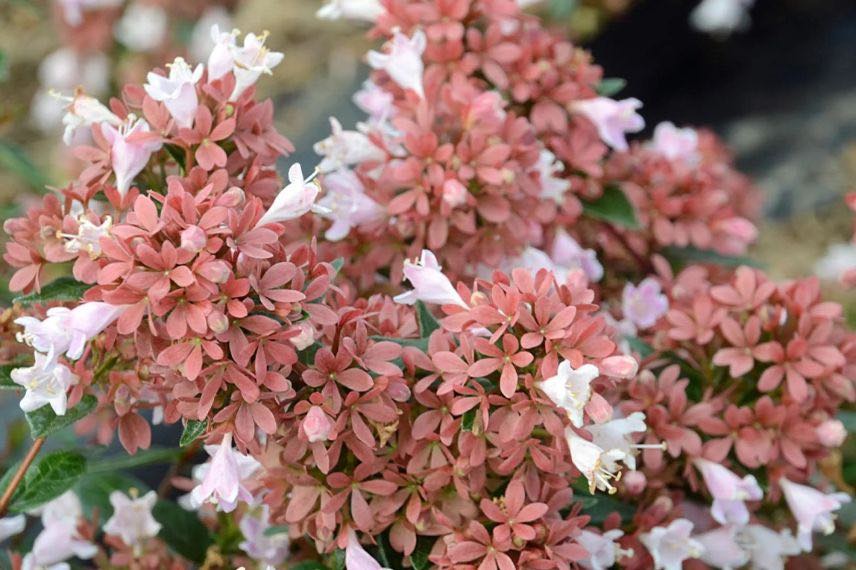
Abelia grandiflora 'Francis Mason'
Abelia grandiflora ‘Francis Mason’ is a hybrid shrub with an enchanting fragrance, resulting from the cross between the Abelia chinensis and the Abelia uniflora. This compact, rounded, slightly spreading shrub is a charming asset for the garden, especially in summer when it displays its long, fragrant flowering. From July to September, its funnel-shaped flowers, white with a pink tinge, appear in terminal panicles, bringing a gentle fragrance that attracts pollinators and enlivens spaces where few shrubs bloom at this season. The 2 cm flowers, consisting of 2 to 5 sepals, then become small fruits called achenes.
The semi-evergreen foliage of Abelia ‘Francis Mason’ is just as decorative. The leaves, dark green variegated with yellow, glossy and ovate, measure about 5 cm long and persist for much of the year in mild climates. The graceful, arching shoots add a touch of elegance, while the shrub reaches a mature height of 1.5 m with a 2 m spread, making it ideal for structuring small urban gardens.
Versatile and ornamental, this Abelia fits into borders, in informal or clipped hedges, or as a specimen to showcase its bright foliage. It also adapts very well to container cultivation, making it ideal for terraces and balconies. Less hardy than other varieties, tolerating down to -10°C, it prefers well-drained soil and a sunny position to realise its full ornamental potential.
Read also
How to pair an abelia?Abelia chinensis 'White Surprise'
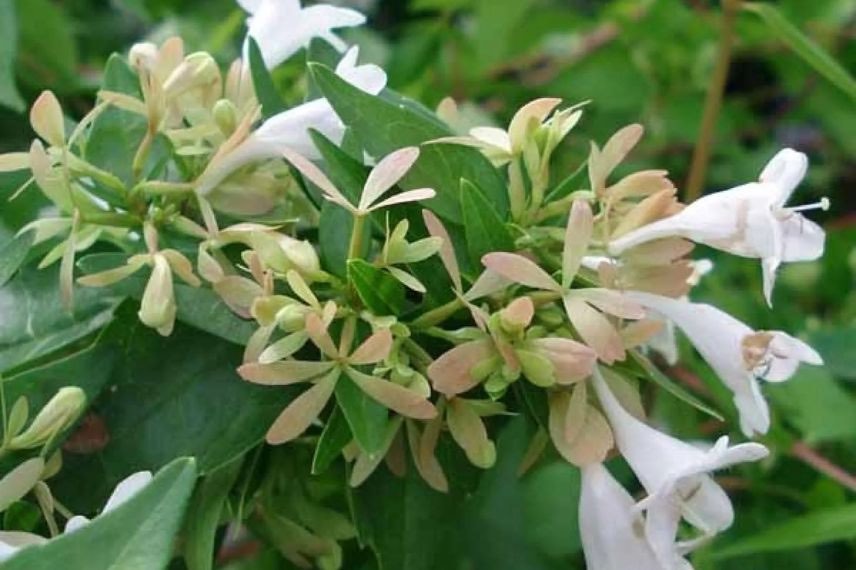
Abelia chinensis ‘White Surprise is a charming variety, perfect for lovers of heady fragrances. Its flowering is white, early, abundant and extended from July to October, perfumes the garden with a gentle blend of lilac, jasmine and hyacinth, detectable from several metres away. Suitable for small spaces, this bushy shrub, graceful and dense, grows to 1.2 m across in all directions, forming a verdant and luminous mantle. Its tubular white flowers, surrounded by dusty-rose calyces, provide a decorative display even after the corollas have fallen.
The green, glossy foliage, deciduous or semi-evergreen depending on the severity of winter, turns bronze in autumn. Hardy to -10/-12°C in well-drained soil, ‘White Surprise’ adapts to a wide range of soils, even poor or calcareous, and tolerates summer drought well. Its easy-going temperament and robustness make it an ideal choice for sunny borders. It pairs harmoniously with Chinese lilac and Spiraeas. Easy to grow in the ground or in a large pot, this abelia will find a place on a terrace, to perfume summer evenings.
Abelia mosanensis 'Sweet Emotion'
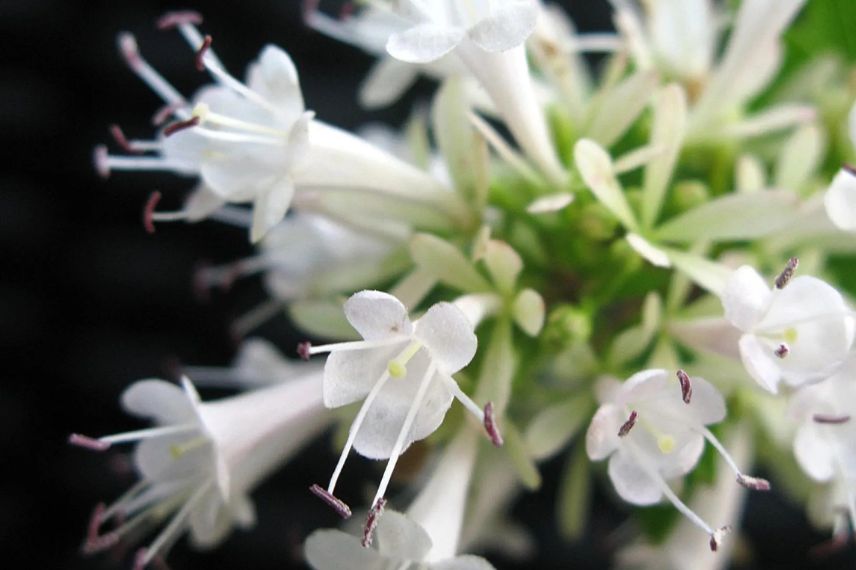
Abelia mosanensis ‘Sweet Emotion’ is a variety with an enchanting jasmine fragrance, with remarkable spring flowering. This deciduous bush, with a dense, supple, bushy habit, grows up to 1.7 m tall and wide. Its flowering lasts from April to June, producing white tubular flowers, sometimes pink-speckled, opening from deep-pink buds.
This American variety is an improvement of the species Abelia mosanensis, native to Korea, offering better hardiness and a more intense fragrance. The powerful fragrance attracts pollinators, while the glossy green foliage turns red-orange in autumn.
Suitable for cool, humus-bearing and slightly acidic soils, it thrives in a flowering hedge or in autumn borders with asters and Tricyrtis. In heather-soil gardens, it pairs perfectly with Rhododendrons and Pieris. It can also be grown in a large pot to decorate and perfume terraces.
Abelia grandiflora 'Prostrata'
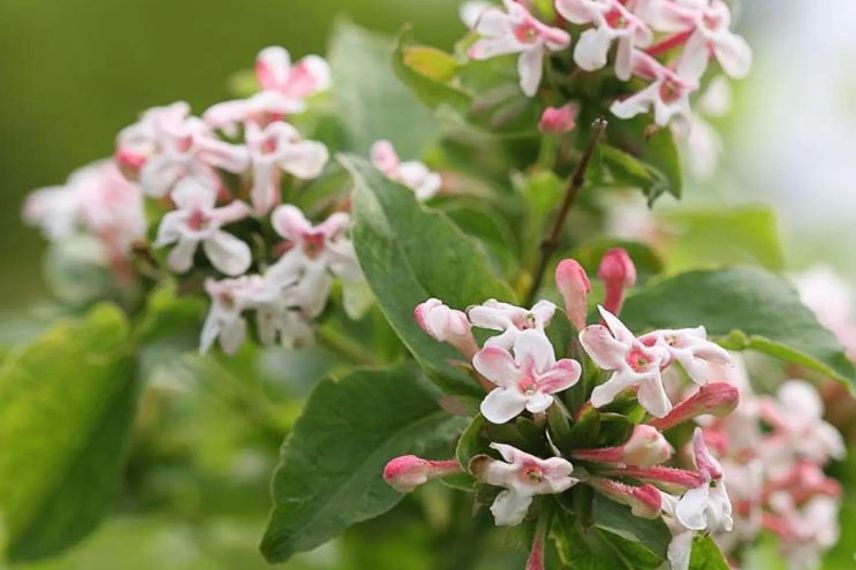
Abelia grandiflora ‘Prostrata’ stands out for its low, prostrate habit, making a superb ground-cover shrub. This compact, vigorous and hardy plant brightens the garden with abundant, pleasantly scented summer flowering. From July to October, its small white-pink flowers bloom in large numbers, forming beautiful panicles visible on dark, glossy green foliage. The sweet fragrance of its corollas attracts pollinators and enlivens the garden or terrace for almost four months. The spent flowers give way to decorative rust-coloured calyces, while the foliage, semi-evergreen in mild climates, takes on purplish tones in autumn.
‘Prostrata’ is a hybrid resulting from a cross-breeding between Abelia chinensis and Abelia uniflora. It is distinguished by its spreading habit and arched, almost pendulous branches, reaching 80 cm in height with a spread of 1.25 m. Low-maintenance, this hardy abelia tolerates temperatures down to -17°C and adapts well to dry, well-drained soils. It requires little maintenance, a simple tidy-up at the end of winter is all that is needed. Versatile, it suits groundcover beds as well as borders, or for forming a low hedge. Pair it with shrubs such as Escallonia ‘Red Carpet’ or Nandina ‘Fire Power’ for lasting, colourful displays.
Abelia chinensis 'Autumn Festival'
- Subscribe!
- Contents
Comments