





























7 bamboos for full sun
Our selection
Contents
Bamboos, robust and with natural grace, have established themselves as essentials in garden design. Originating in Asia, they have conquered gardens worldwide thanks to their great diversity and their ability to adapt to different environments. The selection of seven varieties of bamboos presented here has been carefully chosen for their ability to tolerate full sun. These varieties offer a range of sizes, shapes and colours. Whether you’re looking to create a dense bamboo hedge, add an exotic touch to a corner of the garden, or even grow bamboos in a pot on a sunny balcony, there is a variety suited to every situation.
Note that bamboos of the Phyllostachys and Pleioblastus species generally tolerate sun well, but they do, however, need to have their roots kept cool to cope with this hot exposure.

Pleioblastus pygmaeus 'Distichus'
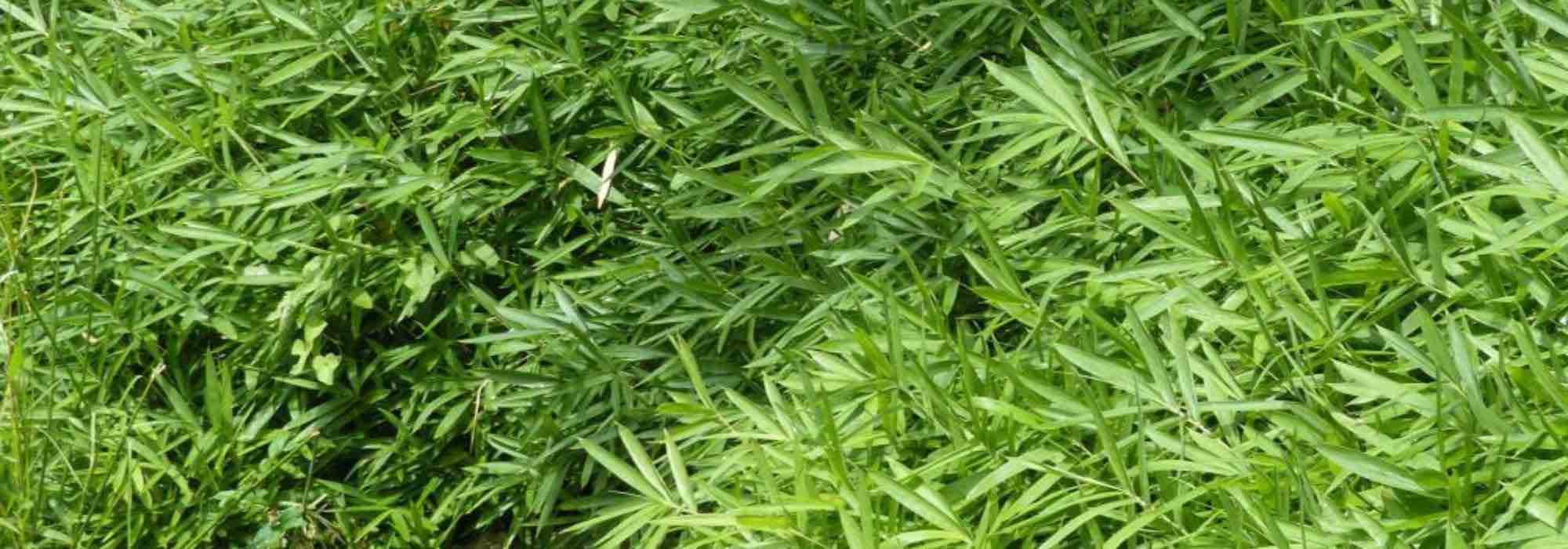
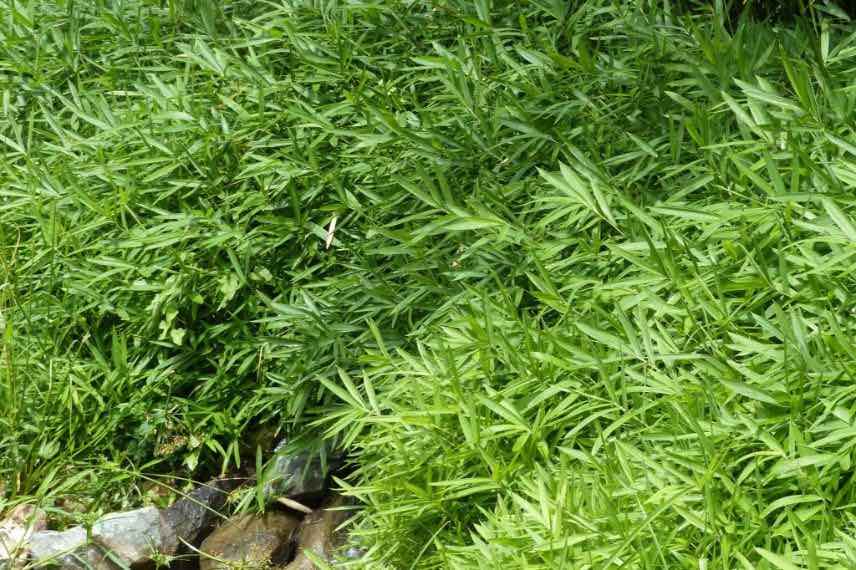
The Pleioblastus pygmaeus ‘Distichus’, a dwarf bamboo and groundcover, is characterised by its compact habit and bright green leaves. Resistant to cold winters and occasional droughts, it spreads rapidly via its running rootstock, forming a dense carpet ideal for a slope, small hedges or as a substitute for lawn in lightly trafficked areas. Annual pruning in early spring is sufficient to keep it tidy. This bamboo adapts to a range of climates and soils, provided heavy, wet soils are avoided. Its green, slender, hollow culms typically do not exceed 60 cm.
Its semi-evergreen, glossy foliage blends well with other plants, though it can dominate them in some cases. To control its spread, rootstock barriers are recommended. This versatile bamboo suits zen, wild, exotic or contemporary gardens, and can be planted at woodland edges, in low borders or in a pot on a balcony or terrace. For a textural garden, pair it with ornamental grasses such as Pennisetum or Miscanthus, which offer a contrast of shape and movement, or in another style, at the feet of weeping conifers.
Read also
Phyllostachys: planting, growingBashania fargesii
The Bashania fargesii, a hardy mountain bamboo, is distinguished by its straight, sturdy culms, suited to the extreme conditions of high-altitude areas. Medium-sized, its dark-green culms turn grey-silver. Its evergreen, bright-green foliage forms lush cascades. Its running rootstocks allow it to cover large areas, ideal for a spacious natural garden. It grows by forming a large open clump, with rootstocks able to penetrate deeply into the soil, enabling drought tolerance. Originating from China, it grows at altitudes up to 2,500 metres. Its young culms emerge in large numbers in spring, reaching up to 3.5 metres in height, or even more in favourable conditions. Its long, glossy leaves add to its charm.
Extremely robust and hardy, Bashania fargesii thrives in a variety of conditions, from sun to shade, and even in poor, acidic soils. It is ideal for creating an exotic ambience in large Zen, wild or contemporary gardens. To control its growth, rhizome barriers are recommended. For large gardens, plant this bamboo at the back of a perennial bed or along the edge of a water feature to create a spectacular effect. At its feet, plant dwarf conifers such as Pinus mugo or creeping junipers.
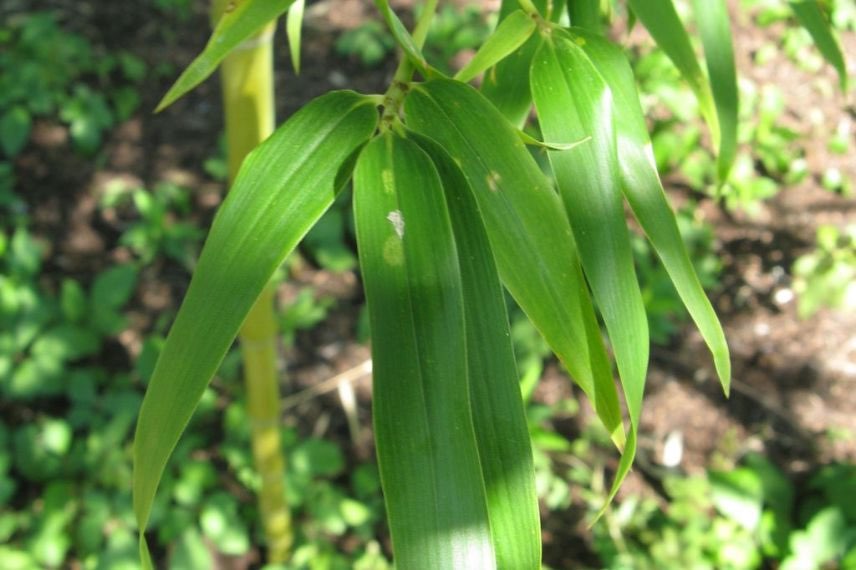
Phyllostachys flexuosa
Read also
How to water a bamboo in a pot properly?Phyllostachys aurea
Hibanobambusa tranquillans 'Shiroshima'
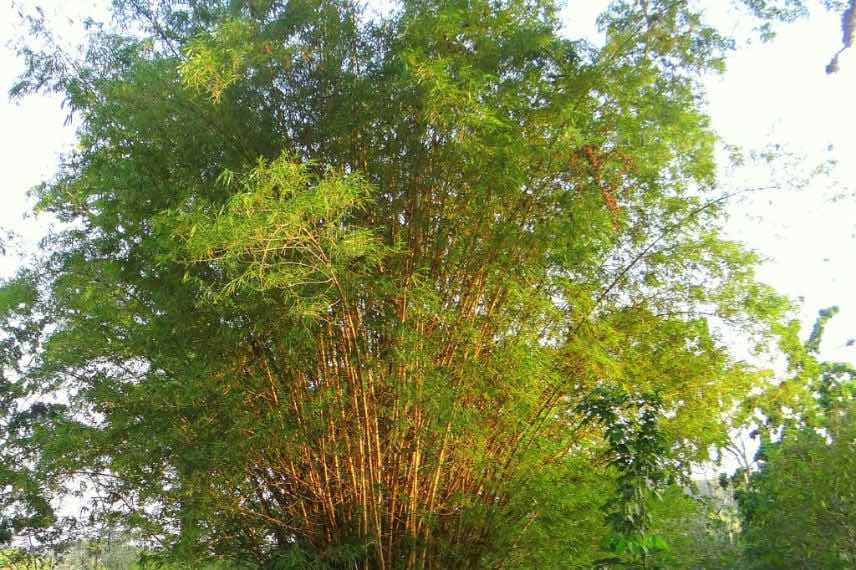
Hibanobambusa tranquillans ‘Shiroshima’, a small bamboo with variegated foliage, distinguished by its light-green and cream-white leaves. Modestly sized, it combines the attractive foliage of Sasa with thicker culms, typical of Phyllostachys. Easy to grow, it is hardy, drought-tolerant, and adaptable to various exposures. Ideal for privacy hedges or as a clump, it nevertheless requires a rhizome barrier to control its spread. Its green culms, sometimes striated with cream-white, reach 2–3 metres tall, with evergreen and vibrant foliage, even in winter. The leaves, larger on the new culms, are slightly pendulous and may show a pink margin in spring.
Semiarundinaria fastuosa
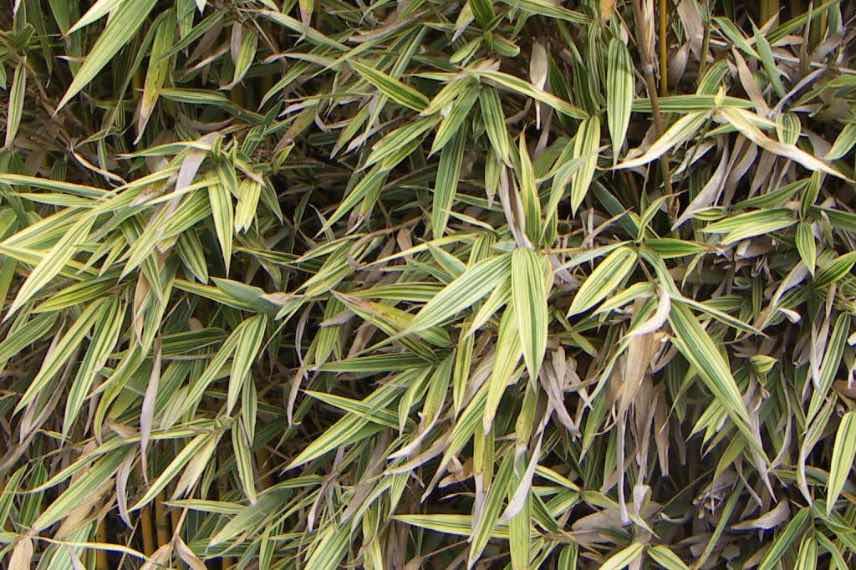
The Semiarundinaria fastuosa is a majestic Japanese bamboo, perfect for creating tall hedges, screens of greenery or windbreaks. With its compact columnar habit, its coloured culms and dense foliage, it adds a decorative touch and an oriental charm to the garden. Its culms are straight and glossy, medium-green with brown-purple striations, which take on purplish tones as they age, especially in full sun. These culms, which can reach up to 7 metres in height, bear large, green, glossy, lanceolate leaves. The sheaths of the culms, semi-evergreen, provide an interesting contrast with their pearly colour.
For an Asian garden, pair it with azaleas or rhododendrons for colour and form contrast. Ideal for tall hedges or as a standalone clump, the Semiarundinaria fastuosa pairs well with other bamboos. It has been awarded the Award of Garden Merit.
Fargesia robusta
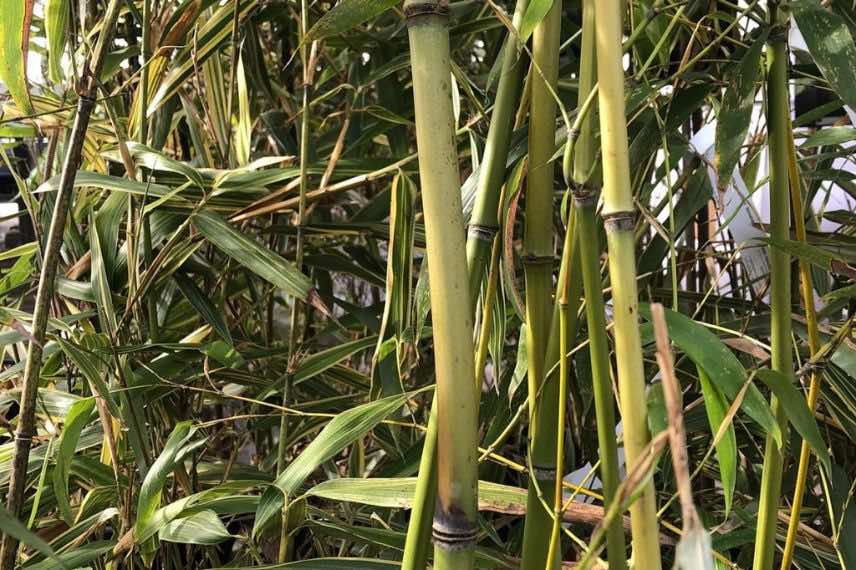
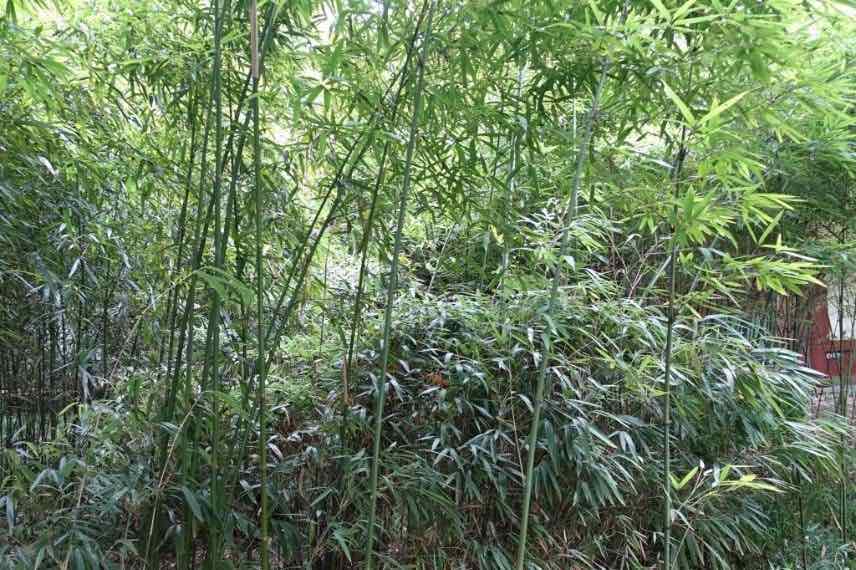
Finally, if Fargesia, these non-running bamboos, are not the best candidates for full sun, there are nevertheless exceptions. The Fargesia robusta is a medium-sized, non-running bamboo, with fine and abundant foliage that naturally bows the canes. Its green-yellow culms, adorned with white sheaths, form a graceful, slightly trailing clump. Hardy and robust, this Fargesia is one of the few varieties to tolerate sun well, used as a specimen, in a hedge, or in a pot for terraces.
- Subscribe!
- Contents
Comments