





























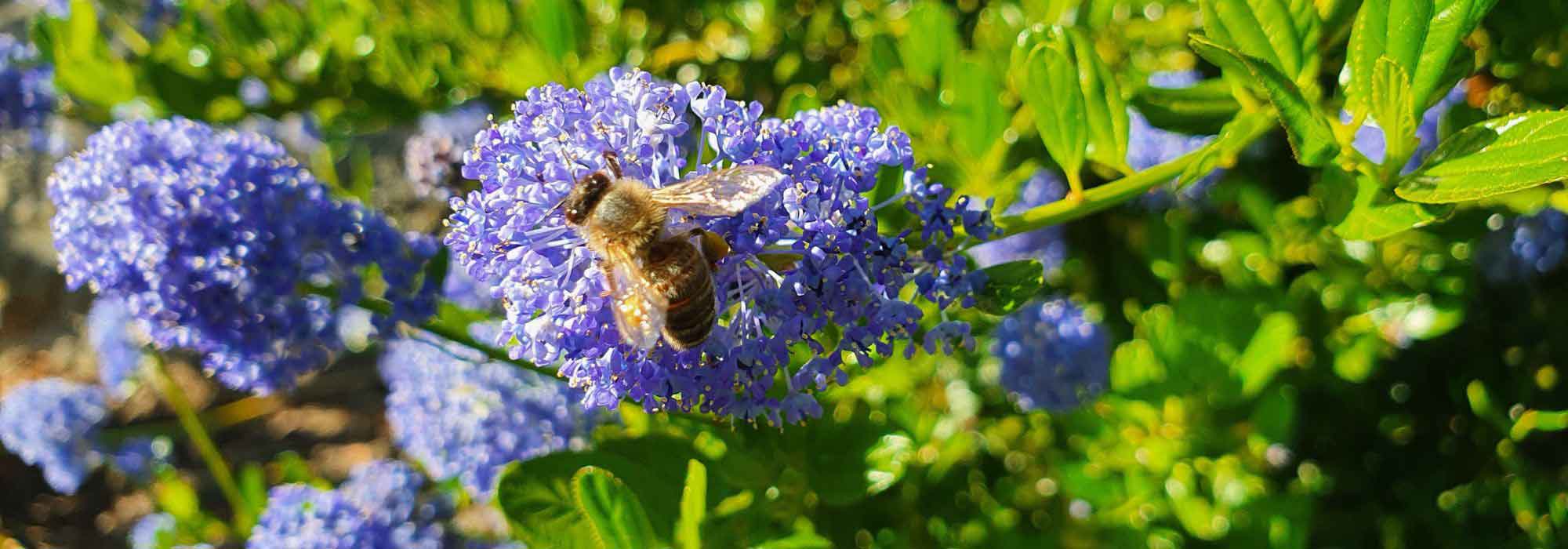
7 drought-resistant melliferous bushes
sober and precious for pollinators!
Contents
Pollinators are essential players in our ecosystems, enabling the pollination of plants, which leads to the production of fruits and seeds that allow plants to reproduce. Planting melliferous bushes in the garden encourages the presence of these insects, as their flowers provide the nectar they feed on.
To combine the welcome of beneficial insects with the planting of drought-resistant bushes that can withstand the heat and dryness now characteristic of our seasons, discover a selection of 7 melliferous bushes suited to low water availability: beautiful specimens to plant in hedges, as standalone features, or to create beds that benefit biodiversity!

Cytisus scoparius 'Palette' or Broom
Bush caduc compact and ramified, Broom Cytisus scoparius ‘Palette’ will delight all gardeners with its abundant spring flowering in multicoloured shades of red, orange, yellow, lilac, and peach. There are different species of brooms, but the broom we are discussing here is one of the most interesting: quite hardy, it enjoys full sun and particularly withstands drought very well. In May-June, its papilionaceous flowers bloom in clusters pollinated by bees. Fast-growing, it will form a bushy, upright, and fairly dense shrub, yet with a light appearance, measuring about 1 m to 1.5 m in all directions.
Plant the broom in any light, well-drained soil, preferably slightly acidic or sandy, in a sunny position. It can, however, tolerate a bit of lime. Not very demanding, it will be satisfied with a severe pruning after flowering to prevent fruiting, which can quickly exhaust the plant and allow it to maintain a compact habit.
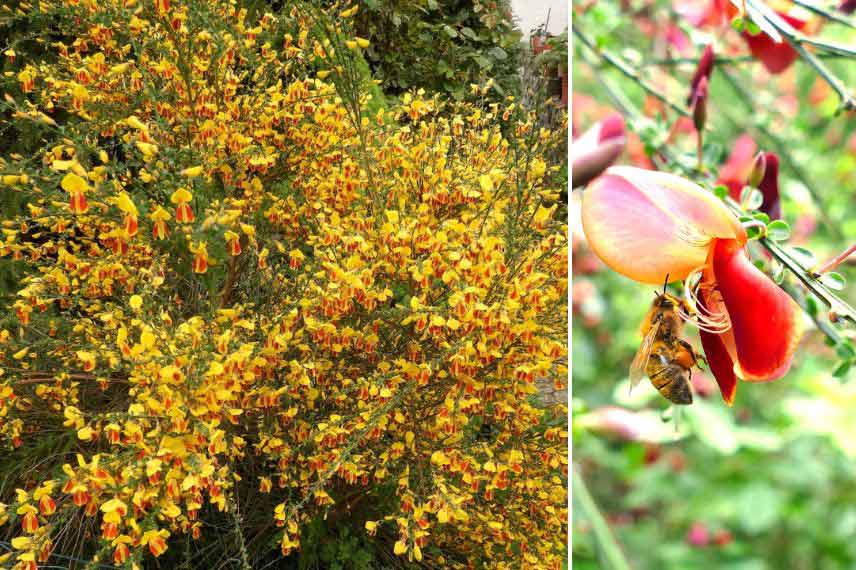
Cytisus scoparius ‘Palette’
Ceanothus 'Burkwoodii' or California Lilac
The Ceanothus ‘Burkwoodii’ stands out for its long summer flowering, which is rare among California Lilacs. Its flowers are grouped in abundant panicles of a very bright blue. This is an evergreen bush with attractive dark green, glossy foliage that quickly develops dense growth to form a compact bush 1 m high and 2 m wide. It can create beautiful flowering borders and hedges, but it can also be planted alone to highlight its generous flowering. This attracts many pollinating insects and delights them from June to September. It tolerates fairly heavy soils and dry conditions in summer very well.
Best reserved for gardens in the Mediterranean or Atlantic fringe, its hardiness does not exceed -7 °C. The Ceanothus ‘Burkwoodii’ prefers warm locations, in full sun, in dry, well-drained soil, rather free of lime.
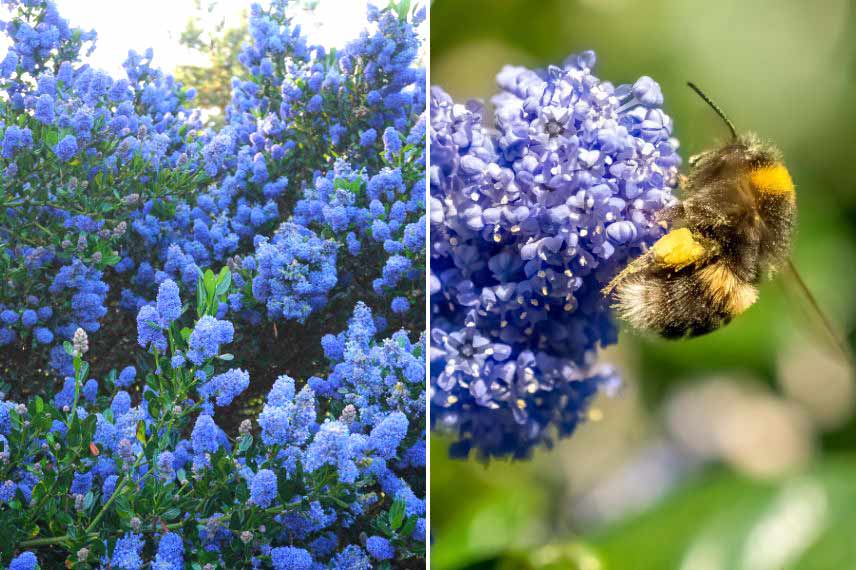
Ceanothus ‘Burkwoodii’
Discover other Melliferous shrubs
View all →
Available in 1 sizes
Available in 1 sizes
Available in 2 sizes
Available in 1 sizes
Available in 1 sizes
Available in 2 sizes
Available in 1 sizes
Available in 1 sizes
Available in 1 sizes
Available in 1 sizes
Lonicera purpusii 'Winter Beauty' or Fragrant Winter Honeysuckle
Vigorous, drought-resistant, hardy, and low-maintenance regarding soil, the Lonicera purpusii ‘Winter Beauty’ has everything to please! This is a winter-flowering bush honeysuckle, with blooms appearing from December to March depending on the region. The small flowers of ‘Winter Beauty’ are grouped in clusters of 2 to 4 and measure no more than 1.5 cm in length and diameter. Creamy white in colour and featuring yellow stamens, they emit a fragrance reminiscent of jasmine with a citrus note. Highly nectariferous, they provide a food source for bees at a time of year when flowers are scarce!
At maturity, this shrub, which has a slightly wider than tall silhouette, will reach approximately 2 m in height and 2.5 m in spread. Choose a semi-shaded position to the south or a sunny spot to the north, preferably in a sheltered location. Indeed, it is not afraid of the cold (-20 °C), but will flower better in a protected situation during winter. Tolerant of soil type, which can be slightly acidic, neutral, or slightly calcareous, it prefers well-drained soils. Once well established in deep soil, it withstands dry summers, ideally shaded by a deciduous tree in the hottest latitudes.
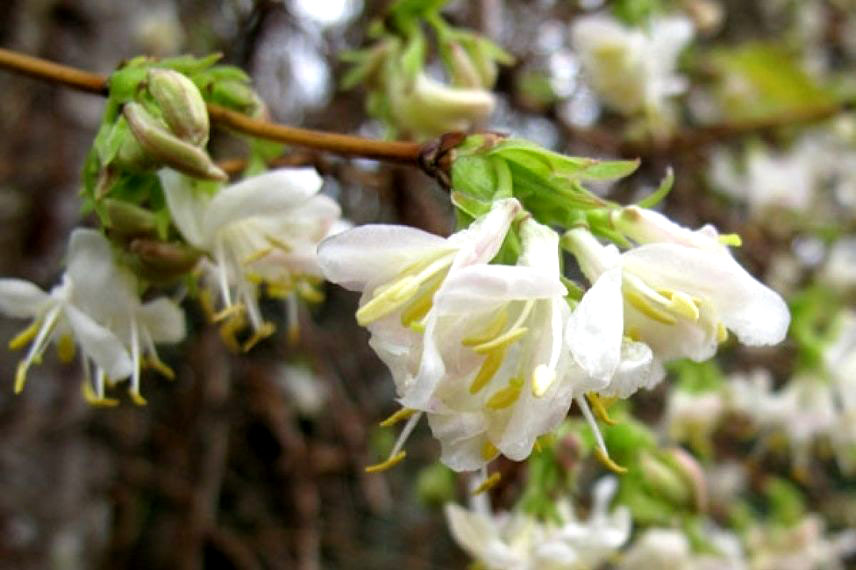
Lonicera purpusii ‘Winter Beauty’
Philadelphus coronarius or Mock Orange
Ancient variety cultivated for its intense orange blossom fragrance, the flowering of mock orange Philadelphus coronarius occurs in May-June. Its numerous white flowers are composed of 4 rounded petals, 3 cm wide, arranged in a cup around a heart of stamens with yellow anthers. Their very pronounced fragrance and their nectariferous character attract many pollinating insects. Once established, our mock orange requires no watering in summer in all regions and will form a beautiful deciduous bush at maturity, reaching a height of 2 to 3 m.
Choose a sunny location in the north of the Loire, but rather partial shade if your summers are hot and dry. It is an excellent garden plant, very easy to grow in ordinary soil and perfectly hardy (-20 °C).
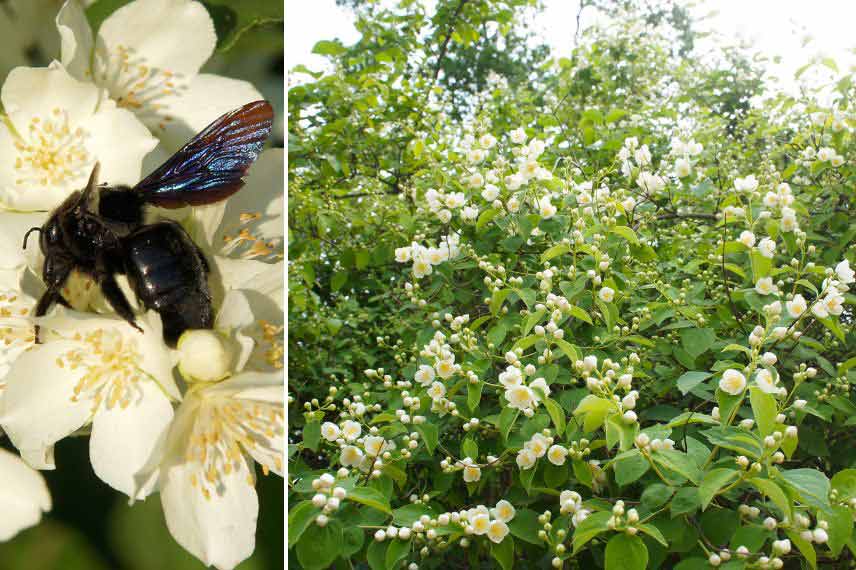
Philadelphus coronarius
Phillyrea angustifolia or Narrow-leaved Phillyrea
The Narrow-leaved Mock Privet Phillyrea angustifolia is an evergreen bush with a somewhat slow growth rate that gradually establishes itself to form a very beautiful, dense shrub, very robust, rarely exceeding 3 m in height and 2 m in spread. Its narrow leaves are an elegant, glossy dark green, and its spring flowering, quite discreet, takes the form of small cream-white bouquets with a hint of green. These small, lightly scented flowers are melliferous. Their appearance early in the season (from March to May) is appreciated by pollinating insects at this time.
The Mock Privet is undoubtedly a valuable shrub in a dry garden or by the sea: very tolerant of soil and exposure, it can completely do without water in summer, even in hot, dry regions. It adapts well to calcareous and clay soils in dry climates but also tolerates slightly acidic soils that are both compact and moist in winter, provided they do not freeze. Once mature, it withstands short periods of frost down to -12 °C.
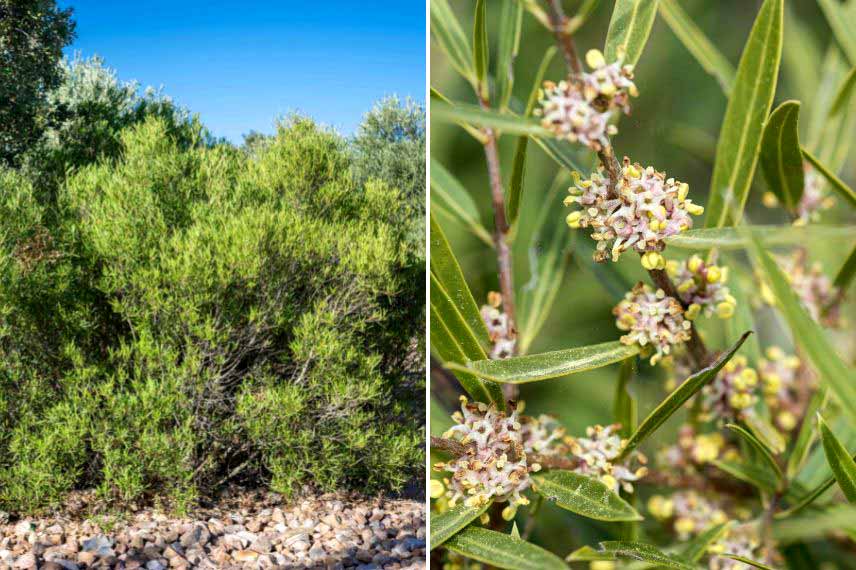
Phillyrea angustifolia
Ligustrum ovalifolium or California Privet
Well known to all gardeners, the Privet deserves its place in our gardens, as it is easy to cultivate and has vigorous growth. The Ligustrum ovalifolium or California Privet is an evergreen bush that can reach 4 m in height with a spread of 3 m; perfect for creating a free-standing or trimmed hedge. It can also be included in your borders for its always green and elegant presence. Highly melliferous due to its intensely fragrant flowering that contains a lot of pollen, this privet contributes to the essential preservation of bees. Low-maintenance, it thrives in full sun or partial shade, can be planted in any well-drained soil, and withstands summer drought once established.
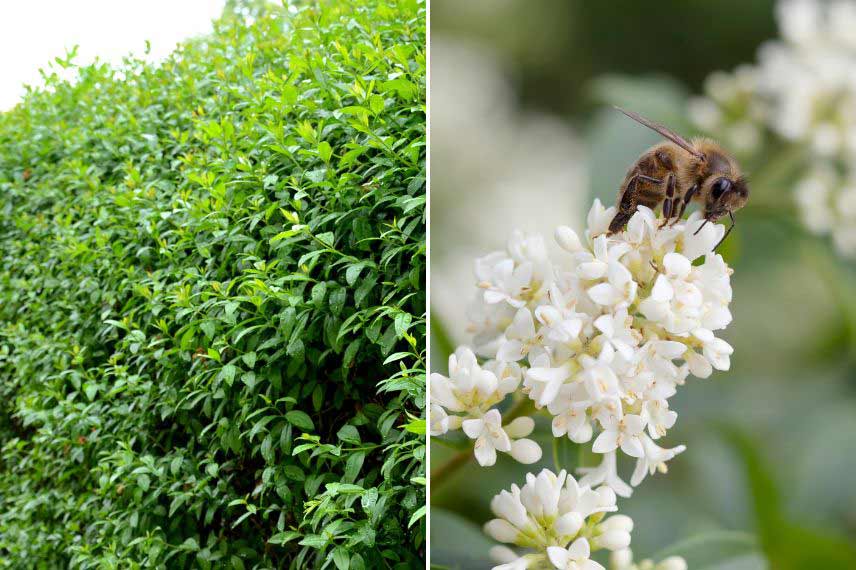
Ligustrum ovalifolium
Buddleia or Butterfly Bush
Recognisable by their characteristic flower spikes, whose sweet scent attracts butterflies, as well as bees and a plethora of pollinating insects, Buddleias or Butterfly Bushes undoubtedly have their place in this selection. From the beginning of summer until October, their lilac, pink, purple, orange, or white flowers rise above decorative foliage, forming a well-branched silhouette. Their elegant habit and slightly wild appearance bring lightness and grace to all gardens.
Hardy, Buddleias are among the easiest flowering bushes to grow in full sun in any well-drained soil. Fast-growing, they quickly form beautiful flowering screens, withstanding dry soils and intense heat. Choose from the many varieties in our collection of buddleias: they are essential in the garden, grouped in flowering hedges, as solitary specimens, or even in pots on the terrace for the more compact varieties.
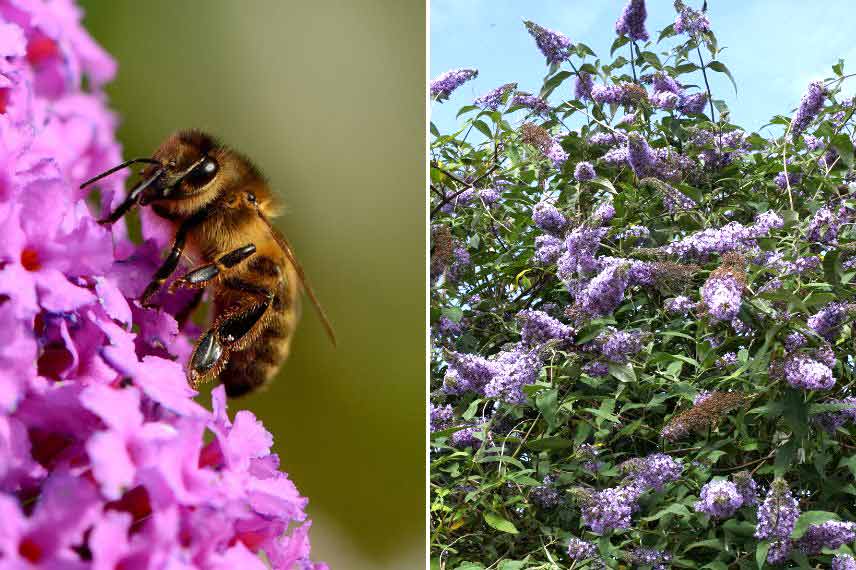 Buddleia

- Subscribe!
- Contents
Comments