





























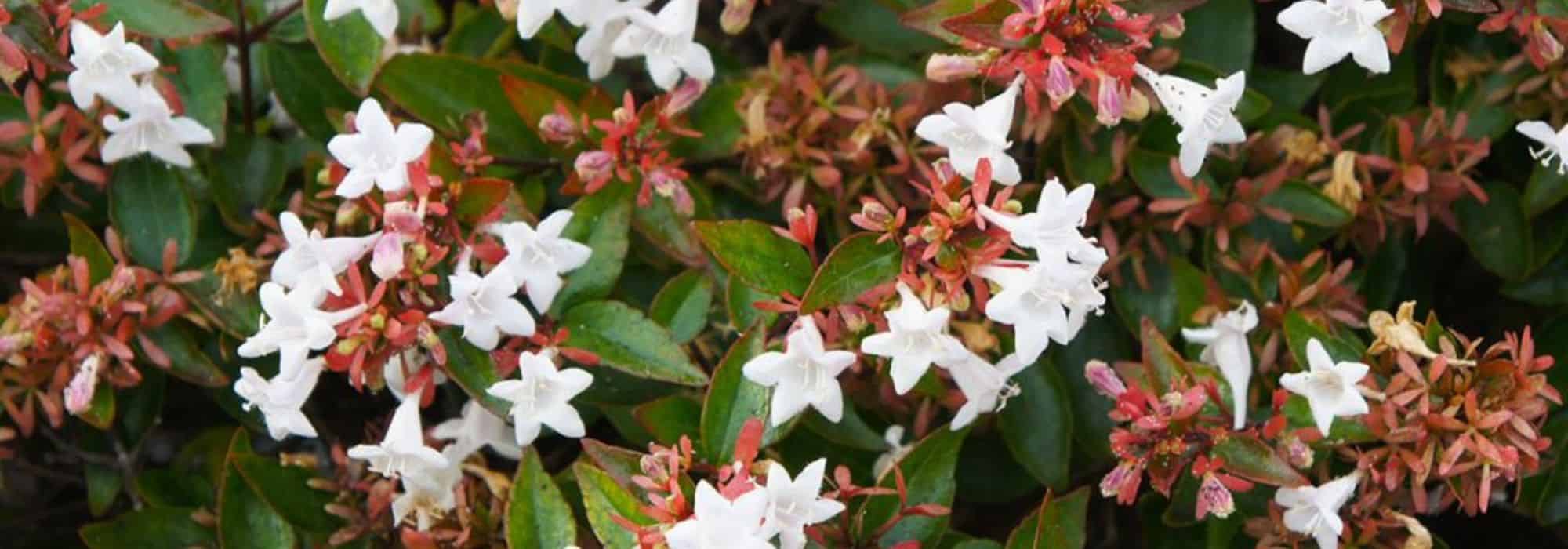
7 evergreen flowering shrubs
To add charm to the garden all year round
Contents
In the wonderful world of gardening, evergreen flowering shrubs hold pride of place. These plants, which keep their foliage year-round, offer not only constant greenery, but also spectacular flowering that brightens our gardens, even during the coldest months. For the gardener, choosing the right evergreen flowering shrub can transform an ordinary space into a true haven of peace, rich in colour and fragrances.
Discover our selection of the best evergreen flowering shrubs and let yourself be inspired for your next gardening project.

Kalmia latifolia 'Minuet', for its hardiness
The Kalmia latifolia ‘Minuet’, also known as “Mountain Laurel,” delights with its evergreen foliage of a deep green and pale pink flowers flecked with purple, which brighten gardens in spring and early summer, around May/June. Reaching a height of about 1 metre at maturity, it is perfect for small gardens, in a border or as an understorey plant. With good hardiness, it tolerates cold down to -29°C. It enjoys partial shade and thrives in acid soils, staying slightly moist and well-drained.
Although it is particularly suited to the Loire’s northern regions, it can also thrive in temperate zones with proper care and adequate watering. Ideal for cottage and romantic gardens, it pairs well with rhododendrons or azaleas for a complementary splash of colour.
→ Discover our other Kalmia varieties, and, to learn more about this handsome shrub, read our article on Kalmia latifolia: planting, growing and care.
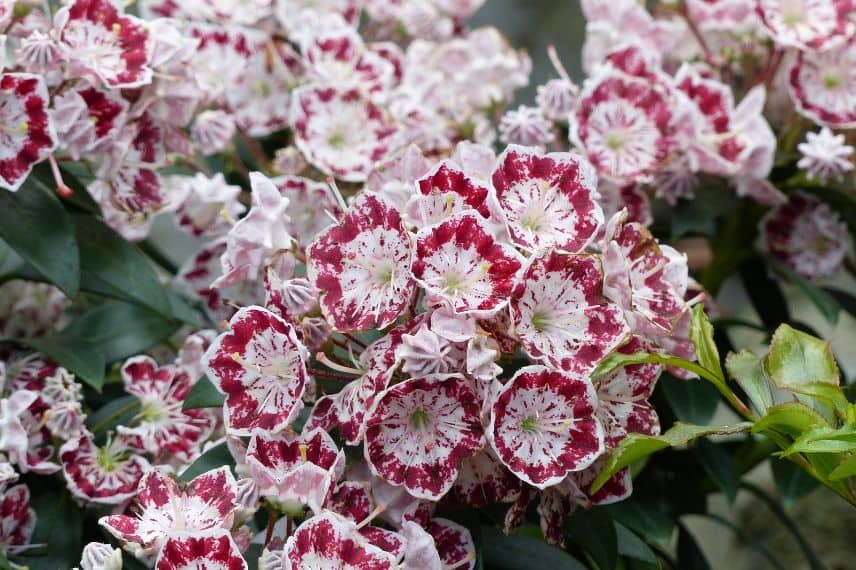
Kalmia latifolia ‘Minuet’
Read also
10 XXL flower bushesCallistemon viminalis 'Hot Pink', for its long flowering
Callistemon viminalis ’Hot Pink’ is a true star among ornamental shrubs, renowned for its stunning hot-pink inflorescences that resemble bottle brushes, hence its other name, “Bottle Brush”. Its flowering occurs mainly in spring and summer, from May to June, then again in August and September, to provide an unparalleled visual display. With a height of up to 1.70 m at maturity, this variety is ideal for creating a focal point in the garden or in a dynamic hedge.
Hardy and adaptable, the Callistemon viminalis ‘Hot Pink’ thrives in all soil types, dry or slightly damp, but well-drained. When well established after a few years, it even tolerates drought. A sunny to semi-shaded position suits it best, allowing it to reveal the full splendour of its flowers. Although it particularly enjoys the mild climates of the Mediterranean rim, it can also adapt to coastal regions if winter temperatures do not fall below -6°C.
For perfect harmony, consider pairing it with silvery-leaved plants such as Santolina or lavender. It will blend beautifully into contemporary or coastal gardens, adding an exotic touch and colour.
→ Discover our other Callistemon varieties, and, to learn more about this handsome shrub, read our page on the Callistemon, Bottlebrush: plant, prune and maintain.
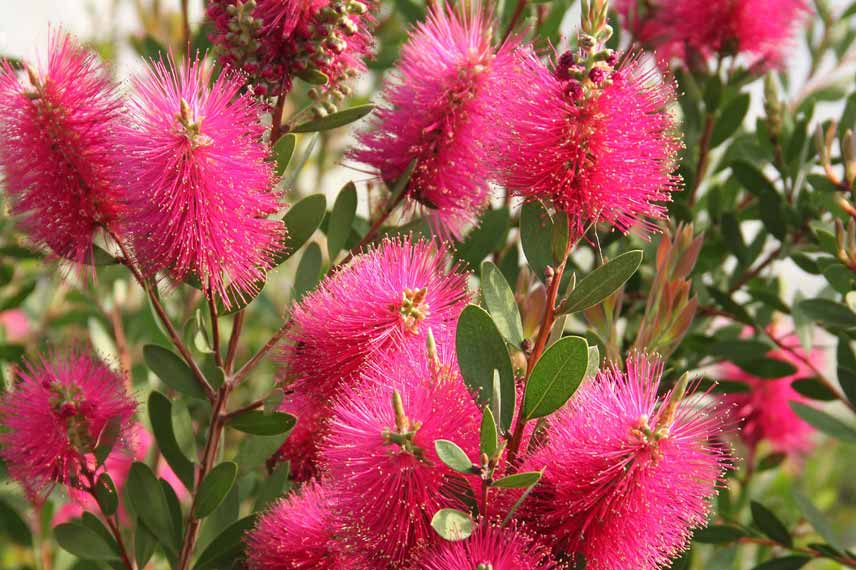
Callistemon viminalis ‘Hot Pink’
Ceanothus 'Blue Sapphire', for a touch of vibrant blue.
The Ceanothus ‘Blue Sapphire’ stands out for its evergreen foliage, dark, glossy green, on which clusters of deep-blue flowers appear in spring and early summer, from April to July. This long flowering is a delight for the eyes and for pollinators. Reaching 1 to 1.5 m in height and spread at maturity, it is ideal for flower beds, in low hedges and even in pots on the terrace. Its moderate hardiness (to -12°C) makes it suitable for mild regions such as the Mediterranean coast or the coastal zone. A good mulch or winter protection, or even a greenhouse, can help it to flourish elsewhere.
Preferring a sunny aspect, Ceanothus ‘Blue Sapphire’ thrives in dry or well-drained soil, slightly acidic to neutral. For a harmonious display, consider pairing it with white- or pink-flowered plants, such as roses or hardy geraniums. It also has a place in contemporary gardens, seaside locations or even in a more rustic countryside setting, where its vibrant blue adds a distinctive touch.
→ Discover our other Ceanothus varieties, and to learn more about this fine shrub, read our page on Ceanothus, California lilac: planting, care, pruning.
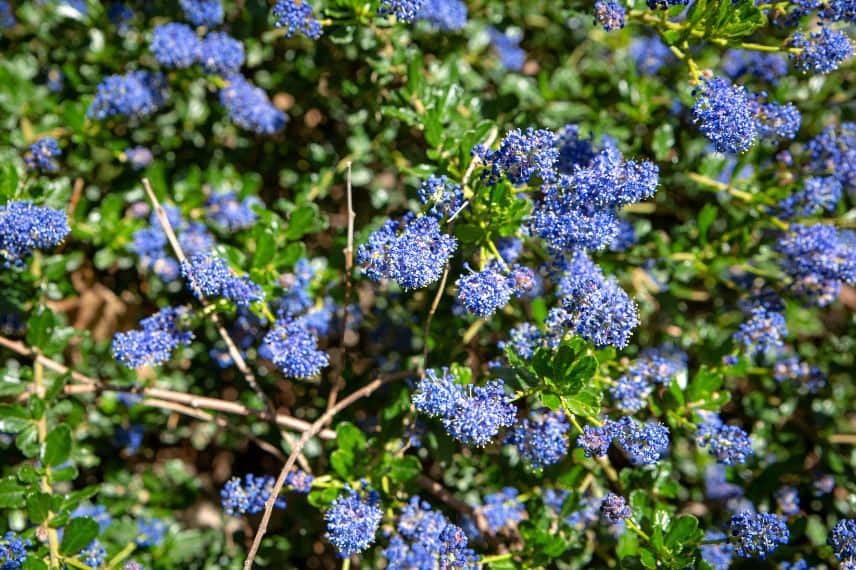 Ceanothus ‘Blue Sapphire’
Read also
8 shrubs with extraordinary flowersMahonia japonica 'Hivernant', for its winter flowering
The Mahonia japonica ‘Hivernant’ is a shrub that stands out, especially during the colder months. Its evergreen foliage, with spiny and glossy leaves, offers a dark green hue that elegantly contrasts with its clusters of bright yellow flowers in winter. These flowers appear from December to March depending on the region and they emit a delicate fragrance. They are followed by blue-black berries in summer.
Reaching 1.50 m at maturity, the Mahonia japonica ‘Hivernant’ is perfect for borders, hedges or as a stand-alone plant. Its robustness allows it to withstand temperatures down to -18°C, making it suitable for most of our regions. For eastern regions, prefer the ‘Fireflame’ variety, even more frost-hardy. It enjoys a partly shaded to shaded aspect, in all soil types provided that the soil remains slightly damp and well-drained.
For a harmonious composition, consider pairing it with ferns or hostas. It fits perfectly into woodland gardens, shade gardens or even contemporary ones, bringing a touch of exoticism and colour in the depths of winter.
→ Discover our other Mahonia varieties and to learn more about this handsome shrub, read our guide on Mahonia: planting, pruning and maintenance
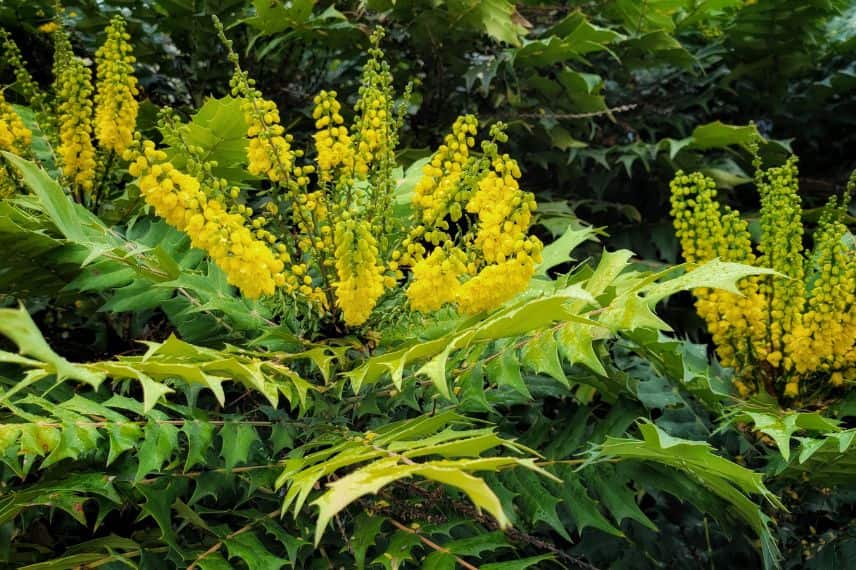
Choisya 'Goldfinger', to brighten up the garden
The Choisya ‘Goldfinger’ is a Mexican orange blossom shrub that dazzles with its evergreen foliage in golden hues. Its leaves, finely cut, shine with a bright green-yellow hue, bringing a splash of brightness to any green space. In late spring, this brightness is enhanced by its white flowers, barely tinged with pink, fragrant, evoking the sweet aroma of orange blossom. This flowering is often repeat-flowering in August–September.
With a height that can reach 2 metres at maturity, the Mexican orange blossom ‘Goldfinger’ is ideal for hedges, borders or even in a pot on a terrace. Its hardiness (to -15°C) enables it to thrive in most regions of France, though it prefers protection from strong winds and severe frosts. It thrives in a sunny to partly shaded position. Very low-maintenance, it will grow in all soil types as long as they are well-drained, even dry and calcareous.
For perfect harmony in the garden, pair it with purple- or blue-green-leaved plants, such as the Heuchera or the Caryopteris. The Choisya ‘Goldfinger’ will find its place just as well in contemporary gardens as in cottage or exotic gardens, offering a constant brightness thanks to its golden foliage.
→ Discover our other Choisya varieties, and, to learn more about this lovely shrub, read our fact sheet on Mexican orange blossom, Choisya: planting, pruning and maintenance
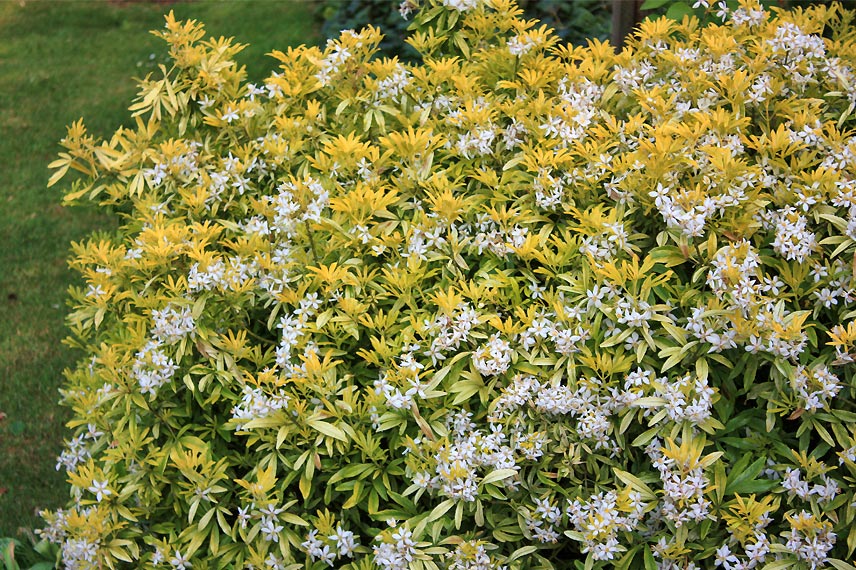 Choisya ‘Goldfinger’
The Rhododendron catawbiense 'Boursault'
The Rhododendron catawbiense ‘Boursault’ is a true star among the rhododendrons, captivating the eye with its large pale mauve flowers, slightly maculated with orange on the macule. This flowering, which appears in spring, from May to June, is enhanced by evergreen foliage in a dark, glossy green, providing a striking contrast.
Reaching a height of about 2 to 3 m at maturity, this majestic shrub is perfect for creating a focal point in large gardens or for establishing a flowering hedge. Hardy, it tolerates frosts down to -29°C once well established. This variety prefers partial shade or full sun and acidic, rich, well-drained soil.
This handsome shrub will be perfect in woodland or romantic gardens, bringing a splash of vibrant colour and lush texture. To enhance its beauty, pair it with azaleas, camellias or ferns.
→ Discover our other varieties of rhododendrons, and, for more information about this beautiful shrub, read our guide on the Rhododendron: planting, cultivation and maintenance.
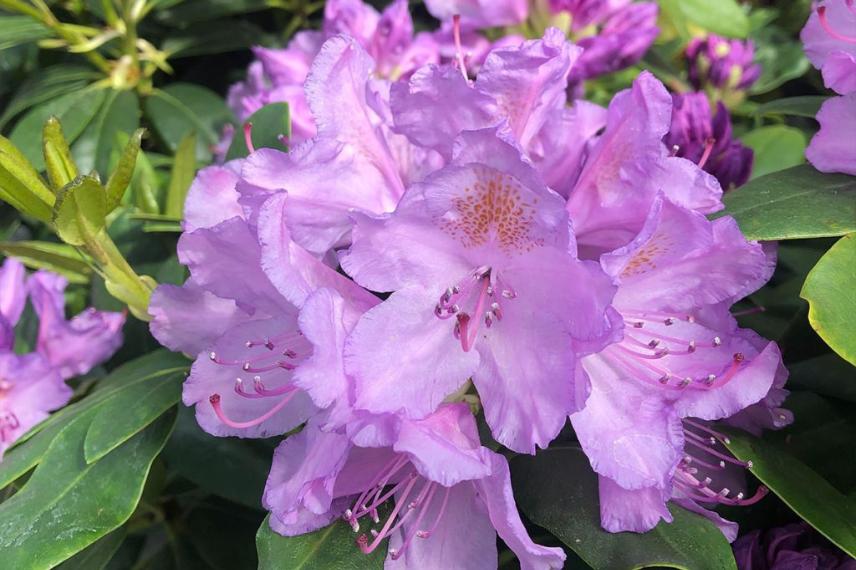
Rhododendron catawbiense ‘Boursault’
The Escallonia 'Pink Elle'
Escallonia ‘Pink Elle’ is a shrub that captivates with its delicacy. Its evergreen foliage, a glossy green, provides a backdrop to its bright pink tubular flowers and white blooms. They appear in abundance from July to September. These flowers, besides being aesthetically pleasing, attract pollinators, adding welcome life to the garden.
Grows to 80 cm at maturity, Escallonia ‘Pink Elle’ is a compact variety, ideal for borders, low hedges, or in a pot. With medium hardiness (down to -9°C), it is best suited to oceanic or Mediterranean climates. Otherwise, it should be grown in a pot and overwintered in a greenhouse. This handsome shrub thrives in full sun as well as partial shade. It likes to be planted in well-drained soil, whether acidic, neutral, or even calcareous. It resists sea spray, but fears cold winter winds.
For perfect harmony, consider pairing it with plants with silvery foliage, such as Santolina or lavender. Escallonia ‘Pink Elle’ is a wonderful choice for romantic gardens, coastal gardens or contemporary spaces, where its soft pink colour brings a touch of serenity and charm.
→ Discover our other Escallonia varieties, and, to learn more about this beautiful shrub, read our page on Escallonia: planting, pruning, maintenance.
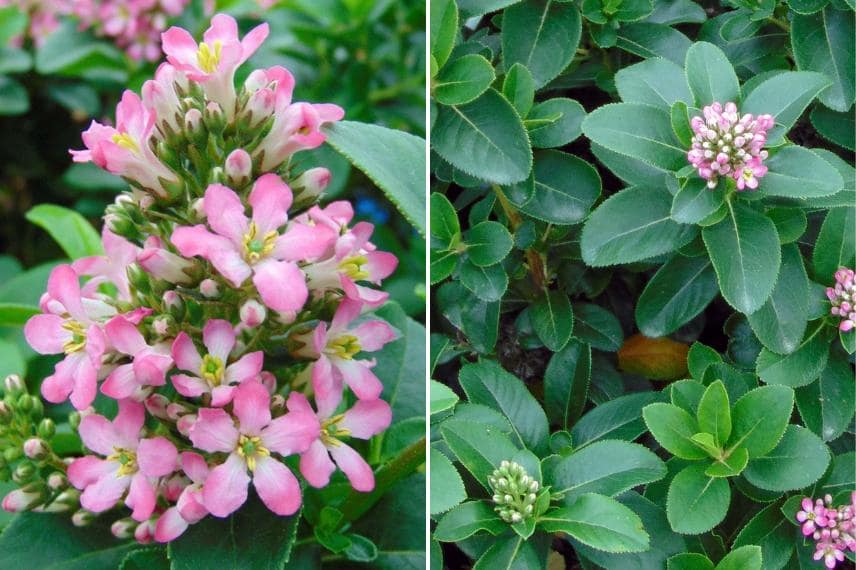 Escallonia ‘Pink Elle’
- Subscribe!
- Contents
Comments