




























FLASH SALES: discover new special offers every week!
7 magnolias with fragrant flowering

7 magnolias with fragrant flowering

The Best Fragrant Varieties

Contents

Modified the 12 January 2026  by Leïla 6 min.

Magnolias, with their spectacular flowering and intoxicating fragrance, are undisputed jewels of the garden. These trees or shrubs, symbols of grace and beauty, offer not only an impressive visual display, but also enchant our senses with their delicate fragrances. In this article, we invite you to discover seven fragrant magnolia varieties, each with its own unique character and distinctive aesthetic qualities.

→ Read our Magnolia family sheet.

Difficulty

Magnolia hypoleuca

Magnolia hypoleuca is a species less well known in the West than Magnolia grandiflora, yet it is hardier in cold conditions. It forms a majestic ornamental tree, with large silvery leaves and fragrant flowers, which bloom after 10–15 years. It tolerates cool soil, from neutral to acidic.
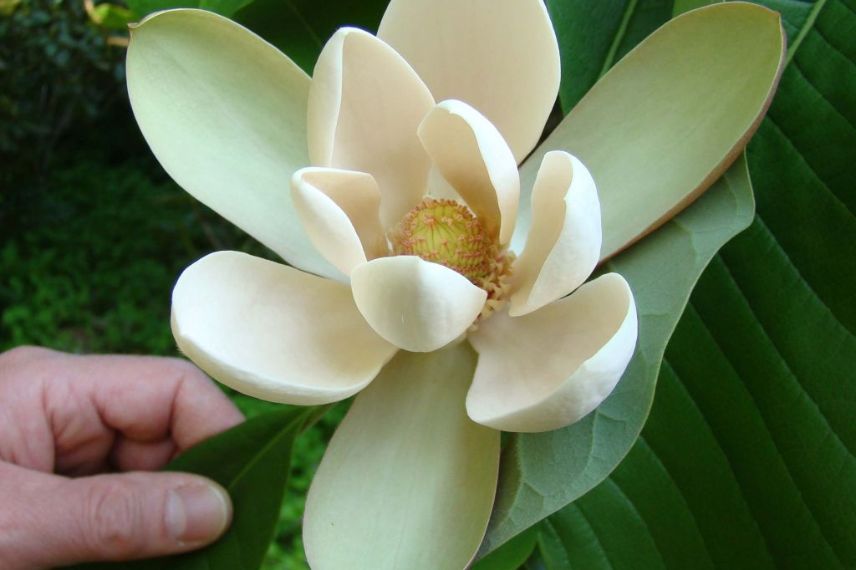
This magnolia, one of the largest in its family, is a hardy deciduous tree native to Japan and China. It is characterised by a broad, airy crown, obovate leaves measuring up to 45 cm in length and 20 cm in width, and fragrant flowers, sometimes reaching 20 cm in diameter, followed by red fruits. They are composed of 9 to 12 petals in cream to greenish tones or tinted pink to pale purple at flowering. The base of the stamens is a vivid red to crimson. The flowers exhale a strong and pleasant, fruity fragrance reminiscent of a ripe melon. The Magnolia hypoleuca typically reaches 10–12 metres in height with a spread of 8–10 m in our gardens.

Ideal for medium-sized gardens or large parks, the Magnolia hypoleuca pairs well with rhododendrons, shrub peonies and trees with autumn colours such as Parrotia. In Japan, its large leaves are used to wrap foods and it is known as Honoki.

Fragrant magnolia flowers

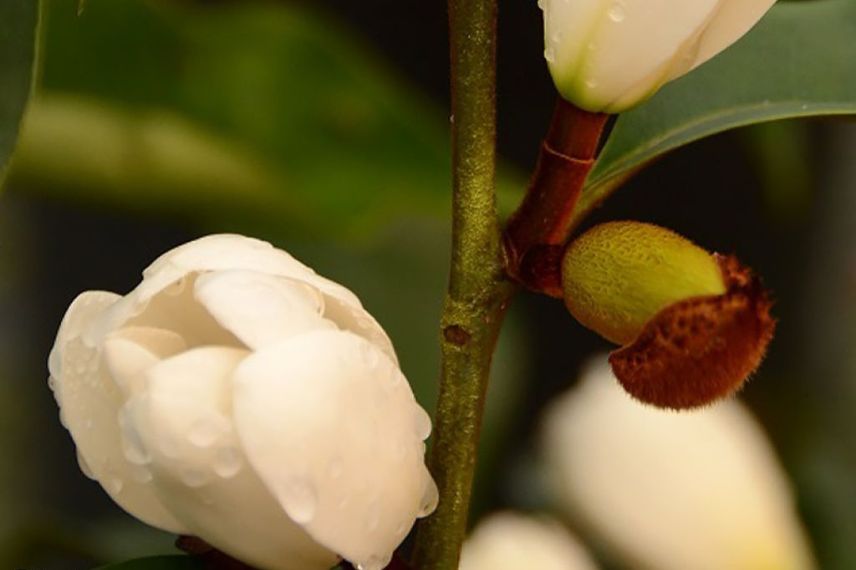
Michelia (x) foggii 'Allspice'

The Michelia (x) foggii ‘Allspice’ is an evergreen bush related to Magnolias. It is distinguished by its large, glossy leaves and its cream-white, fragrant flowers from spring to summer. Suitable for temperate climates, it tolerates down to -7 °C and is suitable for pot culture, ideal for colder regions. It prefers bright partial shade or gentle sun and humus-bearing soil, not calcareous.

Reinstated into the Magnolia genus by botanists, it is also known as Magnolia ‘Allspice’. Resulting from the hybridization between Michelia figo and M. doltsopa, this slow-growing bush with a pyramidal habit reaches about 2.5 m in height at 10 years. Its evergreen leaves are larger than those of other Michelia, and its flowering extends from May to July, offering cup-shaped flowers that are particularly fragrant.

When planted in the ground, Michelia ‘Allspice’ thrives in gardens in regions such as Brittany or Normandy, spared from both severe frosts and hot, dry summers. Plant it in bright partial shade, sheltered from cold winds from the east and north. You can also plant it in a large pot in colder regions or for cultivation in a conservatory. It fits well into an exotic display with plants such as the Fatsia japonica or the Fuchsia regia.

Fragrant Magnolia

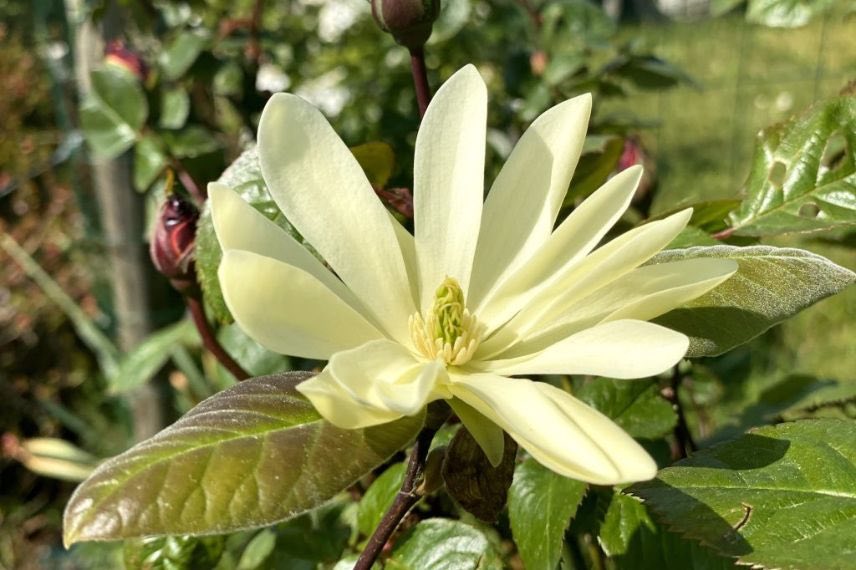
Magnolia x stellata 'Gold Star'

The Magnolia x stellata ‘Gold Star’, a rare deciduous magnolia, distinguished by its pale-yellow star-shaped flowers in spring. With a bushy, light habit, it features dark green foliage, bronze in youth, suited to any cool, moist soil, in full sun or partial shade.

Derived from an American cross between Magnolia acuminata var. subcordata ‘Miss Honeybee’ and Magnolia stellata, it inherits good hardiness and tolerance to calcareous soils. This small, rounded, spreading tree, taller than wide, reaches 3.5 metres tall by 2.5 metres wide at maturity. Its obovate leaves, dark green, turn yellow-brown in autumn. In April, it produces large pale-yellow star-shaped flowers, before the leaves appear, releasing a delicate, floral and sweet fragrance.

Perfect for gardens of all sizes, Magnolia ‘Gold Star’ can be used as a specimen plant on a lawn or in combination with heather-soil bushes such as the Nandinas or the Hydrangeas for a Japanese-style garden. It is also suitable for creating flowering hedges, alternating with other magnolias.

Star Magnolia with pale yellow flowers

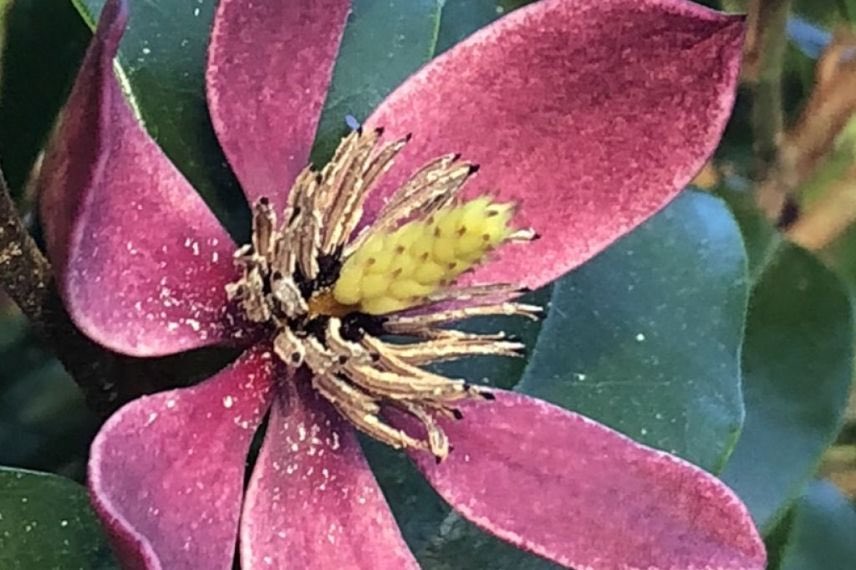
Magnolia figo 'Stellar Ruby'

The Magnolia figo ‘Stellar Ruby’, formerly Michelia figo, is an exotic hybrid with luxuriant leaves and cup-shaped pink to purple flowers, releasing a fruity fragrance reminiscent of banana. Evergreen, it adopts a narrow, pyramidal habit, reaching 4 m in height and 1.5 m in width in 10 years. Its abundant flowering, from the early years, occurs in spring and early summer, then reappears in late summer. This cultivar is particularly hardy, tolerating temperatures down to -15°C.

Included in the genus Magnolia, the species Michelia figo is native to Tibet and introduced to Europe in 1789. It is characterised by a compact habit and continuous flowering from March–April to the end of summer, with flowers bearing a scent of ripe banana. The hybrid ‘Stellar Ruby’ is distinguished by a narrower habit, increased hardiness and darker flowers.

Ideal as a specimen plant, near a path or in a large container on a terrace, Magnolia figo ‘Stellar Beauty’ is also suitable in a border or in an informal hedge with viburnums or privets. Its narrow habit makes it suitable for small gardens, and its high hardiness makes it suitable for many regions.

Michelia figo

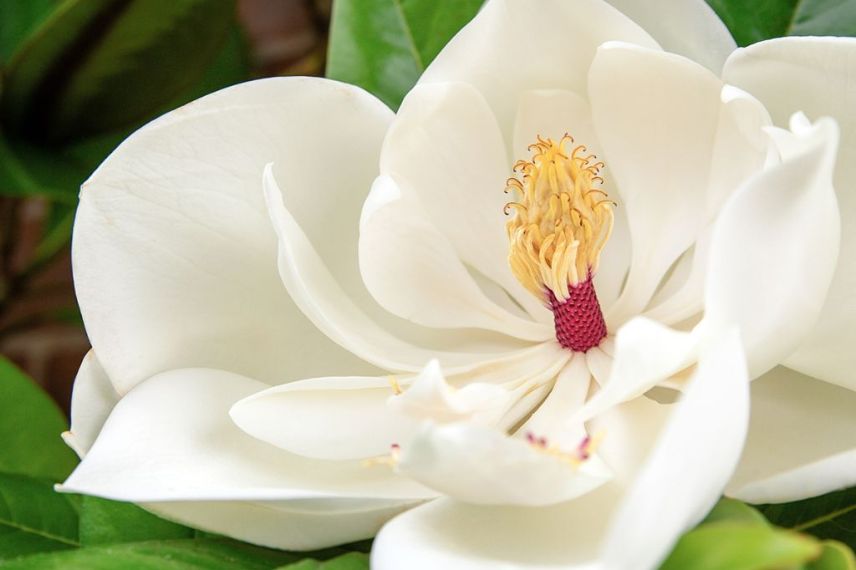
Magnolia grandiflora 'Goliath'

The Magnolia grandiflora ‘Goliath’ is an evergreen-leaved magnolia with summer flowering, flowering throughout the summer. This slow-growing small tree forms a regular pyramid, ideal for modest-sized gardens.

Magnolia grandiflora, native to the southeastern United States, prefers light, warmth, humidity and rich soils. Hardy up to ÃŽle-de-France, it flowers less abundantly further north. The variety ‘Goliath’ reaches 6 to 8 metres high and 4 to 6 metres wide, with dark green evergreen foliage and fragrant flowers from three years old.

Hardy to -20°C, ‘Goliath’ is relatively resistant to diseases. It is suitable as a specimen plant or at the back of a border, pairing well with the Hibiscus moscheutos and the Buddleias, for example.

Fragrant Magnolia

Magnolia macrophylla subsp. ashei

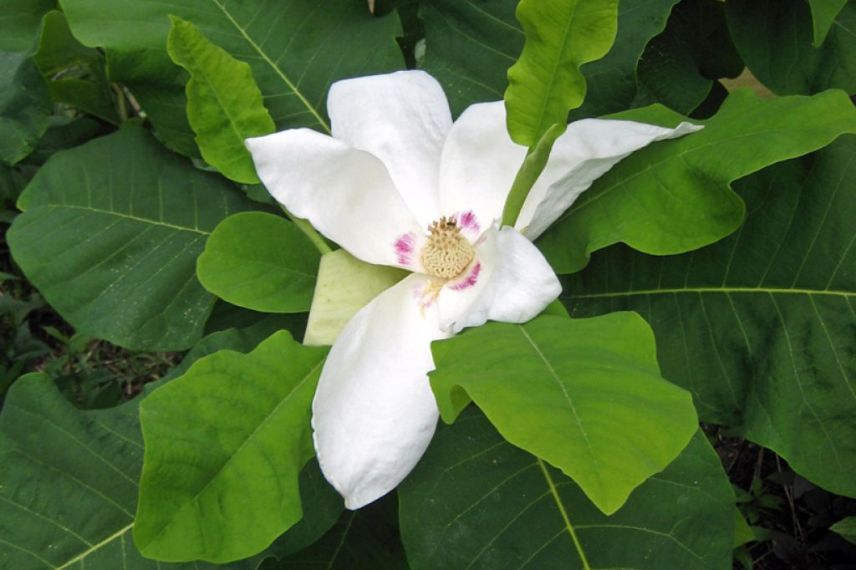
The Magnolia macrophylla subsp. ashei, or Magnolia ashei, is a more compact version of the large-leaf Magnolia, ideal for medium-sized gardens. It is distinguished by its apple-green foliage with a silver underside and its large, white, fragrant flowers with a dark red heart, exhaling notes of jasmine and citrus trees. Its foliage takes on golden autumn colours. It flowers from a young age, offering a tropical and exotic touch.

Discovered in Florida, Magnolia ashei is smaller than the type species, with less-downy leaves and early flowering. It reaches 8 to 10 metres in height with a 7 to 8 metre spread, with rapid growth in rich, cool soil. Its oblong leaves measure 40 to 60 cm long, and its cup-shaped flowers, 20–25 cm in diameter, unfold from May to July, followed by decorative conical fruits, red to violet.

Hardy to -15°C, Magnolia ashei thrives in partial shade or full sun in the less sunny regions. It is ideal as a specimen plant or at the back of a border, accompanied by exotic moisture-loving plants such as Gunnera manicata, Rodgersias or the Filipendula ulmaria.

Magnolia with white, fragrant flowers

Magnolia officinalis var. biloba

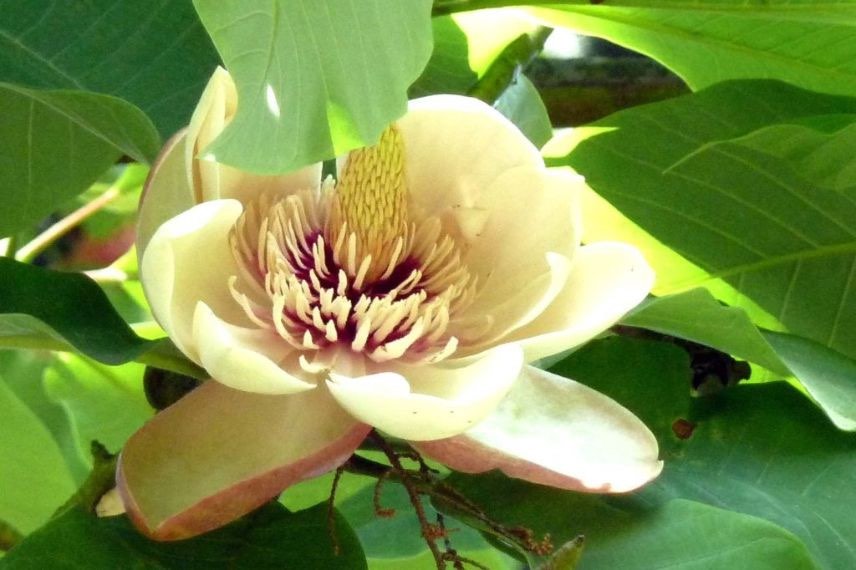
The Magnolia officinalis var. biloba is a small exotic ornamental tree, remarkable for its large rosette leaves and its cream-coloured, fragrant flowers, which bloom after eight to ten years. They emit a pronounced and pleasant, fruity fragrance. Easy to grow, it is hardy to -18°C and prefers deep, cool soil, neutral to acidic.

This magnolia is distinguished by its elegant habit and conical crown, which becomes rounded with age. The subspecies biloba, native to China, is prized for its medicinal properties and is recognised by its lobed leaves. It generally reaches 8–10 metres in height and 5–6 metres in width, with rapid growth once established. Its obovate leaves measure up to 50 cm long, and its cream-coloured flowers appear from May to June, followed by decorative red-pink fruits.

Ideal for medium- to large-sized gardens, the Magnolia officinalis var. biloba pairs well with rhododendrons, deciduous azaleas, or the caramel tree, creating a colourful autumn display.

Magnolia with fragrant flowers

Comments

Magnolia grandiflora Goliath