Magnolia figo Stellar Ruby
Magnolia figo Stellar Ruby
Magnolia figo Stellar Ruby
Banana Shrub, Port Wine Magnolia, Brown-Stalked Magnolia, Chinese Tulip Tree
Lovely young plant upon arrival, I noticed it had a difficult hardening period a few days after planting last spring: despite all my care, the plant suddenly had all its leaves drooping and turning yellow. I had to pamper it closely for several months (mulching, watering, partial shade), then new leaves appeared until they replaced all the previous ones, the bush hasn't grown much, but it has regained good health and has even already given me a few of its strange flowers. I hope winter won't be too hard on it!
Anna, 29/08/2025
Back-to-school special offer!
Get €10 off for every €50 you spend! And get up to €40 off on a single order.
How does it work?
1. Shop your favourites
Add your favourite plants to your basket. For every €50 you spend (excluding delivery charges, store credit and the plastic-free option), you’ll receive a €10 voucher.
€50 spent = €10 voucher
€100 spent = €20 voucher
€150 spent = €30 voucher
€200 spent = €40 voucher
2. Place your order
Once your basket reaches one of the spending thresholds, place your order. You can even choose your delivery date!
3. Receive your voucher
As soon as your order has been shipped, you’ll receive an email containing your personal voucher code and its value.
4. Use it on your next order
Your voucher is valid for 90 days from the date you receive it. It can be used once only, on a new order worth at least the value of the voucher, excluding delivery charges.
Please note: Vouchers can be combined with other offers, but cannot be split or refunded.
Home or relay delivery (depending on size and destination)
Important: You may be charged customs duties by your country’s customs authorities upon delivery.
Schedule delivery date,
and select date in basket
This plant carries a 24 months recovery warranty
More information
We guarantee the quality of our plants for a full growing cycle, and will replace at our expense any plant that fails to recover under normal climatic and planting conditions.
Would this plant suit my garden?
Set up your Plantfit profile →
Description
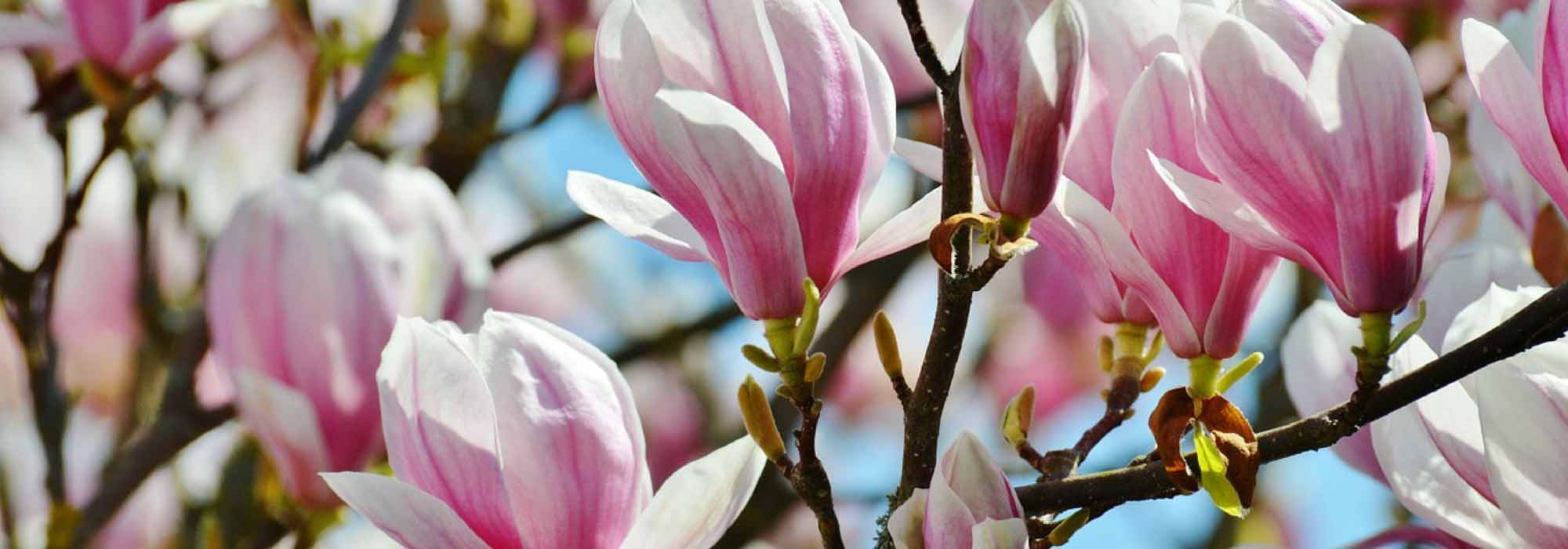
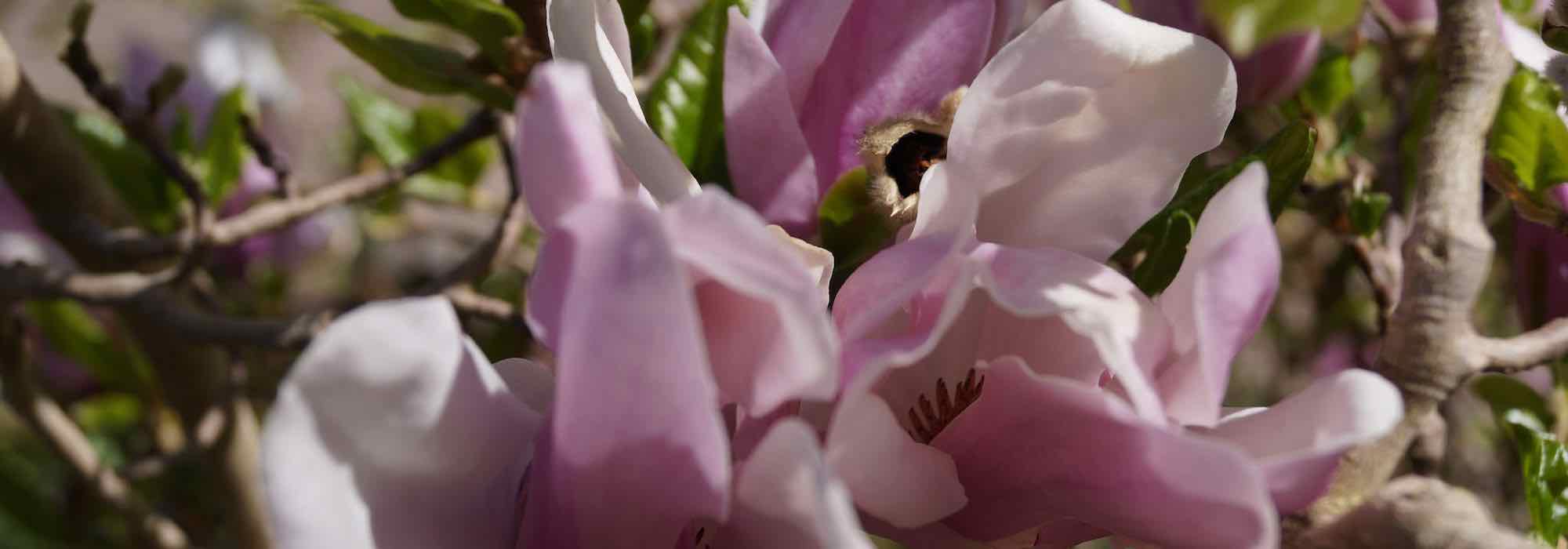
The Stellar Ruby Magnolia figo, formerly known as Michelia figo, is a hybrid of this fantastic banana bush, exotic with its lush leaves, cup-shaped flowering and unique, very fruity fragrance reminiscent of bananas. It forms an evergreen bush with a narrow and pyramidal habit, with dense, glossy, dark green foliage. Its abundant flowers appear from spring to early summer, in open and refined cups, ranging in color from pink to purple, accompanied by a floral and fruity fragrance. They reappear again at the end of summer. This bountiful flowering occurs in the early years after planting and this generous bush quickly takes root and grows rapidly to reach 4m (13ft) in height and 1.5m (5ft) in width in 10 years. This cultivar is hardy, down to -15°C (5°F).
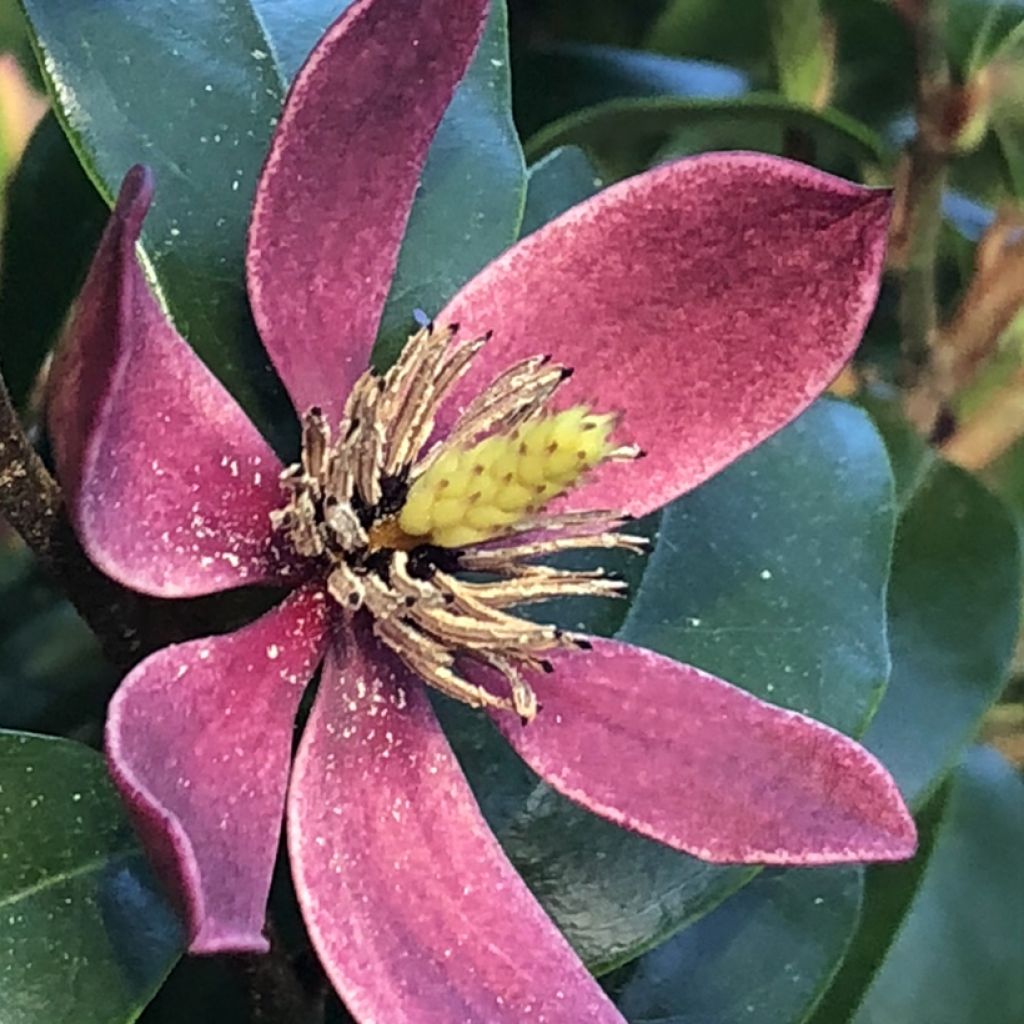
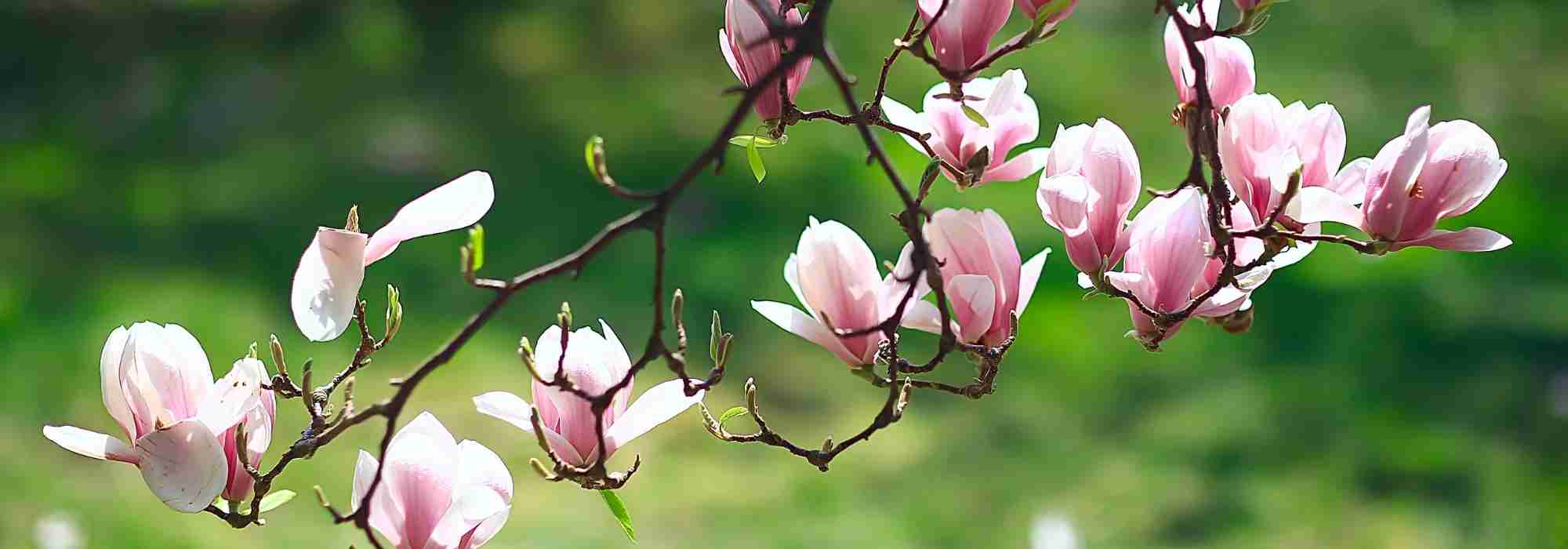
The Michelia figo botanical species, now included in the Magnolia genus, belongs to the Magnoliaceae family. It is an evergreen bush native to Tibet, introduced to Europe in 1789. With a compact habit, both erect and spreading, its vegetation is dense, with multiple stems and numerous branches. In nature, it reaches 3m (10ft) in height and almost as much in width. Its growth is slow. The continuous flowering begins in March-April and lasts until the end of summer. The flowers succeed each other, perfuming the air with their surprising scent of ripe bananas. Bursting open from velvety buds, they open up into cups with a diameter of 4cm (2in), formed by 6 waxy petals with a subtle shade of old pink, finely edged with purple, showing in their center a cluster of protruding stamens surrounding a granular club-shaped pistil. The foliage is leathery, dark green and shiny, composed of ovate leaves, 8 to 10cm (3 to 4in) long, with a lighter velvety underside.
The Stellar Ruby hybrid was selected in 2010 after crossing two unnamed and unpatented plants of two subspecies of Magnolia figo: var. crassipes and var. skinneria. It differs from the botanical species with its narrow habit, improved hardiness and rapid and vertical growth. It offers flowers of a darker color, pink to purple, almost ruby pink, both slightly faded but more intense.
Plant the Stellar Ruby Magnolia figo as a standalone plant to showcase it, near a pathway to enjoy its fragrance, or even in a large container on the terrace, to be stored for winter if necessary. In mild climates, it works wonders as a standalone plant on a short grass meadow, but also mixed in a flower bed or in a free hedge with viburnums (Viburnum odoratissimum), privets (Ligustrum japonicum), and even as a trimmed hedge by the seaside. When planted freely, it does not require pruning, appreciates exposure to non-burning sun or partial shade. The narrow habit of Stellar Ruby makes it a friend of small gardens. Its improved hardiness allows it to be adopted in many regions.
Plant habit
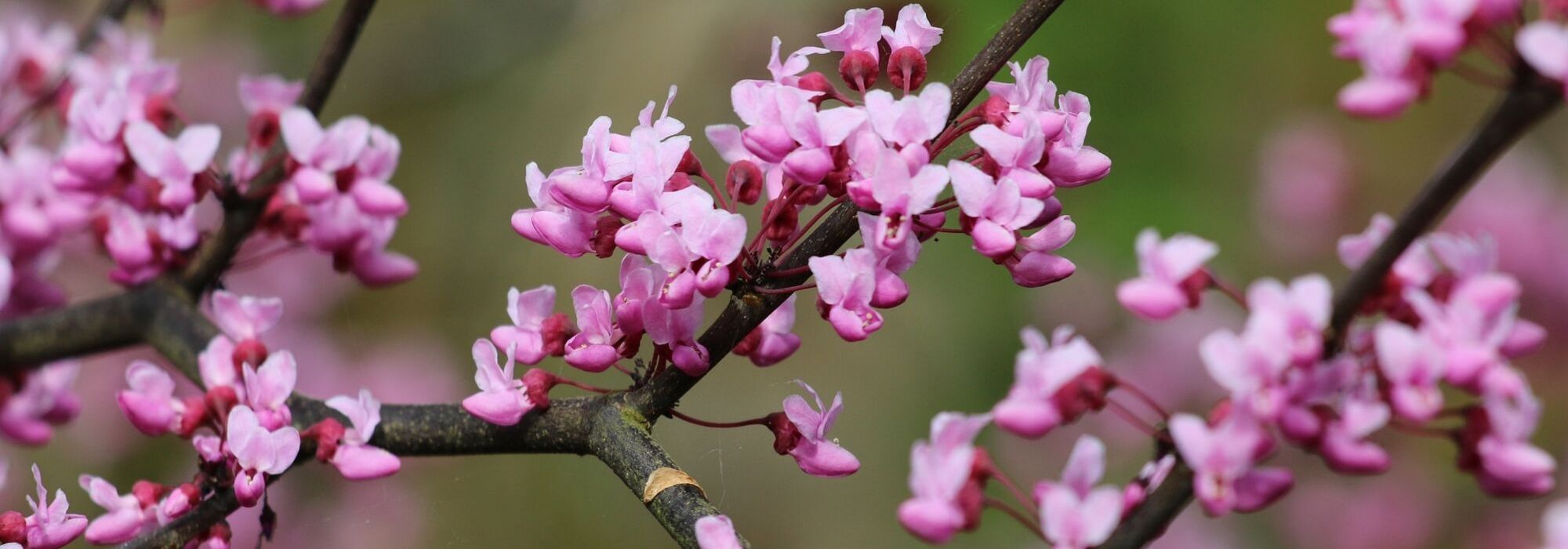
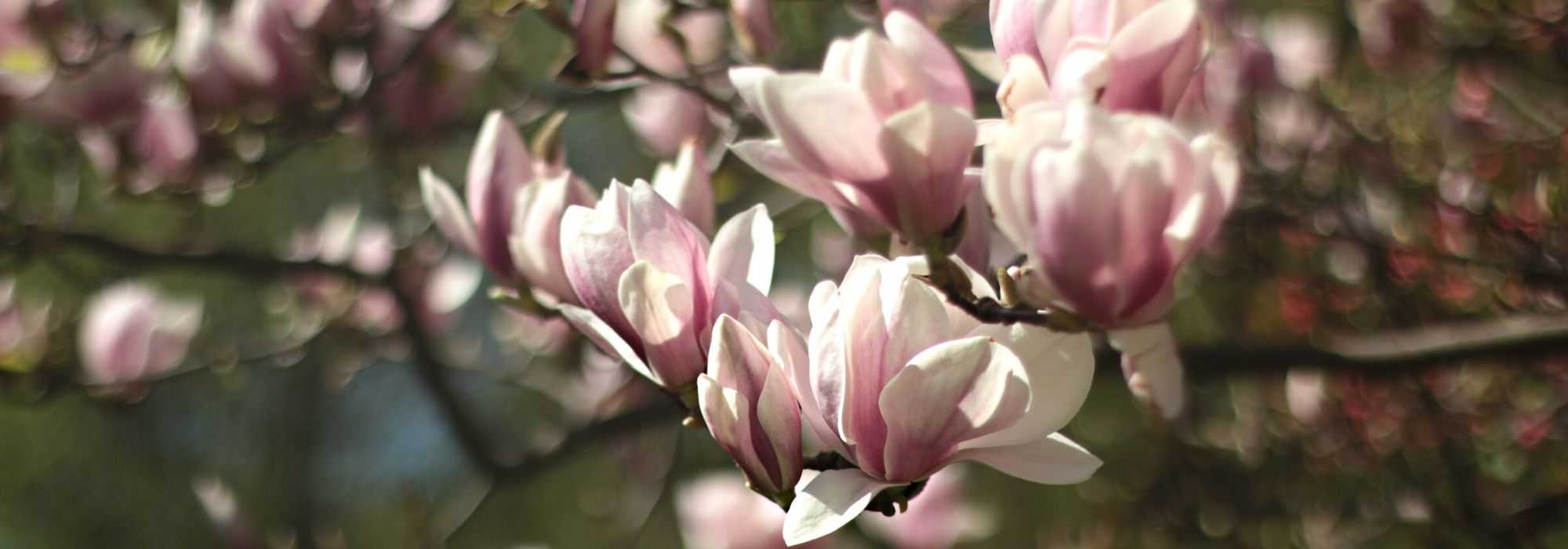
Flowering
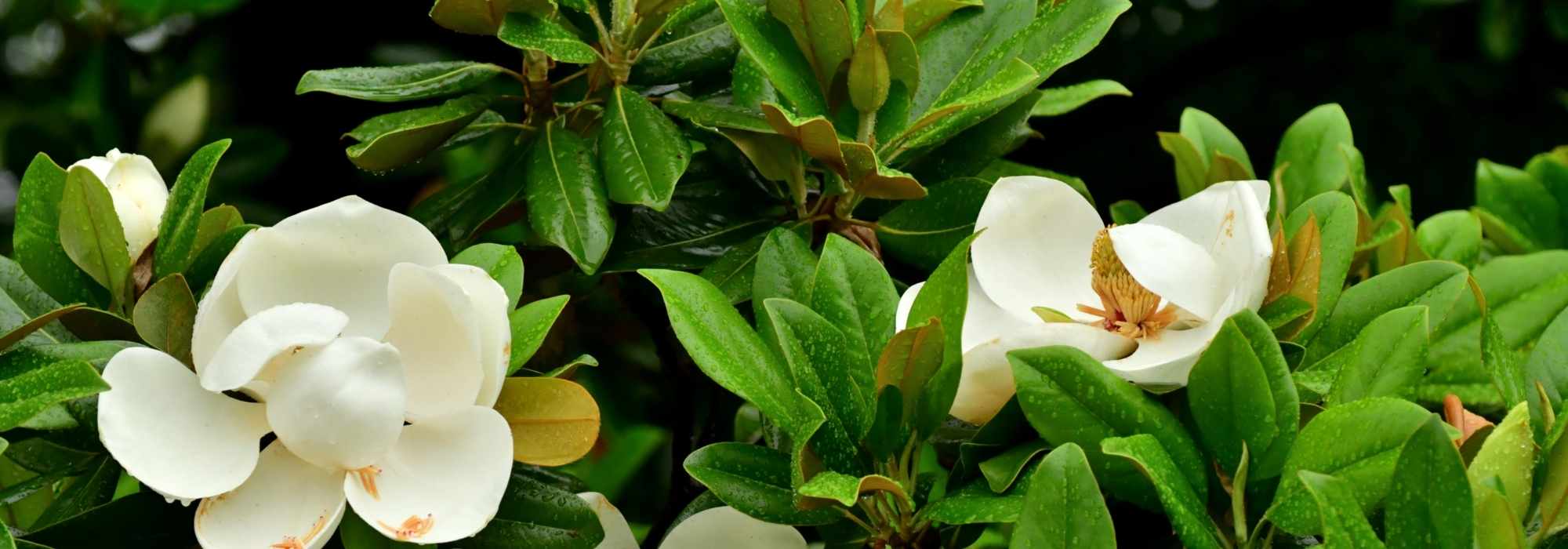
Foliage
Botanical data
Magnolia
figo
Stellar Ruby
Magnoliaceae
Banana Shrub, Port Wine Magnolia, Brown-Stalked Magnolia, Chinese Tulip Tree
Cultivar or hybrid
Planting and care
The Magnolia or Michelia figo Stellar Ruby prefers humus-rich, acidic soils, rich in organic matter, from moist to dry, with good drainage. It appreciates semi-shaded exposures and dislikes scorching exposures, but still needs sun and warmth to flower well. Install it sheltered from cold winds. Its cultivation is possible in open ground in many regions, it is hardy down to -15°C (5°F). This bush does not tolerate transplanting once it is established, so choose its location carefully.
Its appearance and growth will be different depending on whether it is planted in open ground or in a container. When grown in a large container, its development is more limited. Watering should then be maintained in summer, and greatly reduced in winter: in a cold greenhouse or conservatory, water (without too much lime) should be applied sparingly, only when the substrate is dry to a depth of 1 cm (1in) on the surface.
The banana shrub does not normally require pruning, but if necessary it can be done after flowering. In late winter, before the start of vegetation, remove dead wood and tangled branches, keeping only the vigorous branches to maintain a beautiful habit.
Planting period
Intended location
Care
Planting & care advice
-
-
-
-
-
-
-
-
-
, onOrder confirmed
Reply from on Promesse de fleurs
Recently viewed products
Haven't found what you were looking for?
Hardiness is the lowest winter temperature a plant can endure without suffering serious damage or even dying. However, hardiness is affected by location (a sheltered area, such as a patio), protection (winter cover) and soil type (hardiness is improved by well-drained soil).

The flowering period indicated on our website applies to countries and regions located in USDA zone 8 (France, the United Kingdom, Ireland, the Netherlands, etc.)
It will vary according to where you live:- In zones 9 to 10 (Italy, Spain, Greece, etc.), flowering will occur about 2 to 4 weeks earlier.
- In zones 6 to 7 (Germany, Poland, Slovenia, and lower mountainous regions), flowering will be delayed by 2 to 3 weeks.
- In zone 5 (Central Europe, Scandinavia), blooming will be delayed by 3 to 5 weeks.
In temperate climates, pruning of spring-flowering shrubs (forsythia, spireas, etc.) should be done just after flowering.
Pruning of summer-flowering shrubs (Indian Lilac, Perovskia, etc.) can be done in winter or spring.
In cold regions as well as with frost-sensitive plants, avoid pruning too early when severe frosts may still occur.
The planting period indicated on our website applies to countries and regions located in USDA zone 8 (France, United Kingdom, Ireland, Netherlands).
It will vary according to where you live:
- In Mediterranean zones (Marseille, Madrid, Milan, etc.), autumn and winter are the best planting periods.
- In continental zones (Strasbourg, Munich, Vienna, etc.), delay planting by 2 to 3 weeks in spring and bring it forward by 2 to 4 weeks in autumn.
- In mountainous regions (the Alps, Pyrenees, Carpathians, etc.), it is best to plant in late spring (May-June) or late summer (August-September).
The harvesting period indicated on our website applies to countries and regions in USDA zone 8 (France, England, Ireland, the Netherlands).
In colder areas (Scandinavia, Poland, Austria...) fruit and vegetable harvests are likely to be delayed by 3-4 weeks.
In warmer areas (Italy, Spain, Greece, etc.), harvesting will probably take place earlier, depending on weather conditions.
The sowing periods indicated on our website apply to countries and regions within USDA Zone 8 (France, UK, Ireland, Netherlands).
In colder areas (Scandinavia, Poland, Austria...), delay any outdoor sowing by 3-4 weeks, or sow under glass.
In warmer climes (Italy, Spain, Greece, etc.), bring outdoor sowing forward by a few weeks.
Shipping country and language
Your country of residence may be:
Your country of residence is:
For a better user experience on our website, you can select:
Your shipping country:
-
 Austria
-
 Belgium
-
 Bosnia & Herzegovina
-
 Bulgaria
-
 Croatia
-
 Cyprus
-
 Czechia
-
 Denmark
-
 Estonia
-
 Finland
-
 France
-
 Germany
-
 Greece
-
 Hungary
-
 Iceland
-
 Ireland
-
 Italy
Italy
-
 Latvia
-
 Liechtenstein
-
 Lithuania
-
 Luxembourg
-
 Malta
Malta
-
 Netherlands
-
 Poland
-
 Portugal
-
 Romania
-
 Serbia
-
 Slovakia
-
 Slovenia
-
 Spain
Spain
-
 Sweden
-
 Switzerland
Language:
-
French
-
 English
-
Spanish
-
Italian
-
German
-
Portuguese
-
Dutch
-
Finnish
My Account
Hello
My wish lists
My cart
Log in / Register
Existing customer?
This form is protected by reCAPTCHA - the Google Privacy Policy and Terms of Service apply.
New customer?
Create an account to track your orders, access our customer service and, if you wish, make the most of our upcoming offers.