Viburnum odoratissimum
Viburnum odoratissimum
Viburnum odoratissimum
Viburnum odoratissimum
Viburnum odoratissimum
Viburnum odoratissimum
Viburnum odoratissimum
Viburnum odoratissimum
Viburnum odoratissimum
Sweet Viburnum, Sweet Bay, Walter's Viburnum
Shoot not growing fast.
Patrice, 03/06/2023
Back-to-school special offer!
Get €10 off for every €50 you spend! And get up to €40 off on a single order.
How does it work?
1. Shop your favourites
Add your favourite plants to your basket. For every €50 you spend (excluding delivery charges, store credit and the plastic-free option), you’ll receive a €10 voucher.
€50 spent = €10 voucher
€100 spent = €20 voucher
€150 spent = €30 voucher
€200 spent = €40 voucher
2. Place your order
Once your basket reaches one of the spending thresholds, place your order. You can even choose your delivery date!
3. Receive your voucher
As soon as your order has been shipped, you’ll receive an email containing your personal voucher code and its value.
4. Use it on your next order
Your voucher is valid for 90 days from the date you receive it. It can be used once only, on a new order worth at least the value of the voucher, excluding delivery charges.
Please note: Vouchers can be combined with other offers, but cannot be split or refunded.
Home or relay delivery (depending on size and destination)
Important: You may be charged customs duties by your country’s customs authorities upon delivery.
Schedule delivery date,
and select date in basket
This plant carries a 24 months recovery warranty
More information
We guarantee the quality of our plants for a full growing cycle, and will replace at our expense any plant that fails to recover under normal climatic and planting conditions.
Would this plant suit my garden?
Set up your Plantfit profile →
Description
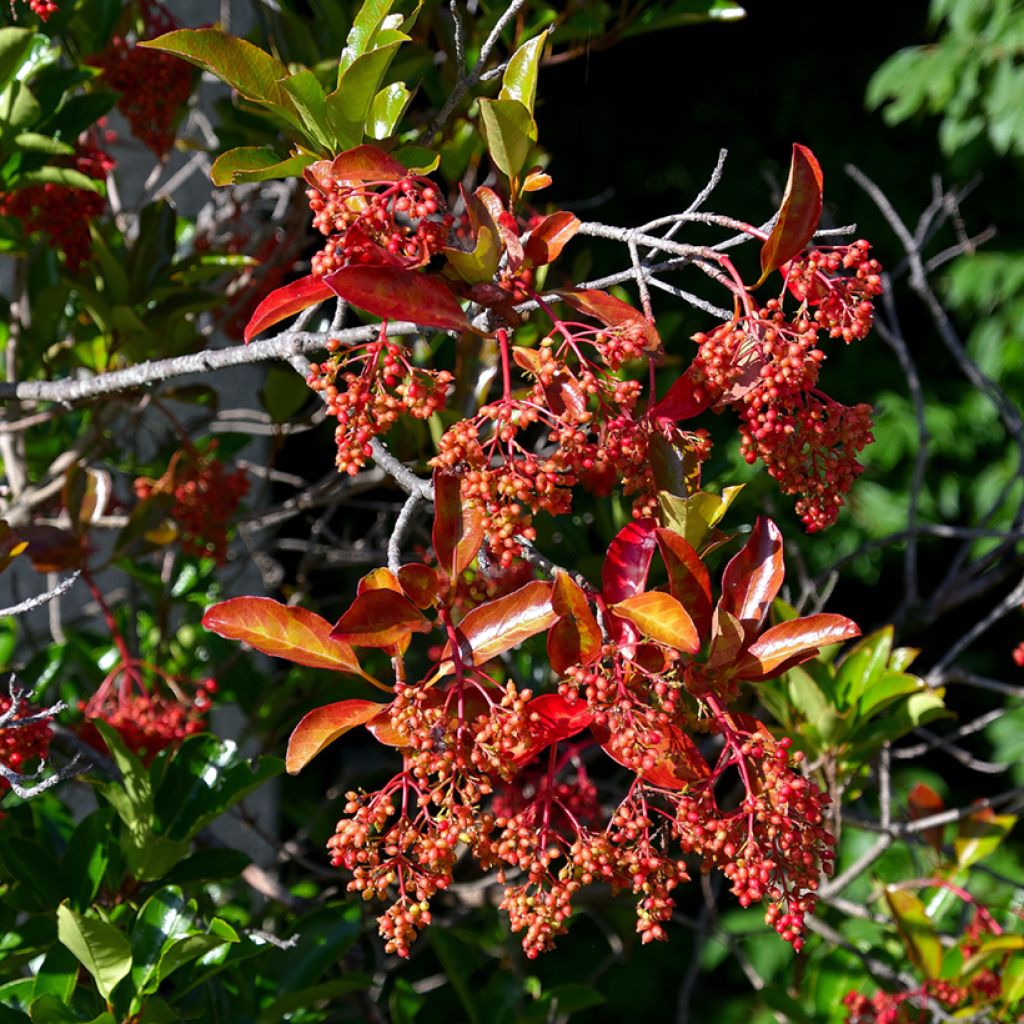
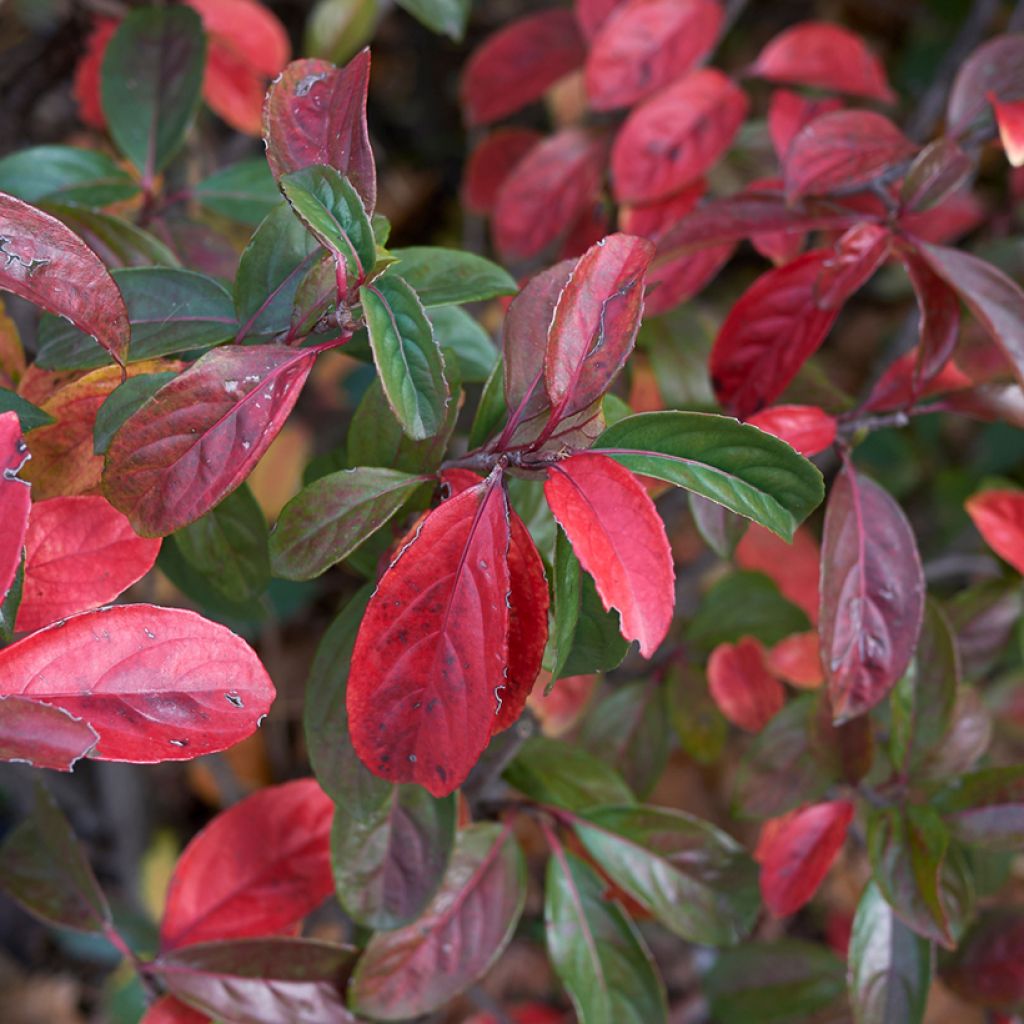
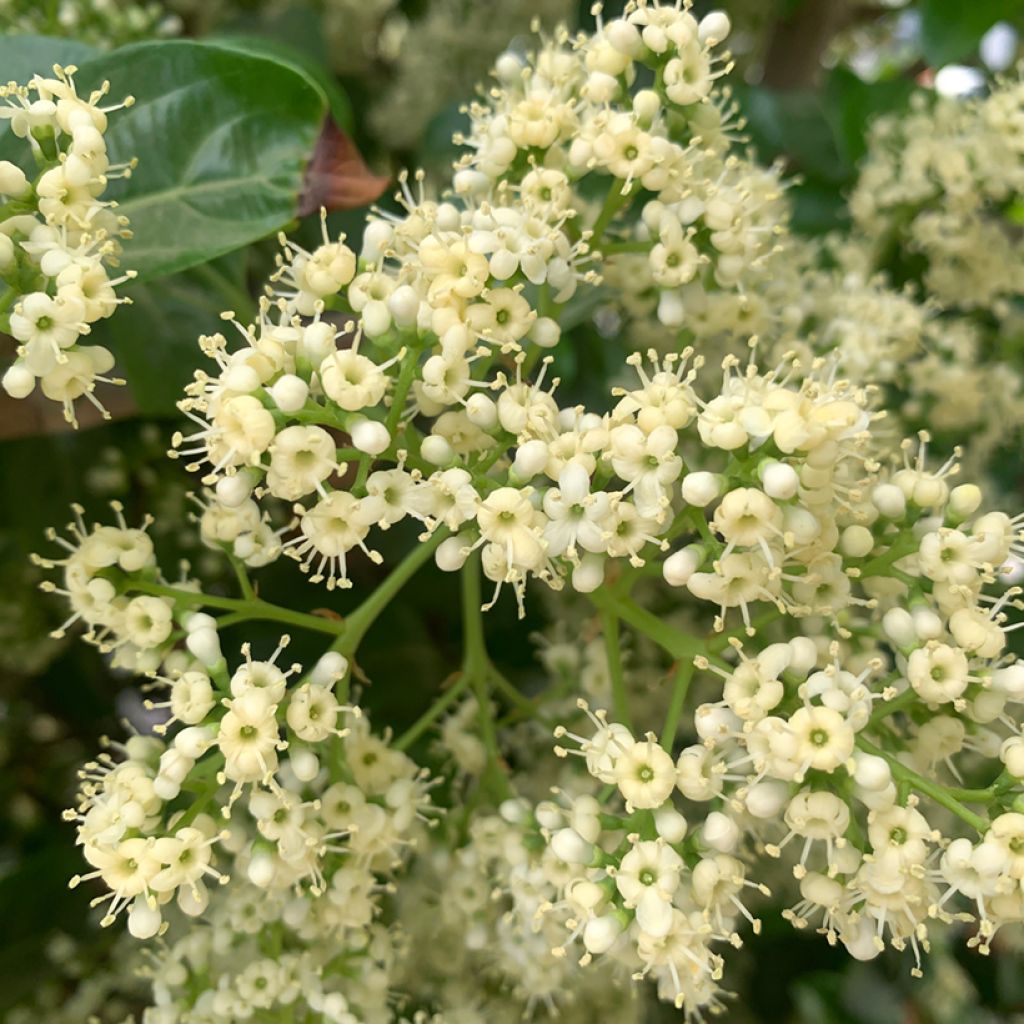
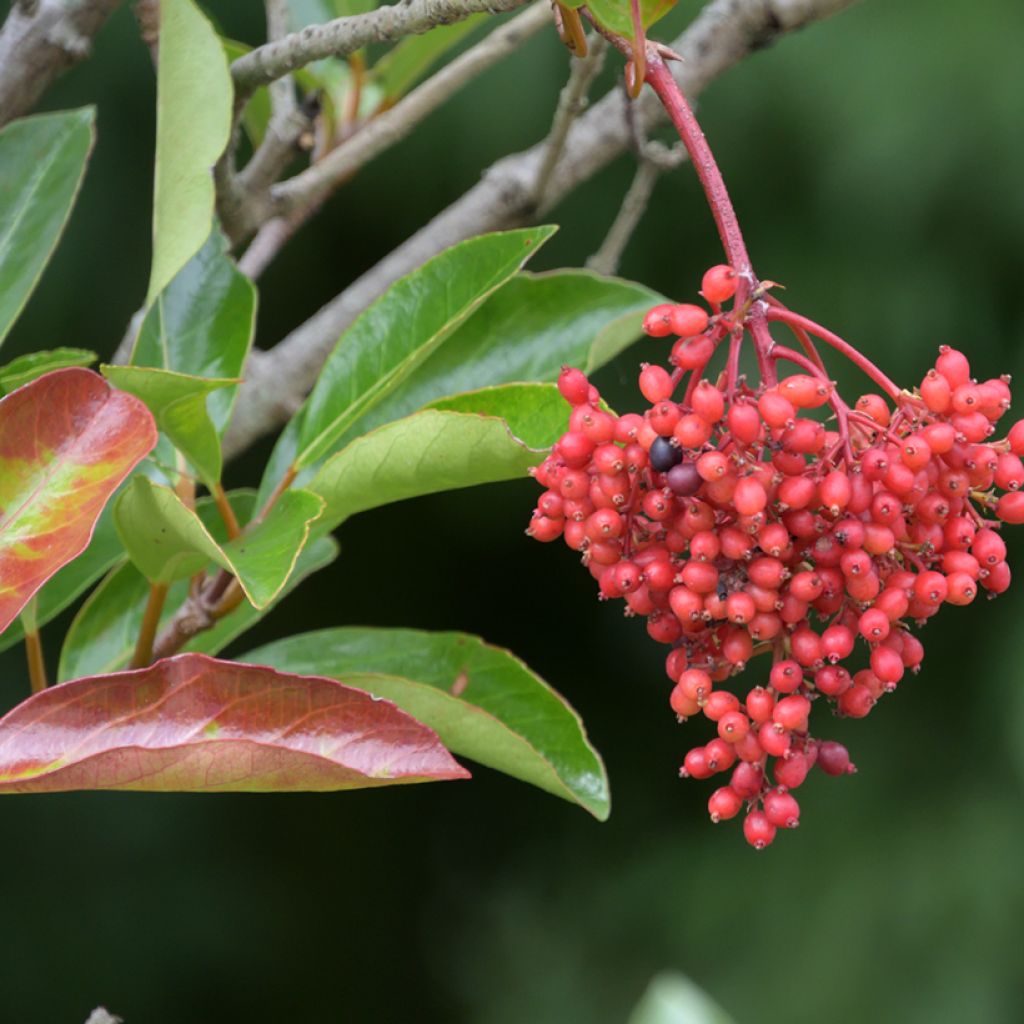
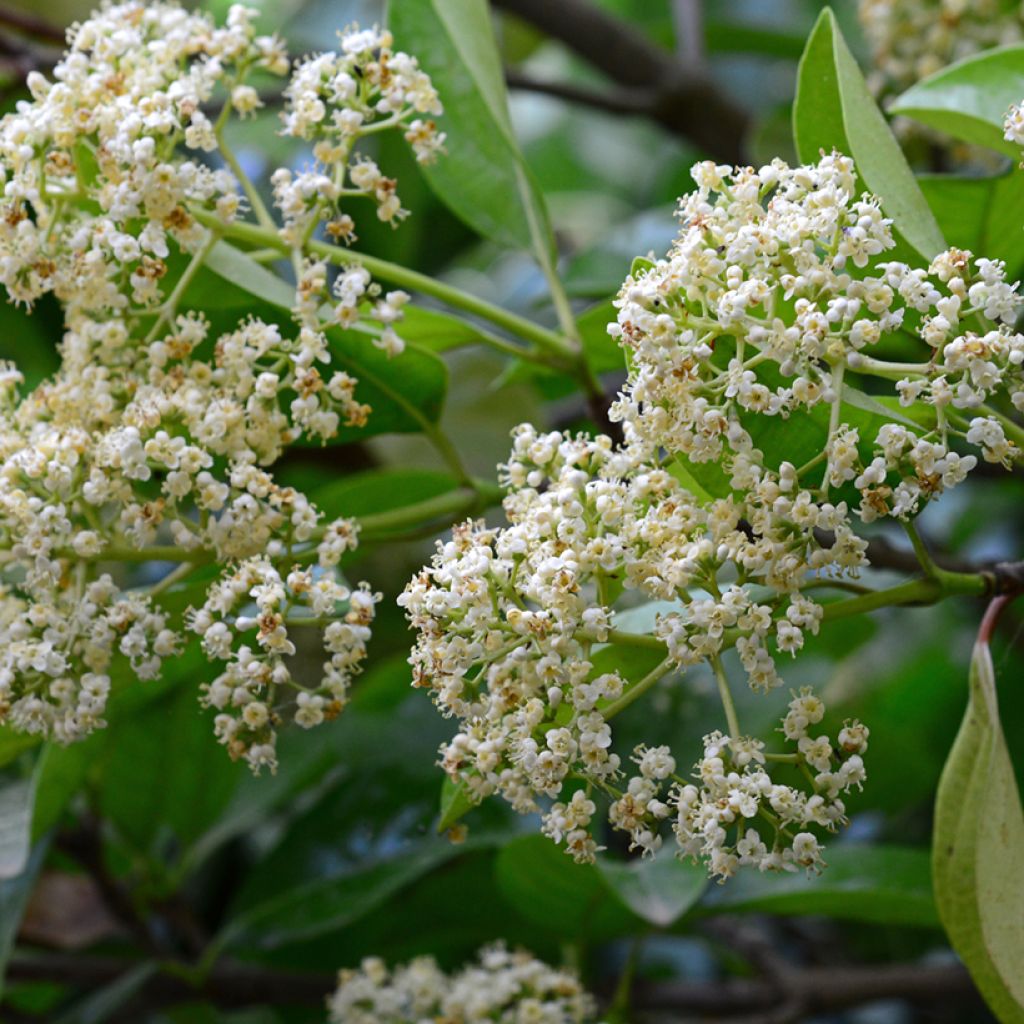
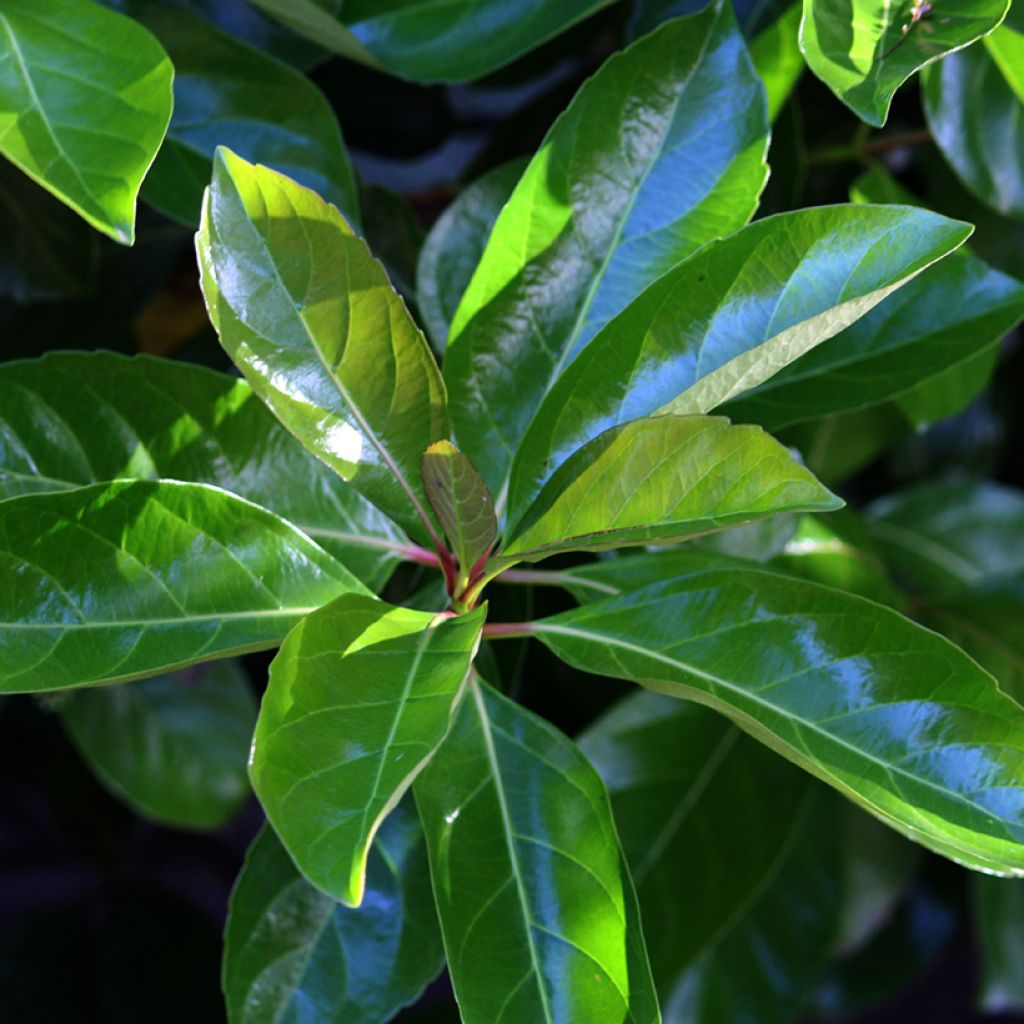
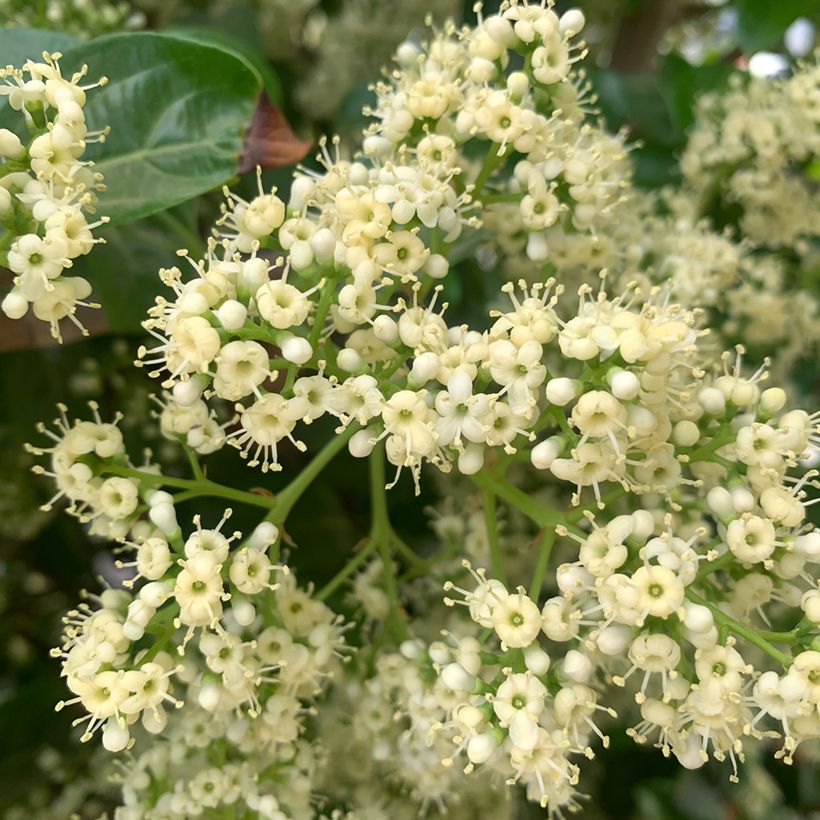
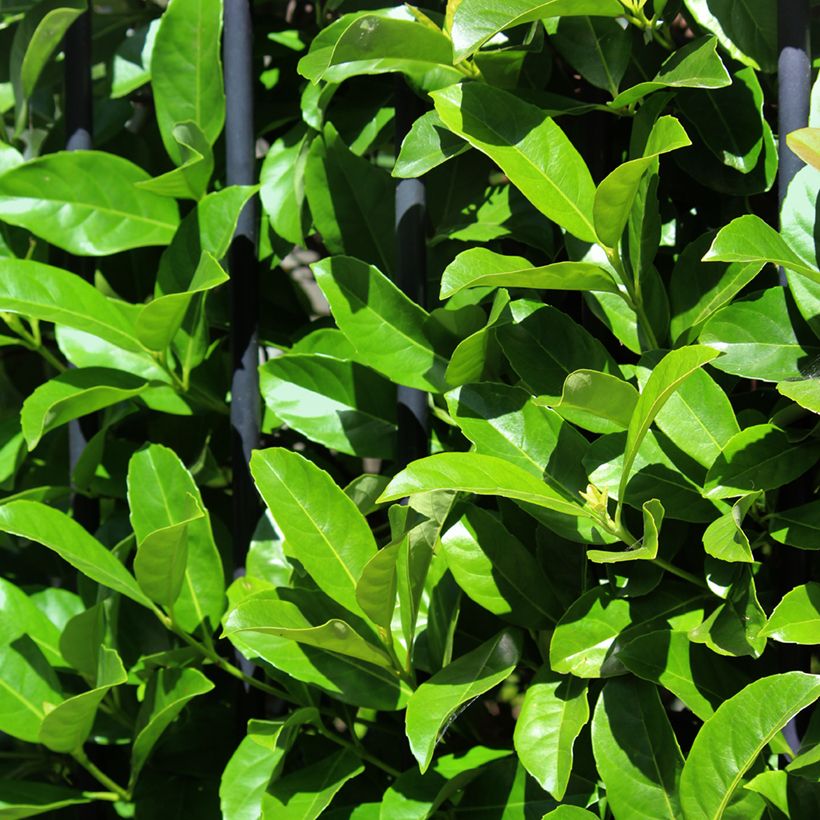
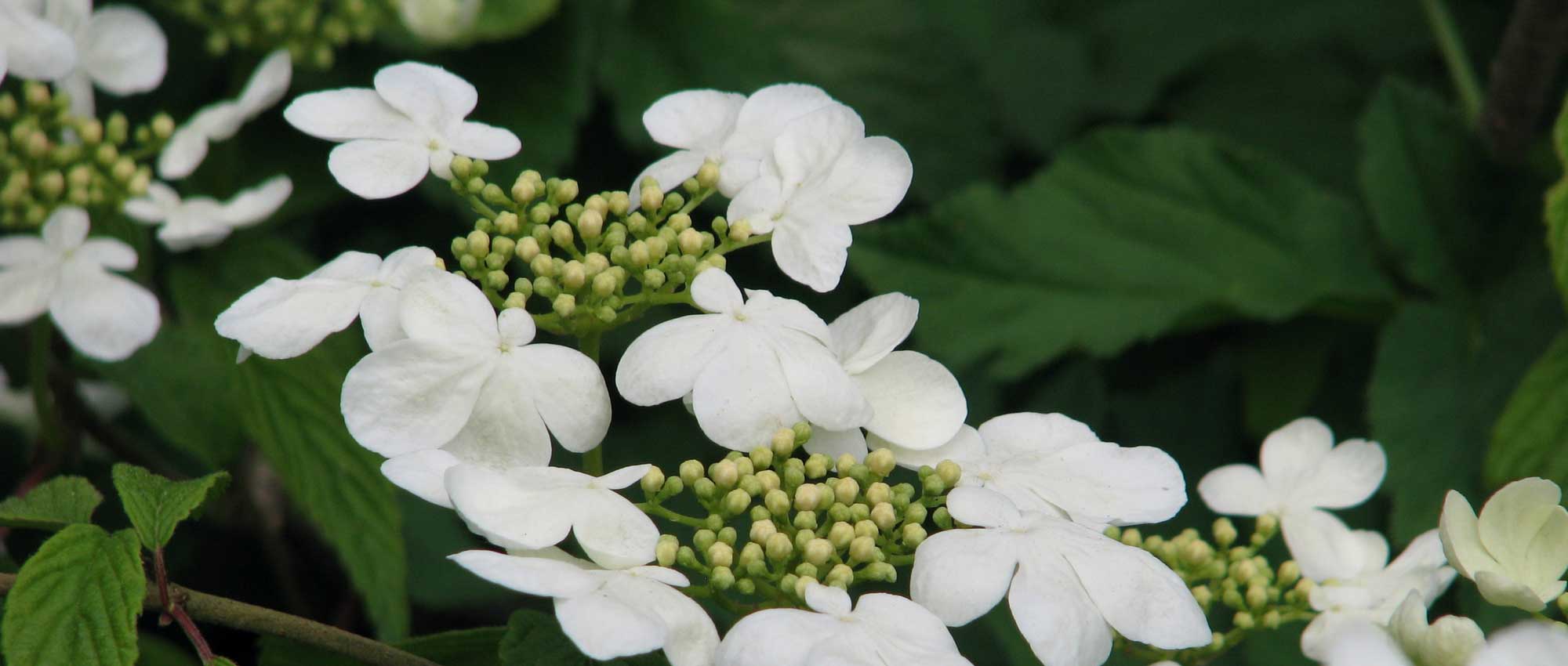
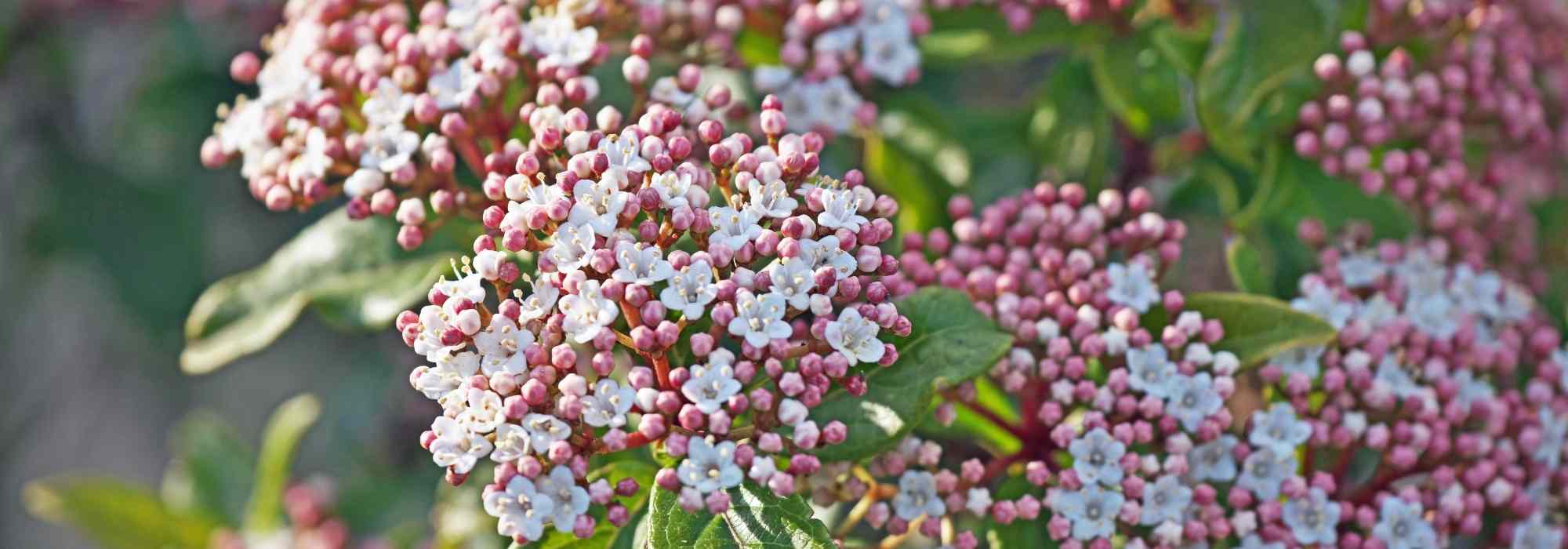
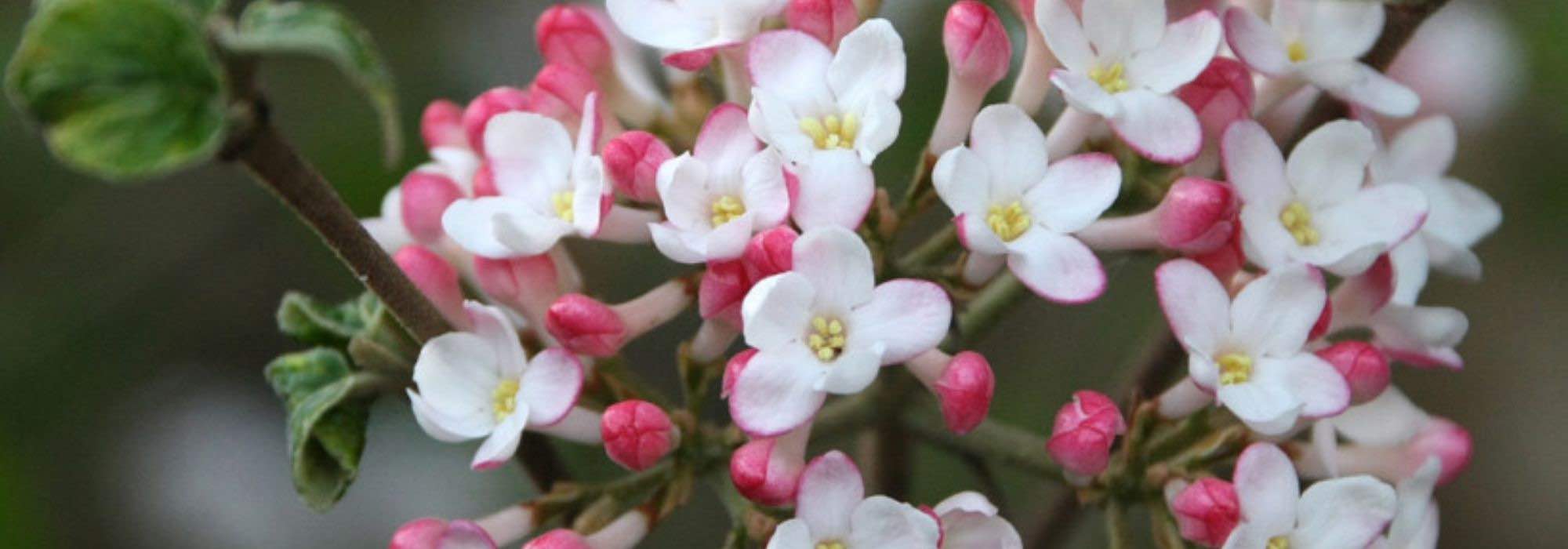
The Viburnum odoratissimum, commonly known as Sweet Viburnum, is an evergreen bush with glossy green foliage that is particularly decorative. In spring, it is covered with small, lightly scented white bouquets. In autumn, some leaves turn beautiful shades of red-orange, which is quite unusual for an evergreen. This bush can be used as a hedge, but it is sensitive to cold drafts. In cold climates, it is therefore preferable to provide it with the shelter of a small tree above it.
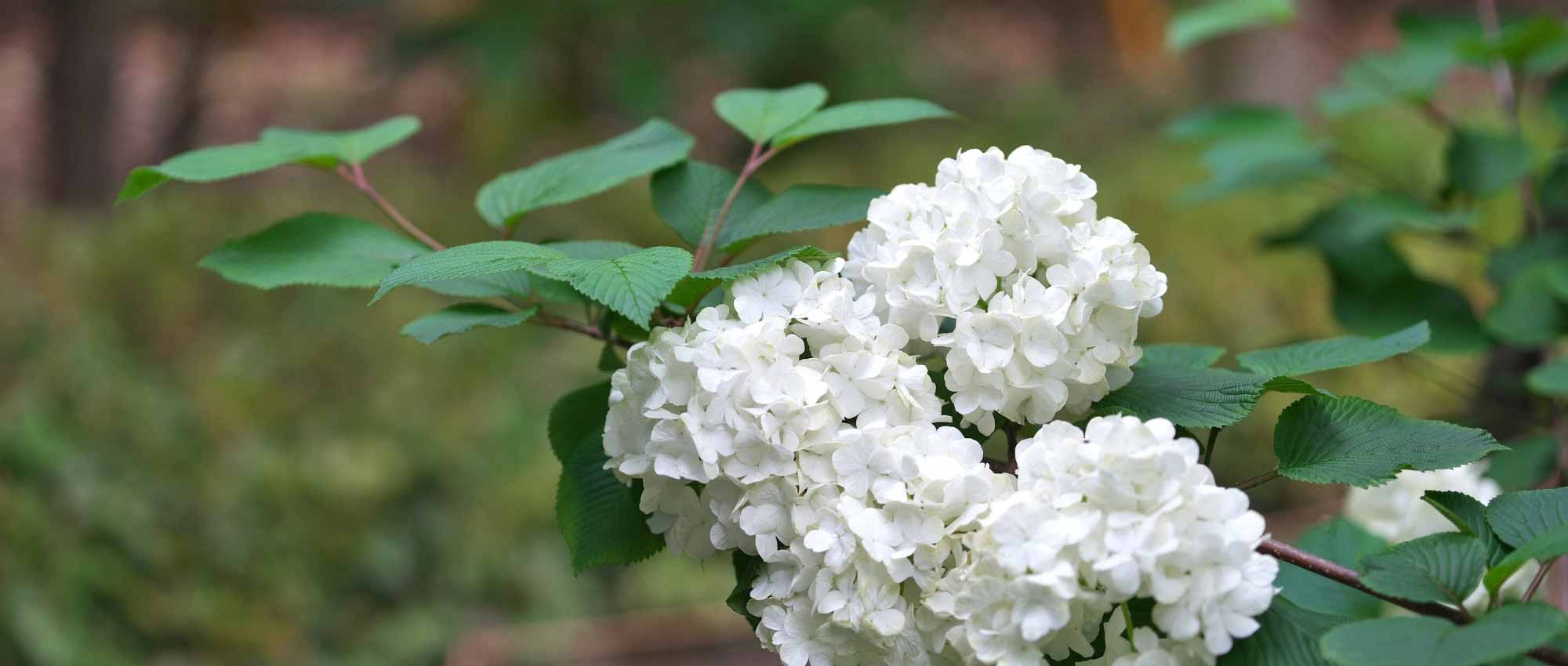
The Sweet Viburnum is native to the small Himalayan mountains. It belongs to the genus Viburnum (now classified in the Adoxaceae family), which includes very ornamental bushes such as the Snowball Bush (Viburnum opulus 'Roseum'), the laurustinus (Viburnum tinus), and the Chinese snowball bush (Viburnum plicatum). This species is no exception; it is a large bush with evergreen leaves of a beautiful bright green, elongated and shiny, which often take on beautiful orange hues in autumn. Between May and June, the Sweet Viburnum produces numerous panicles of white flowers turning creamy white that attract many insects.
This viburnum grows relatively slowly at first, with a somewhat gangly and irregular habit, then gradually balances itself by forming a large ball about 2 m (6 ft 7 in) in all directions, or even slightly wider than high depending on the space it has. In mild climates, it can reach 2.50 to 3 m (8 ft 2 in to 9 ft 10 in). Not picky, this bush adapts to most soils that are not too dry. The only drawback is that it tends to constantly shed its old leaves, which can be unpleasant in windy conditions. Its beautiful glossy foliage is satiny, almost shiny, and its thick, almost fleshy leaves have a healthy appearance. As an autumnal coquetry, some turn red like some deciduous shrubs, even though this viburnum is evergreen even in cold climates.
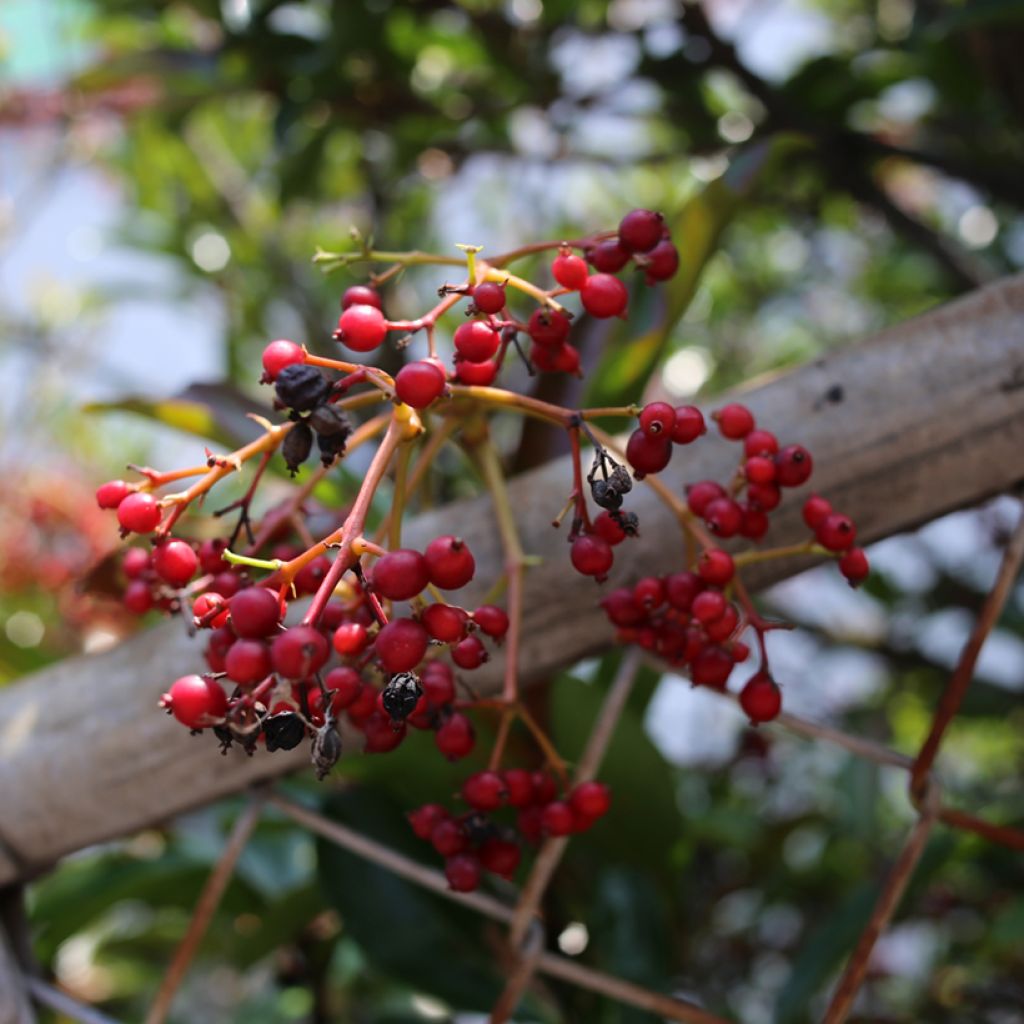
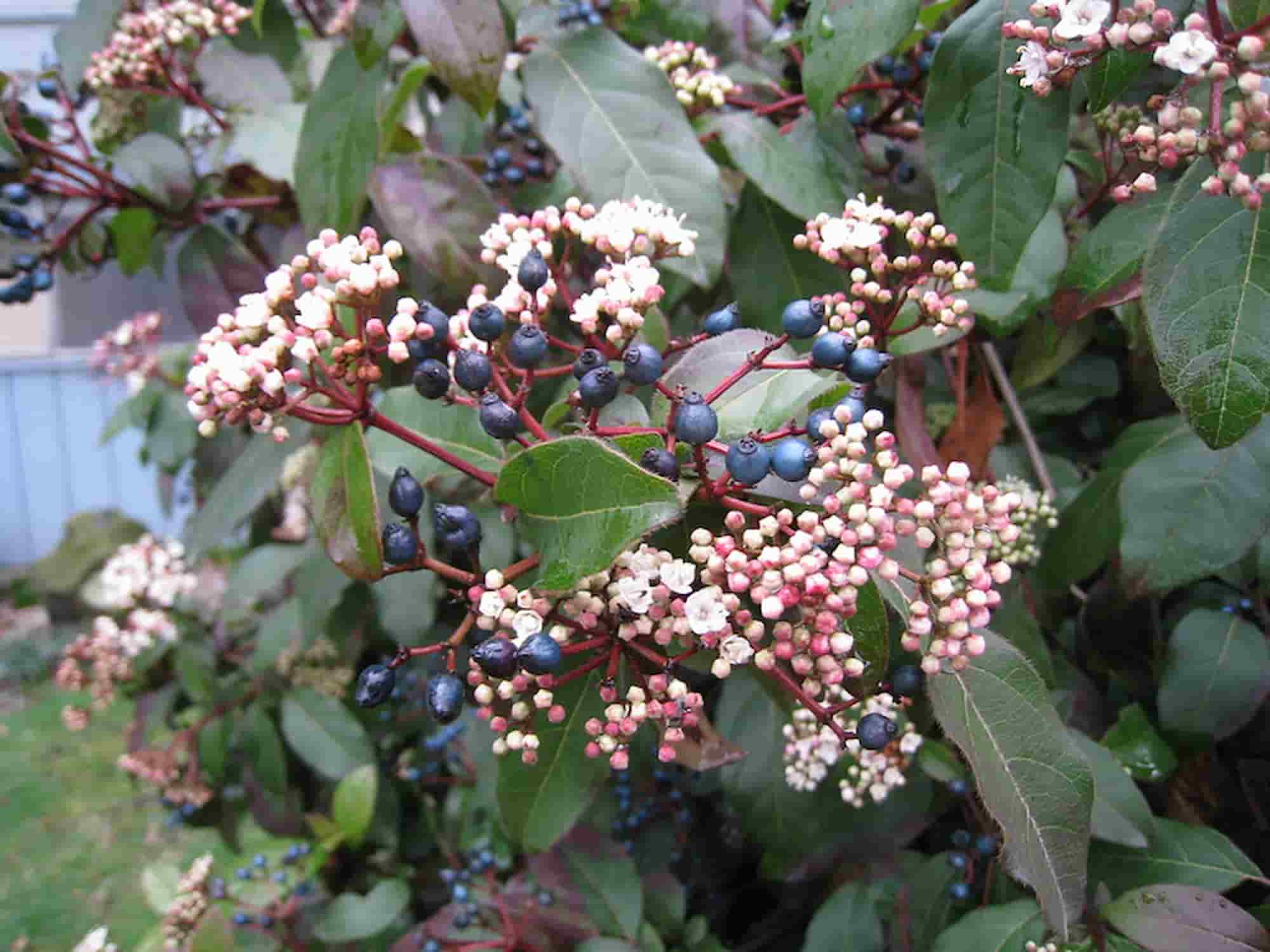
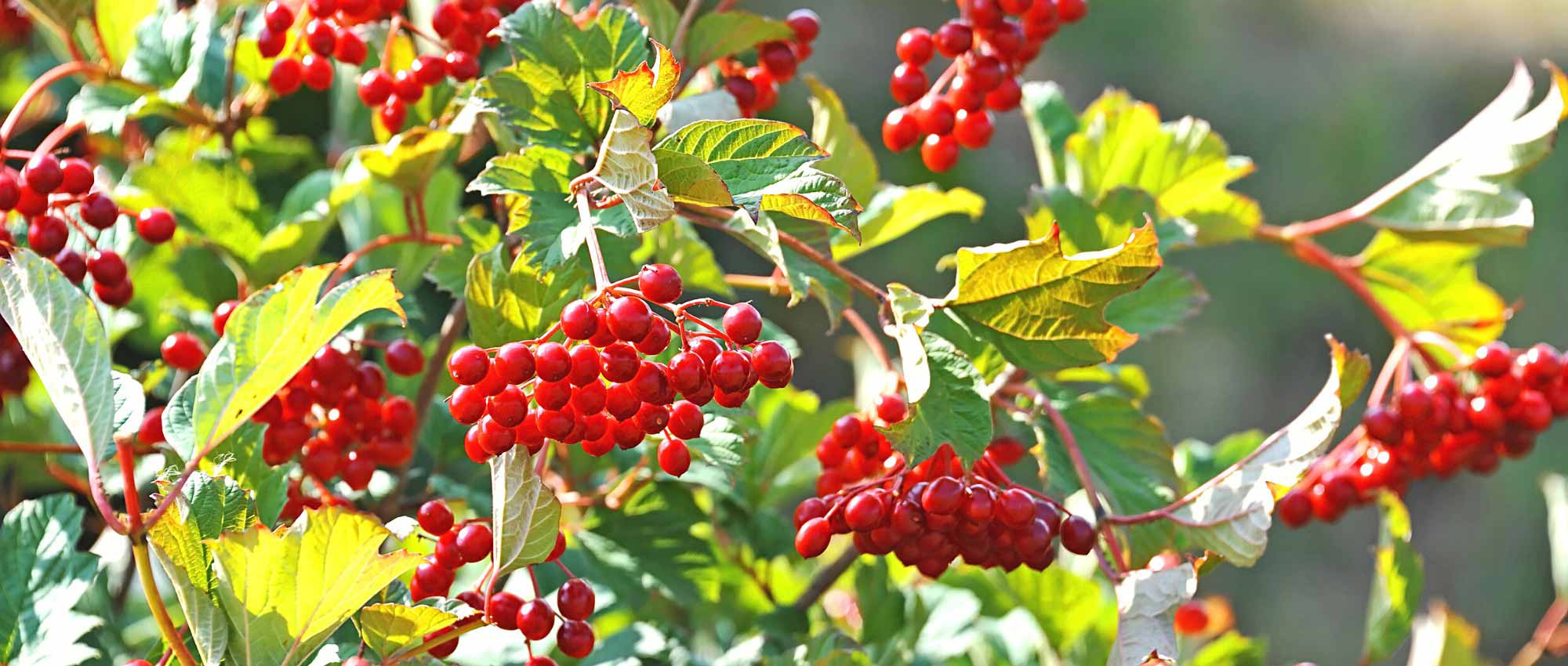
As for its hardiness, it is often said to be limited to mild climates like Brittany, while the bush easily withstands the climate of Orléans. In cold winters, the foliage may freeze a little, but it regrows in spring. The flowering appears in May-June, and while not remarkable, it is pleasant especially for its fragrance and delights bees. Above all, it produces small decorative fruits, red and then black, which birds feed on.
Not demanding, Viburnum odoratissimum should be placed in a location that is not too exposed to wind. Prefer a protected environment, for example behind a wall, or in the light shade of small trees like the Mountain Ash or a flowering apple tree like the Malus Coccinella Courtarou, whose purple foliage will contrast nicely with that of the Viburnum. Its beautiful shiny green foliage will be perfectly suited for creating powerful contrasts, by planting golden masses next to it, such as the small Choisya Aztec Gold, with its magnificent patterns, whose fine foliage will contrast both in form and colour. For an even bolder choice, try the surprising Albizia julibrissin Summer Chocolate, with its fern-like foliage in a stunning dark purple, or the Physocarpus 'Diabolo', also purple and with decorative bark in winter.
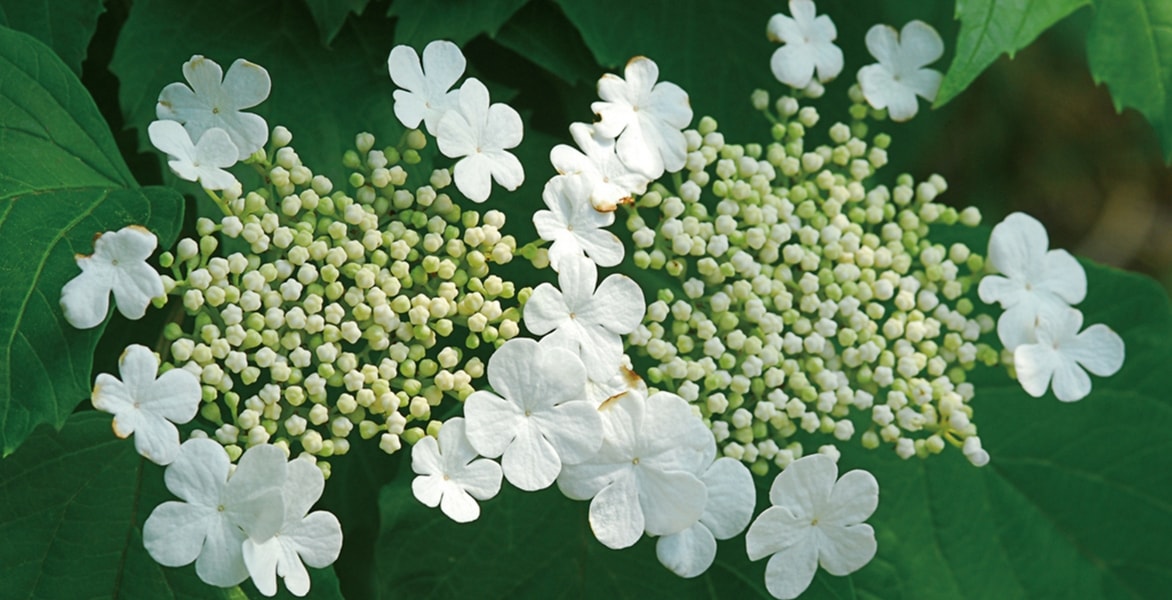
Viburnum odoratissimum in pictures
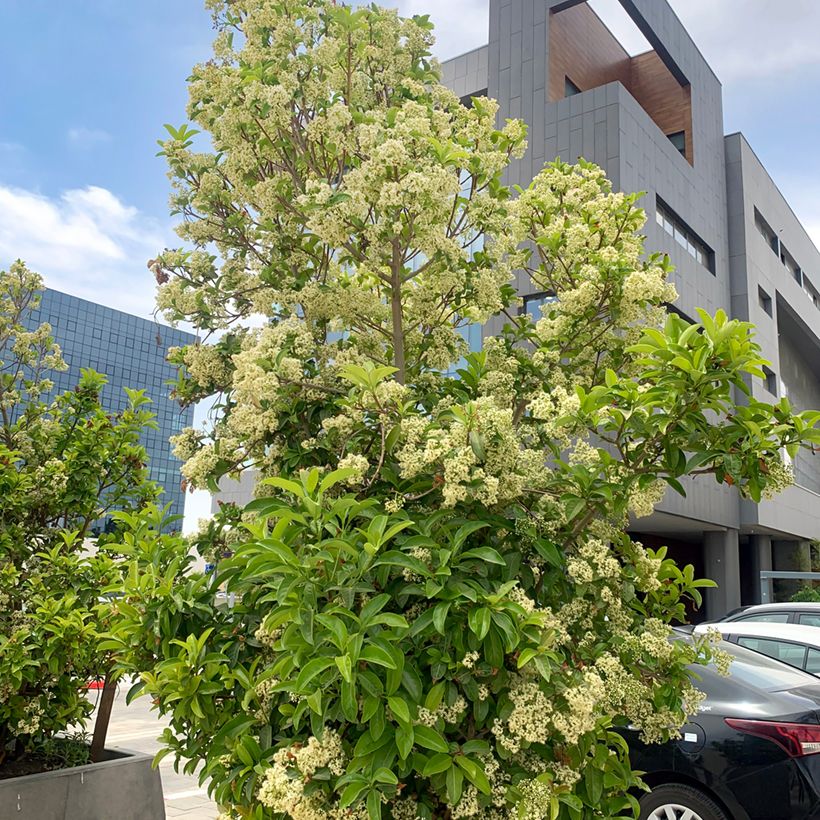
Plant habit
Flowering
Foliage
Botanical data
Viburnum
odoratissimum
Viburnaceae
Sweet Viburnum, Sweet Bay, Walter's Viburnum
Cultivar or hybrid
Planting and care
The Viburnum odoratissimum is preferably planted in spring to allow it time to develop its root system before winter. In mild climates, it can also be planted in spring after the last frosts. It grows in any ordinary, neutral soil, but also slightly acidic or alkaline. Choose a sunny or semi-shaded location, under the protection of trees in cooler regions. Dig a hole 50 to 60 cm (19.7 to 23.6 in) wide and deep, and if the soil is sandy, enrich it with compost to improve water retention. Soak the root ball in a bucket of water for 20 minutes to ensure it is well saturated before planting. Fill in and water generously. Water regularly, especially during summer, for 2 or 3 years, after which this bush proves quite resistant to drought.
This Viburnum is not susceptible to any particular diseases and is not affected by insects. It is a resilient plant that tolerates cold better than people say, once it is well rooted.
Planting period
Intended location
Care
Planting & care advice
-
-
-
-
-
-
-

-
-
, onOrder confirmed
Reply from on Promesse de fleurs
Recently viewed products
Haven't found what you were looking for?
Hardiness is the lowest winter temperature a plant can endure without suffering serious damage or even dying. However, hardiness is affected by location (a sheltered area, such as a patio), protection (winter cover) and soil type (hardiness is improved by well-drained soil).

The flowering period indicated on our website applies to countries and regions located in USDA zone 8 (France, the United Kingdom, Ireland, the Netherlands, etc.)
It will vary according to where you live:- In zones 9 to 10 (Italy, Spain, Greece, etc.), flowering will occur about 2 to 4 weeks earlier.
- In zones 6 to 7 (Germany, Poland, Slovenia, and lower mountainous regions), flowering will be delayed by 2 to 3 weeks.
- In zone 5 (Central Europe, Scandinavia), blooming will be delayed by 3 to 5 weeks.
In temperate climates, pruning of spring-flowering shrubs (forsythia, spireas, etc.) should be done just after flowering.
Pruning of summer-flowering shrubs (Indian Lilac, Perovskia, etc.) can be done in winter or spring.
In cold regions as well as with frost-sensitive plants, avoid pruning too early when severe frosts may still occur.
The planting period indicated on our website applies to countries and regions located in USDA zone 8 (France, United Kingdom, Ireland, Netherlands).
It will vary according to where you live:
- In Mediterranean zones (Marseille, Madrid, Milan, etc.), autumn and winter are the best planting periods.
- In continental zones (Strasbourg, Munich, Vienna, etc.), delay planting by 2 to 3 weeks in spring and bring it forward by 2 to 4 weeks in autumn.
- In mountainous regions (the Alps, Pyrenees, Carpathians, etc.), it is best to plant in late spring (May-June) or late summer (August-September).
The harvesting period indicated on our website applies to countries and regions in USDA zone 8 (France, England, Ireland, the Netherlands).
In colder areas (Scandinavia, Poland, Austria...) fruit and vegetable harvests are likely to be delayed by 3-4 weeks.
In warmer areas (Italy, Spain, Greece, etc.), harvesting will probably take place earlier, depending on weather conditions.
The sowing periods indicated on our website apply to countries and regions within USDA Zone 8 (France, UK, Ireland, Netherlands).
In colder areas (Scandinavia, Poland, Austria...), delay any outdoor sowing by 3-4 weeks, or sow under glass.
In warmer climes (Italy, Spain, Greece, etc.), bring outdoor sowing forward by a few weeks.
Shipping country and language
Your country of residence may be:
Your country of residence is:
For a better user experience on our website, you can select:
Your shipping country:
-
 Austria
-
 Belgium
-
 Bosnia & Herzegovina
-
 Bulgaria
-
 Croatia
-
 Cyprus
-
 Czechia
-
 Denmark
-
 Estonia
-
 Finland
-
 France
-
 Germany
-
 Greece
-
 Hungary
-
 Iceland
-
 Ireland
-
 Italy
Italy
-
 Latvia
-
 Liechtenstein
-
 Lithuania
-
 Luxembourg
-
 Malta
Malta
-
 Netherlands
-
 Poland
-
 Portugal
-
 Romania
-
 Serbia
-
 Slovakia
-
 Slovenia
-
 Spain
Spain
-
 Sweden
-
 Switzerland
Language:
-
French
-
 English
-
Spanish
-
Italian
-
German
-
Portuguese
-
Dutch
-
Finnish
My Account
Hello
My wish lists
My cart
Log in / Register
Existing customer?
This form is protected by reCAPTCHA - the Google Privacy Policy and Terms of Service apply.
New customer?
Create an account to track your orders, access our customer service and, if you wish, make the most of our upcoming offers.