





























7 perfect dwarf shrubs to edge a path
Our selection
Contents
Dwarf shrubs offer an ideal solution for defining spaces, guiding visitors through the garden and adding a permanent feature to the landscape. They are especially prized for their compact habit, their low maintenance requirements and their ability to adapt to a range of garden styles, from the most traditional to the more contemporary. In this article, we present a selection of seven dwarf bushes that stand out for their beauty, robustness, spectacular flowering or decorative foliage. These varieties have been chosen for their ability to create harmonious and colourful borders, capable of brightening your paths all year round.

Dwarf birch
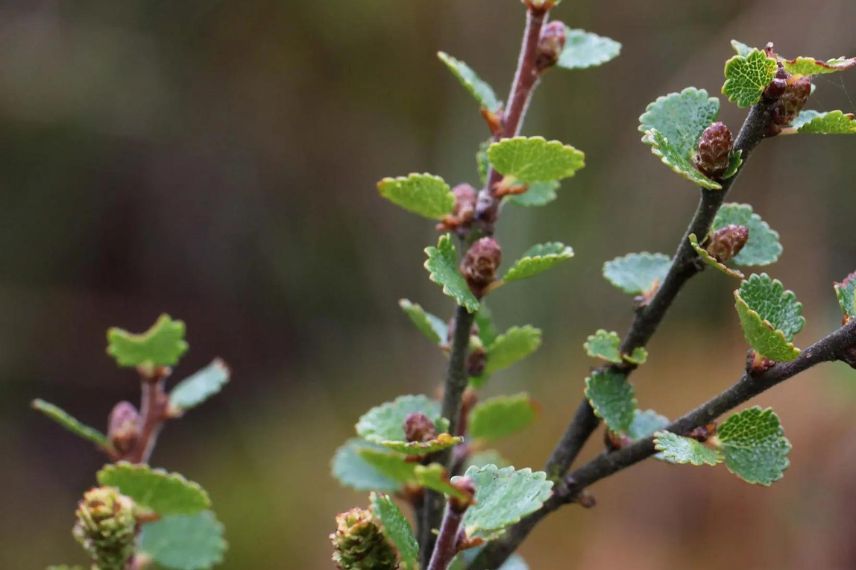
Appreciated in 1970s landscaping before falling out of favour, Dwarf Birch, or Betula nana, is making a comeback. This undershrub is distinguished by its robustness and elegance, especially in autumn when its foliage takes on vibrant shades ranging from yellow to orange and red. With spreading branches and a creeping habit, it offers a unique look. It adapts to a range of environments, including shallow soils, provided they remain reasonably cool.
Dwarf Birch does not exceed 60 cm in height, with a spread of 1.5 m, making it ideal for small urban gardens, rockeries and borders along paths. It features deciduous foliage and a flowering period from April to May, during which the Dwarf Birch bears male catkins and female flowers of yellow-brown colour.
Dwarf Birch pairs perfectly with other plants, notably red or purple grasses such as the Imperata ‘Red Baron’, the Phormium tenax ‘Purpureum’, or other shrubs with colourful foliage such as the Physocarpus with purple foliage. This small shrub offers a wealth of possibilities for enhancing restricted spaces with a touch of wild, colourful nature.
Cotoneaster 'Queen of Carpets'
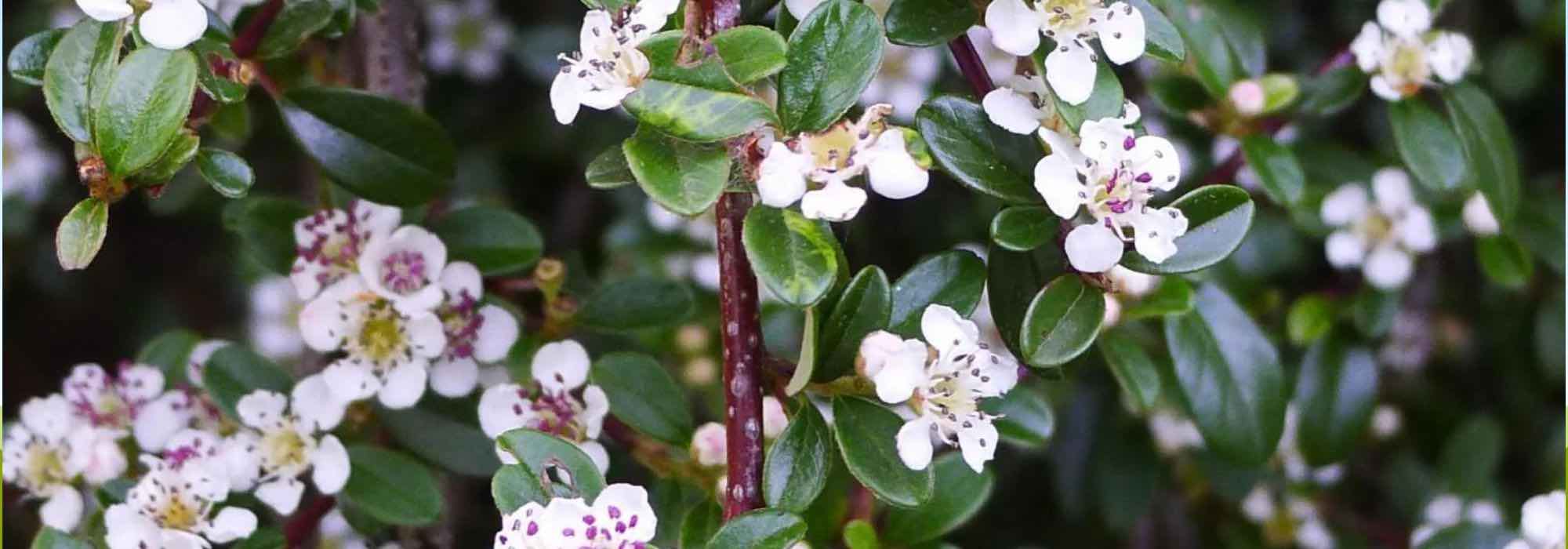
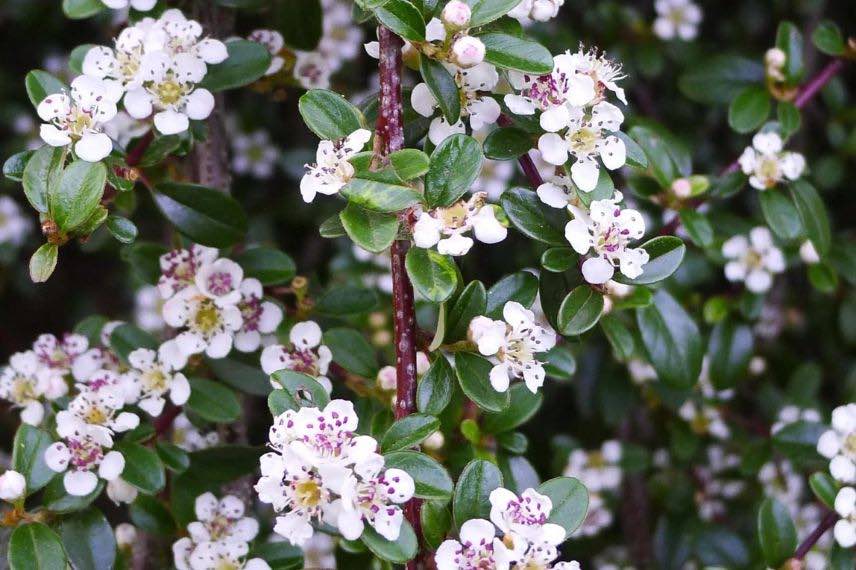
The Cotoneaster ‘Queen of Carpets‘ creates a dense, low carpet of dark green evergreen leaves with grey undersides, accented by white flowers in spring and followed by bright red fruit in autumn. This variety is particularly valued for its ability to carpet banks and form low hedges, edging paths.
This cotoneaster has a compact, creeping habit, reaching no more than 50 cm in height and about 1 metre wide. Its growth makes it an excellent groundcover, dense enough to suppress weeds.
Cotoneaster ‘Queen of Carpets’ readily adapts to a range of well-drained soils, including calcareous soils, and thrives in full sun as well as light shade.
It requires little maintenance, needing only pruning in March to maintain its shape and mulching to keep the soil cool in summer.
It can be paired with a few dwarf conifers or with other small shrubs to add structure, colour and life to your outdoor space.
Spiraea japonica 'Magic Carpet'
Spiraea japonica ‘Magic Carpet’, with its vibrant hues and spectacular flowering, stands out as a top choice for adding colour and texture to your garden. This small shrub features young shoots with bronze and orange-pink hues, which mature into bright green-yellow foliage, transforming with the seasons. In summer, its flowers, ranging from vivid pink to raspberry, enhance its appearance, making this Japanese spirea a charming addition to any outdoor space.
‘Magic Carpet’ is characterised by a compact, rounded habit, not exceeding 50 cm in height and width, making it an ideal candidate for borders, low beds, or for successful container cultivation.
This variety is notable for its rapid growth and ease of cultivation, tolerating only exceedingly dry conditions.
For best growth of Spiraea japonica ‘Magic Carpet’, choose a sunny or part shade position in rich, well-drained soil. It harmonises perfectly with roses in various colours, or even dwarf red willows for striking contrasts.
Dwarf rose 'Robe Fleurie'
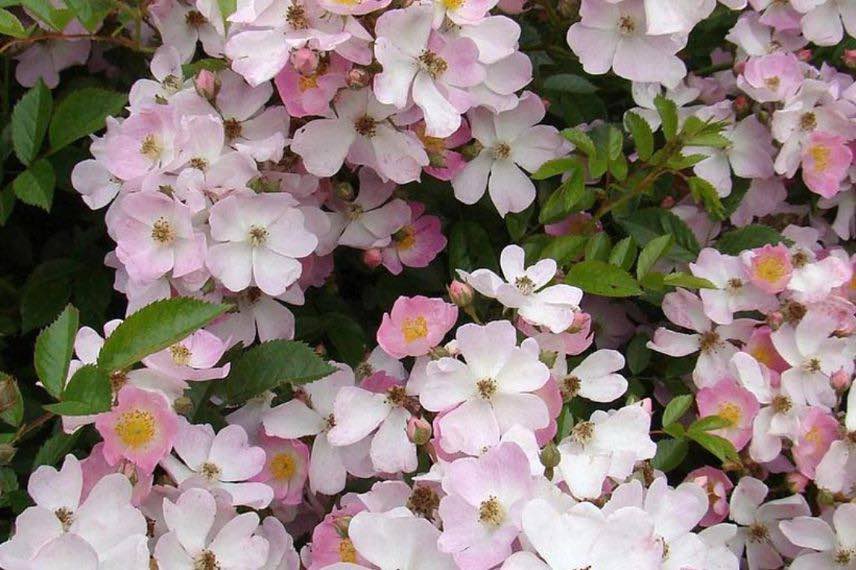
The Rose ‘Robe Fleurie’ is a dwarf, low-growing, broad rose, ideal for borders, with very abundant flowering. It offers in summer a dazzling display of bright pink flowers with white centres and yellow stamens. Bees find refugium in its welcoming flowers, while its vigorous growth and its dark, dense foliage require little care. Let its flowers turn into decorative orange hips at the end of the season for a garden that stays lively all year.
Birchleaf Spiraea 'Tor' or Spiraea betulifolia
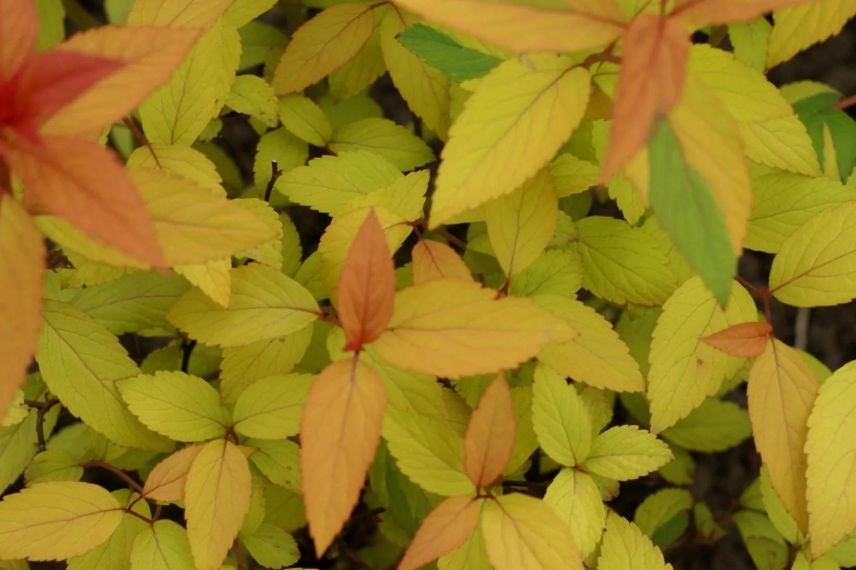
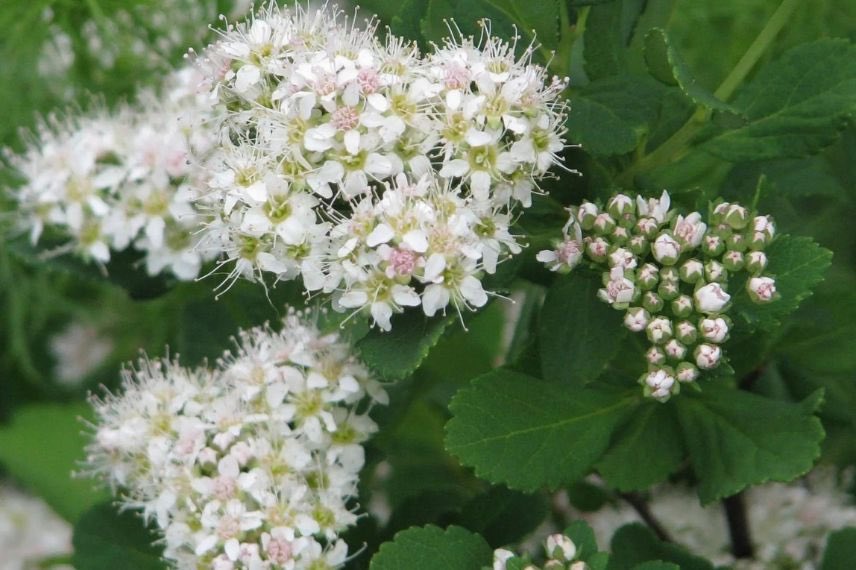
The Spiraea betulifolia ‘Tor’, also known as birch-leaved spiraea, is a deciduous shrub notable for its abundant spring flowering and vibrant autumn colours. With its small white flowers arranged in cymes, this compact shrub is a valuable nectar source for butterflies. Its foliage takes on vibrant hues of gold, copper, orange to purple in autumn, turning a border along a path into a display of warm colours.
This spiraea has a slow growth habit and, at maturity, reaches a maximum height and width of 80 cm. Its leaves, resembling those of a dwarf birch, emerge from purplish buds to reveal a unique texture and a dark green-blue colour. With an upright, compact habit, it flowers generously from May to June, as if draped in white snow.
For best growth, plant Spiraea betulifolia ‘Tor’ in cool, humus-bearing and well-drained soil, preferring a sunny to partly shaded position. The ideal conditions for intensifying autumn colours are in neutral to acidic soil. This versatile shrub fits perfectly as a border plant along paths. Pair it with plants with contrasting colours and textures such as heavenly bamboo (Nandina domestica) or Carex testacea to create a diverse and harmonious landscape year-round.
Cotoneaster dammeri
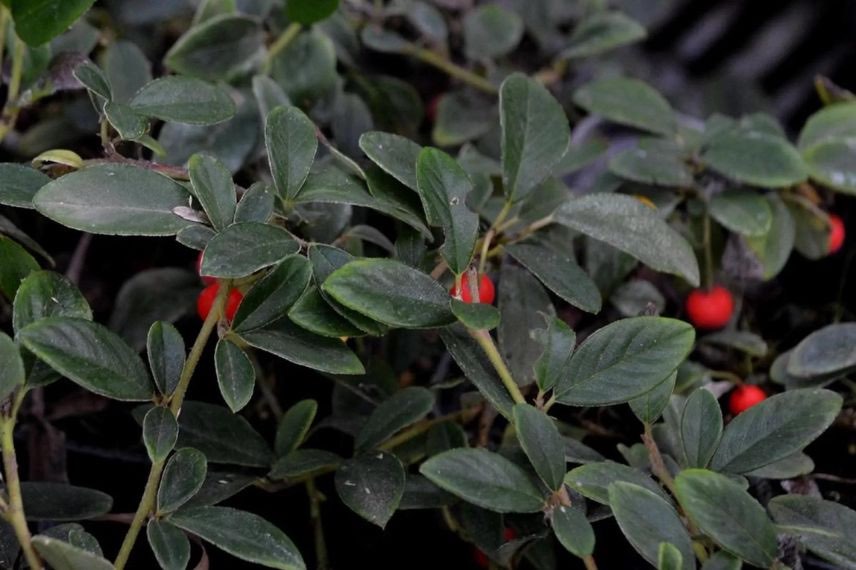
Dammer’s cotoneaster, or Cotoneaster dammeri, is an interesting choice for gardeners seeking an effective and attractive groundcover. Its vigorous growth and spreading habit allow it to rapidly cover large areas, while reducing weed growth. In June, this shrub blushes with delicate white flowers with pink-tinged accents, heralding the arrival of small red berries that attract birds. Its evergreen foliage, comprising small, thick, glossy leaves, forms a dense and homogeneous carpet.
Native to central and western China, the Cotoneaster dammeri is notable for its resistance to extreme climate conditions, thriving in both summer droughts and harsh winters. Its tolerance of poor, stony soils makes it an ideal candidate for less-favoured areas of the garden. However, it grows most rapidly in full sun or partial shade and in fertile, moist soil. At maturity it reaches a height of 25 cm with a spread exceeding 2 metres, thanks to its shoots that root naturally.
It integrates perfectly as an elegant border along paths. Pair it with plants such as creeping juniper or Euonymus fortunei.
Berberis buxifolia 'Nana'
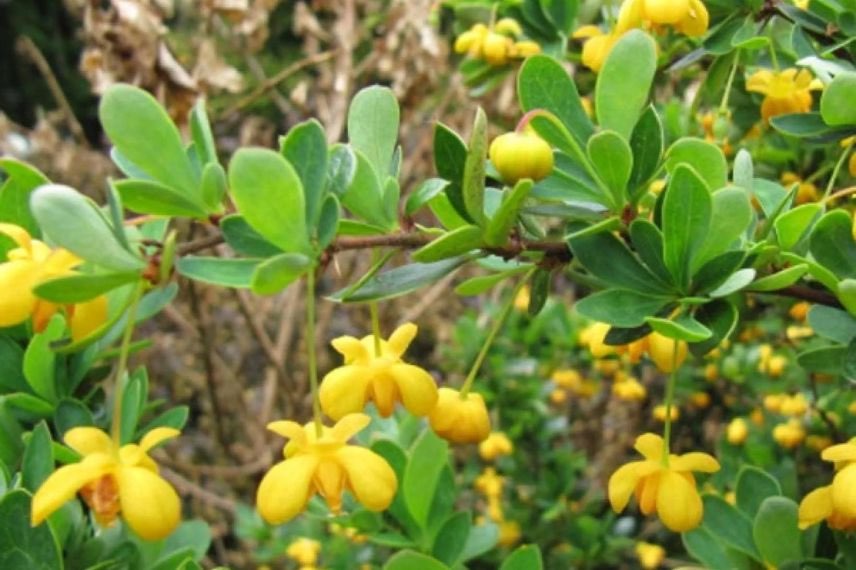
The Berberis buxifolia ‘Nana’, known for being an excellent alternative to traditional boxwood, is an evergreen shrub with few thorns that forms a dense, rounded cushion. With small, leathery and glossy leaves, it evokes the look of boxwood while offering remarkable resistance to the box tree moth. This variety is also prized for its spring yellow-orange flowering and the possibility of seeing a few small purple fruits appearing in autumn, although this is quite rare.
Originating from southern Argentina and Chile, the Berberis buxifolia stands out for its robustness against harsh climatic conditions, such as cold and calcareous soils. The cultivar ‘Nana’ is particularly prized for its compact form and slow growth, reaching about 50 cm high and 55 cm wide.
Ideal as a border along a path, the Berberis buxifolia ‘Nana’ is a sensible choice for small gardens or restricted spaces. It complements surrounding plants and pairs harmoniously with fleabane (Erigeron karvinskianus) or small phlox.
- Subscribe!
- Contents

Comments