


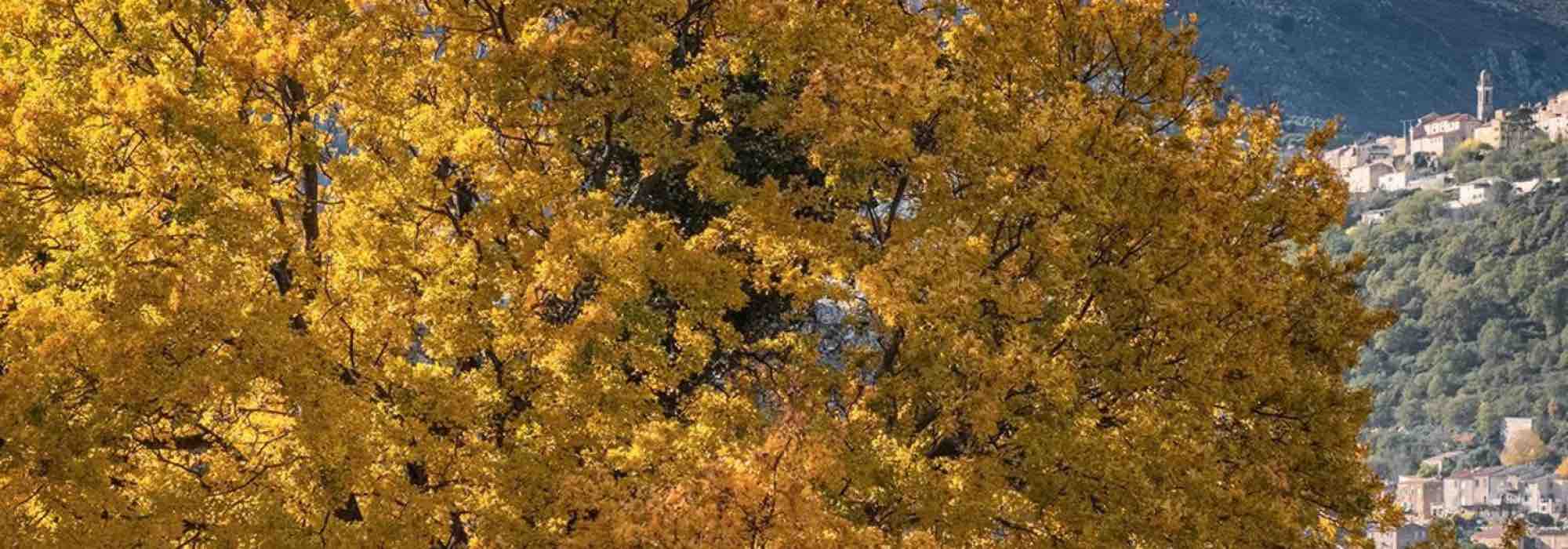
8 ornamental trees to plant in calcareous soil
Plant trees best suited to your site
Contents
Choosing the right trees for calcareous soils can allow you to see them flourish rather than struggle against nature. Calcareous soils can pose a problem for many plants. However, some tree species thrive in these conditions, and it is far better to choose them than to struggle to grow a tree that is intolerant of calcareous soils in alkaline soils. If that’s true for all plants, it’s even more so when choosing a tree you’ll plant for several decades. Here is our selection of eight trees that are perfectly suited to calcareous soils for their long lifespans.

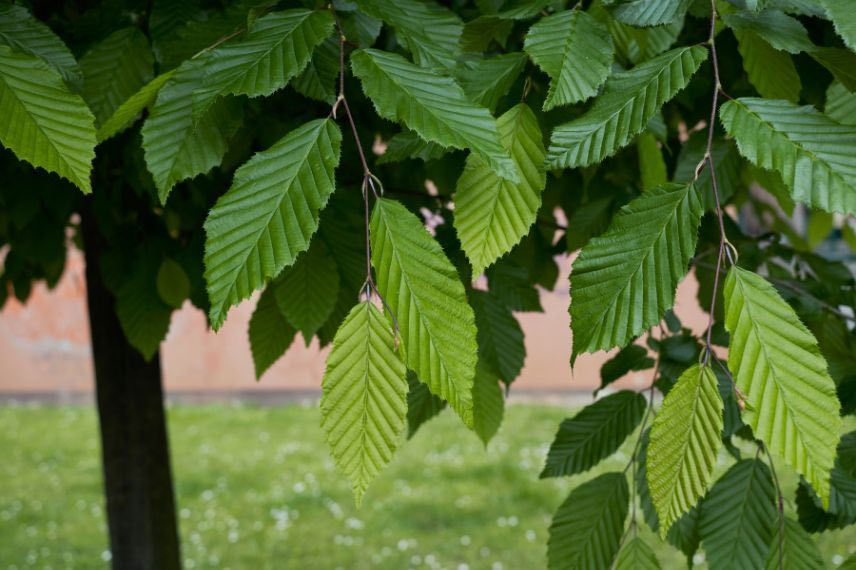
Carpinus betulus - common hornbeam
The Carpinus betulus, or common hornbeam, is a tree of pyramidal habit that becomes rounder with time. Native to Europe, Turkey and Ukraine, this hardy species is widespread in the forests of Central Europe. At maturity, the Carpinus betulus can reach 25 m in height, but in gardens it rarely exceeds 10 m, especially if regularly pruned. It is widely used to form hedges, which it embellishes with its pale-green, veined and marcescent foliage. Its leaves dry in autumn, but remain attached to the branches until spring, when new leaves appear.
The hornbeam prefers cool, semi-shaded spots, but can tolerate sun that is not scorching. It should be planted sheltered from cold winds, in well-drained soil, not too dry in summer nor waterlogged. Its preference is for fertile, fresh calcareous clay soils. Hardy to cold and heat, it does not tolerate summer heatwaves and thrives in a continental climate.
Read also
10 perennial plants for calcareous soilPopulus alba - White poplar
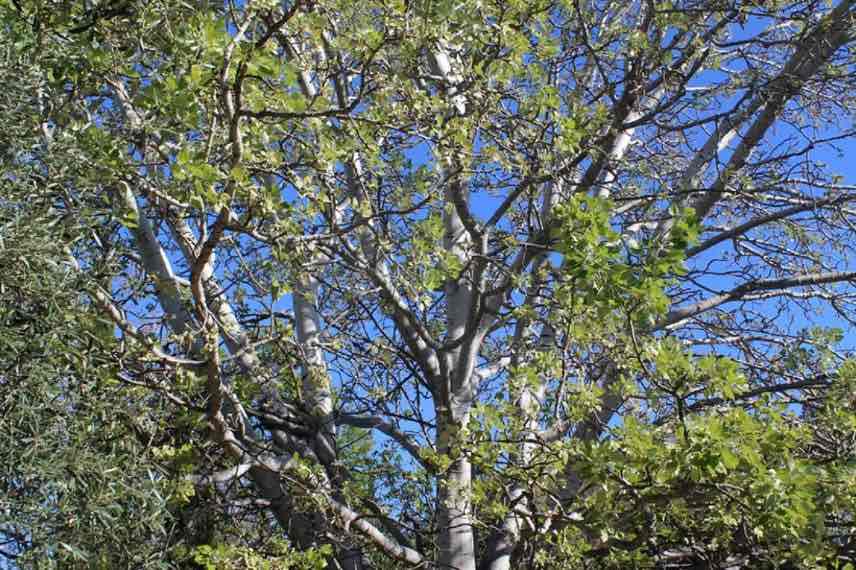
Populus alba, known as Dutch White Poplar, Silver Poplar or Maple-leaved Poplar, is a fast-growing tree of medium to large size, with a variable conical habit. Its grey-white trunk and leaves with the characteristic white undersides confer its name. Native to central and southern Europe, central and western Asia, it occurs across mainland France, Corsica and North Africa, as well as in the cold climates of central Europe, which testifies to its great adaptability.
In the wild, it reaches 20–30 m in height, with a habit sometimes erect and conical, sometimes more spreading with a rounded crown. Intended for large spaces due to its size and its suckering habit, the Populus alba can be planted as a specimen tree, in large hedges or along pond margins.
Plant it in neutral to calcareous, loose and light soil, or even clayey and heavy soils. Prefers cool to moist soils, such as river banks, but tolerates relatively dry sites better than other species and even withstands sea spray and slightly saline soils. It requires full sun. Because of its highly developed root system, it is recommended to plant it away from buildings.
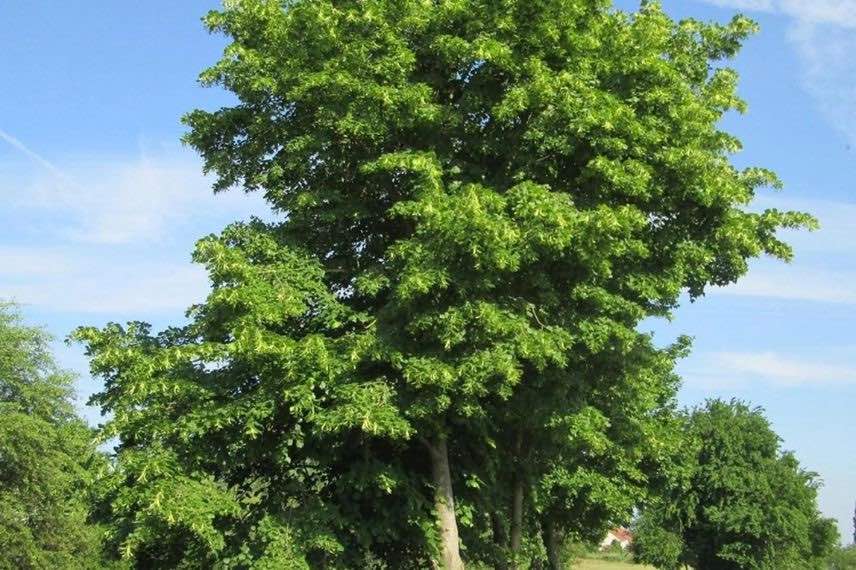
Tilia - Lime tree
Lindens, belonging to the genus Tilia, are renowned for their fragrant, melliferous flowering, used in soothing infusions. These deciduous, majestic and ornamental trees are often found in old parks, large gardens or planted in rows along avenues. Their fresh green foliage turns beautifully yellow in autumn.
Lindens are also melliferous trees attracting and nourishing many bees and bumblebees. Although inconspicuous to the eye, early-summer flowers perfume the garden and its surroundings.
Lindens are light-loving or part-shade trees, on calcareous soils and perfectly hardy. They readily form suckers from their stump. Lindens express their character in the habit and the appearance of their foliage.
Read also
5 fruit trees for calcareous soilPinus nigra nigra - Austrian black pine
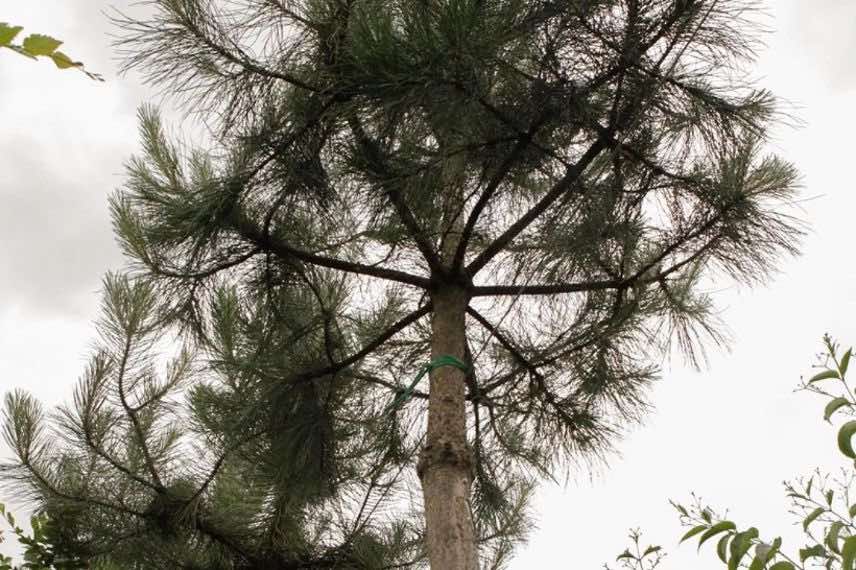
The Austrian Black Pine, Pinus nigra subsp. nigra is a subspecies of the European Black Pine. This majestic tree is suited to large gardens and parks thanks to its spreading habit and evergreen foliage. It tolerates cold, pollution, salt spray and adapts to a range of soil types. With a strong taproot, it tolerates drought well once established.
The Austrian Black Pine reaches 25 m in height with a 15 m spread, forming a rounded crown and bare at the base. Its dark green foliage and tiered branching are splendid. This pine bears needles in pairs, with dense, dark green foliage, yellow flowers in June–July, and brown cones 5–8 cm long.
Adaptable to almost all soil types, including calcareous or dry soils, it tolerates -30°C and wind, including coastal winds. Its tolerance to pollution makes it a popular choice for urban parks.
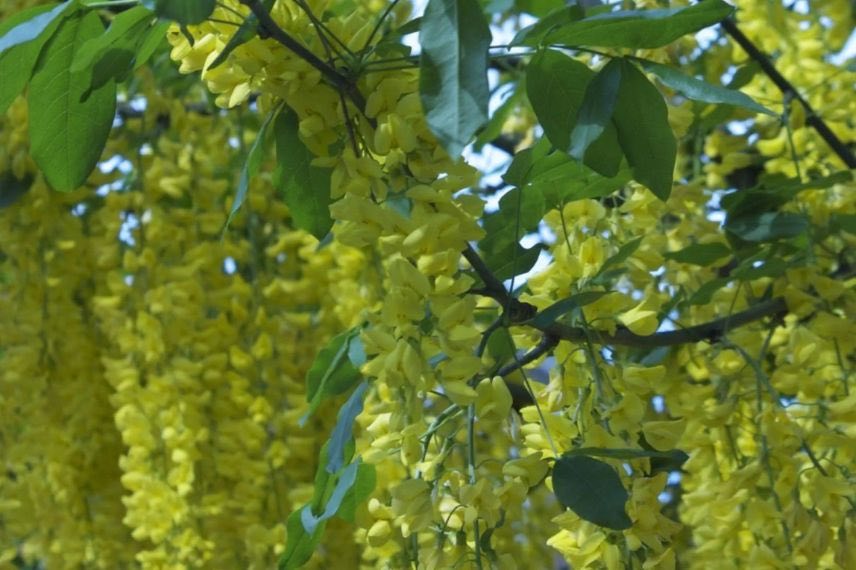
Laburnum anagyroides - laburnum
Acer - Maple
If Japanese maples are known for thriving in heath soil, other species form large trees with strong ornamental value, perfectly suited to calcareous soils.
Maples, or Acer, are highly decorative, distinguished by their palmately-lobed leaves and splendid autumn colours, varying by species.
With growth that varies and is very hardy, maples are easy to grow. The soil should be deep and moist all year round, with little calcareous content for most species. Some species, however, grow on calcareous soil: the Acer campestre or field maple, the Acer monspessulianum or Montpellier maple, the Acer platanoides, or plane maple, the the Acer cappadocicum and the Acer negundo.
- The Acer campestre is planted in spring or autumn in any deep soil, preferably calcareous, in sunny or semi-shaded positions. Once well established, it can go without watering in summer and requires no maintenance. Of medium size, it is valued mainly for its beautiful autumn colours.
- The Acer monspessulianum often forms several trunks and a dense crown. Its small leathery leaves of a glossy green colour turn in autumn to yellow, orange or coppery red. This species is found throughout southern France, notably on calcareous, stony hills that are very dry in summer. Unlike other species, it tolerates very dry soil.
- The Acer platanoides tolerates calcareous soils well, but requires a soil deep enough to accommodate its powerful root system. It prefers fertile, deep and moist soil, in a site with gentle sun or partial shade. With dark, glossy green foliage that lights up to yellow–orange in autumn, this large tree forms a pyramidal crown.
- The Acer negundo and the Acer cappadocicum are planted in any fertile, deep and moist soil, in a sunny position, but not in scorching sun or in partial shade.
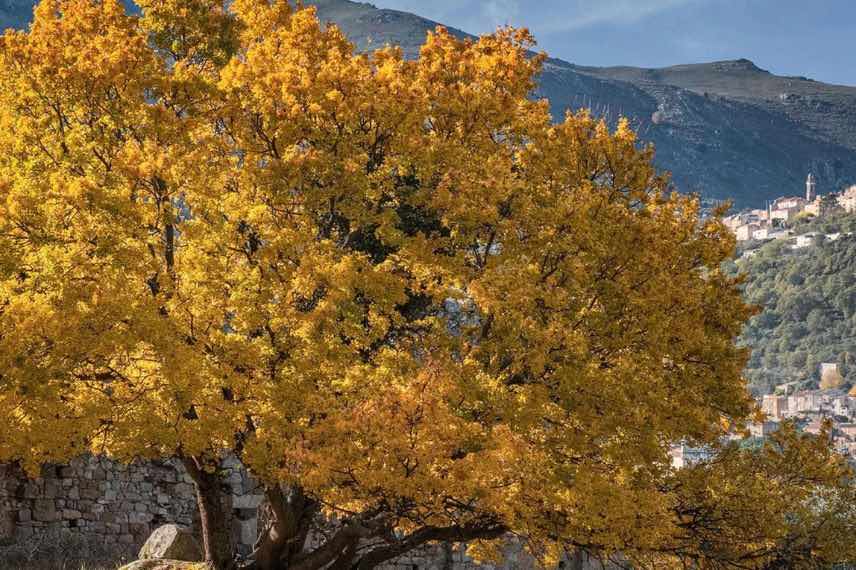
Montpellier maple
Ulmus minor - Field elm
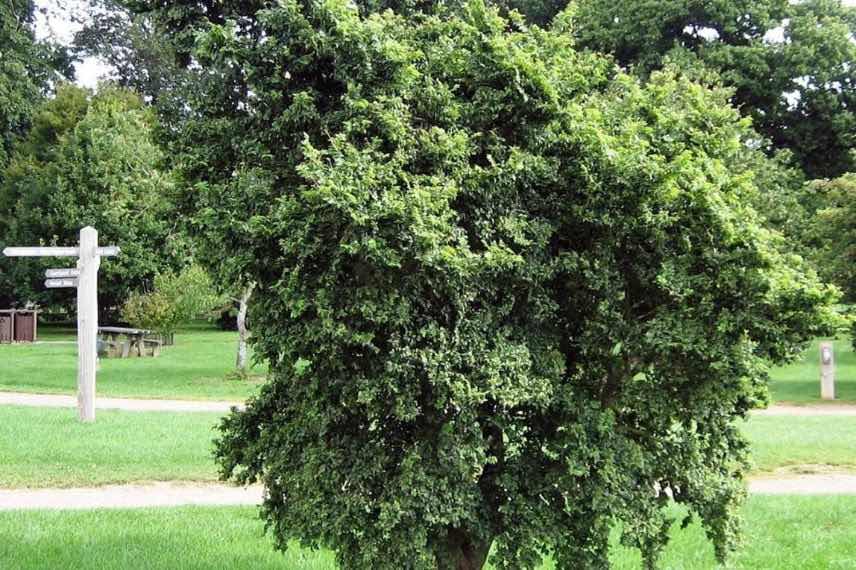
The Ulmus minor or field elm was once an iconic tree in our landscapes. An outbreak of Dutch elm disease decimated the large specimens in the 1970s, but this tree still survives in a few gardens where it can reach a venerable age. Appreciated for the shade it provides in summer and beneficial to garden wildlife, field elm also offers beautiful autumn colour.
Originating in a broad area spanning Europe, Western Asia and North Africa, the Ulmus minor (syn. Ulmus campestris) is still found in copse form regularly shortened by disease, although a few rare individuals seem to escape Dutch elm disease. The species also persists in attractive horticultural varieties with a compact growth.
The field elm has a generally erect habit and a very broad crown. It is a large deciduous tree, very hardy, with rapid growth, capable of reaching 25 m in height and a spread of 18–20 m, depending on growing conditions. It is planted in ordinary soil, even heavy or calcareous soil. Although it grows faster in moist soil, it tolerates drier soils very well. Plant it in a sunny or partly shaded position, avoiding scorching sun. Widely grown in France, it adapts to all our climates, but dislikes acidic soils.
Caragana arborescens - yellow acacia, Siberian pea shrub
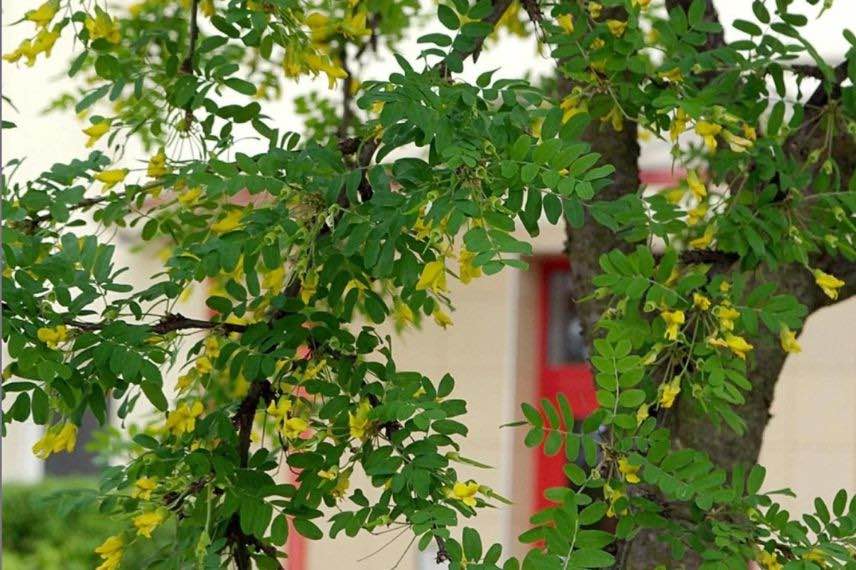
The Caragana arborescens, or yellow acacia, Siberian pea shrub, is a small tree or bush that is extremely hardy. Originating from Siberia and Mongolia, it withstands the harshest conditions, including temperatures well beyond -20°C. It thrives in poor, calcareous soils, but dislikes waterlogged soils. Its deep root system makes it drought-tolerant once established.
The Caragana arborescens is more of a bush formed of multiple stems, but it can also form a small tree with low branching. Fast-growing, it reaches about 4.5 to 5 m in height and width. Its light-green foliage, formed of small ovate leaflets, turns yellow in autumn.
The melliferous flowering takes place from April to May, with small clusters of yellow flowers. The caragana is ideal for gardens with poor or degraded soils.
- Subscribe!
- Contents
Comments