





























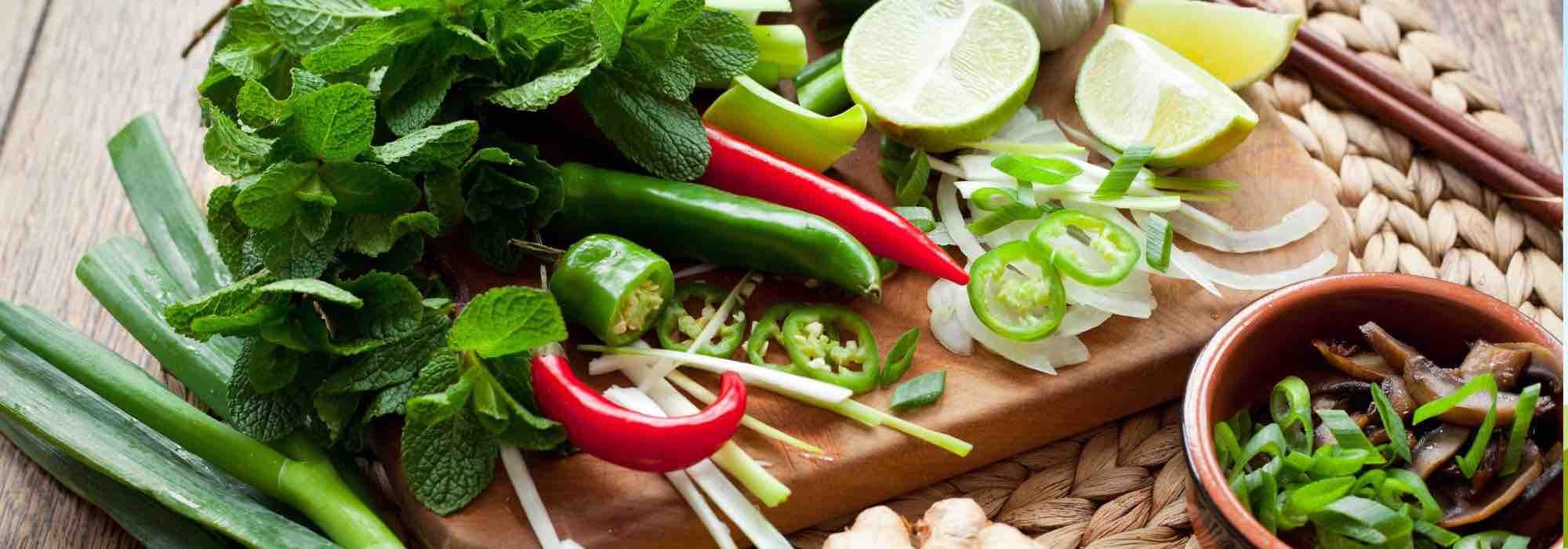
9 aromatic herbs for Asian cuisine
our selection
Contents
What does the term Asian cuisine encompass? It is often used to refer to recipes from East and Southeast Asia. This includes the culinary cultures of Japan, China, Korea, Vietnam, Thailand, and Indonesia, to name a few of the most common. All these countries share common ingredients and techniques, even though Japan and China have very specific cuisines, while the other countries have more closely related characteristics.
Discover our selection of herbs that are widely used in Asian recipes, but not always easy to find in stores. Most are very simple to grow, so don’t wait to pot some on a balcony or make space for them in the garden, allowing you to enjoy them at will without having to visit three shops to find a bunch of Thai basil.

Coriander
The first and queen of Asian dishes: Coriander or Coriandrum sativum. Beloved by some, hated by others, it seems our olfactory receptors perceive it differently depending on individual genetics. The culprit is a receptor sensitive to aldehydes. Several plants containing linalool can cause the same aversion. Some even describe it as tasting like soap! I’m quite glad to be on the side of the lovers!
Coriander is an herb cultivated for both its leaves and seeds. The two have different flavours and are used in different recipes. Asian cuisine particularly makes abundant use of the leaves. The seeds, for instance, are found in Thai curry pastes.
Coriander leaves are consumed raw, as cooking alters their flavour. They spoil quite quickly once harvested, especially after chopping. I recommend chopping or slicing them as late as possible before adding them to your dishes. By the way, don’t be too vigorous with your knife; they “turn” quickly. Coriander leaves are used in all Asian countries, whether in Vietnamese spring rolls or nems, in Thai soups or curries, in Chinese stir-fried noodles, or in Japanese gyoza dumplings.
Growing coriander is easy in the garden or in pots, but while it needs sunlight to thrive, it bolts to seed very quickly in hot or dry conditions. One way to counter this tendency is to stagger sowings so that the clumps are not at the same stage at the same time. You can also sow varieties resistant to bolting. Coriander dies with frost, but spontaneous seedlings can sometimes be found, which can also be managed by harvesting your own seeds after flowering.
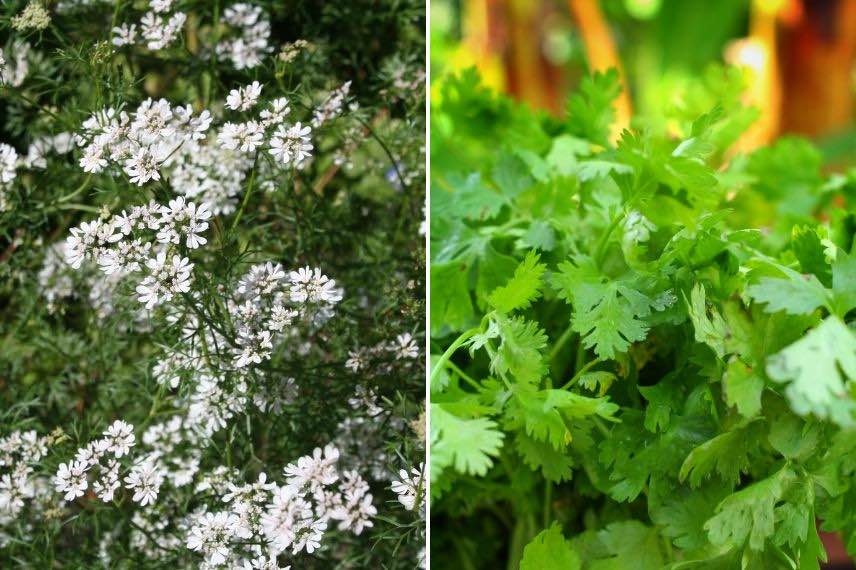
Coriander
Mint
If Mint is widely used in hot or cold drinks and desserts across many culinary cultures, it is also employed in all savoury dishes, whether cooked or raw. It can be found in salads as well as sprinkled over hot dishes. This is particularly true in Asian cuisine, where it is used either chopped or as whole leaves in salads, or added at the end to many dishes. Mint is best used raw after cooking. Less delicate than coriander, it can still quickly “turn” once cut. I also recommend chopping or slicing it as late as possible and without too much force. However, its leaves are thicker than those of coriander, so it is interesting to cut it quite finely for a less tough texture in the mouth. To enhance a salad with whole leaves, choose the young, tender, smaller leaves from the top of the stem.
There are many different types of mint with varied flavours, but in Asian cuisine, it is green mint, Mentha spicata, that is most commonly consumed. You can also use Chinese mint or Mentha haplocalyx. If you already have another type of mint in your garden, you can certainly use what you have, just avoid mints with a very strong scent, such as Peppermint or Chewing Gum, and those with very specific scents like Pineapple or Chocolate.
Mint is easy to grow; it is even outrageously prolific, so it is advisable to plant it in a pot or to reserve a defined area to prevent being overwhelmed by its running roots. It can sometimes reappear from one year to the next, depending on the harshness of the winter.
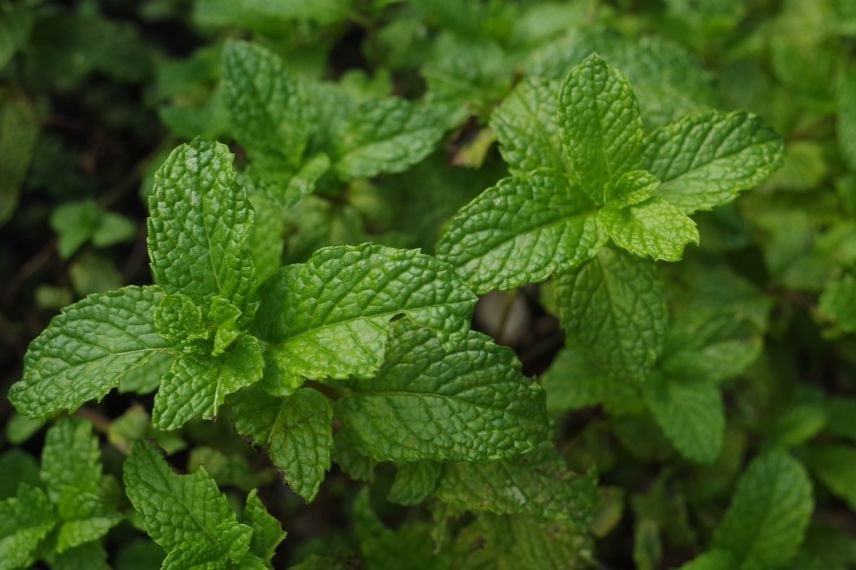
Mint
Thai basil
A star of Thai cuisine, Thai Basil has a very distinctive taste, different from Sweet Basil, for example. While there is a common flavour relationship, Thai basil has a pronounced aniseed flavour that pairs wonderfully with certain typical dishes such as seafood or fish curries, scallops, or mussels in coconut milk. It is also found in Thai chicken recipes. It is also popular in Vietnam, Cambodia, and Laos. If you need to substitute it, it is preferable to use another basil rather than another plant with aniseed flavour, except perhaps occasionally tarragon.
Adorned with purple flower spikes, it is a basil with small, fairly thin leaves. Quite delicate as well, it should be harvested and chopped at the last moment. It is grown like all basils, as an annual plant, which is reseeded each year. Basils are a bit more sensitive to cultivation; it is essential to balance the mix of sunlight and soil freshness and to consider placing them in the shade for a few hours each day when they start to suffer from heat or direct sunlight in summer.
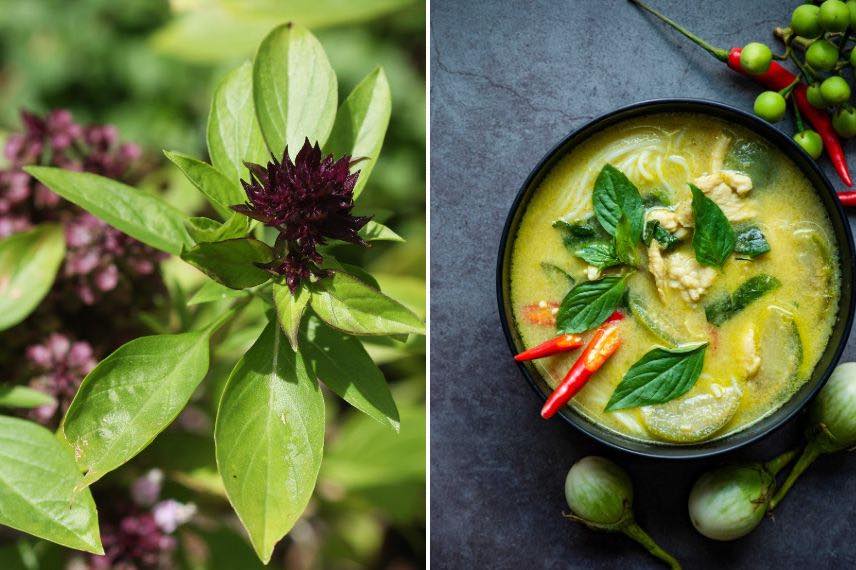
Thai basil
Welsh onion
The Spring Onion is essential in spicy hot dishes, whether in stir-fried noodles or soup, for example. As a finishing touch, its finely chopped stems and bulb add a flavour similar to that of young onion, often accompanied by chilli, to enhance many dishes. These two ingredients elevate the dimension of meals and give them that distinctly Asian touch. It can be replaced by any colour, whether red or white, of young onion, chive, or scallion. Chives can substitute for them, but they won’t have the same punch or texture presence because the cross-section of their stem is much smaller. The cylindrical and hollow stem of the spring onion plays a role in its presence in the dish. Wild garlic or garlic chives do not serve as substitutes, as their garlicky flavour is quite different from that of onion or even leek, which is somewhat closer to spring onion.
It is more of a vegetable garden plant, requiring a bit more space, although it can be attempted in a small patch. It is grown like onion.
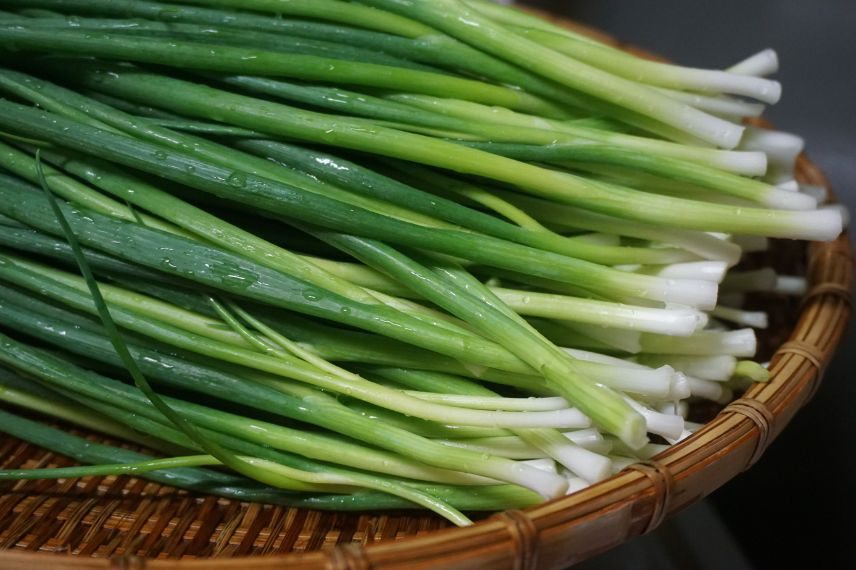
Spring onion
Lemongrass
Lemongrass or Cymbopogon citratus is an exotic plant, more delicate to cultivate, but it can also be attempted in our latitudes. It is very prominent in Southeast Asian cuisine, particularly in Thai and Vietnamese cooking. Its bulbs are consumed, and it is necessary to peel them a bit to remove the toughest leaves. Then, it is crushed in a mortar or with the flat of a knife to release its flavours, cut into three sections, and added at the beginning to a broth or sauce to enhance their aroma. It is also included in homemade curry pastes; in this case, it is finely chopped and then crushed in a mortar or chopper. It flavours many curries and dishes based on coconut milk, as well as delicate shrimp broths.
Frost-sensitive, it can be planted in pots in our climates. It loves warmth and requires a bit of attentive care to thrive.
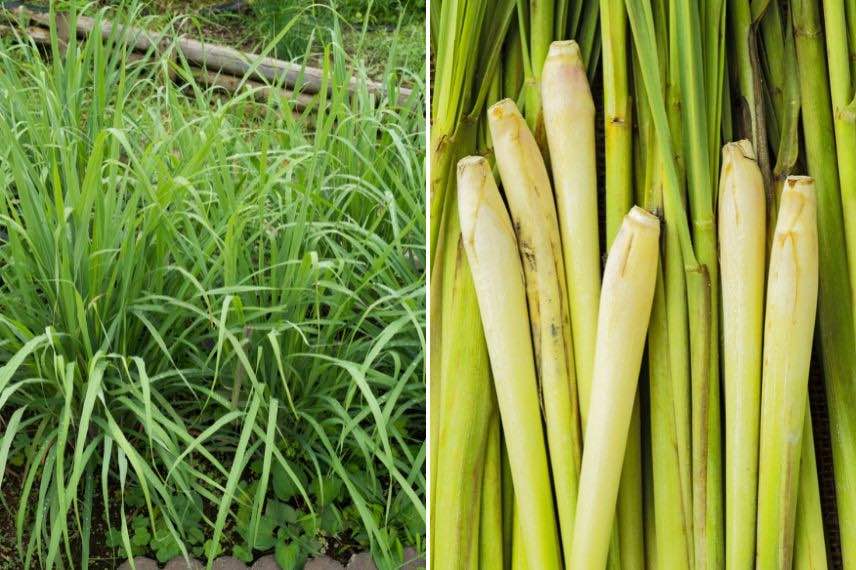
Lemongrass or Cymbopogon citratus, not to be confused with lemon verbena
Wasabi and Shiso
Two typical culinary plants of Japanese cuisine, Wasabi japonica and Shiso, are regularly found in Japanese gastronomy, starting with the well-known sushi.
Wasabi is grown for its root, which is grated like horseradish, and for its leaves, which can be used as a vegetable. It is a delicate plant that tolerates a temperature range between 15 and 20° C.
Shiso, or Perilla frutescens, has ornamental and extremely aromatic foliage, with a unique flavour that is hard to compare, featuring hints of cinnamon, basil, cumin, and anise. In cooking, when used raw, it creates a subtle pairing with salmon, for example in sushi or onigiri. Easier to grow than wasabi, it can be planted in pots and maintained like an annual herb. Definitely worth trying!
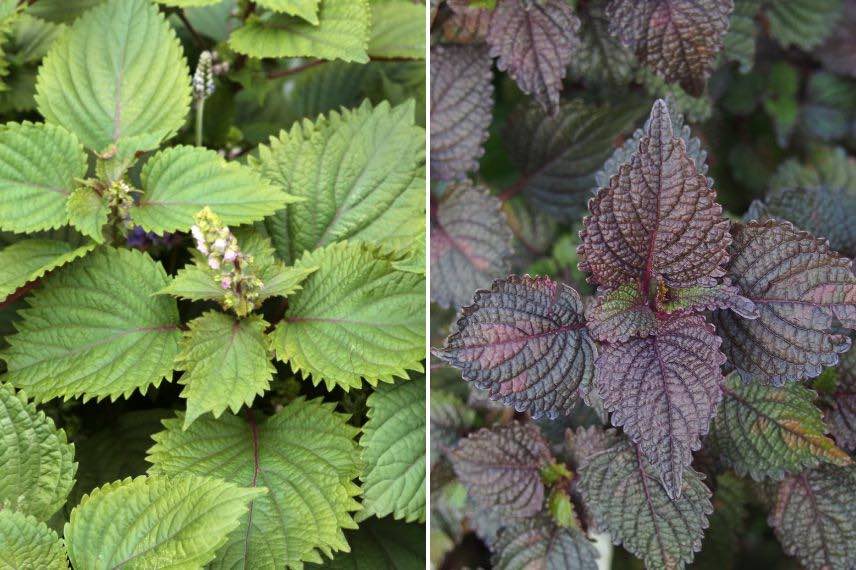
Green and purple Shiso
Polygonum odoratum, also known as Rau Ram.
The Polygonum odoratum, Persicaria odorata or Rau Ram is also known as Vietnamese coriander, although personally, I find it has little resemblance to coriander. That said, those who hate coriander will probably prefer to steer clear of Polygonum odoratum. Ornamental plant enthusiasts in the garden will find its appearance familiar, as its foliage exhibits all the characteristics of Polygonum or Persicaria. I have tasted it before, but never used it in cooking; however, I know it is rarely found in shops, except miraculously at a market or in an Asian grocery store. For such uncommon herbs, it is useful to remember its various names in case you come across it to avoid confusion. It is primarily used in Vietnamese cuisine. It can be grown as an annual or in a pot to be overwintered in a conservatory.
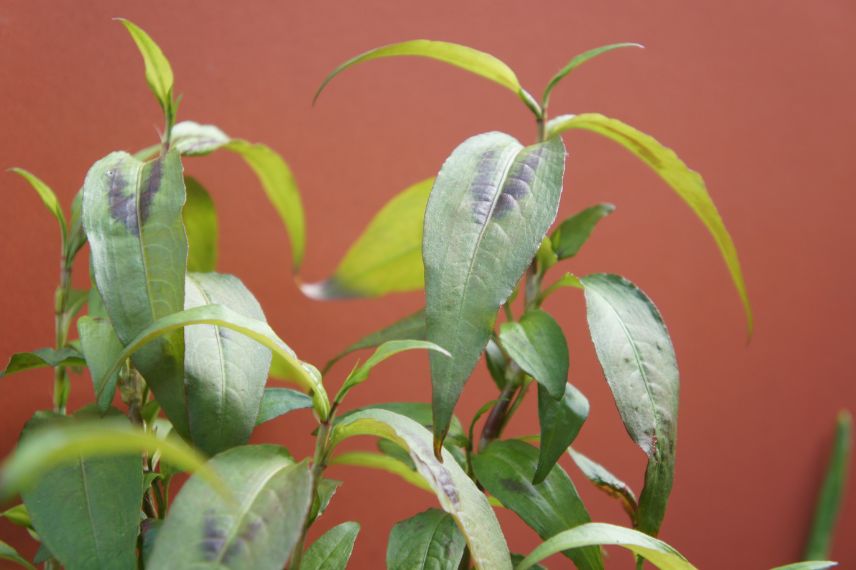
The Polygonum odoratum
Houttuynia cordata 'Chameleon'
Finally, let’s mention Houttuynia cordata, and its highly ornamental version ‘Chameleon’, used in salads in Asian cuisine. Its flavour is quite distinctive, somewhat reminiscent of Polygonum odoratum and, once again, probably similar to coriander for those who dislike it. Personally, while I love coriander, I grimace when tasting a leaf from either of these two plants. It grows well in our gardens in cool, moist soil and can be invasive, but it is a very attractive plant, a delightful groundcover with colourful and variegated foliage that blooms in summer.
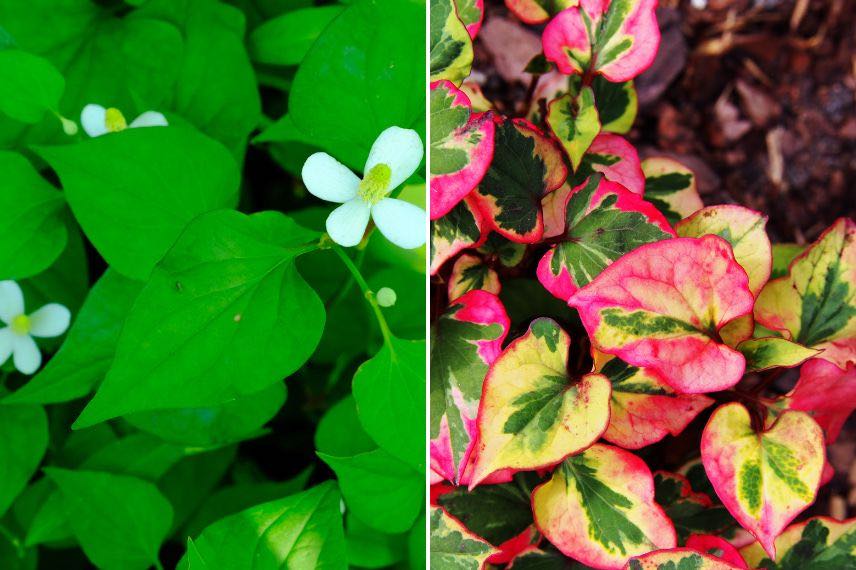
Houttuynia cordata and variety ‘Chameleon’
- Subscribe!
- Contents
Comments