





























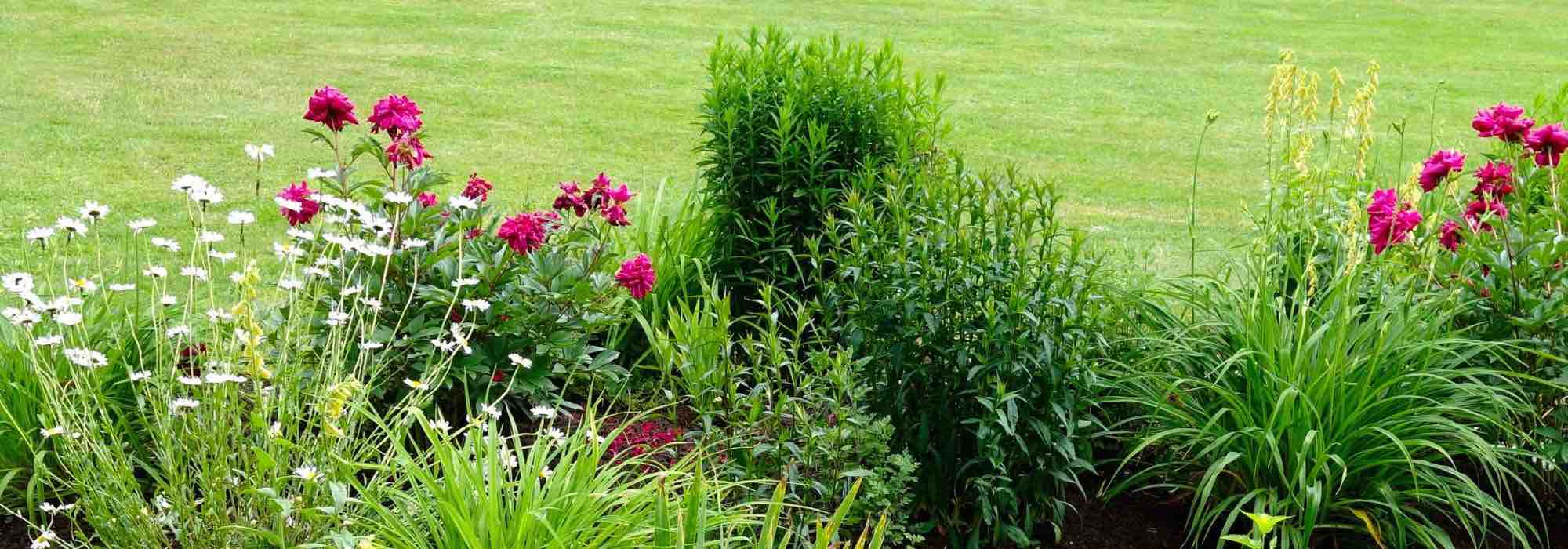
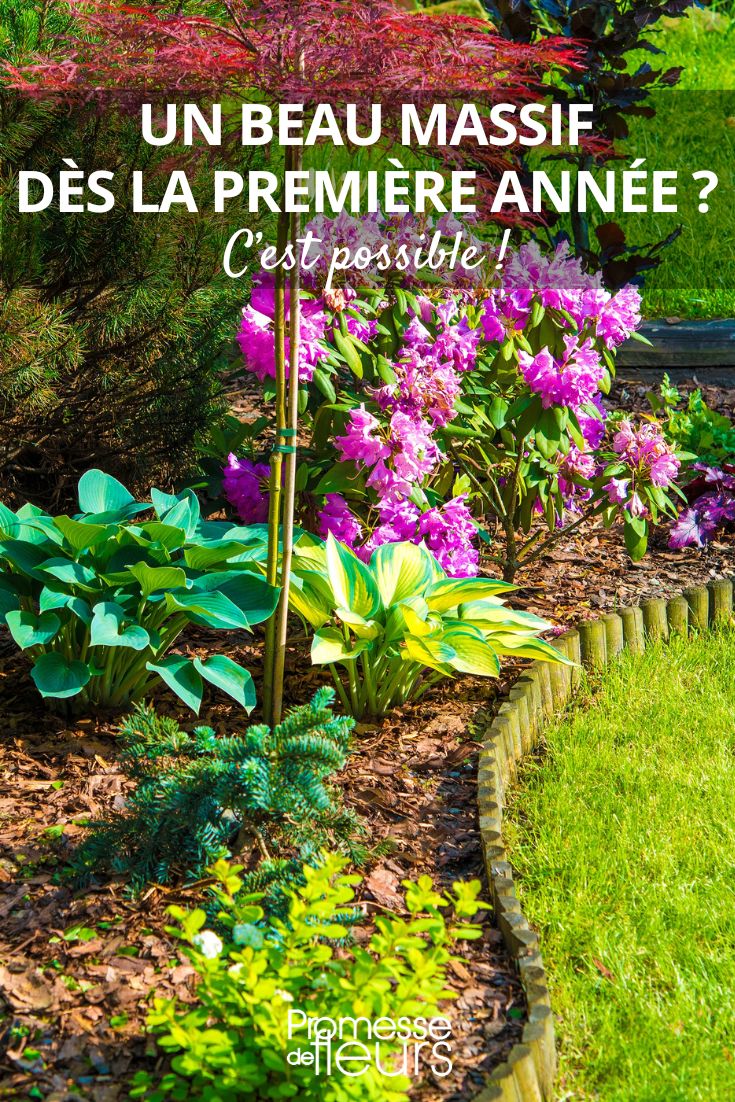
A beautiful flower bed from the very first year is possible!
Our guide to creating an instant impact in the garden
Contents
Creating a flowering display that blooms brilliantly from the first year is within reach thanks to a judicious selection of plants. This article guides you through choosing shrubs, perennials and annuals which, together, will form a harmonious and dynamic display from the outset. By paying attention to the structure, colour and texture of the plants, we show you how to transform an empty space into a vibrant display of life from the early months.

The basics of a successful border in the first year
Creating a flowering bed in the first year is an exciting project that requires a bit of planning and gardening knowledge. To ensure your bed’s success, it is crucial to start with the foundations: choosing the location and planning the bed’s design. These initial steps determine not only the aesthetics of your garden, but also the health and vigor of your plants.
Choosing the location: the importance of sunlight and soil type
The location of your bed is critical to plant choice. Most shrubs, perennials and annuals with flowers require good sunlight to thrive. A site receiving at least six hours of direct sun per day is ideal. However, if your garden is rather shadier, you’ll need to favour plants suited to these conditions.
Soil type is just as crucial. Rich, well-drained and fertile soil will promote rapid, healthy growth of your plants. Before planting, it is recommended to add amendments, such as well-rotted compost or manure, to enrich and improve its structure.
Note: while many flowering plants enjoy sun and fertile soil, there are exceptions. These are general guidelines; check each plant’s growing conditions. For example, lavender, in the following paragraph, does not like rich soils. By contrast, there are few exceptions to well-drained soils. Only a few plants, often preferring cool to moist soils, will have their growth unaffected by heavy, compact soil.
Planning: how to structure your bed for maximum visual impact
The design of your bed should take into account the height and colour of the plants at ripeness, as well as their flowering period. Start by placing the shrubs, which will form the backdrop and structure the space. Then incorporate perennials, playing with variations in height and colour to add depth and visual interest. Finally, fill the remaining gaps with annuals, perfect for injecting short-lived colour and energising the whole bed.
When planning, also consider the succession of blooms to ensure a bed that remains attractive from spring to autumn. Using a colour scheme can help, for example by choosing colours that are complementary or contrasting depending on the desired effect.
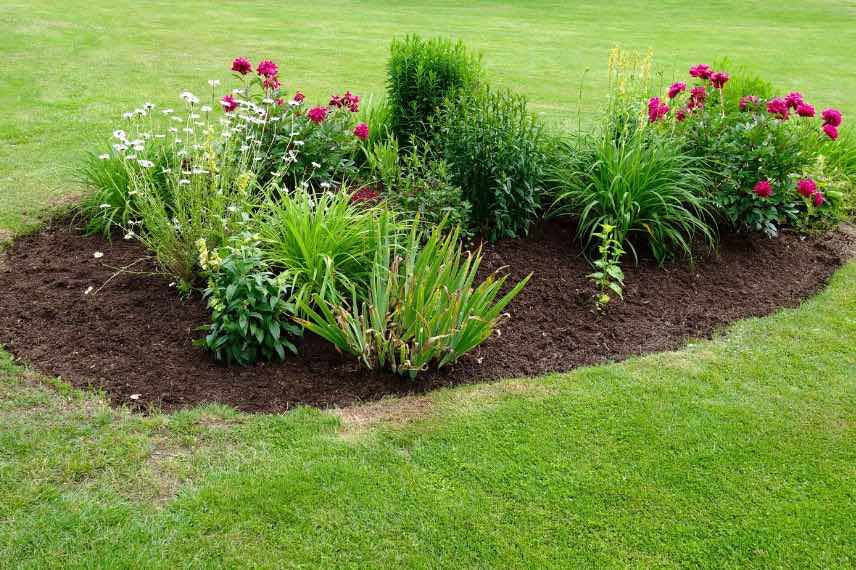
Even with recent planting, the bed can be visually appealing, with a good combination of plants that are already fairly leafy
Read also
3 ideas for beautiful winter flower bedsSelection of shrubs for a background structure
Shrubs play a crucial role in border design, providing permanent structure and visual interest year-round. Their selection should be considered to ensure a balance between rapid growth, minimal maintenance and maximum aesthetic impact from year one.
Selection of fast-growing shrubs
For an immediate effect, opt for shrubs that are already well sized at planting. These more mature specimens provide instant presence and structure to your border. Among the many options available, you will find:
- Forsythia : With its bright yellow flowering in early spring, forsythia is ideal for adding a splash of vibrant colour after winter.
- Buddleia : This shrub offers abundant flowering in summer, with panicles of fragrant flowers available in a range of colours.
- Hydrangea : Hydrangeas offer a wide range of colours and flower shapes, flowering from summer to autumn for a lasting display. Depending on their species, they can be grown in a variety of conditions and exposures.
- dogwood : with deciduous foliage, they are ornamental even in winter thanks to their coloured wood. Some have variegated, purple or green foliage. Beautiful spring flowering and flamboyant autumn colour.
- Elders : versatile and easy to grow, elders offer a handsome range of foliage, from unlobed to deeply lobed, green, yellow or purple.
- Willows : the smaller species are particularly useful in borders, in moist to damp soil.
Also consider climbing plants in the back of the border, if you have a support to train them. Some are champions at rapidly filling space. A few can also be used as ground cover.
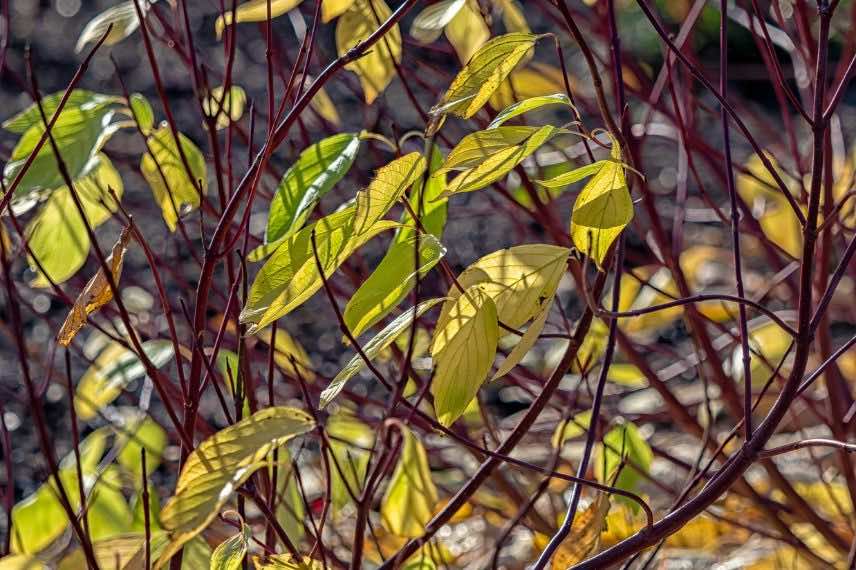
Here is a Cornus alba, ornamental all year round: attractive foliage, flowering and coloured wood
Planting tips
To achieve strong growth and avoid shrubs languishing:
- Enrich the soil with well-rotted compost or manure to improve fertility and structure. Good drainage is essential.
- Respect the space required for each shrub’s future growth so it can develop harmoniously and display its flowering.
- After planting, regular watering is crucial until shrubs are well established. Mulching is very beneficial for conserving soil moisture and reducing the need for watering.
Rapid-flowering perennials to add colour and texture.
Perennials can bring dynamism and colour from year one. They offer a range of colours, shapes and textures, with the advantage of coming back year after year. For an immediate impact, it is wise to choose fast-flowering perennials capable of establishing themselves and flowering abundantly from their first season. Consult our category “Fast-maturing perennials”. Here are a few examples:
- Perovskia: hardy perennial that stands out for its long blue-violet flower spikes and silvery aromatic foliage. Easy to grow, Perovskia attracts pollinators and is drought-tolerant, making it an ideal choice for sunny borders.
- Hardy geranium Rozanne: firstly, the unmissable Rozanne geranium, renowned for its rapid and long-lasting flowering.
- Erigeron karvinskianus: it produces a profusion of small daisy-like flowers, creating a spectacular mass effect. Adapted to a wide range of conditions, it thrives in full sun as well as partial shade and tolerates different soil types.
- Gaura: with its long stems adorned with small butterfly-shaped flowers, they create an airy and delicate effect in borders. Their flowering, which can last from summer to autumn, adds a touch of lightness and dynamism. They are drought-tolerant once established.
- Purple Malva: they offer beautiful and delicate flowers on a fairly tall plant and tolerate relatively dry soil.
- Echinaceas: hardy perennials that flower quickly and offer an abundance of large daisy-shaped flowers, with a prominent and often colourful centre. Adapted to a wide range of conditions, they attract pollinators and resist drought well once established.
- Sages: prized for their dense, colourful flower spikes. They thrive in full sun and offer a long flowering period from early summer to autumn.
- Rudbeckia: with its bright golden-yellow flowers and dark centres, it’s an excellent choice for a sunny border. It is notable for its abundant flowering and its ability to cope with a range of soil conditions. Very hardy, it brings a touch of light and warmth to the garden from summer to autumn.
- Lavender: not only valued for its enchanting scent but also for its rapid flowering and ease of cultivation. It prefers sunny locations and well-drained soil.
- Nepeta: it offers generous and prolonged flowering, with flowers in the shape of delicate lavender-blue bells. Its aromatic foliage and drought tolerance make it an excellent choice for low-maintenance borders.
- Persicaria: for moist soils, even clayey and heavy soils, persicarias quickly form imposing clumps and flower for a long time in slender spikes.
- Valerian: undemanding, they flower abundantly and quickly form a robust tuft.
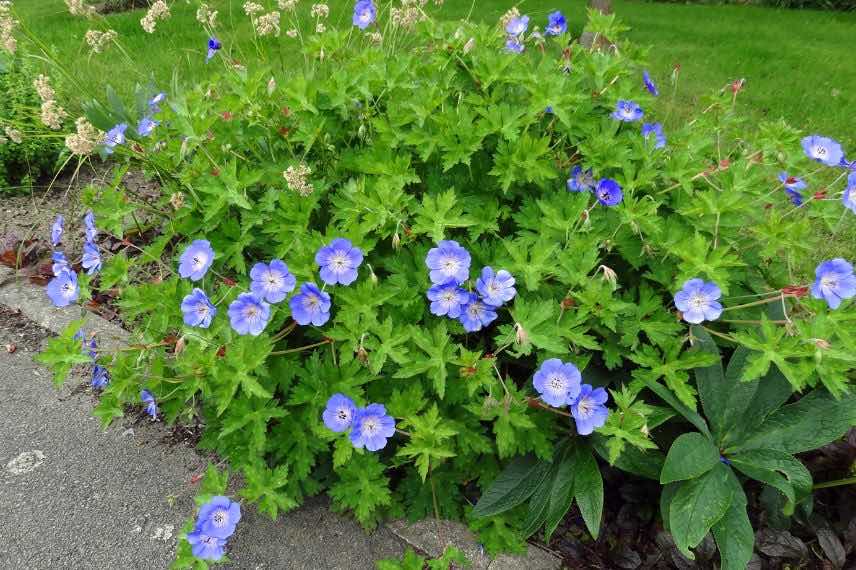
The Rozanne geranium is unbeatable for making a quick impact
Grasses: essential for adding texture, bulk and movement
Grasses add an extra dimension to borders thanks to their texture and their ability to catch the light. They sway gracefully in the wind, adding movement and architectural interest. They quickly add bulk to the border. Species such as Miscanthus or Pennisetum pair well with perennials and shrubs. Many grasses have rapid growth.
Note: as noted in the first paragraph, all perennials mentioned here require well-drained soil, with the exception of persicaria and the Rozanne geranium, which will grow anywhere.
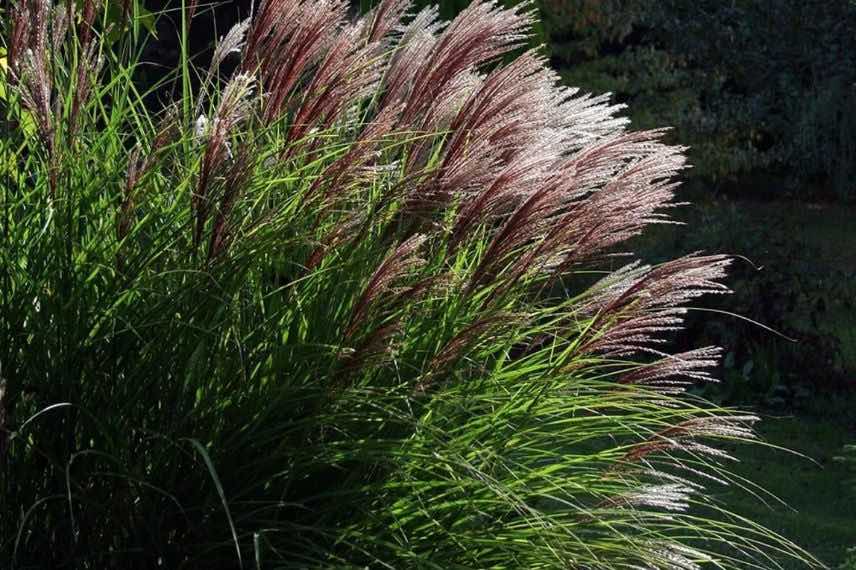
Grasses, here a large Miscanthus, add their grace and bulk to the border
Read also
5 Japanese anemones for a borderAnnuals for ephemeral colour accents
Annuals fill the gaps between perennials and shrubs in the first year, delivering bright, ephemeral colour that energises the garden throughout the growing season.
Selection of annuals for continuous flowering
To keep a flower bed looking attractive from late spring to autumn, it is essential to choose annuals that flower at different times during the season. Among the most popular for their abundant flowering and ease of cultivation, these three species are listed, though most annuals are highly rewarding and offer quick results:
- Annual verbenas: With their wide palette of colours and abundant flowering, they are perfect for adding colour touches all summer.
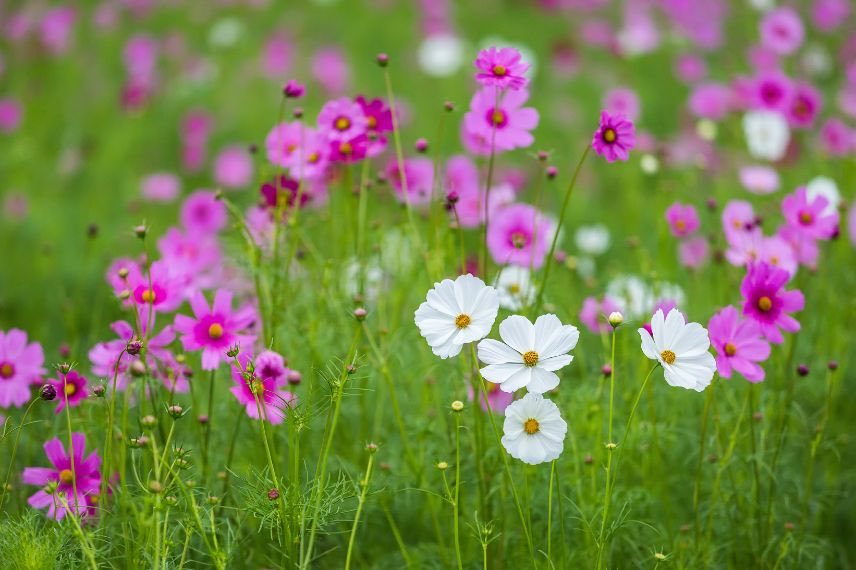
- Cosmos: They charm with their simple appeal and wide range of colours. Their rapid growth and abundant flowering make them ideal candidates for quickly filling empty spaces.
- Nasturtiums: They are very easy to sow directly in place and form a clump of attractive rounded foliage, then covered with flowers.
Planting tips: how and when to plant annuals to maximise their impact
Pour tirer le meilleur parti des annuelles dans votre massif, suivez ces conseils :
- Annuals are often frost-tender. Plant them in the ground after the risk of late frosts has passed to avoid damage.
- Sow the easiest-to-grow varieties, those that can be sown directly in place.
- Play with the different heights of annuals to add depth to your bed. Place taller varieties at the back and shorter ones at the front.
Some annuals reseed freely year after year, here or elsewhere, and are thus more perennial than you might think.
- Subscribe!
- Contents
Comments