


Acanthus: the most beautiful varieties to discover
Selection of Acanthus to enhance your garden
Contents
Acanthus, a majestic plant with dissected leaves and impressive flowers, takes pride of place in gardens and on terraces, bringing a graphic and contemporary touch full of elegance. Between June and September, its tall, vertical flower spikes bear tubular two-lipped flowers that are very distinctive and ornamental. The flowers range in colour from white, violet, pink, purple or yellow. Reaching a height of up to 1.5 metres, they bear oblong, dentate leaves and can sometimes be thorny. Easy to grow and undemanding, they have rapid growth and are hardy. They thrive in sun or partial shade, in rich, deep and well-drained soil. Discover a selection of the most beautiful Acanthus varieties, ideal for all types of gardens, and learn how to grow them so that they reveal their full beauty.

Acanthus hungaricus - Hungarian acanthus
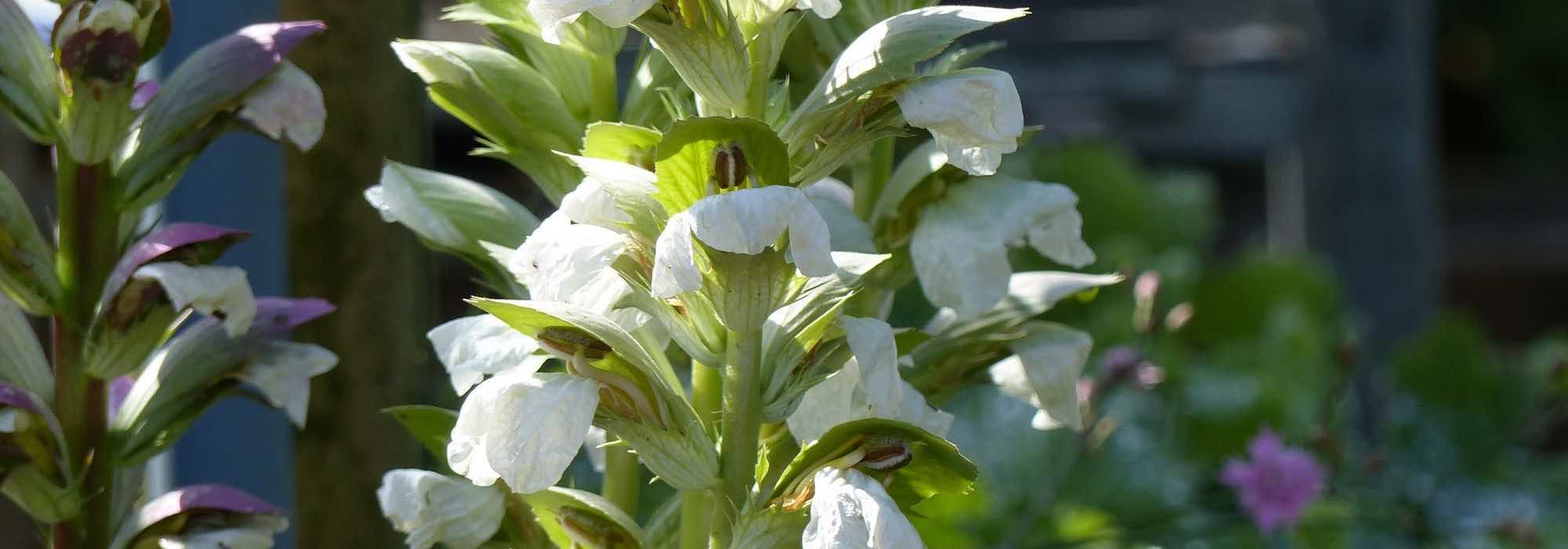
Acanthus hungaricus is also known as Hungarian acanthus or Balkan acanthus. It is a large perennial with a generous habit and a striking, graphic appearance, ideal for adding volume to a sunny border. It forms a dense clump of elongated, deeply lobed leaves, dark-green and glossy, up to 80 cm tall. In June and July, the foliage provides a backdrop for large spikes of flowers, white, sometimes tinged with pink lilac and topped by pale pink, spiny bracts. The plant, with its flowering spikes, can reach a height of 1.5 metres and a width of 80 cm. The flowers are bilabiate and crumpled and attract pollinating insects such as bumblebees and honeybees. After flowering, glossy capsules follow, containing large seeds. After flowering, the foliage disappears, reappearing in autumn and persisting through winter.
Easy to grow, this acanthus has large fleshy roots that store water and reserves during drought. Hardy to -23.5 °C, it can be planted in dry or cool soil, in sun or partial shade. It can be grown in all regions and adds volume and verticality to a flowering border. In a border, pair it with other blue flowers such as Caryopteris and Perovskias.
Acanthus mollis 'Rue Ledan' (Jeff Albus) – White acanthus
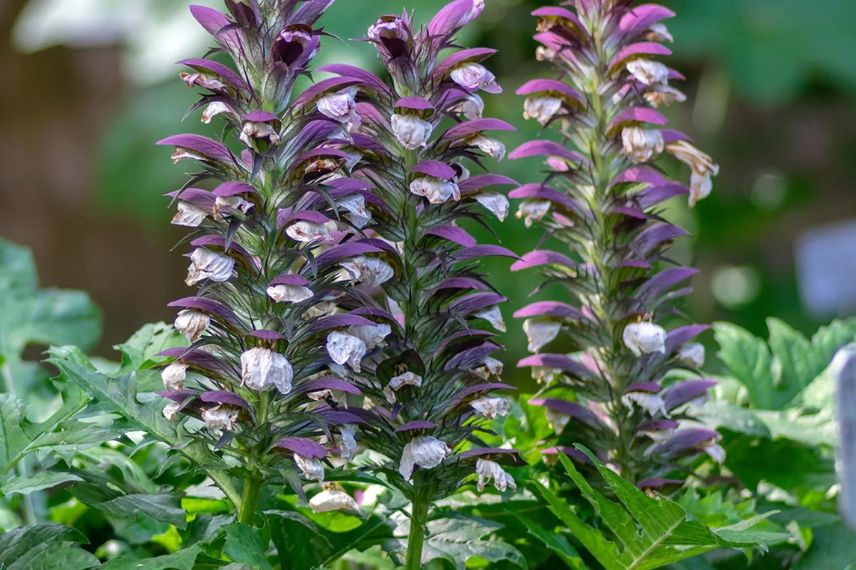
With its white flowering in summer and its large, dark green, glossy, lobed leaves, the Acanthus mollis ‘Rue Ledan’ (Jeff Albus) adds freshness and a striking graphic presence to a garden. It grows to a height of 1.5 metres and a width of 90 cm at maturity. It features dense, upright foliage, dark green and glossy, which is deeply lobed and dentate. Very ornamental, it is topped in June and July by white flowering spikes, adorned with greenish, spiny bracts and slightly purplish. Its bicolour white and green flowers attract pollinating insects. The foliage dies back after flowering, but reappears in autumn and persists in winter if the acanthus is planted in a region where frost does not occur. Hardy and easy to grow, it tolerates temperatures down to -15°C and can be planted in full sun or partial shade. It is ideal for adding a contemporary touch to a white garden or a dry garden. Pair it, for example, with white roses and Digitalis purpurea ‘Snow Thimble’ — purple foxgloves. You can also try pairing it with the original viridiflora shrub rose.
Acanthus mollis 'Hollards Gold' - Golden acanthus
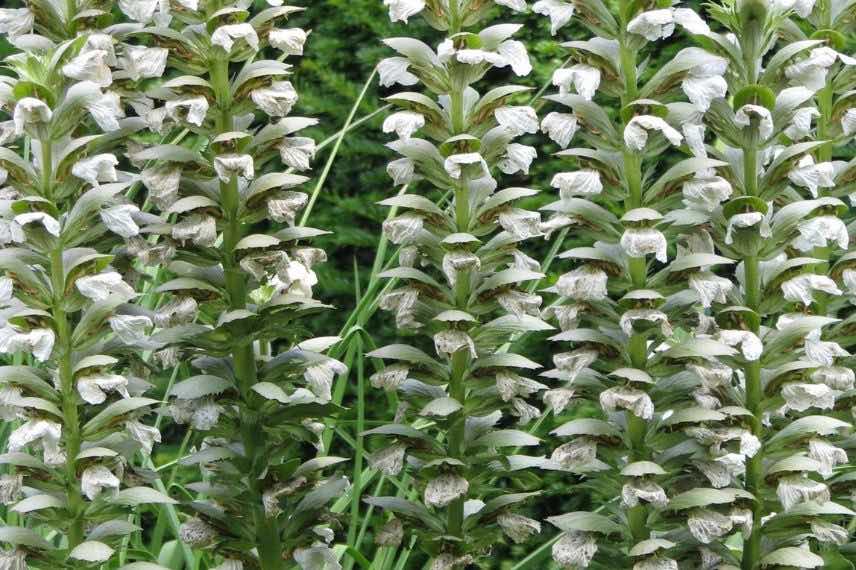
The Acanthus mollis ‘Hollards Gold’ or Golden Acanthus stands out from other acanthuses thanks to its distinctive golden foliage. It forms a spreading clump of foliage about 80 cm tall by 80 cm wide. The large, oval, dentate leaves are highly decorative and bright, ranging from golden yellow to green. From June to August, they are topped with large 40 cm tall flower spikes bearing white and purple flowers. The corollas measure 5 cm in diameter. The deeply lobed foliage is semi-evergreen.
Hardy to -18°C and easy to care for, this acanthus thrives in full sun and partial shade. It can be planted in difficult spots such as under a pine or an oak, as it tolerates root competition from trees. In a border, it harmonises well with giant dahlias. It can also be paired with wildflowers or plants with soft foliage to create contrast with the acanthus’s vertical habit. It can also help brighten a dark hedge or a space planted with conifers, placed at the front.
Read also
How to propagate Acanthus?Acanthus sennii – red acanthus
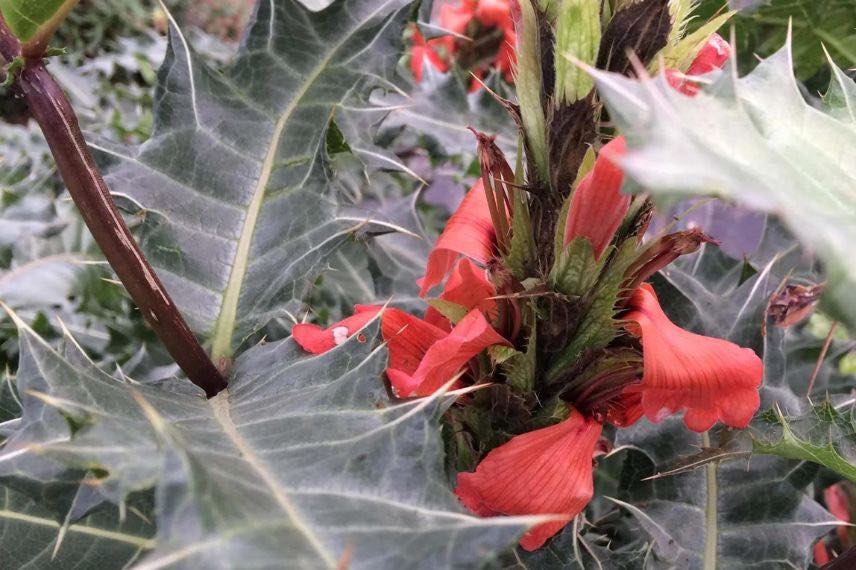
Also known as Ethiopian acanthus or red acanthus, the Acanthus sennii is a spectacular plant. Still little-known and rare, it deserves to be discovered. Originating from the Ethiopian highlands, it bears dark stems adorned with leaves that are very deeply cut, silvery-green and spiny, resembling holly. This distinctive, decorative foliage is complemented by a red flowering from August to October. The flowering spikes, a vivid red, are hard to ignore. It can reach a height of from 1 metre to 2.50 metres depending on the climate with a spread of 60 cm to 1.20 metres. During flowering, this plant needs a little water. The foliage disappears when the temperature drops to -5°C. It is then time to prune and protect the stump to get through the winter.
Very striking and surprising, this plant behaves in our regions as a perennial, re-emerging from the stump each spring. Hardy down to -6°C, it is planted in mild-climate regions, in isolation or in a large exotic border or Mediterranean bed, next to tall euphorbias, for example. In regions with cold winters, it can also be grown in a pot so that it can be brought inside before the first frosts.
Acanthus mollis 'Tasmanian Angel' - variegated acanthus
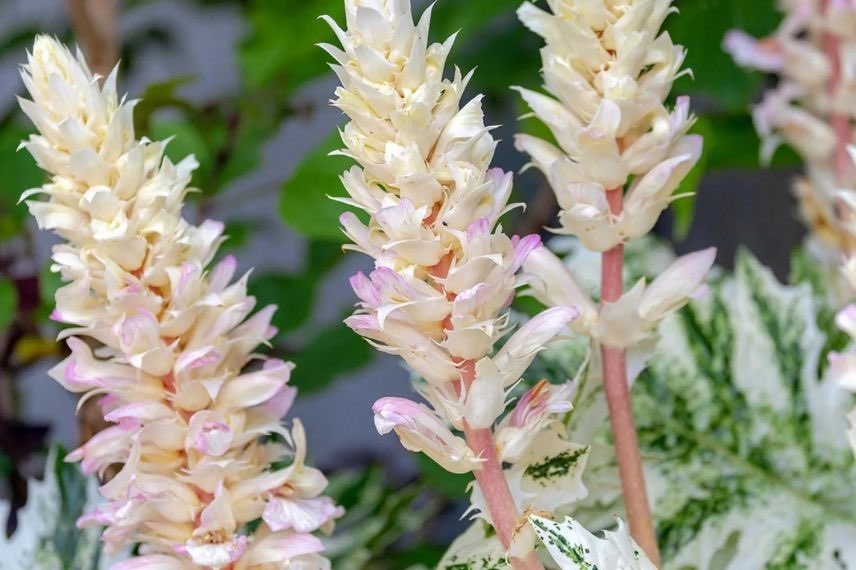
The Acanthus mollis ‘Tasmanian Angel’ is notable for having an astonishing variegated leaf and flowers in pastel and pearly colours. The highly dissected leaves transition from yellow to pure white in spring, then gradually deepen to dark green in summer. In June and July, it is crowned by pale cream floral spikes with pink-tinged bracts. The spikes are squat and consist of crumpled two-lipped flowers topped by pale cream bracts tinged with pink. This acanthus is compact in size, with a mature height of 80 cm and reaches 1.20 m with the flowering stems. The foliage can be evergreen in winter, if the climate is not too cold.
Hardy to -18°C, it is planted in ordinary soil, ensuring it is well-drained but not too dry. It prefers partial shade or shade, as its leaves do not tolerate sun scorch. It can be grown in a pot or in a border where it pairs with boxwood pruned into a ball or with Lobelia laxiflora.
For further information on growing acanthus, see our care guide on planting and maintaining acanthus.
- Subscribe!
- Contents
Comments