





























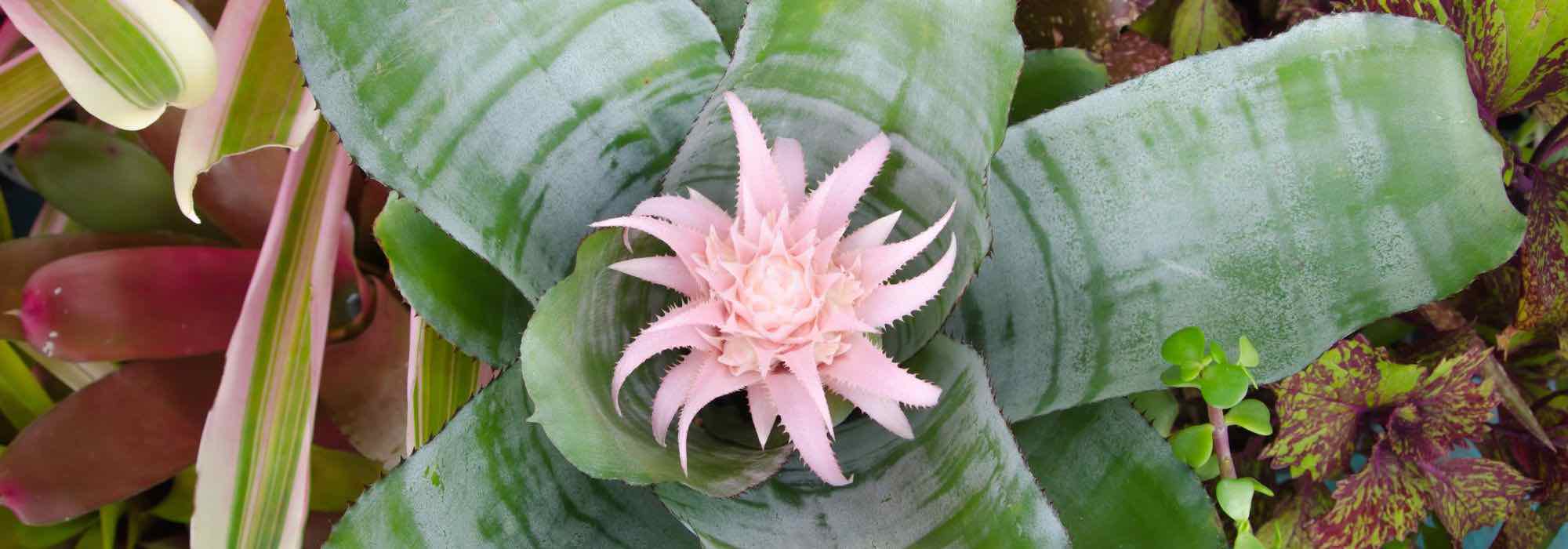
Aechmea: recognise and easily treat its diseases and parasitic pests
Identifying, treating and preventing
Contents
Aechmea is a fairly hardy tropical plant, but like any indoor plant, it can be subject to certain diseases and parasitic attacks. Too much moisture, a lack of ventilation or an environment that is too dry can weaken the plant and promote the appearance of problems such as root rot, brown spots on the leaves or infestations of scale insects and aphids.
A quick detection is essential to prevent these pests or diseases from establishing themselves permanently and jeopardising the health of your Aechmea. Fortunately, with appropriate care and a few simple preventive measures, it is possible to avoid these nuisances and keep a plant in good health year-round.
In this article, discover how to recognise the most common diseases and parasitic problems of the Aechmea, the natural solutions to treat them effectively and the best practices to prevent their appearance.

Common diseases of Aechmea
The Aechmea is a relatively robust plant, but it can be prone to certain diseases, often caused by excess moisture, poor ventilation or improper watering. It is important to quickly identify the symptoms to act before the plant becomes too weakened.
Root rot
Symptoms :
Leaves yellow or become soft. The base of the plant starts to blacken and becomes soft to the touch. A musty odour or rotten-earth smell may also be detectable around the roots.
Causes :
Root rot is mainly due to overwatering or water stagnation in the pot. A substrate that is too compact and poorly drained promotes its appearance, as does a temperature that is too low, slowing water evaporation.
Solutions :
- Remove the plant from the pot and inspect the roots. Cut away all soft and blackened parts with a disinfected pruning shear.
- Repot into a well-draining, airy substrate suitable for epiphytes (coconut coir mix, perlite, sphagnum moss and pine bark).
- Space out the watering if your substrate was already adequate, and never leave standing water in the saucer.
- Place the plant in a well-ventilated place and at a stable temperature of at least 18°C.
Neck rot
Symptoms :
The base of the Aechmea darkens at the junction between the leaves and the substrate. It becomes soft and the leaves may detach easily when pulled, a sign that the rot is advanced.
Causes :
This fungal infection develops when the base of the plant remains constantly damp. An excess of water in the rosette combined with a waterlogged substrate promotes the appearance of fungi, especially in winter when evaporation is slower.
Solutions :
- Remove the affected parts and dust the base with charcoal powder to prevent the spread of the fungus.
- Repot into a lighter, well-draining substrate, taking care not to bury the base of the plant too deeply.
- Reduce the watering and avoid any excessive moisture in the rosette.
- Improve air circulation around the plant to limit the development of the fungi.
Note that if watering into the rosette does not benefit your plant, you can opt for regular bottom-watering of the root ball.
Brown spots and leaf rot
Symptoms :
Brown, black or translucent spots appear on the leaves, which become soft and begin to rot. Progressive discolouration of the tissues can also be observed.
Causes :
Excess moisture and lack of aeration are the main causes of this disease. Water stagnation in the rosette or excessive humidity in the air promote the proliferation of fungi that attack the foliage.
Solutions :
- Remove the affected leaves to prevent spread.
- Regularly drain the water from the rosette and avoid standing moisture.
- Improve the air circulation by spacing the plants and avoiding an overly confined environment.
Leaves drying out or browning
Symptoms :
The leaves dry out at the edges or turn brown. The plant may also look withered and weakened, with tips curling.
Causes :
This problem is often caused by excessively dry air, especially in winter with heating, or by direct sun exposure. A lack of water in the rosette or insufficient watering can also cause this desiccation.
Solutions :
- Move the Aechmea away from direct heat sources such as radiators.
- Maintain a good level of humidity by placing a humidifier nearby if your indoor air is very dry.
- Lightly mist the foliage one to two times per week, without excess.
Aechmea diseases are often linked to an imbalance between humidity and ventilation. A good routine, with moderate watering and a well-ventilated environment, helps prevent most problems before they worsen.
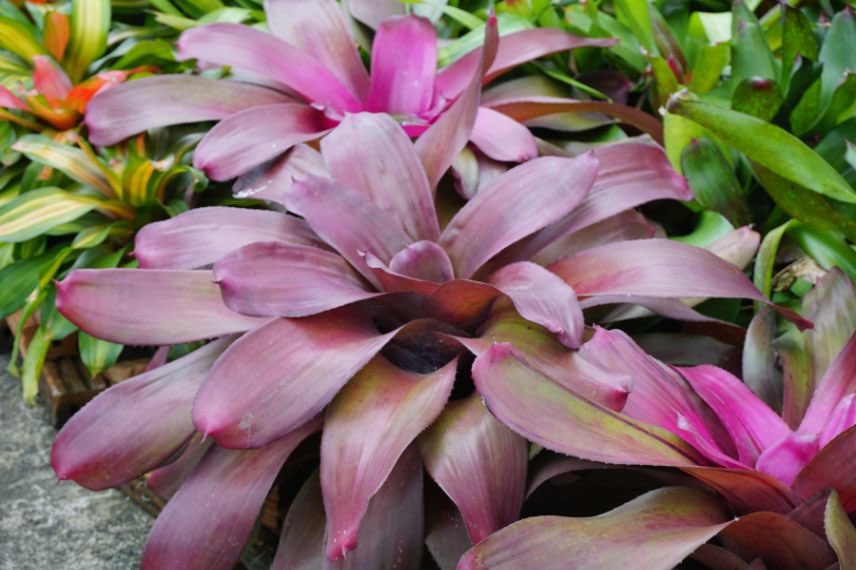
Although it is generally advised to pour water into the leaf rosette, you may also opt for regular bottom-watering of the plant
Read also
Aechmea : planting, growing, and careParasitic organisms on Aechmea
Like any indoor plant, the Aechmea may be attacked by various parasites. These pests often thrive in environments that are too dry or too humid or in a lack of ventilation to develop. Early detection helps prevent the infestation from worsening and enables action before the plant becomes too weakened.
Mealybugs
Symptoms:
Small white cottony masses appear on the leaves, often along the veins or at the base of the leaves. The plant seems to weaken and its growth slows. In advanced infestations, a sticky substance (honeydew) may cover the foliage.
Causes:
Mealybugs proliferate mainly in warm and humid environments. Poor air circulation also promotes their establishment.
Solutions:
- Remove mealybugs with a cotton bud soaked in 70% alcohol.
- Mist a mixture of water and black soap, to which you add vegetable oil and alcohol, to suffocate the pests.
→ Read also our article: Mealybug: identification and treatment
Aphids
Symptoms:
Small green, black or yellow insects colonise the young shoots and the base of the leaves. The leaves may curl in on themselves, and a sticky substance may be present on the plant (honeydew here too).
Causes:
Aphids are often attracted to a weakened or stressed plant.
Solutions:
- Rinse the plant in the shower or bath under a gentle jet of water to dislodge the aphids.
- Mist a mixture of water and black soap to eliminate them.
→ Read also our article: Aphid: identification and treatment
Red spider mites
Symptoms:
The leaves of the Aechmea take on a mottled appearance and gradually yellow. In advanced infestations, fine webs may appear under the leaves and along the stems.
Causes:
Red spider mites proliferate when the air is too dry and hot. A lack of humidity and poor airflow promote their rapid development.
Solutions:
- Mist water onto the leaves, as red spider mites dislike humidity.
- Increase ambient humidity by regularly misting the foliage.
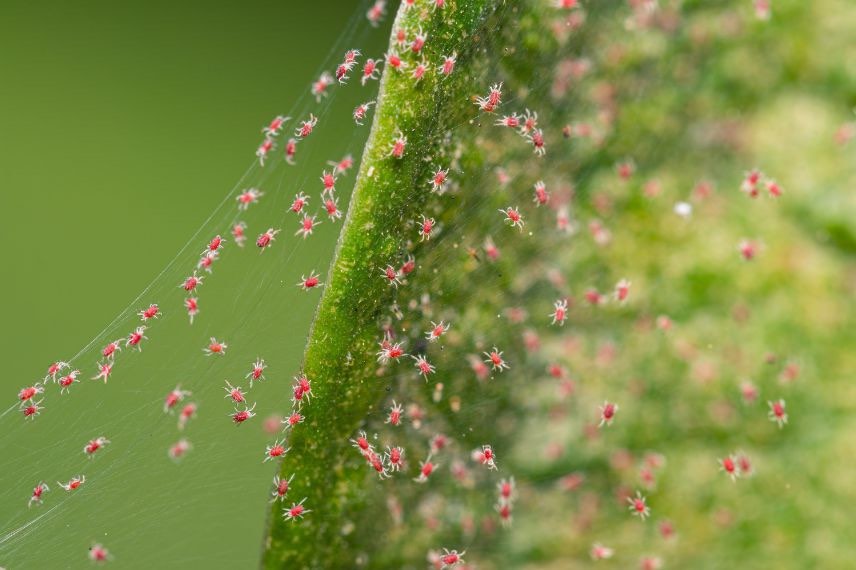
Red spider mites or tetranychids are difficult to spot with the naked eye; their webs are more visible
Prevention: Best practices for a healthy Aechmea
With good cultivation practices, you should be able to avoid the main problems, it’s better to adopt preventive measures to keep an Aechmea in good condition. A good management of watering, light and humidity helps prevent most problems before they occur.
Adjust watering to avoid excess moisture
One of the main causes of disease in Aechmea is overwatering or poorly adapted watering. It is important to fill the rosette with clean water and refresh it regularly to avoid any stagnation. The substrate must never be waterlogged : it is better to have a light drying between two waterings rather than excess moisture that promotes the rot of the roots and the collar. In winter, waterings should be spaced further apart, as the plant is resting and uses less moisture.
Regularly clean the leaves
A simple but effective maintenance consists of clean the leaves of the Aechmea one to two times a month with a damp cloth. This helps remove the dust that could prevent the plant from breathing properly and maximise photosynthesis.
Inspect the plant to quickly detect parasites
Regular visual checks help quickly detect the appearance of potential parasites. It is advisable to examine the undersides of the leaves, the base of the plant and the rosette, where scale insects and aphids like to hide. If in doubt, isolate the suspect plant immediately to prevent spreading to other plants. Prompt intervention often helps to eliminate the problem before it becomes out of control.
Avoid plant stress by stabilising its environment
Severe temperature fluctuations, drafts and unsuitable exposure can weaken Aechmea, making the plant more susceptible to disease and parasitic attacks. It is therefore best to place the plant in a location where the temperature remains stable, ideally between 18 and 24°C, and to avoid drafts that are too cool in winter. Likewise, indirect but sufficient light is required for proper development without the risk of scorching.
Isolate new plants before integrating them
When a new Aechmea or another plant is introduced into a space where other plants are already established, it is recommended to isolate it for about a fortnight. This precaution helps ensure that no parasite or disease is present before it joins the other plants. A simple visual check and preventive cleaning are sufficient to prevent widespread contamination.
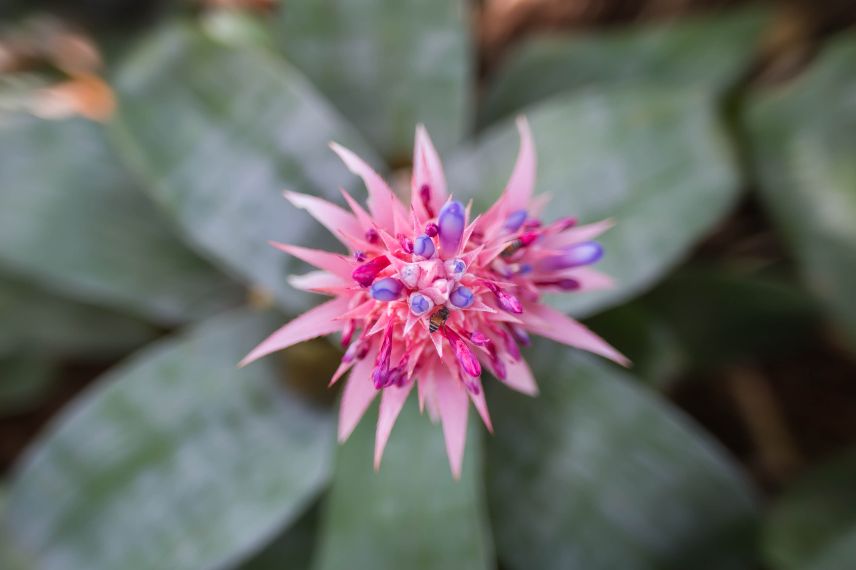
With proper care, every owner of Aechmea eagerly awaits flowering (Aechmea faciata)
- Subscribe!
- Contents
Comments