





























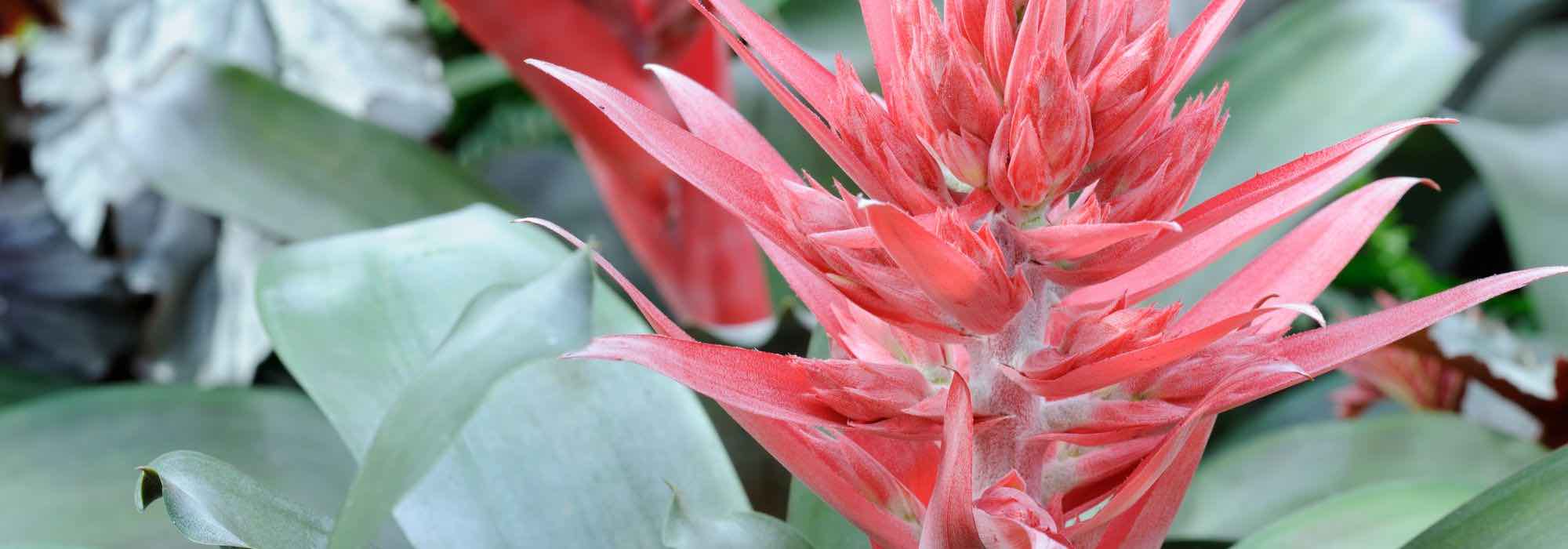
Aechmea: seasonal care
Our tips for a thriving indoor plant
Contents
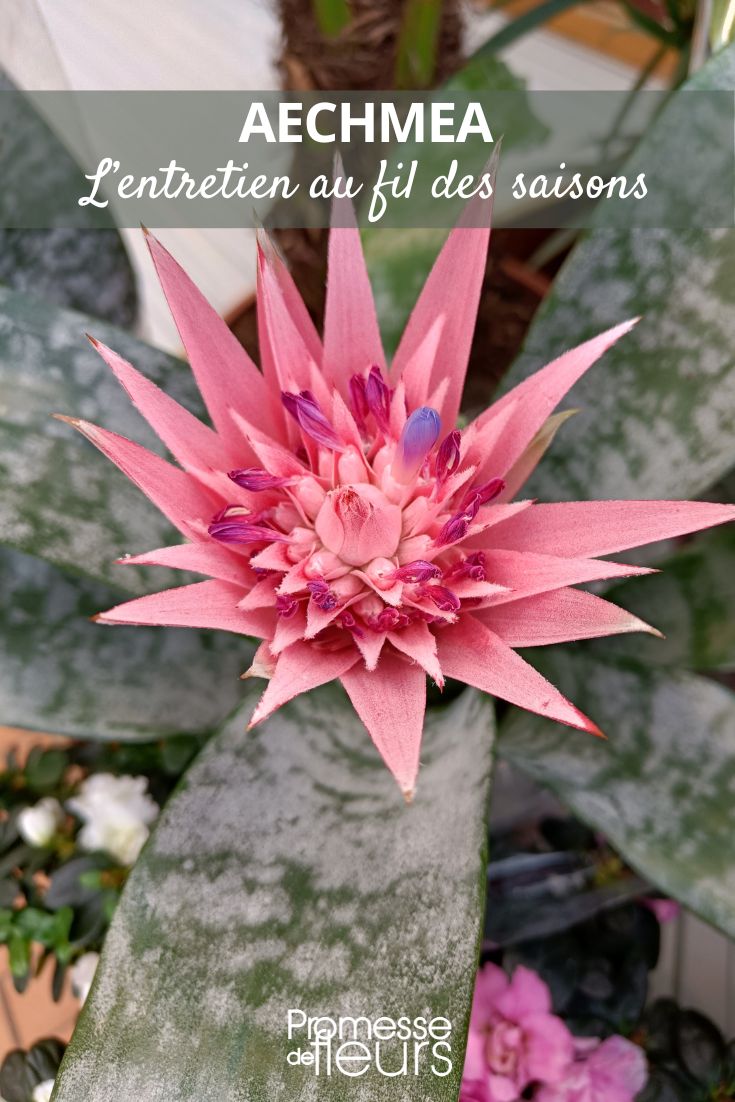
Aechmea is a tropical plant, often called the Silver Vase, belonging to the bromeliad family, prized for its striking foliage and its spectacular inflorescence in bright colours. The most well-known species is Aechmea fasciata. It is a plant that flowers only once in its life, generally after several years of growth. Once the flowering is finished, the mother plant gradually dies, giving rise to offsets that ensure its succession.
Throughout the year, Aechmea has specific needs that evolve with the seasons. Watering, light, humidity and fertilisation must be adjusted to keep the plant healthy and to encourage future flowering, then the future generation.
In this article, discover how to adapt the care of Aechmea to each season to fully enjoy its life cycle and ensure its longevity.

Spring, a growth period for Aechmea
Spring is a key period for Aechmea. After the winter months when its growth slowed, the plant benefits from the return of light and milder temperatures to get going again. It’s the moment to adapt its care to provide optimal conditions and stimulate its development.
Watering: a gradual restart
Aechmea is an epiphytic plant that absorbs water mainly through its leaves and central rosette. After winter, it is important to reintroduce watering gradually.
- Fill the central rosette with rainwater or non-calcareous water (so avoid tap water) and refresh it regularly (about once a week) to prevent the growth of bacteria.
- Lightly moisten the substrate as well, but without excess, as the roots of Aechmea are susceptible to rot.
- If the air is dry, mist the foliage lightly to recreate a tropical ambience.
Feeding: a boost for growth
After winter, Aechmea benefits from a nutrient boost to support its restart.
- Use a liquid fertiliser for bromeliads or flowering plants, diluted to half strength to avoid a mineral overload. There are also fertilisers for exotic plants sensitive to lime, which allows using tap water even if it is hard.
- Apply the fertiliser directly to the water in the rosette once a month.
- Avoid fertilisers high in nitrogen, which would promote leaf growth at the expense of flowering.
Repotting: a fresh start if necessary
Aechmea does not require frequent repotting, but if the plant starts to run out of space or the substrate seems exhausted, spring is the right season to do it.
- Prepare a light, well-draining mix for epiphytic bromeliads using a blend of bark, perlite, coco, and sphagnum moss.
- Choose a pot of appropriate size: not too large, as Aechmea likes to be slightly snug.
- After repotting, wait a few days before resuming watering to prevent the roots from rotting.
Cleaning and maintenance of the foliage
In spring, a thorough cleaning helps the plant start up again well.
- Remove dry or damaged leaves from the base of the plant to encourage new growth.
- Wipe the leaves with a damp cloth to remove dust and optimise photosynthesis.
- Check that the rosette does not contain deposits or impurities that could hinder water absorption.
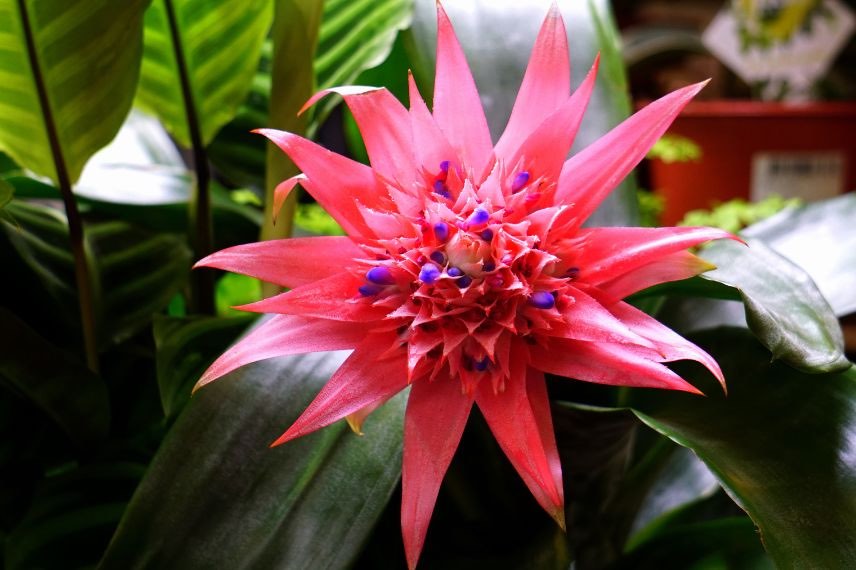
After a few years of cultivation, Aechmea begins preparations in spring for its summer flowering.
Read also
Aechmea : planting, growing, and careSummer: flowering and vigilance for Aechmea
Summer is the season when Aechmea can reveal its magnificent inflorescence. However, it is important to know that this plant flowers only once in its lifetime. Flowering can take several years to appear, and once the flower has withered, the parent plant will gradually decline. Fortunately, it produces offsets at its base, which will ensure the succession.
Watering: maintaining adequate hydration
With high temperatures, Aechmea requires more water, but it is important to avoid excess.
- Fill the central rosette with fresh water or rainwater and change it every 4 to 5 days to prevent stagnation and the growth of bacteria.
- Lightly moisten the growing medium, but ensure it is never waterlogged. As an epiphytic plant, its roots should stay well-aerated.
- If the air is dry (especially during heatwaves), spray water onto the leaves once or twice a week.
Light: maximise exposure without scorching the leaves
Aechmea needs plenty of light to flower.
- Place it in a very bright spot with filtered sunlight.
- If you place it outdoors (which is possible in summer), place it under light shade, such as under a tree or a pergola, to prevent the sun from scorching its leaves.
- If the leaves pale or brown, it is a sign it is receiving too much light. In that case, move it away from the light source.
Fertilising: supporting flowering
Summer is the period when Aechmea needs nutrients most to support its single flowering.
- Add a liquid fertiliser suitable for bromeliads or flowering plants every three weeks, at half-strength.
- Apply the fertiliser directly to the water in the rosette and to the growing medium.
- Do not over-fertilise, as this can burn the roots and harm the flowering.
Pest and disease monitoring
Summer encourages the appearance of pests, notably scale insects and aphids, which like to settle at the base of the leaves.
- Inspect the Aechmea regularly, especially under the leaves and at the heart of the rosette.
- If pests appear, remove them naturally by spraying a solution of black soap diluted to 5% (i.e., 50 ml of black soap per litre of water).
- Avoid excessive stagnant moisture, which could facilitate the development of fungi or rot.
Tips for extending flowering
The Aechmea inflorescence can last six months if well cared for.
- Ensure the plant receives enough light, as a lack of luminosity can shorten the flowering.
- Maintain good humidity around the plant by lightly misting its foliage.
- Once the flower begins to wither, it is normal for the mother plant to start declining. However, it will produce offsets at its base, which will give rise to a new plant.
Anticipating the end of the plant’s life
Aechmea takes several years to flower, and once its flowering is finished, the mother plant begins to decline naturally, which takes several more months.
- It is normal for the outer leaves to yellow and dry after flowering.
- Once the flower withers, monitor the appearance of offsets at the base of the plant: these are the ones that will take over.
- Do not cut the mother plant immediately after flowering. Wait until the offsets reach at least a third of its size before separating them to replant.
Summer is therefore a key period for Aechmea: it’s the time when it can flower after several years of waiting, but also when it begins to prepare its succession. Good maintenance will not only allow you to enjoy its magnificent flowering but also ensure the proper establishment of its offsets to prolong the life of the plant.
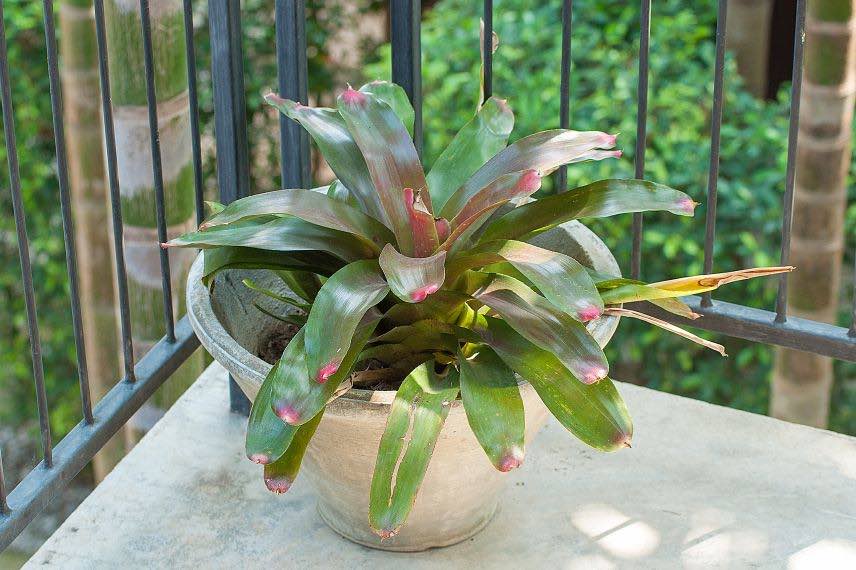
The plant can be moved outdoors in summer when temperatures are mild, avoiding direct sun
Autumn: a gentle transition for Aechmea
Autumn marks the end of the growing season and the start of a quieter period for Aechmea. If the plant flowered during the summer, the flowering begins to fade and the mother plant is slowly declining. This is an important phase in which you should adjust care to prepare the Aechmea for winter and ensure the succession with offsets.
Gradual reduction of watering
With the drop in temperatures and reduced light, Aechmea requires less water.
- Reduce the watering frequency: allow the rosette to be a little less full, change the water less often (every 7–10 days).
- Lightly moisten the substrate when the surface is dry, but avoid it becoming waterlogged.
- If the air becomes drier with heating, continue to mist a little water onto the foliage once a week.
End of fertiliser applications
Aechmea enters a rest phase and no longer needs feeding.
- Gradually stop fertilising from September.
- An excess of fertiliser at this time could harm the plant by overloading the substrate with unnecessary minerals.
- You can resume fertilising in the following spring to stimulate the young offsets.
Managing the mother plant’s end of life
If the Aechmea flowered during the summer, the mother plant will slowly begin to dry out.
- It is normal for its outer leaves to yellow and shrivel; this process can take several months.
- Once offsets reach about a third of the size of the mother plant, you can consider separating them and replanting.
Encouraging offset growth
If offsets appear, give them the best conditions to grow well.
- Leave them attached to the mother plant for as long as possible so they continue to receive its nutrients.
- Ensure good light for them, without direct sunlight, to stimulate their growth.
- Maintain adequate humidity so they do not suffer drying out caused by heating.
Pest control and leaf cleaning
Autumn is a good time to run a general check of the plant.
- Wipe leaves with a damp cloth to remove dust and promote better photosynthesis.
- Check for the possible presence of scale insects or aphids, which can settle in leaf folds as the plant weakens.
- If necessary, treat with a mixture of water and black soap to prevent an infestation before winter.
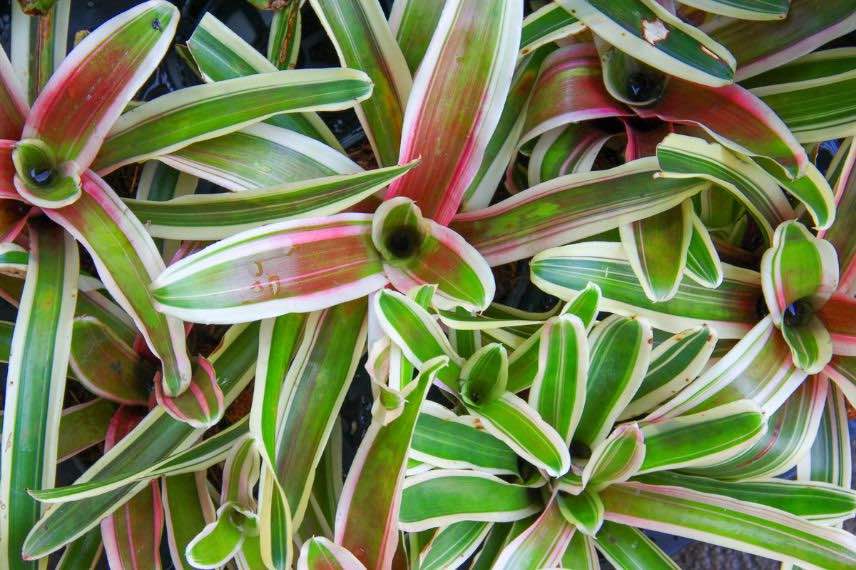
The Aechmeas, variegated or not, display attractive foliage
Read also
Mealybug: identification and treatmentWinter: rest and simplicity for the Aechmea
Winter is a rest period for Aechmea. The plant slows its metabolism due to the reduction in light and cooler temperatures. If the mother plant has already flowered, it will continue to decline while offsets continue to develop slowly. The aim is to keep maintenance minimal to avoid unnecessary stress to the plant and to prepare for a restart in spring.
Watering: space out without drying out
With transpiration and evaporation reduced, Aechmea needs far less water in winter.
- Water the substrate, letting it dry out well between waterings.
- If indoor air is very dry due to heating, lightly mist the foliage, but avoid excessive humidity that could promote rot.
- Filling the rosette is not necessarily recommended in winter.
Light: maximise light exposure
With shorter days and reduced sunlight, it is important to ensure a good light supply for Aechmea.
- Place it near a bright, well-lit window.
- Rotate the pot regularly so that all the leaves receive a homogeneous exposure.
- If natural light is insufficient, particularly in regions with little sun, a horticultural lamp can be helpful to compensate for the lack of light.
Temperature: avoid the cold and abrupt fluctuations
Aechmea, a tropical plant, is sensitive to temperatures that are too low.
- Maintain an ambient temperature between 18 and 22 °C.
- Avoid placing it near an inadequately insulated window or a door to the outside.
- Protect it from cold drafts and temperature fluctuations that could weaken the plant.
- Do not place it directly beside a radiator, as the warm and dry air could dry out the leaves.
Fertilisation: winter rest
Winter being a period of rest, Aechmea does not need to be fed.
- Stop fertilising completely between November and February.
- Resume feeding gradually in early spring, when growth restarts.
Monitoring and minimal maintenance
Winter care of Aechmea essentially consists of observing the plant and intervening only when necessary.
- Wipe the leaves with a damp cloth to remove dust and optimise photosynthesis.
- Check for pests, as dry air can promote red spider mites.
- If the mother plant continues to decline after flowering, don’t worry: it’s a normal process. As long as the offsets are healthy, Aechmea will continue its life cycle.
- Subscribe!
- Contents
Comments