





























Agrobacterium tumefaciens or collar gall: what is it?
Identification, symptoms, and prevention of this disease
Contents
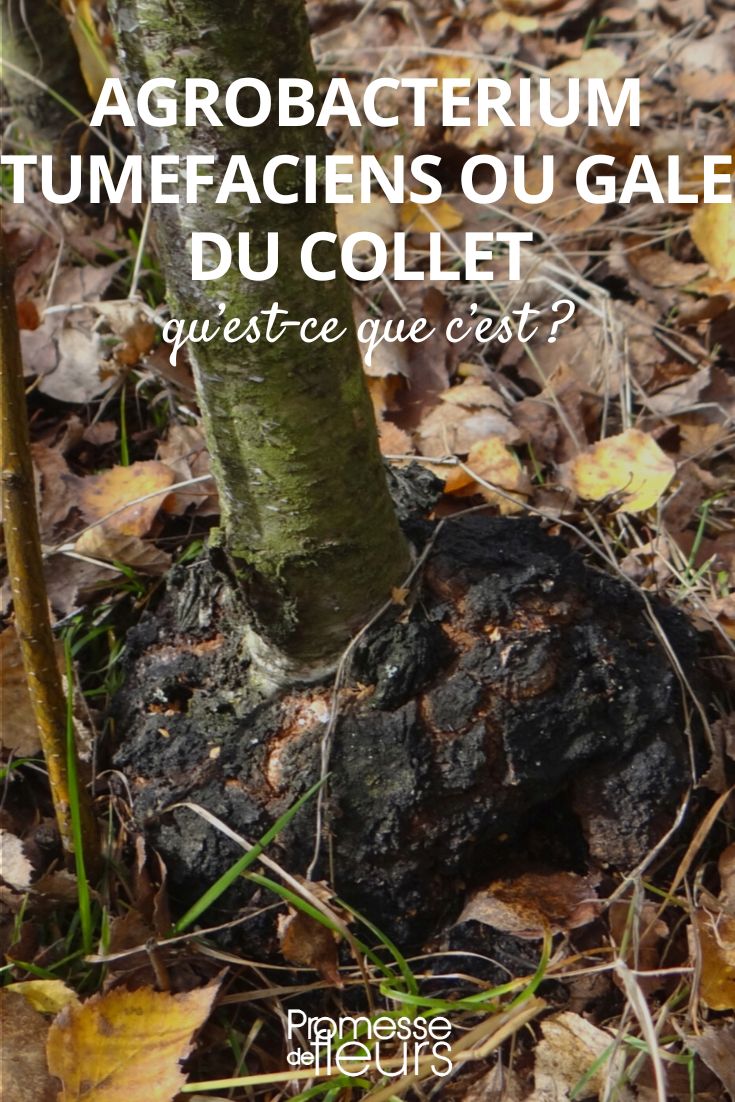
Crown gall is a disease that can affect many plants in the ornamental garden, vegetable patch, or orchard. It is caused by the bacterium Agrobacterium tumefaciens, leading to physical deformities in the form of tumours, usually at the neck or roots of plants.
Let’s look at how to identify the symptoms of crown gall, and then how to take preventive measures to limit its occurrence or slow its spread.
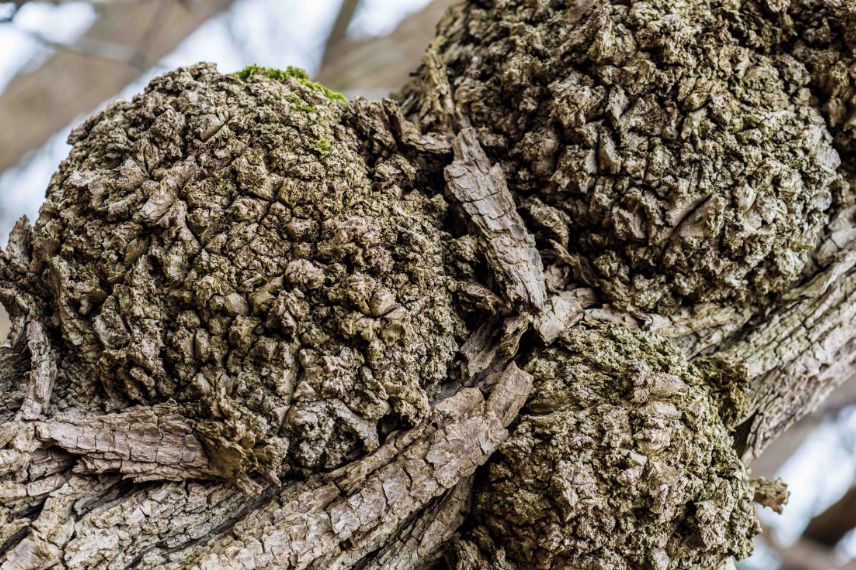
Symptoms of crown gall on a tree

Collar rot: causes and development of the disease
The bacterium Agrobacterium tumefaciens implicated
Agrobacterium tumefaciens is a pathogenic bacterium responsible for the development of tumours in plants. It is believed to have been identified by two American researchers in the early 20th century, although observations regarding this disease date back to antiquity (source: Wikipedia).
But how does it act? To put it simply, Agrobacterium tumefaciens injects fragments of its DNA into the genetic material of the host plant. These contaminated and modified cells then multiply, causing the formation of galls or nodules, comparable to cancerous tumours. They typically appear at the collar, hence the name of this disease, but they can also develop on the trunk, roots, and sometimes even branches. These galls are also referred to as “cecidia” and can proliferate to create a true network along the vascular system of the affected plant.
It is unhealed wounds, caused accidentally or naturally, that provide an entry point for the bacterium. They offer direct contact with the plants. These wounds can be caused by:
- tools during plant maintenance (mowing, pruning…);
- frost;
- insects, parasites, or animals;
- grafting;
- transplanting;
- etc.
The bacterium Agrobacterium tumefaciens is naturally found in soils, particularly in areas where plant roots develop, that is to say, rhizospheric environments. It can survive there for a long time and can quickly proliferate to affect an entire plot. In professional settings, entire fields or nurseries can become contaminated. The bacterium spreads via rainwater or irrigation, through infected equipment, or through the movement of humans or animals.
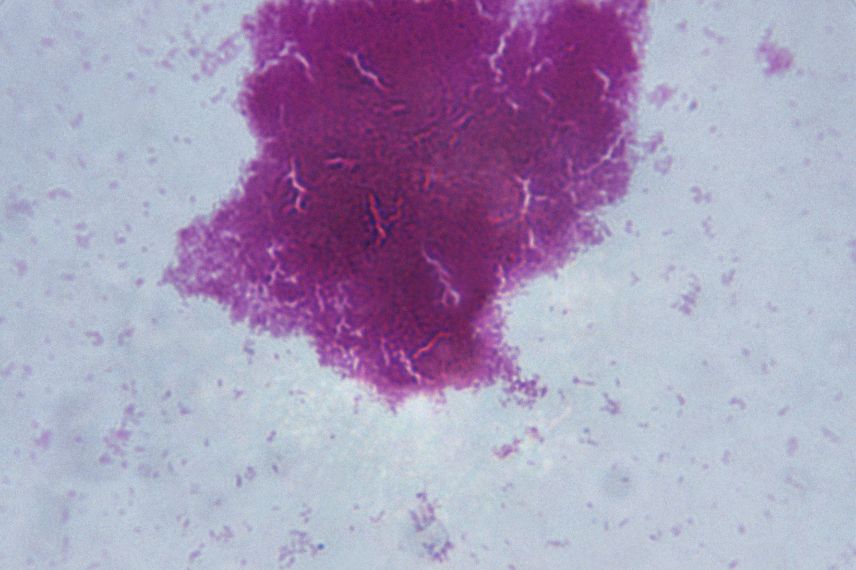
Agrobacterium tumefaciens under the microscope
The targeted plants
Many plants are sensitive to collar gall: there are nearly 600 species that can be affected by this disease. Fruit trees with pips, ornamental plants, vegetables, trees, and bushes are all concerned.
Among them, for example:
Read also
Plant galls: what are they?Damage caused by Agrobacterium tumefaciens
The plant will develop its first visible tumours within a few weeks after infection, sometimes even more quickly if this occurs during its growth period. These are the first symptoms of the disease.
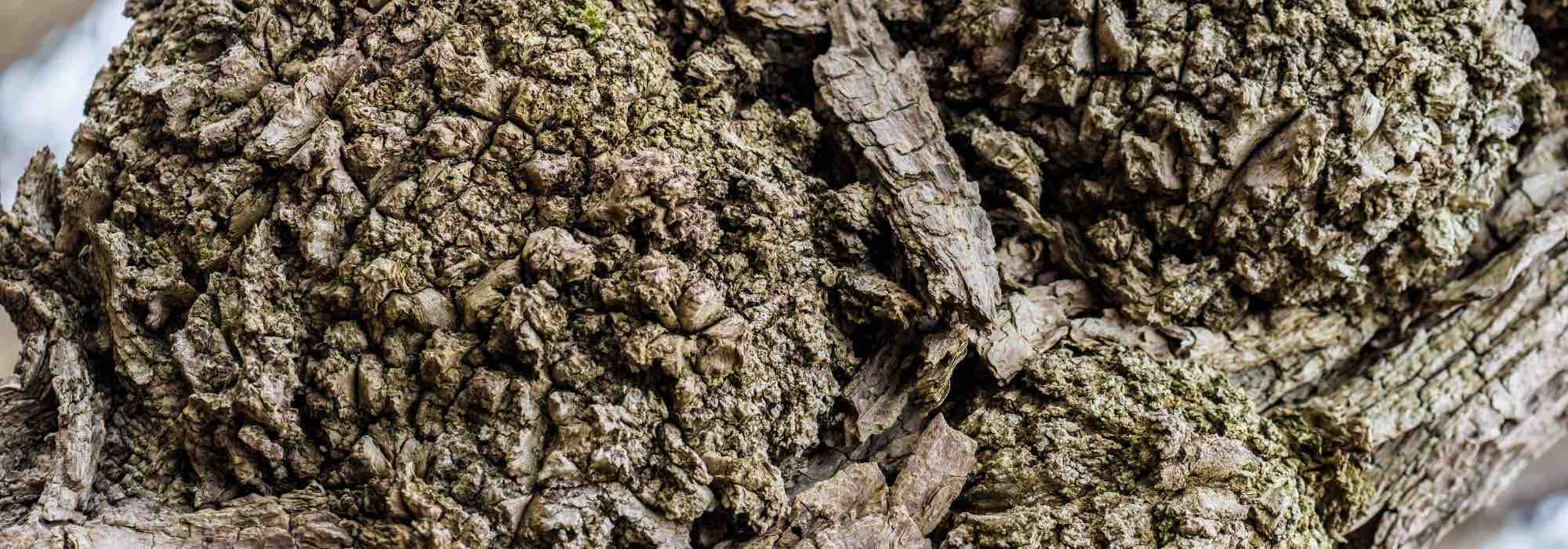
These galls are initially round and light-coloured, rather rough and hard, with a woody appearance, sometimes spongy. Over time, after several months, they dry out and take on a more irregular shape. Their texture becomes crumbly, they crack or hollow out and may then detach easily. Their size varies: the smallest tumours measure only a few millimetres while the largest can reach several tens of centimetres.
These galls are often visible on the main stem of the plant, at soil level (the junction between the stem and the root system). They can also be found on the branches, where they may form rows of several nodules.
These tumours will develop at the expense of the plant and weaken it. They cause:
- a delay in growth and a decrease in vigour, impacting the circulation of sap and nutrients;
- a reduction in the production of flowers and fruits;
- an increased risk of developing other diseases or suffering from parasitic attacks.
While mature and well-established plants can survive and tolerate this disease, younger affected plants may perish.
It is important to note that collar gall should not be confused with plant galls, which is a natural reaction following a parasite’s sting, generally harmless. To learn more about this topic, we invite you to consult the dedicated article: “Plant Galls: What Are They?”.
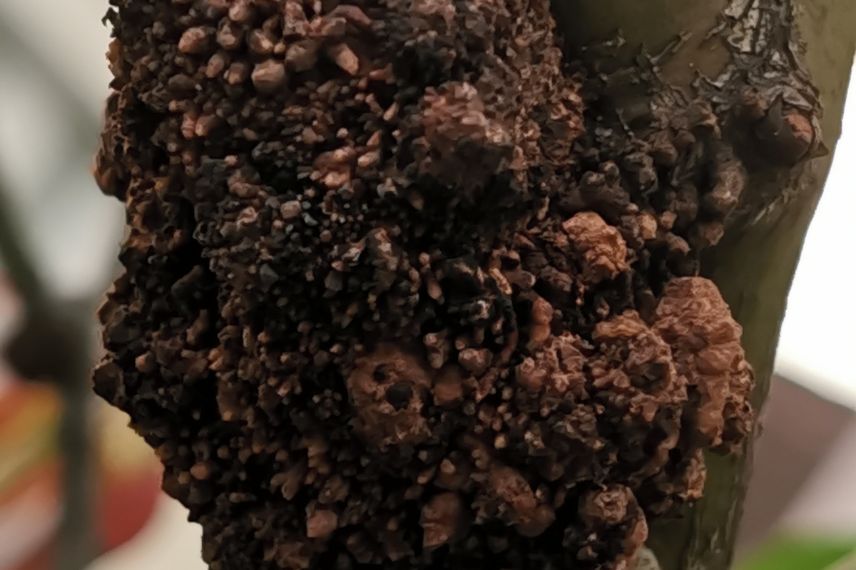
Collar gall tumour on a rose
What treatment is available for collar rot?
Unfortunately, there is no curative treatment for collar rot, whether natural or chemical. Plants remain contaminated for their entire life by the bacterium Agrobacterium tumefaciens.
If you spot the first tumours on a young plant, dig it up quickly. Dispose of it completely (for example, at a waste disposal site). Never place a plant affected by collar rot in the compost.
Mature trees or bushes can be left in place without any further action. Their health status poses less risk than that of young plants.
While there is no treatment, some preventive measures can easily be implemented. They will help limit the risks of this disease developing.
- Before any repotting or transplanting, inspect your plants to ensure there are no symptoms (nodules), particularly on the collar or roots.
- Systematically disinfect your cutting or pruning tools before and after use.
- During your gardening tasks, be careful not to accidentally injure your plants, especially at the collar, trunk, or roots.
- Use a healing paste to protect the wounds of sensitive plants.
- Do not plant sensitive plants near those already infected with collar rot.
- Do not plant sensitive plants in an area previously contaminated.
- If you live in a region regularly subjected to frost, choose well-resistant plant varieties that will be less prone to injury.
- Subscribe!
- Contents
Comments