





























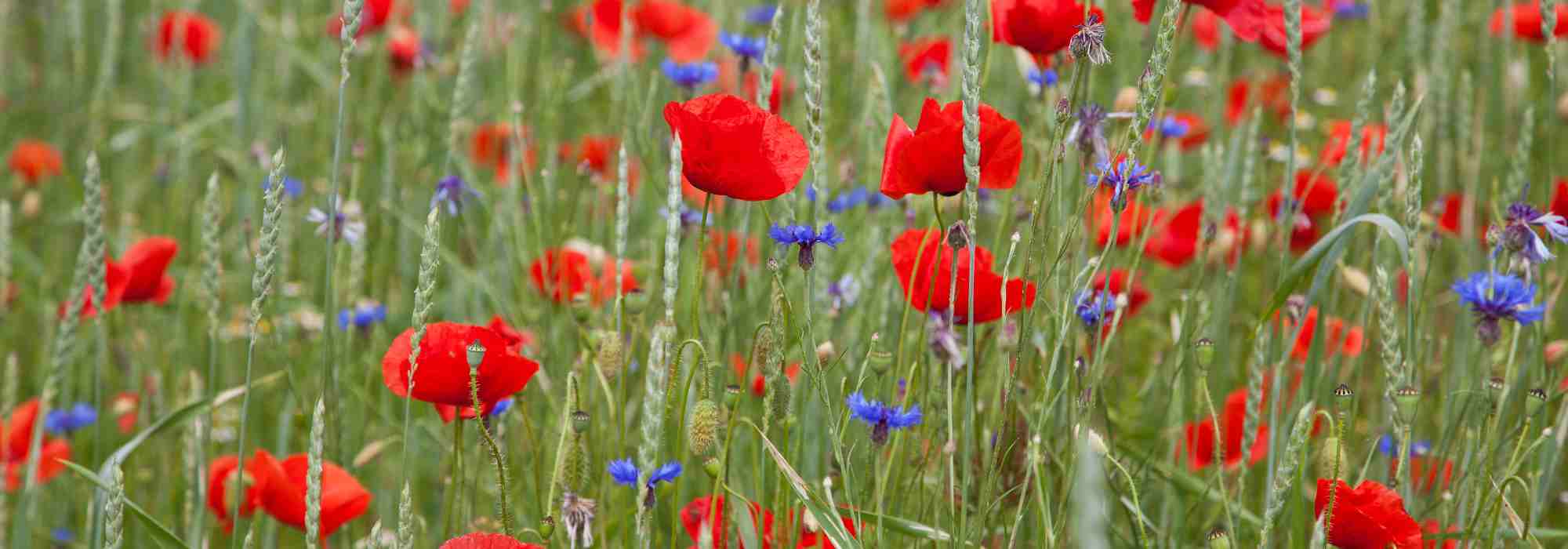
All you need to know about messicolous plants and harvest flowers
Discovering messicolous plants, treasures of the fields
Contents
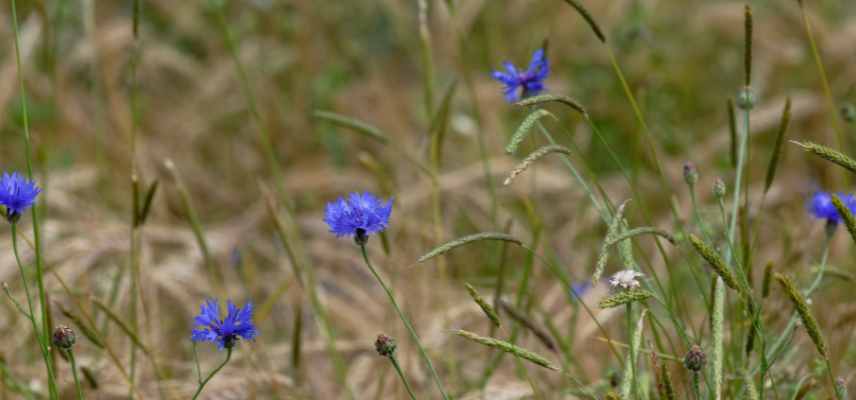

What are messicolous plants?
The term “messicolous” derives from the Latin “messis” meaning harvest, and “colere“, which means to inhabit, defining them as plants living within or near crops.
They are distinguished by their ability to coexist harmoniously with annual crops, in environments shaped by human agricultural activities. These species, which include flowers, herbs, and even wild cereals, have evolved to thrive in specific conditions, often linked to cropping cycles and traditional agricultural practices.
Definition and main characteristics
Messicolous plants, or harvest companions, are mainly characterised by their annual life cycle. They germinate, grow, flower, then reseed over a period that matches that of the crops with which they cohabit. This perfect synchronisation with agricultural cycles not only ensures their survival but also their spectacular flowering, often in late spring or early summer, just before the harvest. Their presence is an indicator of the health of agricultural ecosystems and of farming that respects the environment, as they require soils low in nutrients and minimal use of pesticides.
Difference between messicolous plants and other types of wild plants
The main distinction between messicolous plants and other wild plants lies in their specific living environment: the former are intimately linked to agricultural land, whereas the latter can thrive in a variety of natural or semi-natural habitats, such as forests, meadows, wetlands, or urban environments. Wild plants encompass a much broader diversity of species and ecological adaptations, including perennials, annuals, biennials, and even bushes or trees.
Another notable difference lies in their adaptation to an anthropised environment: while many wild plants must adapt to human presence or changes to their habitat, messicolous plants have co-evolved with agricultural practices. Their existence depends on traditional farming, using gentle and environmentally friendly cultivation methods, such as late mowing, crop rotation, and the absence of intensive chemical treatments.
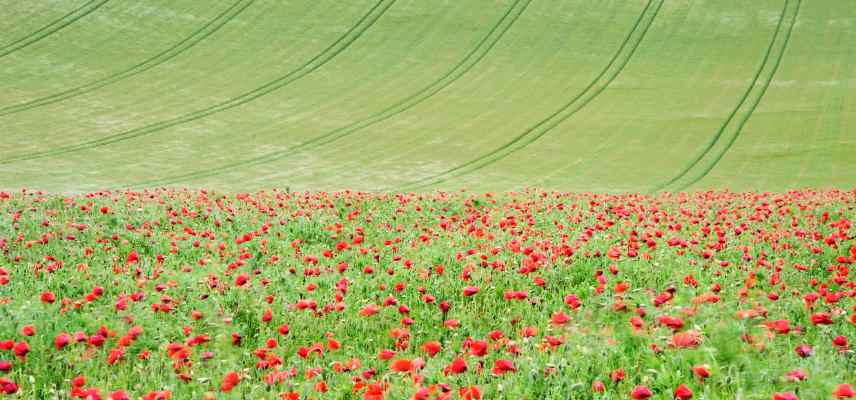
Messicolous plants grow in cultivated fields.
Read also
10 good reasons to let weeds growHistory and Evolution of Messicolous Plants
As you will have gathered, the history of messicoles plants is intimately linked to the evolution of human agricultural practices over millennia. these plants, which have found in cultivated fields a favourable habitat, co-evolved with agrarian societies, adapting to changes in cultivation methods and to crop cycles. Their presence in agricultural landscapes is therefore as old as agriculture itself, reflecting a symbiotic relationship between humans and their environment.
Historical origins of these plants in agricultural landscapes
Messicoles plants began to proliferate with the development of Neolithic agriculture, around 10,000 years ago. At that time, the first farmers began clearing wild lands to sow their seeds (cereals, vegetables…), thereby creating open and disturbed habitats, ideal for many pioneer species. Among these, messicoles plants have learned to take advantage of newly exposed soils and cultivation practices, inserting themselves into the life cycle of domesticated crops. Their integration into cultivated fields was facilitated by diverse, yet relatively gentle farming practices, allowing a balance between food production and biodiversity conservation.
Impact of agricultural practices on their presence and diversity
Over the centuries, the evolution of agricultural techniques has profoundly influenced the diversity and distribution of messicoles. For a long time, traditional agriculture maintained a varied, semi-natural landscape in which these plants could thrive. Crop rotation, moderate grazing and manual mowing contributed to maintaining a habitat conducive to their development, without compromising agricultural yields.
However, the intensification of agriculture during the twentieth century, characterised by increased mechanisation, the widespread use of chemical fertilisers and pesticides, and crop specialisation, has led to a significant decline in messicoles populations. These practices have altered agricultural ecosystems, favouring fast-growing species at the expense of messicoles, which require more balanced and less disturbed conditions to develop. The simplification of agricultural landscapes and the disappearance of hedgerows and grassy strips have also reduced the available habitats for these species.
The most emblematic messicolous species.
Several messicolous species are emblematic of European agricultural landscapes and play a crucial role in the biodiversity of cultivated fields:
- The poppy (Papaver rhoeas): recognisable by its scarlet flower and slender stem, the poppy is perhaps the most emblematic messicolous flower. It flowers in summer, providing a striking visual display in cereal fields.
- The corn cockle (Agrostemma githago): Once common in cereal fields, this plant with purple flowers is now much rarer, a victim of seed selection and weedkillers.
- The wild chamomile (Matricaria chamomilla): This plant with small white and yellow flowers is known for its medicinal properties. It grows in cereal fields, but also along road verges and in fallow lands.
- The cornflower or Bluebottle (Cyanus segetum): With its intensely blue flowers, the cornflower is another classic image of wheat fields. It is not only a food source for pollinators but also a symbol of agricultural biodiversity.
- The field bugloss (Buglossoides arvensis): This is an annual messicolous plant with small white flowers and velvety leaves, preferring calcareous soils and often appearing in cereal fields and fallow lands.
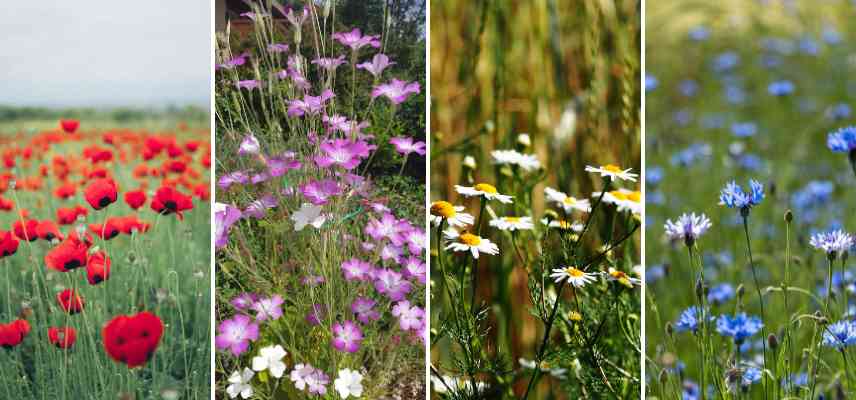
The poppy, corn cockle, wild chamomile and cornflower are among the most recognisable plants.
Read also
Sowing a flower meadow: why, howEcological roles of messicolous plants.
Messicolous plants, these harvest companions, enrich biodiversity by offering habitats and resources to a multitude of living species. By flowering, they provide pollen and nectar to diverse pollinators, such as bees, butterflies and other insects, essential for the pollination of many crops and wild plants. Their presence also helps support populations of birds and small mammals, which find food and shelter in these habitats.
Beyond their nourishing role, messicolous plants contribute to soil structure and health. Through their life cycles, they help to maintain soil fertility by contributing to soil aeration and by promoting a healthy soil structure. Their roots help prevent soil erosion, by stabilising it and enabling better water infiltration, thus reducing runoff and nutrient loss. In short, we can regard messicolous plants as crop auxiliaries.
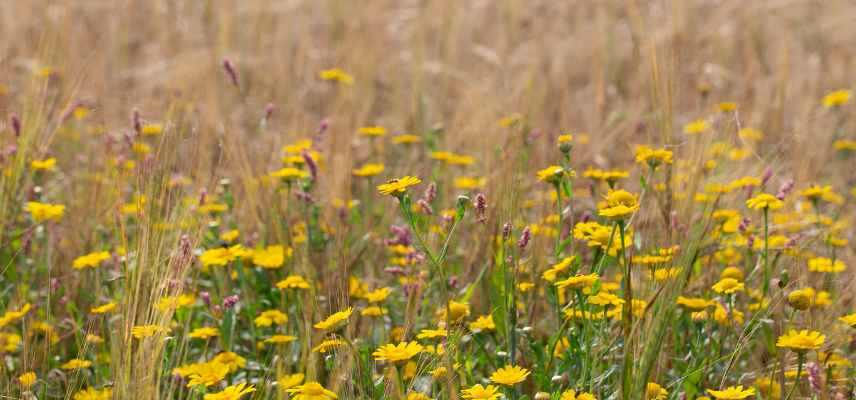
The harvest chrysanthemum (Chrysanthemum segetum).
Messicolous plants are in danger.
These threats, mainly due to human activities, have led to an alarming decline in these species, underscoring the urgency of their conservation for the maintenance of biodiversity and the health of ecosystems. Here are the main factors behind their decline:
- Agricultural intensification: One of the principal threats to messicolous plants is the intensification of farming practices. The increased use of chemical fertilisers and pesticides, heavy mechanisation, intensive irrigation, and the use of large-scale monocultures have profoundly altered the natural habitats of these plants. These practices have not only reduced species diversity in fields but have also degraded soil quality and landscapes, rendering agricultural environments inhospitable for messicolous plants.
- Urbanisation: Urban expansion and infrastructure development have also contributed to habitat loss for messicolous plants. The conversion of agricultural land into residential, commercial, or industrial areas significantly reduces the available spaces for these species, fragmenting and isolating populations, which limits their ability to disperse and reproduce.
- Changes in cultivation practices : The replacement of traditional farming methods with more intrusive ones has also had a negative impact on these plants. Deep tillage, removal of hedges and field margins, as well as early and intensive mowing, destroy the natural habitats of messicolous plants and disrupt their life cycle.
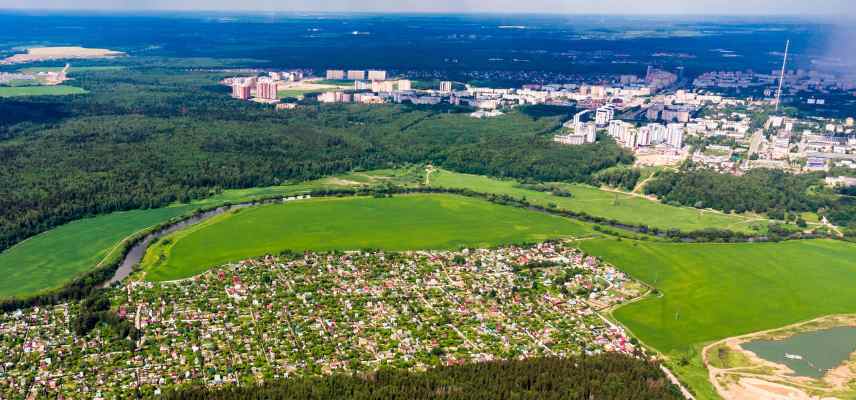
Urbanisation is partly responsible for the disappearance of messicolous flora.
How to support messicolous plants?
In agriculture
- Adoption of agroecology: Agroecology offers practices that mimic natural processes, thereby enhancing biodiversity, including that of messicolous plants. Crop rotation, agroforestry, and maintaining cover crops are examples of practices that help create a propitious environment for these plants, while improving soil fertility and crop resilience.
- Reduction in pesticide use: The use of integrated pest management methods, which favour natural predators and physical barriers over chemical products, helps preserve the habitats of messicolous plants and maintain ecological balance.
- Creation of reserves and buffer zones: Setting up nature reserves or buffer zones around cultivated fields, such as flowering fallows or herb strips, provides refuges for messicolous plants and the animal species that depend on them.
- Participation in conservation programmes: Many conservation programmes and projects work to preserve messicolous plants. Farmers can participate in these programmes, often benefiting from technical and financial support to adopt more environmentally friendly practices.
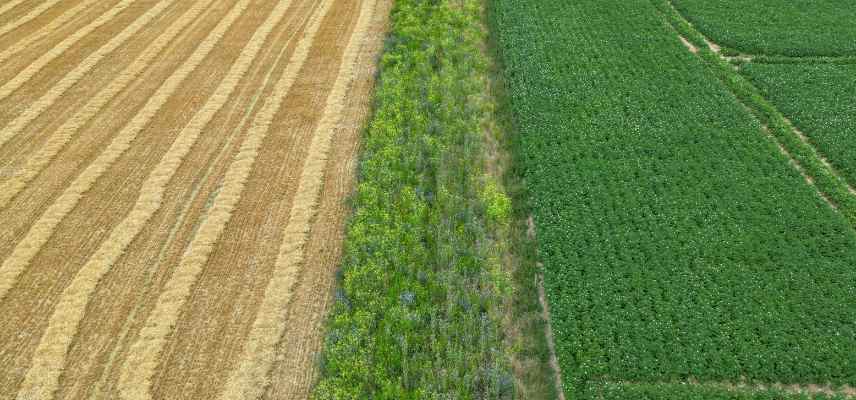
Buffer zones promote the return of messicolous flora.
And in our gardens?
- Raising awareness and education: Informing the public about the importance of messicolous plants and the threats they face is essential to mobilise support for their conservation. Participating in workshops, lectures, and field visits can help disseminate knowledge and encourage positive actions.
- Support for farmers practising sustainable agriculture: Choosing products from sustainable, organic, or biodiversity-friendly farming supports practices that promote the conservation of messicolous plants. This support can translate into direct purchases from these farmers or participation in local veg box schemes.
- Volunteer involvement: Participating in habitat restoration projects or citizen science programmes that monitor biodiversity can have a direct impact on the conservation of messicolous plants. Such initiatives also offer opportunities to learn new skills and contribute to scientific research.
- Responsible gardening practices: For those with a garden, creating wild areas, ceasing the use of pesticides, and planting native species support biodiversity, including that of messicolous plants.
What if we sow messicolous plants?
It is quite possible to sow messicolous flowers to enrich biodiversity and beautify agricultural or garden spaces. To do this, choose a mix of messicolous flower seeds suited to your region and prepare the soil by removing weeds and lightly cultivating it. Sow the seeds broadcast in spring or autumn, taking care not to bury them too deeply, then firm the soil and water gently. With minimal maintenance, these flowers will reseed year after year (although some may disappear gradually, which is perfectly natural), contributing to the beauty and ecological balance of your environment.
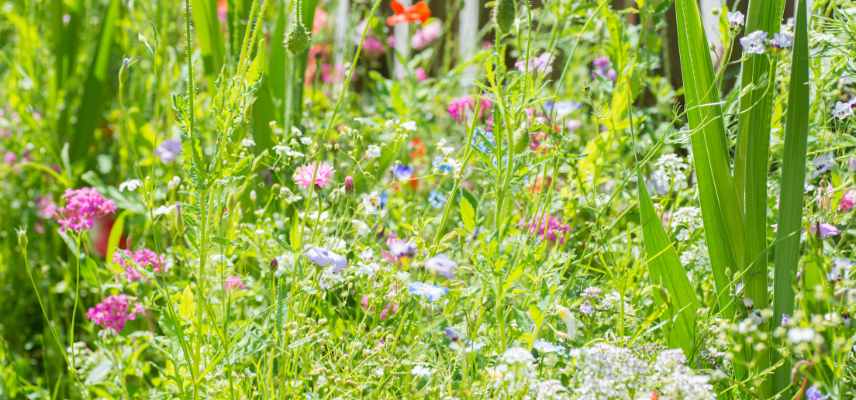
Keep a wilder area of the garden, where you might perhaps sow a few messicolous plants.
Further reading...
→ If you would like to take action or learn more about messicolous plants, here is the link to the site www.plantesmessicoles.fr which is full of information on the topic.
→ There is a citizen observatory that allows the recording of the species of messicolous plants across French territory: www.tela-botanica.org/projets/observatoire-des-messicoles
→ Here is the link to an identification guide for messicolous plants.
- Subscribe!
- Contents

Comments