





























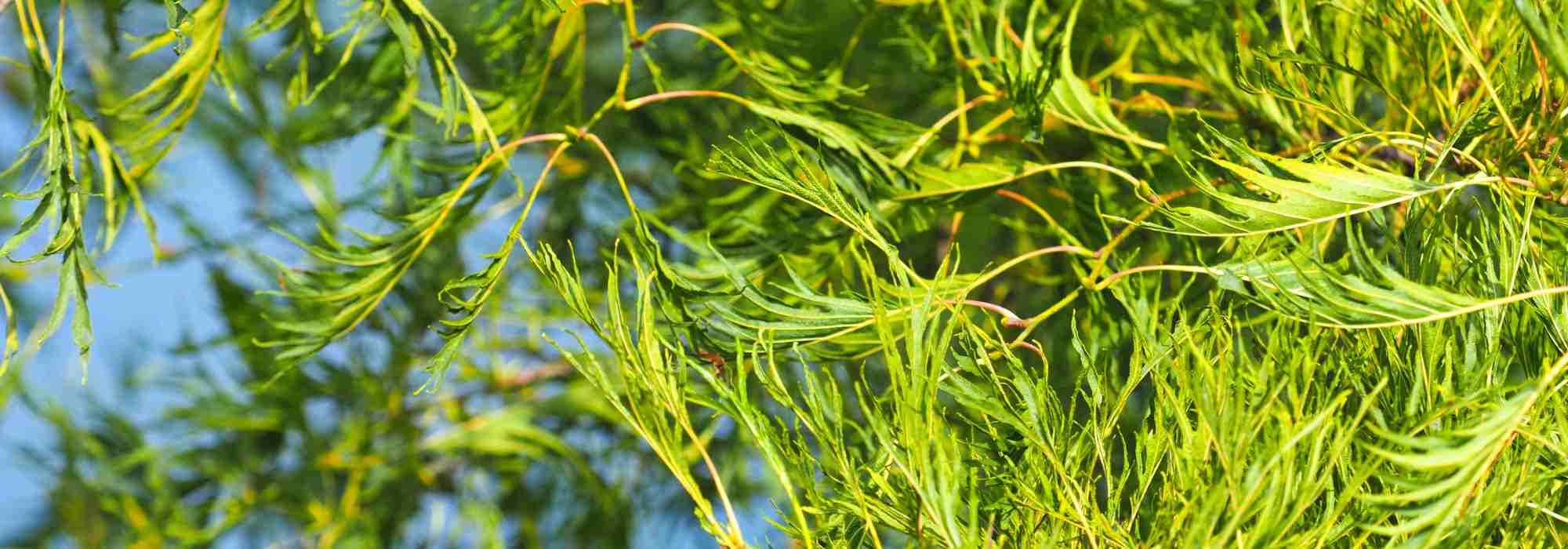
Alnus glutinosa ‘Imperialis’: a small tree with an elegant habit
An ornamental tree with finely cut foliage, ideal for small gardens with moist soil
Contents
The Alnus glutinosa ‘Imperialis’, also known as the glutinous alder ‘Imperialis’ or black alder ‘Imperialis’, is a small tree with an elegant pyramidal habit and finely dissected foliage, which adds a refined touch to any garden. Appreciated for its rapid growth, cold tolerance and tolerance of damp soils, it adapts equally well as a specimen tree, near water features or planted in a row along a driveway. Easy to grow, this alder appeals as much for its decorative appearance as for its ecological role, attracting pollinators and promoting biodiversity. Discover in our care guide how to plant, maintain and use this magnificent small tree to enhance your garden.
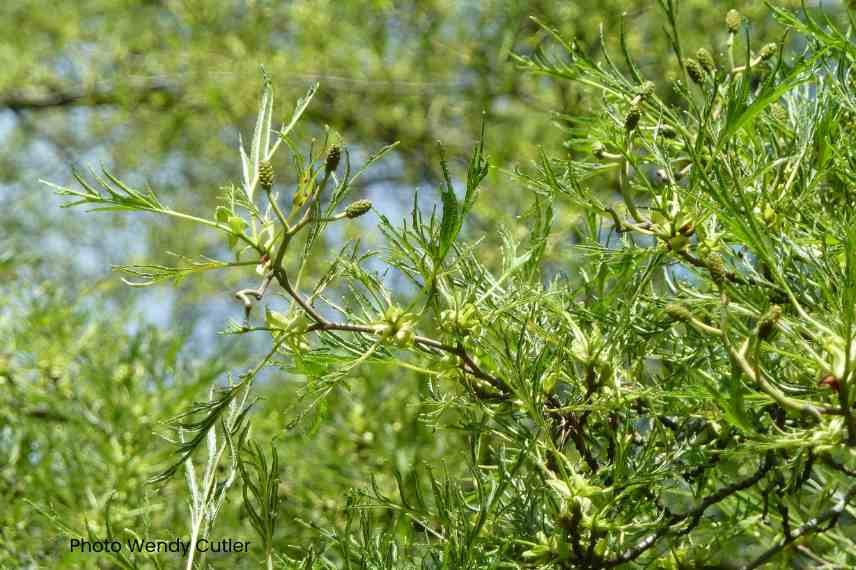
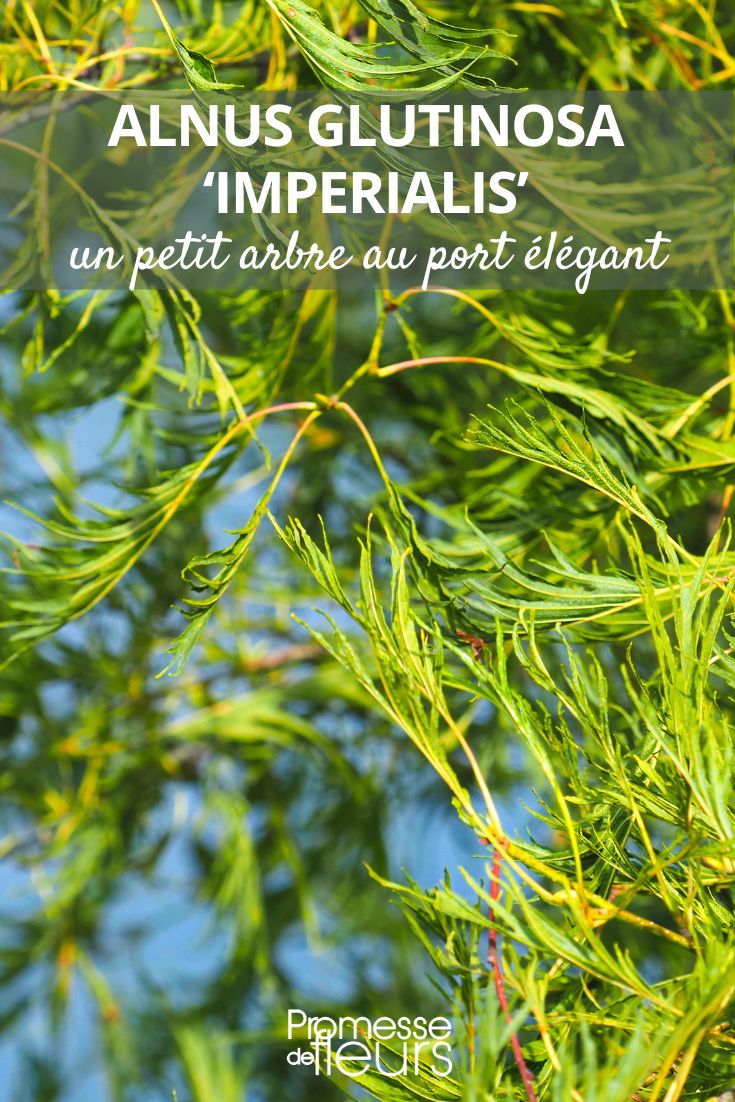
Very finely dissected foliage, remarkable (©Wendy Cutler, Flickr)

Alnus glutinosa 'Imperialis': natural elegance
Size and growth: a tree of harmonious proportions
The Alnus glutinosa ‘Imperialis’ is a small- to medium-sized tree, reaching a height of 8 to 10 metres, with a width of between 4 and 6 metres. Its growth is rapid, which makes it an ideal option for those who want to quickly enjoy an impactful visual effect in their garden. Despite its rapid growth, it retains a light and graceful habit, without becoming invasive.
Habit and silhouette: a natural and elegant pyramid
Its natural habit is pyramidal, forming a slender and structured silhouette that adds verticality to the landscape. Fine, slightly pendulous branches add a touch of softness and movement, creating an impression of lightness, even in a mature tree. This blend of rigour and fluidity makes it well suited to formal gardens as well as to more natural spaces.
Foliage: a graphic jewel through the seasons
Leaves, deeply cut, display a delicate texture that almost resembles ferns.
- In spring and summer, they display a bright, fresh green, which catches the light and brings vitality to the garden.
- In autumn, they take on a more golden hue before falling, contributing to the changing beauty of the seasons.
This fine, light foliage also allows light to filter through, creating subtle shadow patterns on the ground.
Flowers and fruits: a discreet bonus
Even though the Glutinous Alder ‘Imperialis’ is primarily appreciated for its foliage and habit, its flowers and fruits are not lacking in charm, as with the species, Alnus glutinosa :
- The flowers, in the form of pendant catkins, appear from February–March, before the full emergence of the leaves. Although discreet, they offer an early display heralding spring and attract pollinators.
- In autumn, the tree produces small conical fruits, the strobili, resembling mini pine cones. These persistent fruits are very decorative in winter, even after the leaves have fallen, and provide food for many birds.
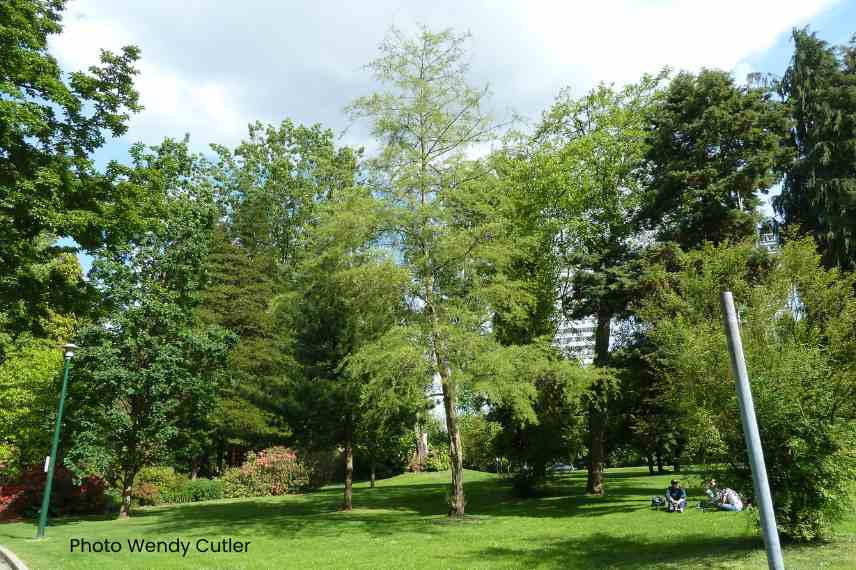
The elegance of the Alnus glutinosa ‘Imperialis’ in a Vancouver park (©Wendy Cutler-Flickr)
A small tree with many benefits
A refined aesthetic to elevate your garden
Its elegant appearance suits both traditional gardens and modern spaces where clean, minimalist forms are sought.
- When planted as a specimen, it draws attention with its slender, graceful silhouette.
- When planted in a row, it structures the landscape while offering a calming atmosphere thanks to its slightly trailing branches. Its architectural foliage adds a sophisticated touch, and its decorative conical fruits provide added value, even in winter.
Exceptional tolerance to damp soils
Few trees rival the Alnus glutinosa ‘Imperialis’ when it comes to thriving in damp conditions or on challenging sites.
- It is particularly well suited to heavy, clayey or poorly drained soils, where other species struggle to establish themselves.
- It’s a perfect choice for flood-prone gardens, riverbanks or ponds, where it blends naturally into the landscape while stabilising soils thanks to its root system.
A boost to local biodiversity
- Its pendulous catkins, appearing from the end of winter, provide a food source for the season’s early pollinators, such as bees.
- Its conical fruits serve as food for several bird species, including the Tarin des aulnes, notably in winter when natural resources are scarce.
- And, of course, its foliage enriches the soil as it decomposes.
Remarkable resistance to diseases and frost
Alnus glutinosa ‘Imperialis’ is a hardy tree, capable of withstanding temperatures down to -20 °C, making it suitable for a broad range of temperate climates.
- It is not overly susceptible to common diseases and shows a high tolerance to pests.
- Its robustness makes it a low-maintenance selection, ideal for gardeners seeking a durable, trouble-free planting.
Its resilience in challenging conditions makes it a prime candidate for damp areas, urban gardens or spaces exposed to climate variations.
Growing conditions and care
The Alnus glutinosa ‘Imperialis’ prefers full sun for optimal growth, but tolerates partial shade. Adapted to moist soils, including clay soils, it nevertheless appreciates a light drainage to avoid excess standing water. Very hardy, it withstands the harsh winters of temperate climates, tolerating temperatures down to -20 °C.
Planting is ideal in autumn or early spring, when the soil is not frozen. A generous hole should be dug to accommodate the root ball, with a possible organic amendment to enrich the soil. The collar of the tree should remain at soil level, and a thorough watering is necessary after planting to ensure a good establishment.
Once established, maintenance of this tree is minimal: a light pruning can be carried out to remove dead wood or balance the silhouette, and regular watering is recommended in the first year. A mulch at the base helps retain moisture and limit weed growth, ensuring favourable conditions for its growth.
→ For more on alder cultivation, read Alder: planting, growing and care.
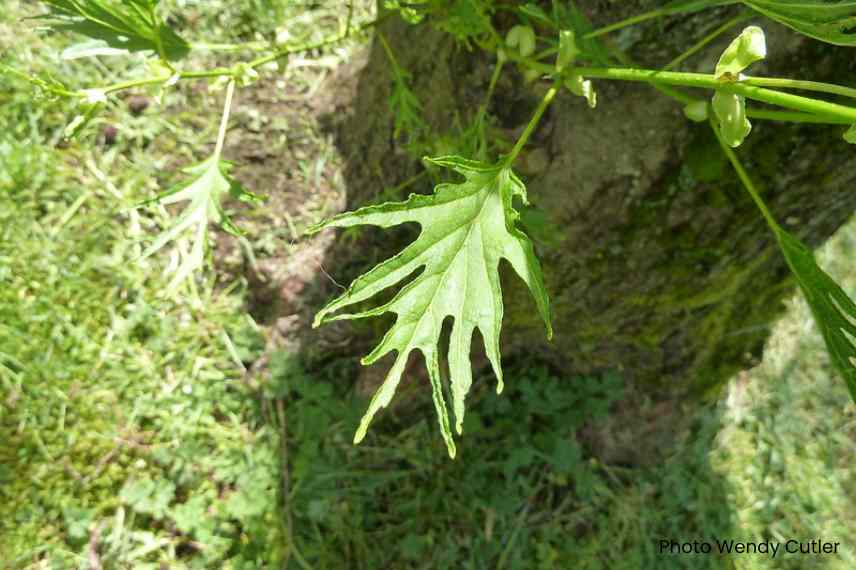
Foliage (©Wendy Cutler)
Read also
Alder diseases and parasitic pestsHow to use Imperial Alder in the garden?
Alnus glutinosa ‘Imperialis’ fits perfectly into a variety of landscape designs. As a standalone specimen, it naturally draws the eye and becomes a structuring focal point in the garden.
Planted in a row, it helps to create rhythm in a space or to border a path with harmony. In addition, its strong tolerance of wet soils makes it an ideal choice for the banks of ponds, rivers or marshes, where it blends in easily while stabilising the soil.
Finally, it also pairs very well with perennials suited to moist soils, such as marsh irises or Astilbes, as well as decorative shrubs such as the dogwoods with coloured bark, which extend the garden’s aesthetic appeal throughout the year.
- Subscribe!
- Contents
Comments