





























Araucaria: discover this conifer and its edible seeds
Monkey puzzle tree: a tree with many uses
Contents

Araucaria: a fascinating tree
The Araucaria is a genus of evergreen coniferous trees belonging to the family Araucariaceae. These trees are notable for their imposing growth habit and evergreen foliage. The size of Araucarias varies greatly among species, with some specimens reaching up to 60 metres in height. Their shape is also characteristic, often pyramidal or columnar, with a straight and sturdy trunk. The foliage of these trees is dense and made up of thick needles, sometimes arranged in scale-like leaves, depending on the species.
The origin of Araucarias dates back to the Mesozoic era, a period during which they were widespread across the globe. Today, they are found naturally in South America, notably Chile and Argentina, where the Araucaria araucana, the Chilean pine or Monkey Puzzle Tree, is, in fact, a national symbol. Other species are also found in Australia, New Caledonia and New Guinea.
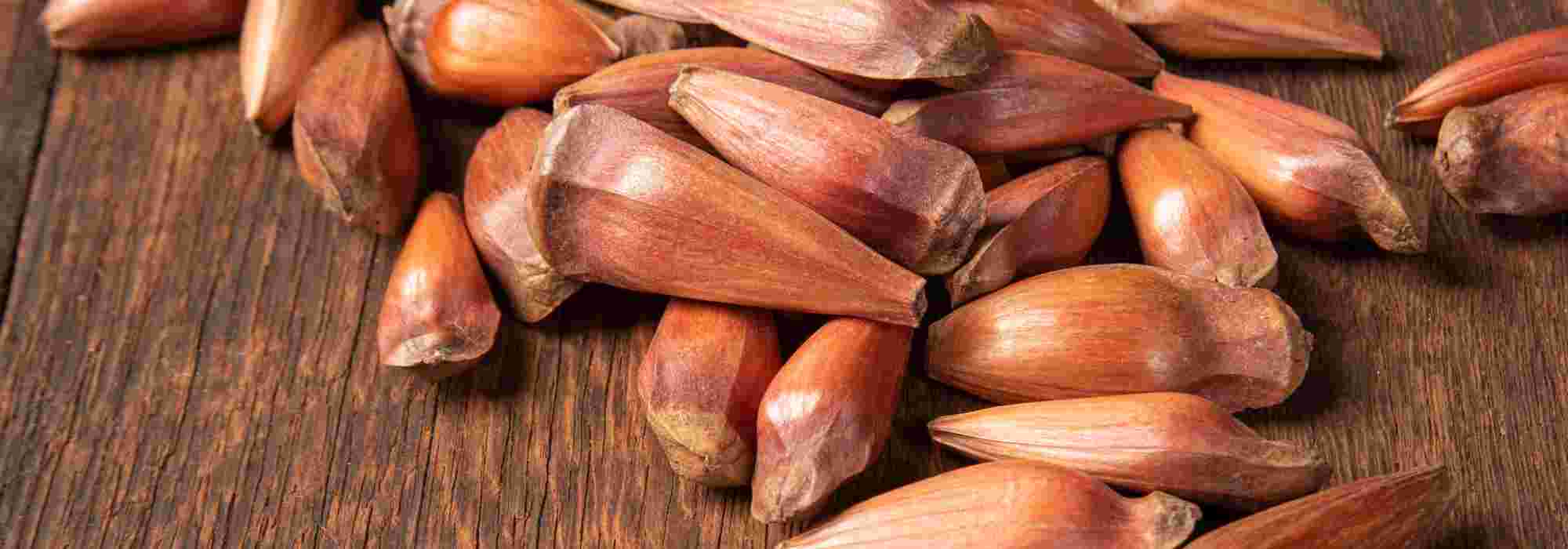
Among Araucaria species, some are edible and have economic and cultural importance for local communities. Araucaria araucana, also known as the Chilean pine, produces seeds called pine nuts which are not only edible but also nutritious. These seeds are traditionally consumed by the indigenous peoples of Chile and Argentina, and their harvest is passed down from generation to generation. They can be eaten raw, cooked or used in a variety of culinary preparations.
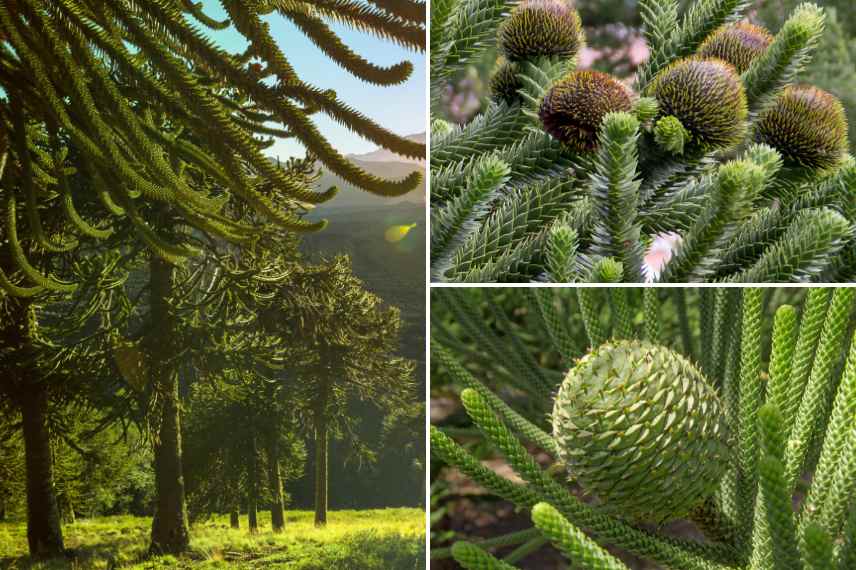
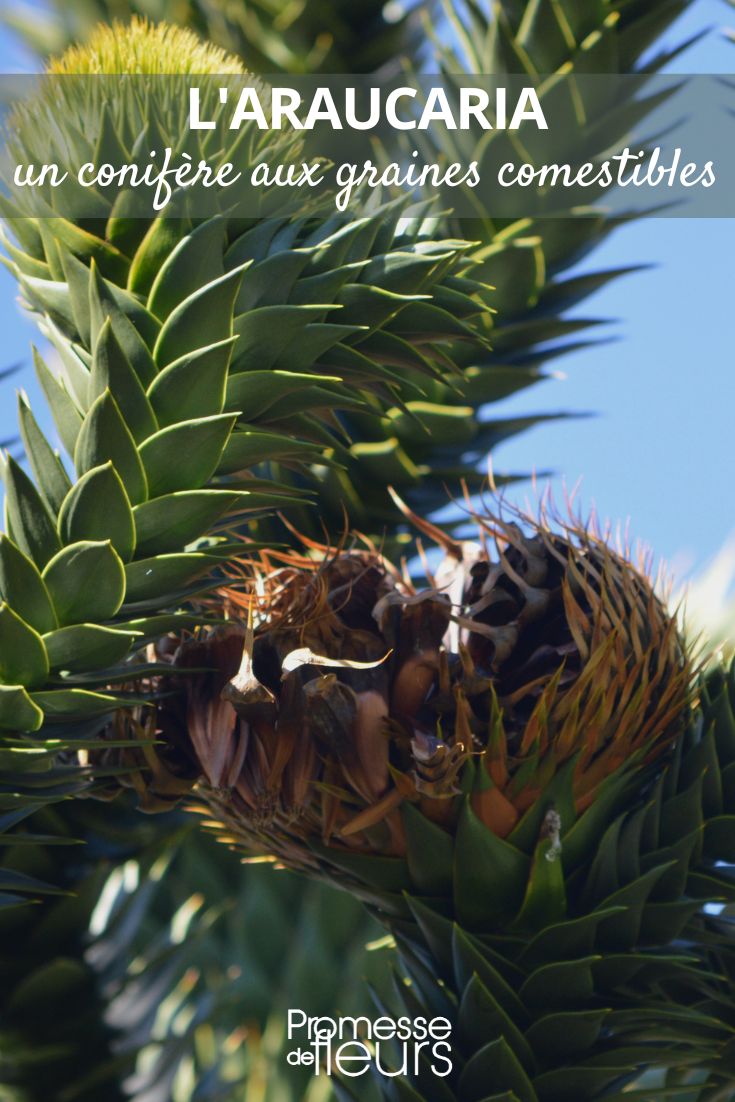
To the left and in the upper right, Araucaria araucana and its large cones. On the bottom right, foliage and fruits of Araucaria heterophylla.
Are all Araucaria seeds edible?
No, it depends on the species: beware of confusion!
Only a few Araucaria species produce seeds large enough and non-toxic for human consumption. Among the best known are: Among the best known are:
- Araucaria araucana (Chilean Araucaria) : It is the best known species for its edible seeds, marketed and valued for their rich and slightly resinous flavour.
- Araucaria bidwillii (Bunya Pine) : Native to Australia, this tree produces large edible seeds, but their flavour is a little more bitter than those of the Chilean Araucaria.
- Araucaria cunninghamii (Hoop Pine) : The seeds of this tree are also edible, but they are smaller and less tasty than those of the two previously mentioned species.
Warning! It is important to note that the seeds of some Araucarias may be toxic and should not be eaten. This is notably the case for Araucaria columnaris (New Caledonia Araucaria or Cook Pine) and for Araucaria heterophylla (Norfolk Island Pine).
In short, it is essential to correctly identify the Araucaria species before consuming its seeds. If you are not sure, it is best not to eat them. And do remember to apply this thinking routinely!
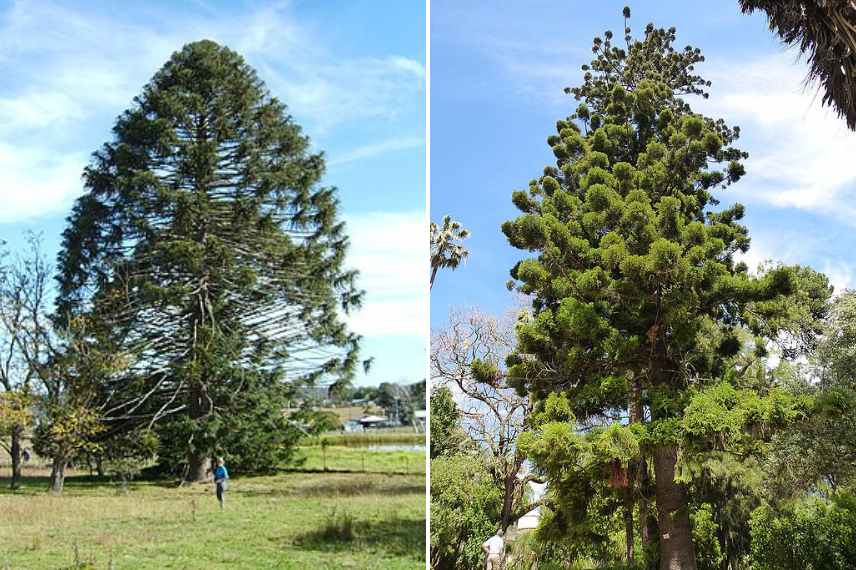
Araucaria bidwilii, on the left (© Wikimedia Commons, John Tann) and Araucaria cunnighamii at the Lisbon Botanical Garden, on the right (© Wikimedia Commons, Salix) : two other species besides the Araucaria araucana, from which the seeds can be eaten
Araucaria fruits
Araucaria fruits are actually modified cones, which, depending on the species, can be either male or female. Female cones are those that, once ripe, release edible seeds in some species, pine nuts. These Araucaria pine nuts, similar to pine nuts, are, however, somewhat larger, up to 6 cm in length.
The shape of Araucaria cones is generally spherical or ovoid, with a sturdy structure. Their size varies significantly across species, ranging from a few centimetres to more than 30 cm. The colour of mature cones tends towards brown, varying from light to dark, but some may display greener hues while still developing.
The nutritional display of Araucaria seeds is remarkable, making them valuable for human and animal consumption. Rich in fatty acids, notably omega-3 and omega-6 fatty acids, these seeds provide an excellent source of healthy lipids. They are also rich in protein, fibre, and contain a range of vitamins such as vitamin E, a powerful antioxidant, as well as essential minerals such as potassium, magnesium and zinc. This display makes it a food that is both energising and nutritious.
The taste of Araucaria seeds is often described as delicate and mildly sweet, reminiscent of pine nuts. The texture is tender and slightly crunchy, making these seeds pleasant to eat whether raw or cooked. They can be incorporated into various dishes, such as salads, pastries, or even eaten on their own as a nutritious snack.
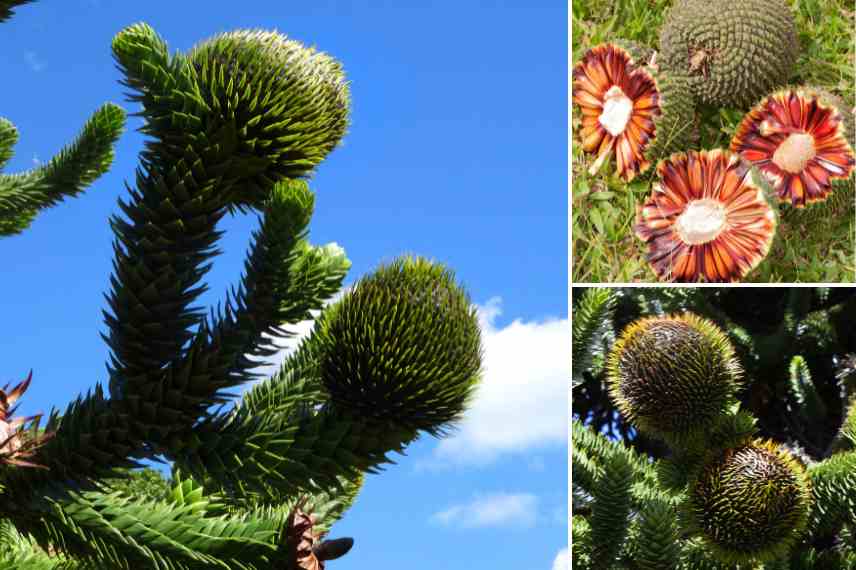
The female cones of the Araucaria araucana at different stages of ripeness
Read also
The travelling plants: the Wollemi pineSeed harvest
Typically, the cones of the Araucaria araucana mature and are ready to be harvested at the end of summer or early autumn. This period may vary slightly from climate to climate, so it’s essential to monitor cone development to choose the optimal harvest time, when the cones begin to open naturally and release their seeds.
For small- to medium-sized trees, it may be possible to harvest the cones by hand using ladders to reach those high up (watch out for falls!). In the case of large trees, the use of specialist tools, such as picking poles, may be necessary. For cones located at significant heights, a traditional method involves making them fall by gently shaking the branches or using long sticks (this technique must be used with care to avoid damaging the tree). It is essential to respect the tree and its surroundings by avoiding unnecessary damage during harvest. This includes not cutting branches to access the cones and limiting the use of tools that could injure the bark or branches.
To separate the seeds, open the cones gently using pruning shears or a knife. Remove the seeds, taking care not to damage them. Then remove the wings and debris from the seeds.
Oli’s tip : we can only recommend that you wear personal protective equipment, such as thick gloves and a helmet, to protect against cone falls and sharp branches. It is also important to check the stability of the ladder used and never undertake the harvest alone, to ensure assistance in case of an accident.
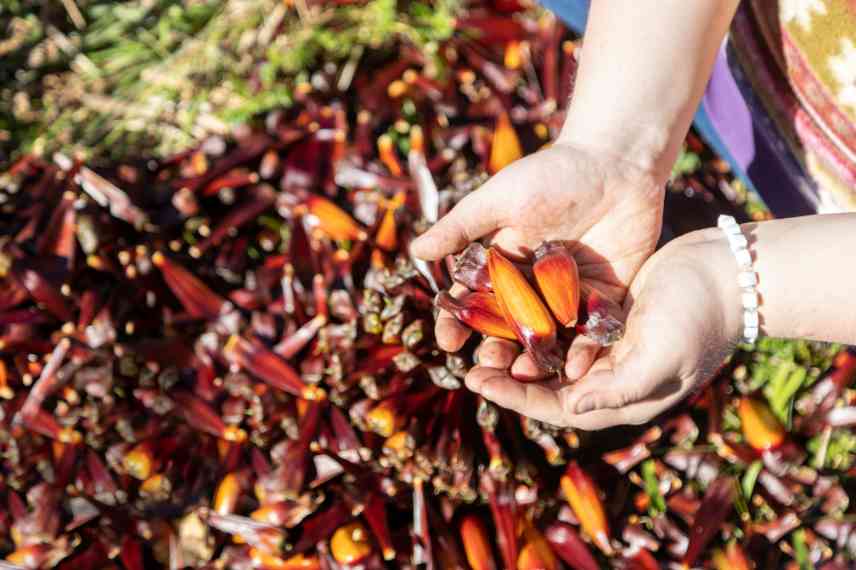
Dehulling pine nuts
The actual decortication
- First step: Soak the seeds in hot water for 24 to 48 hours. This will soften the shell and make decortication easier.
- Second step: Use a sharp, fine tool, such as a kitchen knife or tweezers, to gently remove the shell from the seeds. Start at the small end and progress slowly to avoid damaging the almond.
- Third step: Rinse the decorticated seeds in clean water to remove the shell residues.
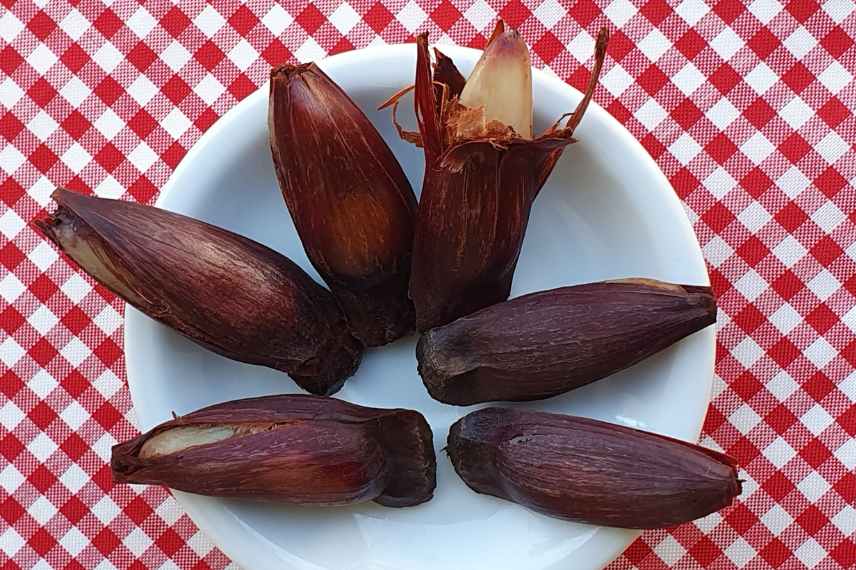
The pine nut is to be extracted from inside the seed
Some tips
- To facilitate the decortication, you can use nail scissors or a small knife with a fine blade.
- If the shell is particularly hard, you can crack it slightly with a hammer before removing it.
- Be patient and meticulous to avoid damaging the almonds.
Pine nut storage
Preservation of Araucaria seeds is essential to maintain their nutritional quality and flavour in the long term. Different methods can be used to extend their shelf life. The most common storage techniques for Araucaria seeds include drying and freezing.
Drying is a traditional process that reduces the water content of the seeds, limiting the growth of micro-organisms and prolonging their shelf life. Seeds can be dried naturally in the sun or with a low-temperature dehydrator. It is crucial to ensure the seeds are completely dry before storing them in airtight containers, away from light and moisture, to prevent mould.
Freezing is another effective method for preserving Araucaria seeds over a prolonged period. This technique preserves the texture, flavour and nutritional qualities of the seeds. Before freezing, it is recommended to lightly blanch the seeds in boiling water to inactivate enzymes that could alter their quality. After cooling, the seeds can be portioned and packed into freezer bags, squeezing out as much air as possible to prevent ice crystal formation.
Shelf life of Araucaria seeds varies depending on the storage method chosen. When properly dried and stored under optimal conditions, seeds can be kept for several months, or up to a year. By contrast, when frozen, their shelf life can extend to up to two years without a significant loss of quality, provided they are stored at a stable temperature and properly packaged.
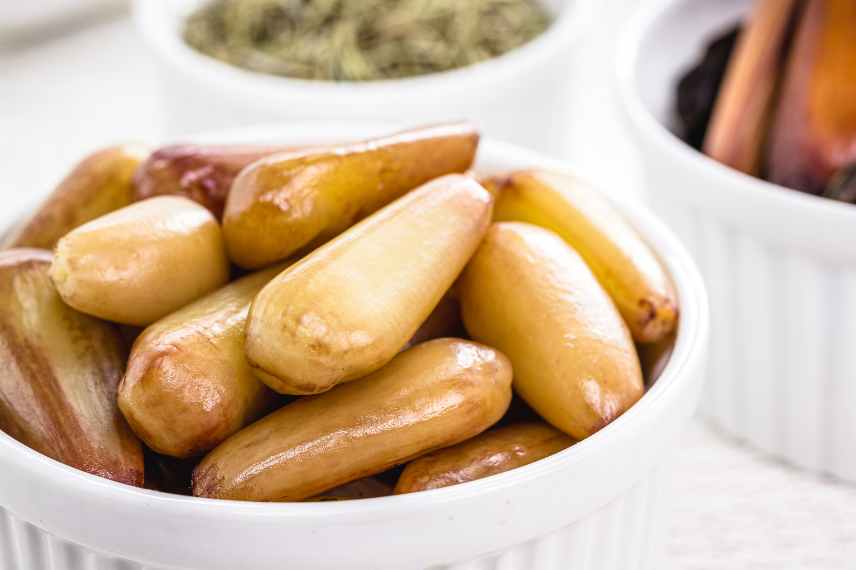
It is important to note that whichever conservation method is chosen, seeds should be inspected periodically for signs of deterioration, such as changes in odour, texture or mould. A good practice is also to label containers with the storage date to manage stock more effectively and to ensure seeds are used while in their best condition.
Uses of the fruit
As you will have gathered, Araucaria seeds or pine nuts offer culinary richness and benefits beyond mere consumption. Their use ranges from creative cooking to traditional medicine practices, demonstrating the versatility of these ‘ancient fruits’.
Culinary uses
Araucaria pine nuts can enrich a variety of dishes thanks to their unique texture and delicate flavour. They are used in a range of recipes, from salads to sauces, and desserts.
- Recipes: In salads, the pine nuts provide a crunch and sweetness, pairing well with green leaves, mild cheeses and light dressings. Incorporated into sauces, they can be ground to thicken and enrich pestos or creams. In desserts, toasted pine nuts add a savoury dimension to cakes, tarts, or ice creams.
- Preparation of pine nuts: Roasting is a popular method for intensifying their flavour. This is done by placing them in a dry pan over medium heat until they release a rich aroma and their colour becomes golden, remembering to stir frequently to prevent burning.
Other uses
Beyond cooking, Araucaria seeds have applications in oil production and traditional medicine.
- Araucaria oil: Oil extracted from Araucaria seeds offers a product with multiple uses, from cosmetics to food. This oil is valued for its moisturising properties and can be incorporated into formulations for skincare creams or hair-care products. In cooking, its distinctive flavour and health benefits make it a go-to oil for dressings and cold dishes.
- Traditional medicine: In Chilean culture, Araucaria seeds and other parts of the tree have been used for their medicinal properties. They have been employed in the treatment of various ailments, such as digestive disorders or to bolster the immune system, thanks to their richness in vitamins and minerals.
Araucaria in human culture
Symbolic importance of the tree
Araucaria is deeply rooted in the traditions and beliefs of many cultures, particularly those of indigenous peoples in regions where it is endemic. For example, for the Mapuche of Chile and Argentina, the Araucaria araucana (known locally as “Pehuén”) is regarded as a sacred tree, a symbol of life and fertility. This particular species plays a central role in their cosmogony and their subsistence, the edible seeds of the pehuén being an important dietary source.
Role in the local economy
Beyond its symbolic value, Araucaria also has a notable economic impact in the regions where it grows. Edible seeds, particularly those of the Araucaria araucana, contribute to the local economy by serving as a staple food and being marketed. Furthermore, in some regions, crafts related to the Araucaria, such as wood carving or the making of decorative objects from its branches and cones, generate additional income for local communities. And finally, tourism centred on discovering Araucaria forests represents another source of income, attracting visitors keen to admire these imposing trees and to learn about their ecological and cultural importance.
Threats and conservation of the species
Despite their importance, the araucarias are, sadly, facing several threats, mainly due to human activity and climate change. Deforestation for agriculture, logging and urbanisation lead to a reduction in their natural habitat, endangering their survival. Moreover, climate change affects the environmental conditions necessary for their growth, such as precipitation patterns and temperatures.
In response to these challenges, conservation efforts are being undertaken to protect the Araucaria. Measures include the creation of nature reserves, enforcement of laws prohibiting illegal felling, and reforestation programmes aimed at restoring Araucaria populations in their natural habitat. Awareness and education about the importance of these trees are also crucial to foster preservation and respect for the Araucaria and its ecosystem.
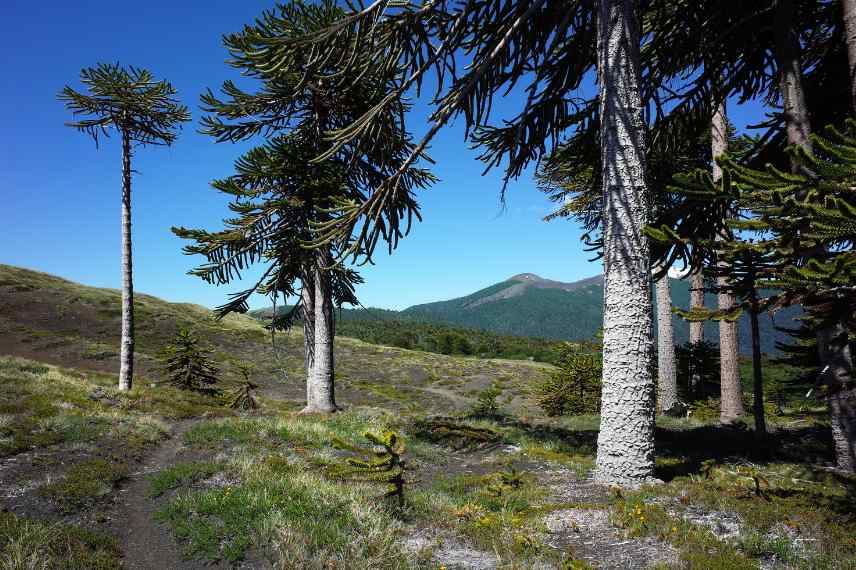
Araucarias araucana in Villarrica National Park, Chile
- Subscribe!
- Contents
Comments