





























Pairing the Katsura tree or Cercidiphyllum
Our inspirations for pairing it with the garden
Contents
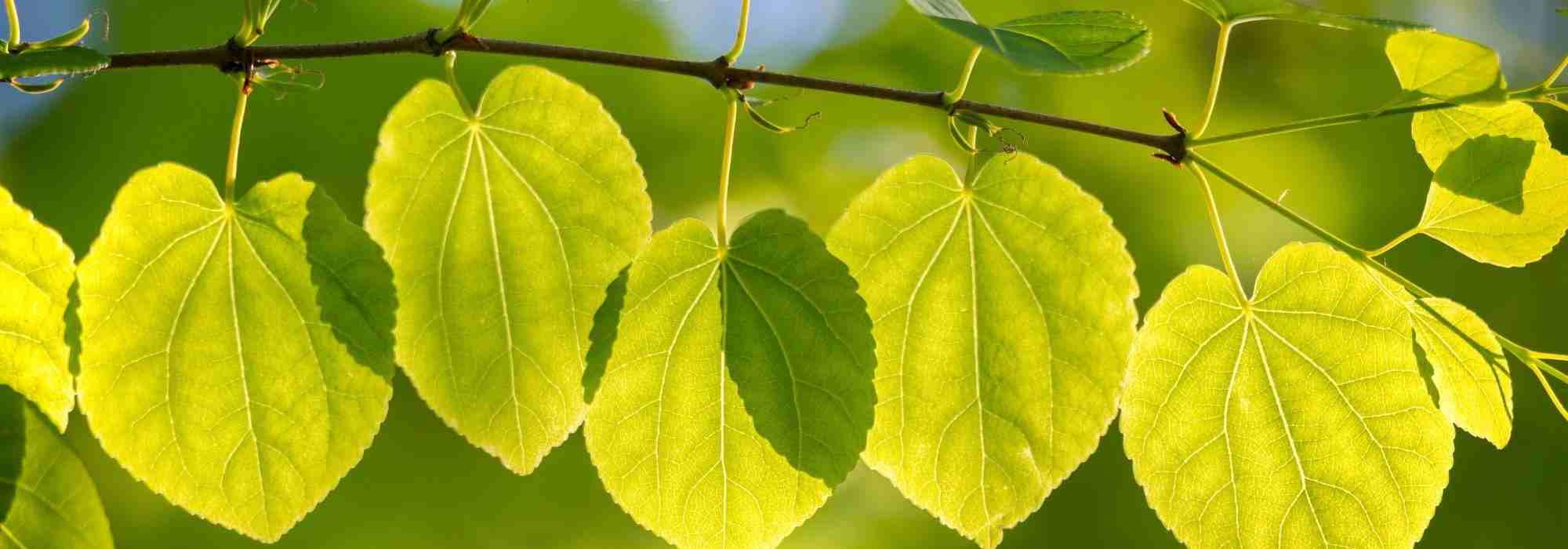
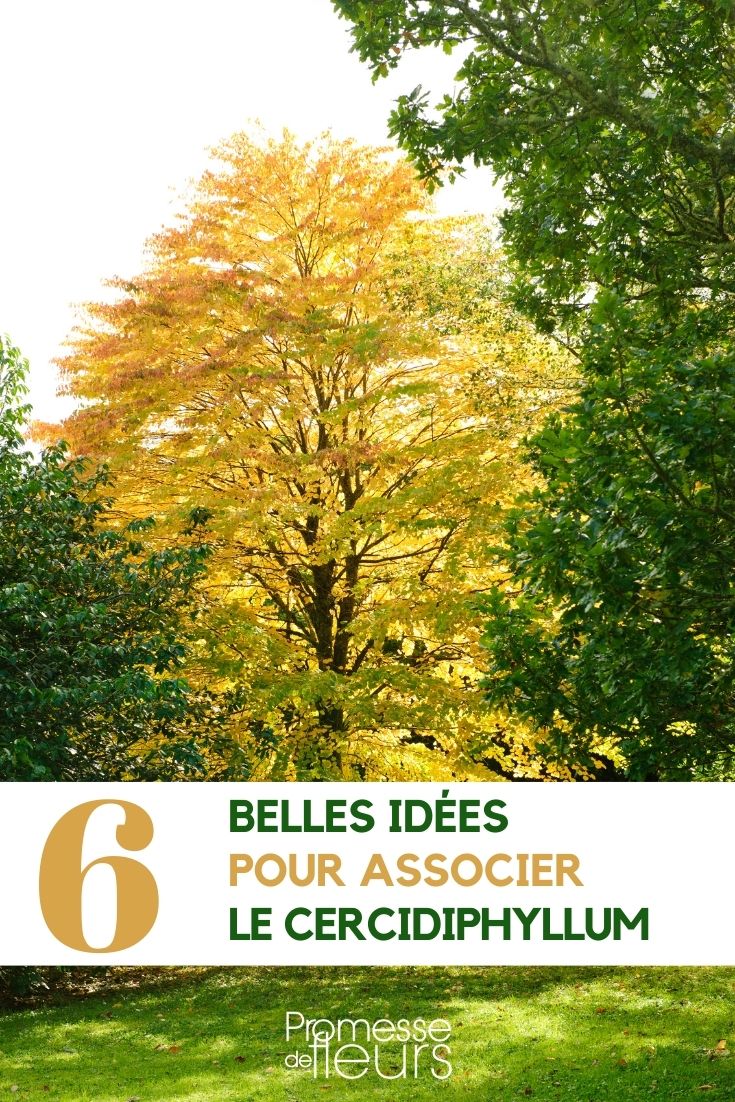
The Cercidiphyllum, commonly known as the Caramel Tree or Spice Bread Tree, is remarkable for its stunning foliage that changes colour throughout the seasons. This deciduous tree develops heart-shaped (cordate) leaves, similar to those of the Judas Tree, which transition from a rosy hue in spring to green in summer, and culminate in vibrant shades of yellow, orange, pink, and purple in autumn. As the leaves gradually fall to the ground with the arrival of winter, this deciduous tree exudes a delightful scent of melted caramel.
Originating from Asia (it is called Katsura in Asia), Cercidiphyllum japonicum thrives in rich, well-drained soils that remain slightly moist. Note that acidic soils enhance the beautiful colours of its foliage. Sheltered from the wind, in a sunny position that is not too hot or partially shaded, the Caramel Tree is ideal for the back of a border, in a grove, or around a water feature. Whether as a coppiced specimen or a single trunk, it makes a great addition to create a welcoming and warm atmosphere at the front of the house or near the terrace. The Cercidiphyllum easily fits into various garden styles: romantic gardens, autumn gardens, or even urban gardens. Discover our 6 ideas for pairing the Caramel Tree.

A caramel tree in a romantic-style flowerbed
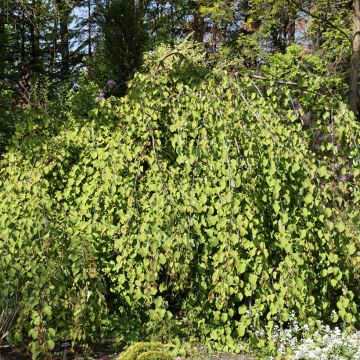
For this romantic scene, the planting of plants is done in layers of varying heights in soil that does not dry out too much. The plants associated with the caramel tree should be planted at a distance from the Cercidiphyllum to prevent it from suffering from root competition. Choose perennial plants with white, pink, or purple flowering. In the background, set back, the Caramel Tree serves as a focal point and adds verticality to the bed. The Cercidiphyllum japonicum ‘Pendulum’ is a weeping variety ideal for this environment. Its trailing branches give it elegance and a beautiful presence. At the base of the caramel tree, install Japanese anemones. For example, the Japanese anemone ‘Queen Charlotte’ enhances the garden with its pale pink flowers. Accompany it with large astilbes, such as the Astilbe arendsii ‘Bressingham Beauty’ in a lovely candy pink. Smaller, the astrantia offers superb umbel-like blooms. You can choose a light shade or opt for the intense Astrantia major ‘Ruby Cloud’ with its purplish flowers.
Consider small decorative foliage bushes that can take place in the heart of the bed: a variegated spindle tree (Euonymus fortunei ‘Golden Harlequin’, Euonymus japonicus ‘Pierrolino’), the dwarf weigela Weigelia florida ‘Monet Verweig’ with changing foliage edged in pink or white, or the Abelia x grandiflora ‘Magic Daydream’. The columbines Aquilegia ‘Nora Barlow’ and Aquilegia flabellata ‘Cameo White’ reveal their fairy-like flowers until early summer. Finally, at the front, decorate the border of the bed with low plants: tiarella, summer heather, hardy geranium, campanula.
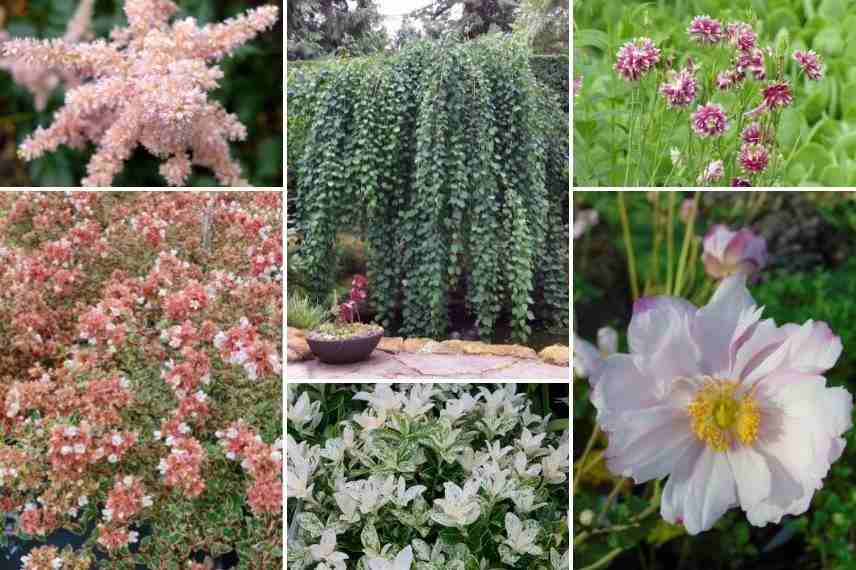
Astilbe arendsii ‘Bressingham Beauty’ (photo Gail Frederick), Cercidiphyllum japonicum ‘Pendulum’ (photo W. Cutler), Aquilegia vulgaris ‘Nora Barlow’, Abelia ‘Magic Daydream’, Euonymus japonicus ‘Pierrolino’ and Anemone ‘Queen Charlotte’
Cercidiphyllum with other trees
Appreciated for its changing foliage, Cercidiphyllum japonicum is an exceptional tree. In large gardens, it is ideal for creating a grove that groups several trees renowned for the beauty of their foliage or flowering. Pair the caramel tree with trees that thrive in cool, neutral to acidic soils, and maintain a good planting distance of 5 metres between each specimen.
The Liquidambar styraciflua ‘Golden Sun’ is smaller than the species type and features palmate foliage that transitions from golden yellow in spring to green in summer, finishing with purple-red in autumn. The red maple Acer rubrum ‘Summer Red’ dresses in foliage that reddens or greens according to the seasons. The black birch ‘Shiloh Splash’ brightens the grove with its bicoloured green and white leaves. The magnolia adds colour with its elegant flowering in various shades: pure white, pinkish white or purple, rose, cream yellow or greenish, wine red, and even dark purple. The Japanese dogwood (Cornus kousa) reveals stunning flowers on its graphic branches.
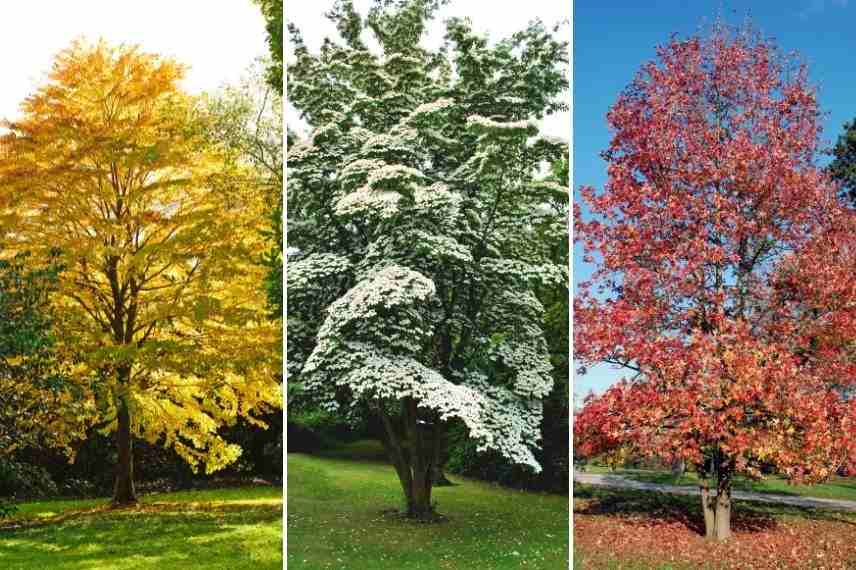
Cercidiphyllum japonicum, Cornus kousa, and Liquidambar styraciflua
Discover other Cercidiphyllum
View all →
Available in 2 sizes
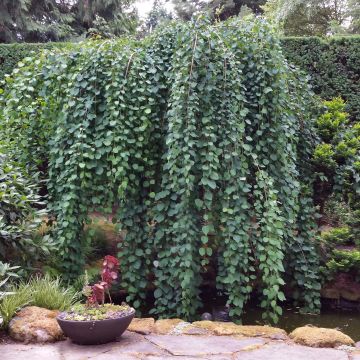
Available in 2 sizes
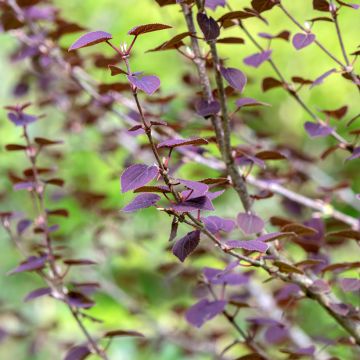
Available in 2 sizes
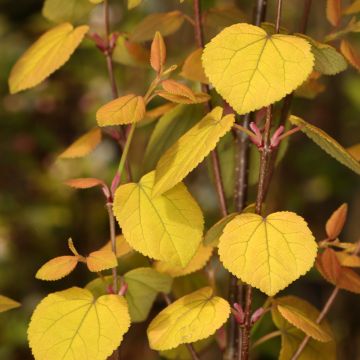
Available in 1 sizes
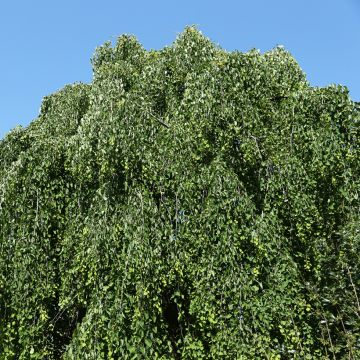
Available in 1 sizes
Available in 1 sizes
Available in 1 sizes
Available in 1 sizes
Available in 1 sizes
The Caramel Tree in a Colourful Autumn Scene
With its stunning fiery foliage in autumn, the caramel tree certainly stands out in the late season. During this time when days shorten, plants gradually enter dormancy. The sap descends into the roots, causing the leaves to change colour. Pair your cercidiphyllum with trees that boast beautiful autumn colours, such as the iron tree (Parrotia persica) with its incandescent leaves or the ‘Forest Pansy’ redbud with its purple-red foliage that turns a rusty hue in autumn. Add some colourful shrubs to this arrangement: Japanese maple (for example, the Acer palmatum ‘Ornatum’ with its purplish laciniate leaves), heavenly bamboo (like the compact Nandina domestica ‘Fire Power’), or even leucothoe.
Don’t forget late-flowering perennials: the American bluebell (Stokesia laevis), autumn asters, Fortune’s saxifrage, or the toad lily (Tricyrtis). The foliage of perennials or grasses can also have decorative interest: the famous heucheras, the elf flower, creeping bugle (the Ajuga reptans ‘Black Scallop’ with its dark leaves, for example), or linear-leaved plants such as hakonechloa, Imperata cylindrica ‘Red Baron’, or black ophiopogon.
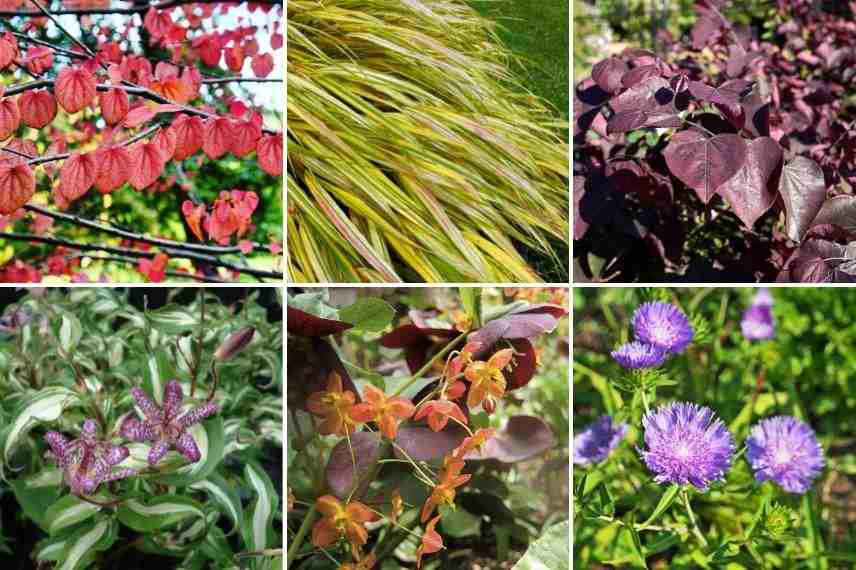
Cercidiphyllum japonicum, Hakonechloa macra ‘Aureola’, Cercis canadensis ‘Forest Pansy’, Tricyrtis ‘Imperial Banner’, Epimedium warleyense (photo Chris Mealy) and Stokesia laevis
Cercidiphyllum near a body of water
Originating from the wooded edges of China and Japan, the caramel tree thrives in humus-bearing soils that are always slightly moist, but not overly so. Planting it near a water feature is quite feasible as long as its roots do not grow in waterlogged soil. Plant the Cercidiphyllum in a sunny or lightly shaded area of the garden.
To create a setting around your pond or stream, pair it with moisture-loving bushes and perennial plants. In the background, install a sweetshrub (Calycanthus floridus), a Clethra alnifolia, or a white dogwood (for example, Cornus alba ‘Gouchaultii’). All thrive perfectly in cool soil. Opulent plants typical of woodland edges, such as ferns (like the royal fern, for example) and hostas, add volume as well. The pink or white flowers of persicarias and Chelone are essential for adding colour to this area. Finally, low-growing groundcover perennials such as Sagina subulata, Adiantum venustum, Chloranthus fortunei, or Anemopsis californica help fill in the gaps.
- To vegetate the surface of your water feature, choose aquatic plants. You will find our entire range of aquatic plants on our site.
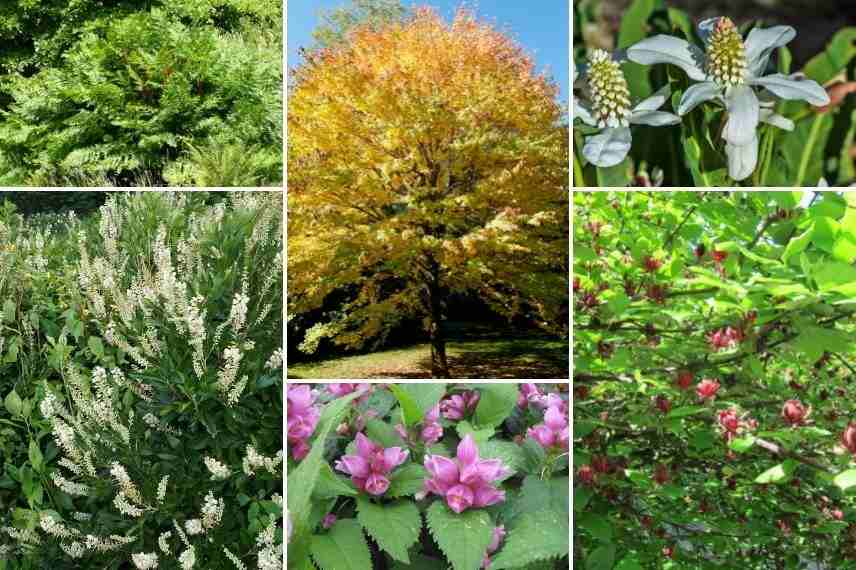
Osmunda regalis, Cercidiphyllum japonicum, Anemopsis californica, Clethra alnifolia ‘Hummingbird’ (photo Kristine Paulus), Chelone obliqua and Calycanthus floridus (photo Wikipedia)
The Caramel Tree near a terrace or at the front of the house
The caramel tree proves to be a good choice for landscaping around a terrace or at the front of a house. This small tree is ideal for welcoming visitors who take the path to the house or for enhancing the view from the terrace. Not only are the beautiful colours of its leaves ornamental for a good part of the year, but when it sheds its foliage, it delights us with its caramel or gingerbread fragrance.
To showcase it well, plant the caramel tree in isolation with a few bulbous plants as companions: chionodoxa, fritillary, or daffodil for spring flowering; tulip, camassia, or ornamental garlic for summer flowering; colchicum, Naples cyclamen, snowdrop, and Naples cyclamen take over in autumn or winter. The successive blooms allow for an attractive garden across several seasons. Interspace some low-growing plants that are interesting for their foliage: carex, silver artemisia ‘Canescens’, or heucherella. Their foliage is useful for temporarily hiding the dried leaves of bulbous plants and reduces the need for frequent maintenance of your low bed.
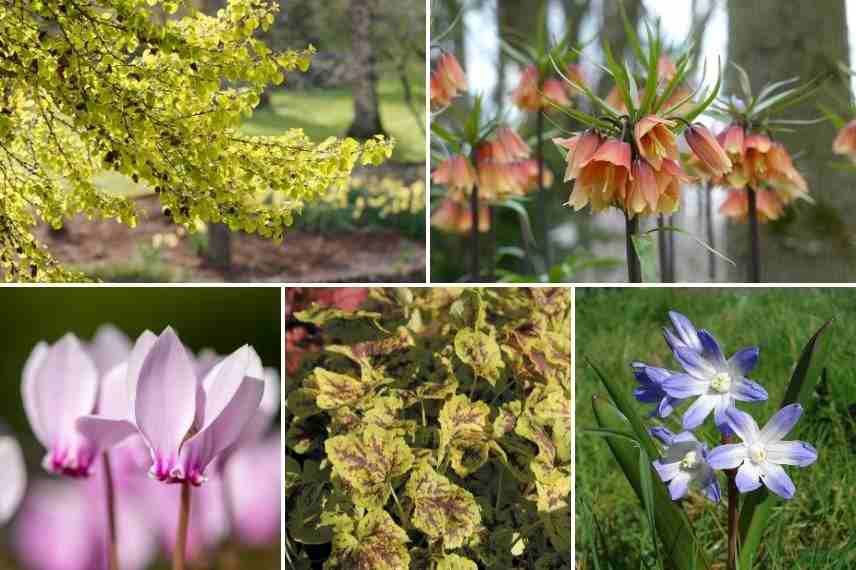
Cercidiphyllum japonicum, Imperial fritillary ‘Tchaikovsky’, Hederifolium cyclamen, Heucherella ‘Solar Power’, and Chionodoxa luciliae
Cercidiphyllum in an Urban Garden
Resistant well to pollution, the Cercidiphyllum has its place in an urban garden, in soil that is not too dry. To create a city garden, it is essential to wisely choose plants that can withstand urban pollution.
For this arrangement, we recommend Cercidiphyllum japonicum ‘Rotfuchs’, which is a reasonable size (4 to 5 metres tall), with purplish-black foliage turning purplish-green at ripeness. If space allows, Catalpa bignonioides ‘Nana’ can accompany the caramel tree. Not exceeding 5 metres in height and 3 metres in spread, it can serve as a leafy parasol if grafted onto a tall stem. To cover a wall, opt for a honeysuckle: for example, Lonicera henryi, which copes very well with urban atmospheres and offers trumpet-shaped flowers in pink-orange during summer. For an original effect, choose a decorative dogwood (Cornus sericea, Cornus alba) or the false spiraea with sorbus leaves ‘Sem’. This small-growing bush features splendid foliage with changing colours: chartreuse green subtly tinged with pink, red, and then beige. In summer, it produces light white panicle inflorescences. Finally, some perennials can complete the picture: sedums, spurge, heathers, daylilies, hardy geraniums, and bergenias.
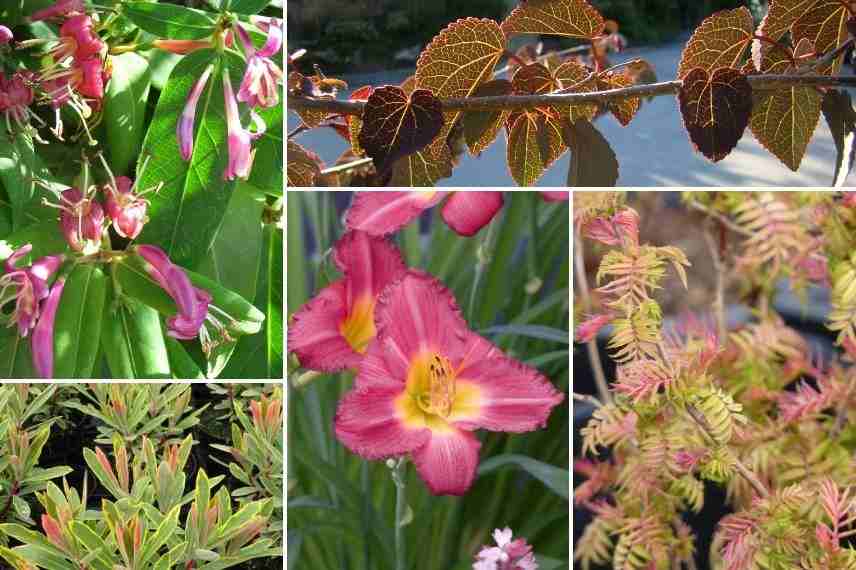
Lonicera henryi, Cercidiphyllum japonicum ‘Rotfuchs’ (photo wlcutler), Euphorbia amygdaloides ‘Ascot Rainbow’, Hemerocallis ‘Everydaylily Red Ribs’ and Sorbaria sorbifolia ‘Sem’
- Subscribe!
- Contents
Comments