


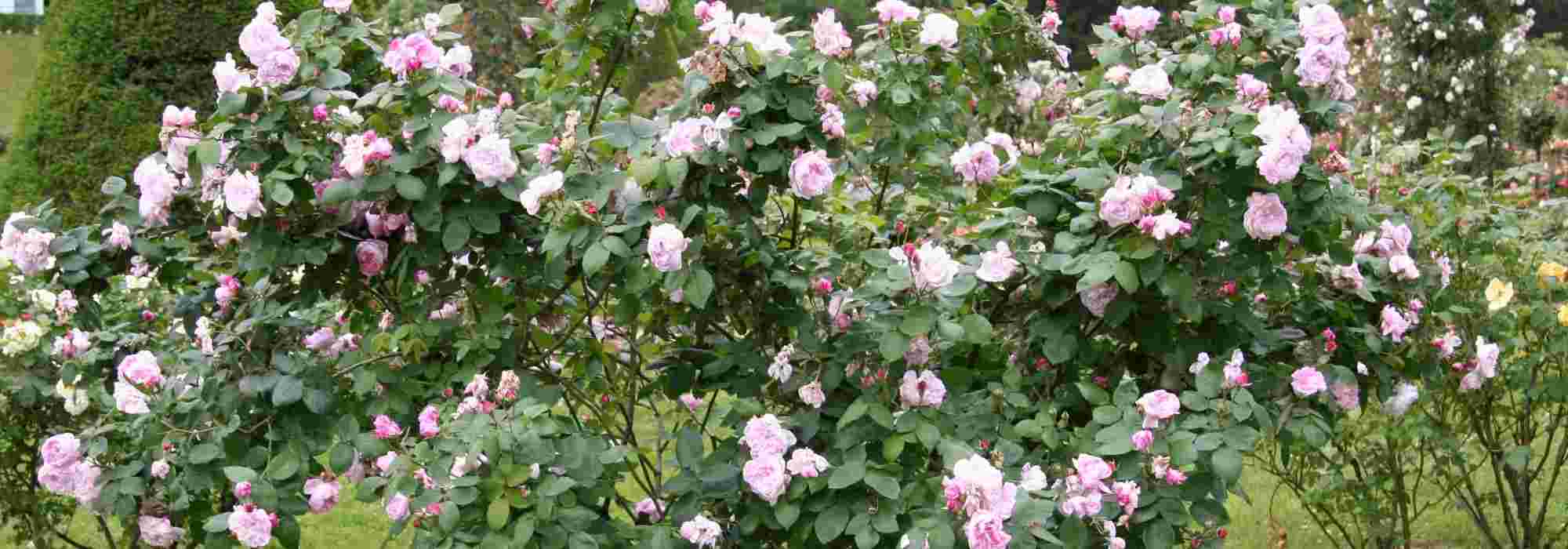
Beautiful roses to nibble in the garden
Our selection of edible roses
Contents
Roses are not only beautiful, they can also be delicious! While in principle all roses can be cooked and eaten, some varieties of roses are more flavoursome than others. There are roses with edible petals, specifically prized for their sweet or sweet-sour flavour, their highly aromatic flowers, and their culinary interest. It is mainly the buds and petals that are used in cooking to flavour our dishes or desserts! But which edible rose petals are the most delicious? Botanical roses, and particularly old roses, are especially recommended due to the richness of their flowers in rose essence.
Here are our top remarkable varieties of roses for the delicate flavour of their edible petals!

The rose 'Rose de Rescht'
The Rose ‘Rose de Rescht’ is one of those old roses that were once found in many flower gardens. This abundant, intrepid, and charming rose forms a compact and bushy shrub that will not exceed 1 to 1.20 m in height and 1.20 m in spread. It is a very old hybrid variety that belongs to the complex family of Damask roses, highly valued for the fragrance and flavour of their flowers.
The fearsome thorny stems are adorned with dark green, leathery foliage and produce, in May-June, well-formed, double, and tightly packed roses, shaped like pom-poms, measuring 5 to 6 cm across. The light pink to deep fuchsia flowers, turning to magenta, are grouped in lovely small bouquets. They emit a powerful, sweet, honeyed fragrance, typical of the Damask rose.
Generous and undemanding, very hardy, this is a vigorous rose accessible to all gardeners, even beginners. It can be planted in full sun or partial shade in a border or even grown in a pot.
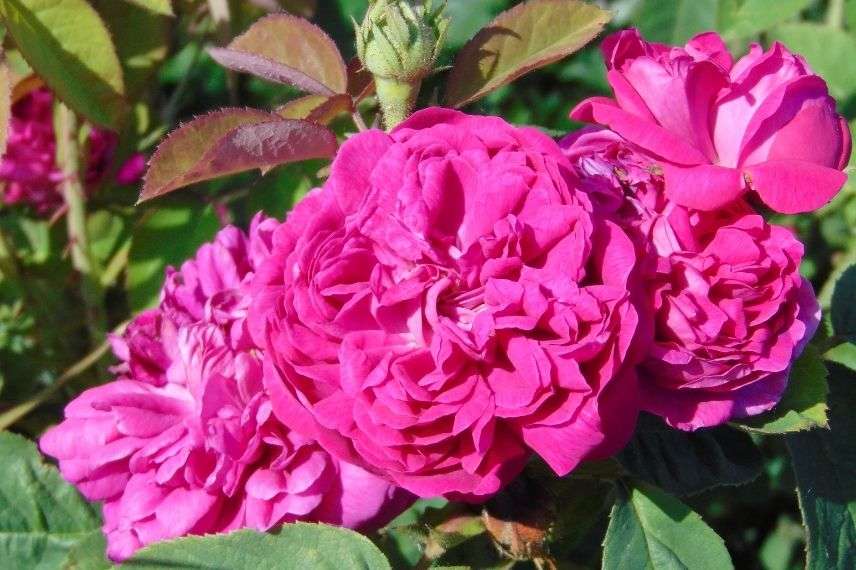
Rose ‘Rose de Rescht’
Read also
Cooking with rosesRugosa rose ‘Blanc double de Coubert’
This 1893 Cochet variety is a beautiful rose still highly sought after in our gardens, nearly 130 years after its creation. Very healthy and resistant to diseases, the rose rugosa ‘Blanc double de Coubert’ is easy to grow and very floriferous. This magnificent repeat flowering rugosa displays large semi-double flowers of 8 cm, highly fragrant, open, pure white, with petals crumpled like tissue paper. They emit a truly penetrating fragrance even at night. It blooms abundantly and continuously from June to October.
It forms a small vigorous and spreading bush of 1.5 metres, with very thorny stems, adorned with rough, crinkled, intense green foliage and red berries in autumn. At the end of the season, its leaves turn golden yellow. It can be planted in a flowering hedge or as a mass in the garden. The rose ‘Frau Dagmar Hastrup’ is another rugosa that produces large pink dog roses throughout the summer and yields large rose hips at the end of the season.
Rosa (x) gallica Officinalis organic
The Rosa (x) gallica Officinalis ORGANIC, or apothecary rose, also known as Provins rose, is an ancient rose from Damascus, brought to Gaul during the Crusades and became one of the symbols of the town of Provins as early as 1240. This botanical rose has been cultivated in France since the 13th century in the herb garden for its medicinal properties. This historic rose has been awarded an Award of Garden Merit in England for its ornamental qualities and great hardiness. It still captivates today with its vigour and abundant summer flowering. During the flowering period, from June to July, the bush is adorned with large semi-double to double carmine pink roses measuring 8 to 9 cm in diameter. Composed of 8 to 15 petals arranged in a flat cup around a heart of yellow stamens, they emit a light scent of old rose and are followed by rose hips. The dark green matte foliage is remarkably healthy.
The Rosa (x) gallica Officinalis forms a bush about 1 metre high, which easily fits into a flowerbed. Extremely hardy, it tolerates shade, drought, and thrives without watering or the need for treatments. Low-maintenance, it adapts to all gardens, from the North to the South of our country.
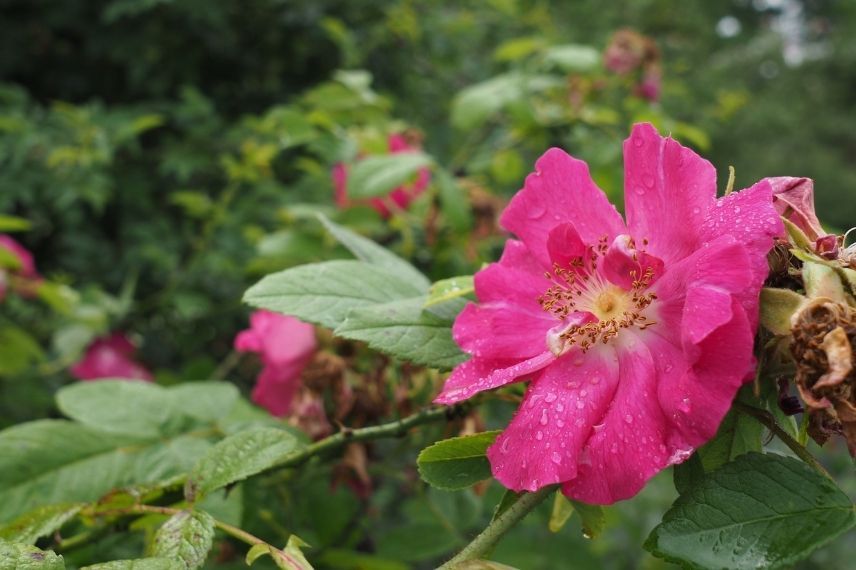
Rosa gallica ‘Officinalis’
Read also
The scent of rosesRosa (x) damascena
The Damask rose is a bush rose renowned since antiquity for the richness of its flower in rose essence. It is one of the most cultivated and most sought-after old roses for perfumery. Brought back from the Crusades from Damascus around 1254, it still grows more or less spontaneously in Syria and Morocco. It has given rise to numerous varieties. In June and July, it is covered in semi-double roses measuring 7 cm, opening in light pink and gathered in loose bouquets. They exude a powerful, sweet, and fragrant aroma.
The rosebush forms a beautiful bush with strongly thorny stems, reaching about 2 m in height and 1.50 m in spread, adorned with very healthy light grey-green foliage.
In the garden, this vigorous rosebush will integrate perfectly into a free hedge as well as in summer-flowering shrub borders.
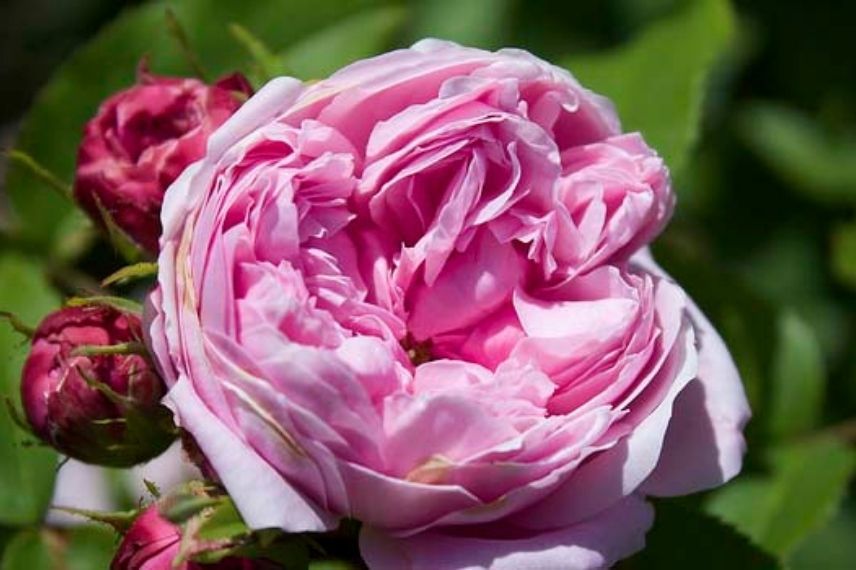
Rosa damascena
The Rose 'Fantin Latour'
The Centifolia roses, also known as cabbage roses, are ancient roses renowned for their unparalleled fragrances. The ‘Fantin Latour’ rose is one of these highly sought-after roses by perfumers. This hybrid of uncertain origin was discovered before 1938 by the rosarian Graham Stuart Thomas. In June and July, it blooms abundantly, showcasing opulent bouquets of intensely fragrant roses against a backdrop of green-grey foliage. Very beautiful roses open in clusters rich in petals, highly double, measuring 9 cm in diameter. They display a powdery pink colour that fades over time. Their fragrance is typical of Centifolia roses, both sweet and sugary.
It forms a harmonious bush reaching 1.5 metres at ripeness and will add a romantic touch to the back of light perennial borders or can be trained over an arch.
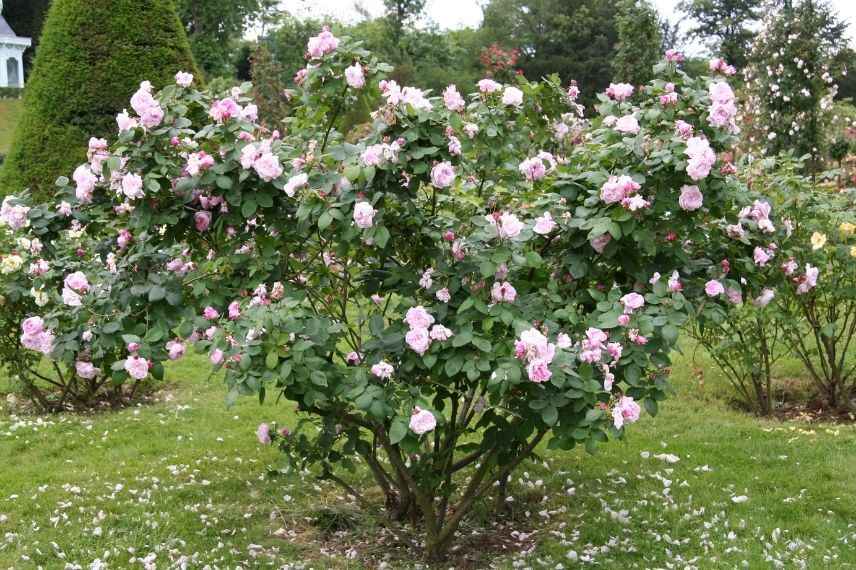
‘Fantin Latour’ rose
The 'Gros Provins Variegated Organic' Rose
The old rose ‘Gros Provins Panaché’ is a legendary, magnificent Gallica rose, a descendant of the gallica Officinalis. It is valued for its delightfully fragrant flowering and is also a highly sought-after rose in the industry and perfumery. In June, and for several weeks, with sometimes a less intense resurgence in late summer, it adorns itself with round roses grouped in bouquets. They bloom in very double cups measuring 7 cm in diameter, in a changing colour, pale pink variegated with white, and mauve pink. Highly fragrant, they are characterised by their concentration of essential oils and emit a scent of old rose.
The rose Rosa (x) gallica ‘Gros Provins Panaché’ forms a large bush with a supple habit of 1.5 metres high, almost thornless and dressed in light green foliage. It will add charm and opulence to a summer-flowering shrub border.
- Subscribe!
- Contents
![[plantes_comestibles]Roses[/plantes_comestibles]](https://en.promessedefleurs.eu/blogwp/wp-content/uploads/2022/06/roses-comestibles-1.jpg "[plantes nom=\"Roses comestibles\"]")
Comments