





























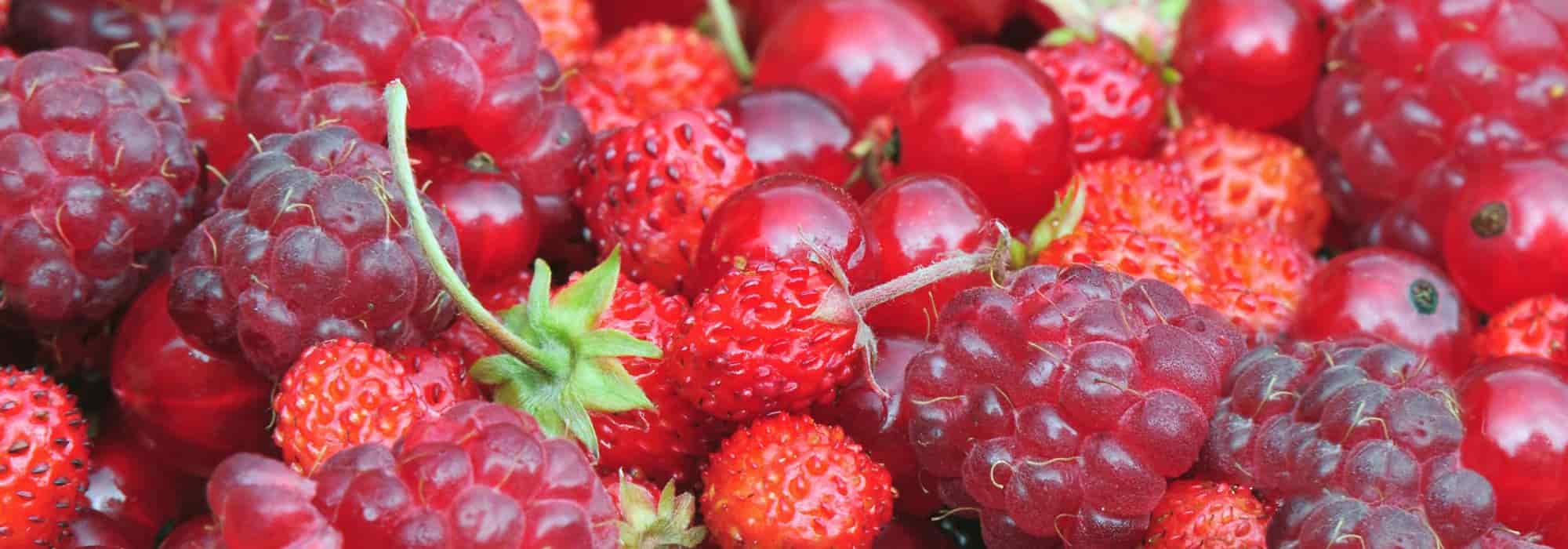
Berries: tips for growing beautiful fruit
All our tips to grow beautiful raspberries, strawberries, currants, blueberries...
Contents
In the garden, berries evoke sunny days, jams, and delightful childhood memories. Moreover, they have the advantage of fruiting in the first year (or second!) after planting. So, there’s no need to wait years to enjoy these raspberries, redcurrants, blueberries, and other strawberries and blackberries from May until the first frosts.
Additionally, due to their small size, berries fit into any garden, including the smallest ones, or even in containers or pots on terraces or balconies. Whether grown at the back of a border, in edging, or as hedges, or even against a wall, berries adapt to all situations. And they can be harvested by children!
Easy to grow, these berries are perfect for adding sweetness to our summers. We share some tips to enhance fruiting.

The importance of exposure and soil when planting
To achieve beautiful future fruiting, it all starts with planting. Although they are not very demanding, soft fruits require soil types suited to their needs and optimal exposure. Indeed, without sunlight, it is difficult to obtain good fruit.
The best exposure
When it comes to exposure, soft fruits thrive in sunlight. However, in regions with very hot summers, it may be wise to plant them in partial shade or to provide shading systems in case of a heatwave. This is because some soft fruits, like raspberries, may be sensitive to intense heat and especially to low humidity levels. Intense sunlight can even scorch the foliage, particularly that of the blueberry.
Soft fruits will also appreciate planting areas where they are protected from cold winds and spring frosts. For instance, currant bushes are sensitive to temperatures that remain low in spring, between 1 and 5 °C, which can hinder pollination and thus cause fruit drop.
As for blackcurrants, they need winter cold to fruit properly. This is why planting in the south of France may not be the most suitable. However, they should be sheltered from spring frosts.
The choice of soil
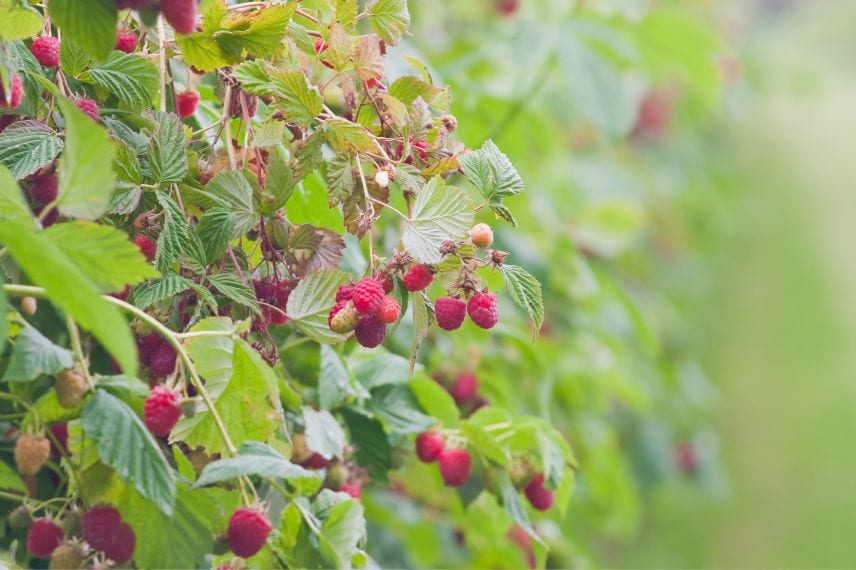
Overall, soft fruits prefer deep, well-worked soils that are rather cool and rich in organic matter. Therefore, the soil should be loosened beforehand, raked to eliminate adventive plants, and enriched with compost or well-decomposed manure.
The nature of the soil varies depending on the species:
- Raspberries, strawberries, and currants prefer slightly acidic to neutral soils
- Blueberries thrive in acidic soils with a pH between 4 and 5.5
- Blackcurrants enjoy clay-limestone soils with a pH of 7 or 7.5
- Bramble will thrive in all types of soil, except those that are too acidic
- The edible honeysuckle (Lonicera), which produces berries in May, should be planted in soil low in lime
Read also
Raspberries: planting, pruning and carePlanting together rather than alone!
Most small bushes or plants with small fruits are self-fertile, meaning that the flowers are fertilised by their own pollen. However, to improve pollination and thus fruiting, it is always preferable to plant several plants of different varieties, or if not possible, several plants of the same variety.
The foraging of flowers by insects such as the honeybee or bumblebee greatly facilitates pollination, which can also occur by wind. For strawberries and blueberries, this pollination by foraging insects is essential.
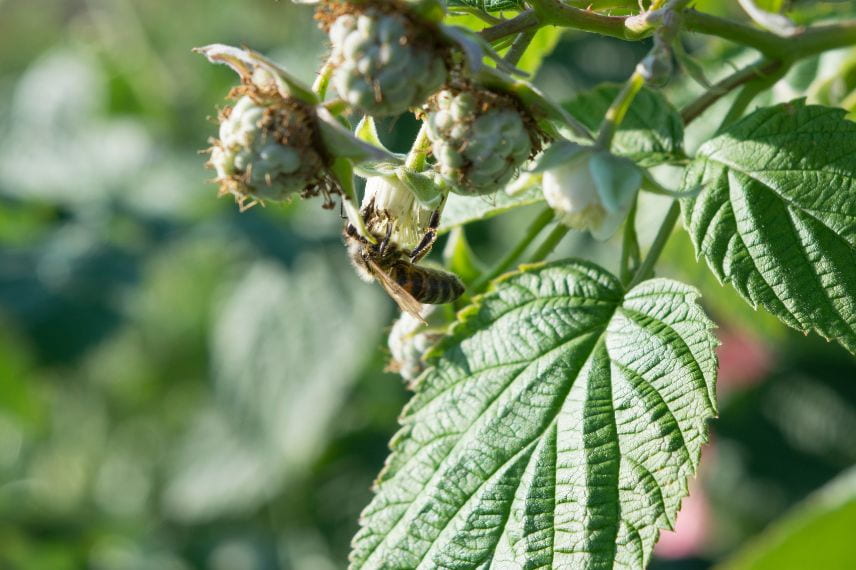
Moreover, to attract these essential insects for pollination, it is recommended to plant melliferous plants around the small fruits. This way, you will combine the useful with the pleasant!
When planting small fruits, it is also important to consider the maintenance of the plants. Raspberries, gooseberries, and brambles need to be supported. Olivier explains everything in video: How to support blackberries?, supporting gooseberries, and Dutch-style support for raspberries. Blueberries and gooseberries are grown as bushes.
Discover other Berries
View all →
Available in 0 sizes
Available in 1 sizes
Available in 1 sizes
Available in 1 sizes
Available in 1 sizes
Available in 3 sizes
Available in 1 sizes
Available in 1 sizes
Available in 2 sizes
Available in 1 sizes
The proper care of soft fruits
If the maintenance of raspberries, currants, blueberries, and similar plants is not particularly demanding, it does require some actions that will facilitate the production of beautiful and tasty fruits.
Moderate watering
Generally, in temperate climate regions, small fruits should be watered moderately, always at the base and thus without wetting the foliage. However, during the development of the foliage and fruiting, watering will be more regular.
Similarly, in the case of a hot and dry spring or summer, or in regions with such climates, watering will be regular and abundant.
Essential fertilisation
As small fruits are quite greedy, it is necessary to maintain a soil rich in organic matter. This is why the application of fertiliser, which ensures good fruiting, is necessary throughout the year. In autumn, it is already possible to apply compost at the base of the bushes. Just lightly scratch the soil to incorporate it.
Then, in spring, to ensure a good recovery of the bushes, you can apply a bit of fertiliser that will stimulate the bacterial life of the soil, thus providing nutrients to the plant. However, it is important not to use just any fertiliser! To promote fruiting and enhance their taste quality, it is better to use a fertiliser richer in potassium and phosphorus than in nitrogen (this element mainly contributes to the development of vegetation!). A special fertiliser for strawberries and small fruits is therefore precisely formulated to meet the needs of raspberries, blueberries, and more.
Pruning, necessary for the bush’s productivity
Pruning raspberries, blackcurrants, and other brambles is essential for several reasons: it increases fruit production, helps contain the bush, and makes it more aesthetically pleasing. Finally, by removing dead or damaged branches, the bush is rejuvenated, more airy, and thus less susceptible to diseases.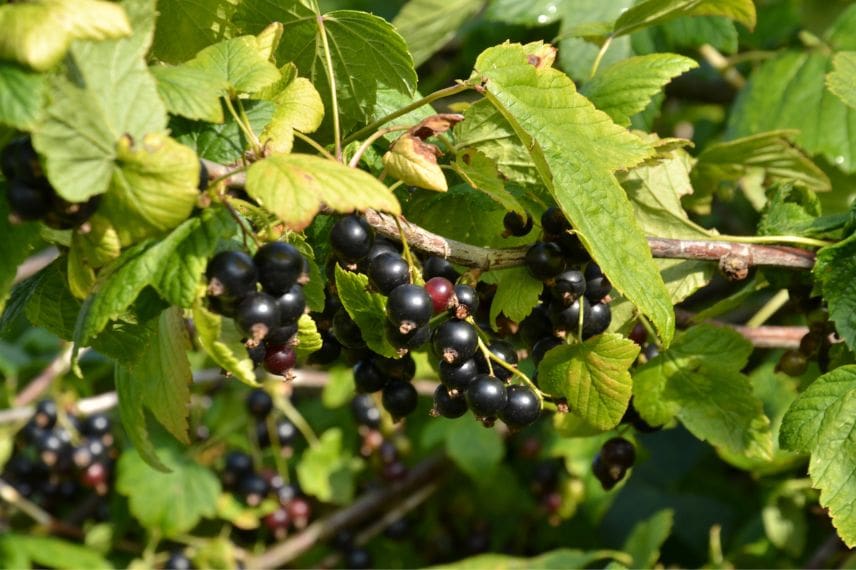
For raspberries, I invite you to read Ingrid B.’s article: Pruning Raspberries: when and how?
Blackcurrants and various currants are pruned in January or February. The pruning involves removing old wood to retain 3 to 10 main branches depending on the plant’s vigour. Ensure a good distribution of the branches. Balance the branches by keeping only one-third of 1-year-old branches, one-third of 2 to 3-year-old branches, and one-third of new branches.
Brambles that produce blackberries are easy to prune: simply remove the dried branches and keep the young shoots.
Overall, blueberries should not be pruned, especially during the first three years after planting. After that, just remove any dry or damaged branches.
Soil maintenance, also recommended
Soil maintenance consists of regular hoeing and weeding to limit the proliferation of unwanted herbs. To space out these weeding sessions, mulching is recommended. It will also help keep the soil cool and limit leaching. You can mulch with straw, ramial chipped wood (RCW), grass clippings, and more.
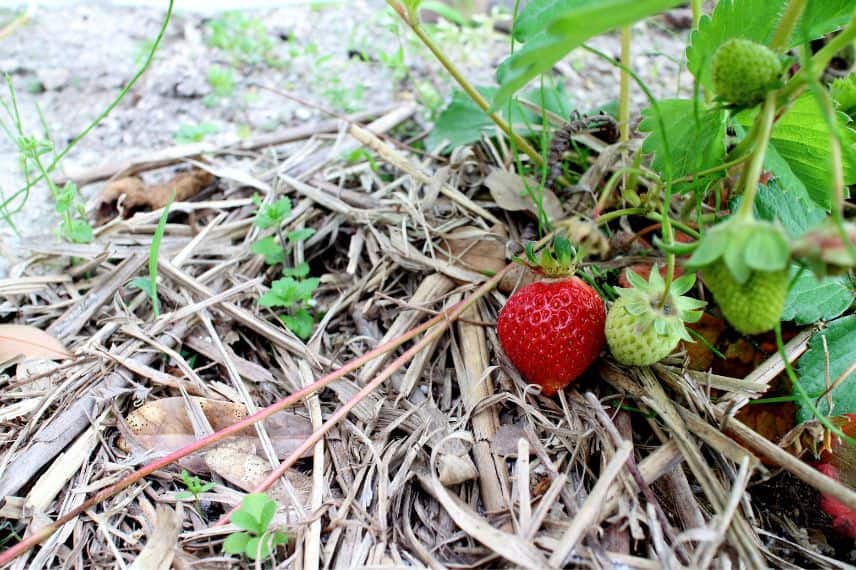
Just before winter, some care can be given to strawberries: remove runners and dry or damaged leaves, eliminate adventive plants, and renew the mulch to keep them warm over winter. You can use pine bark, hemp flakes, flax, or miscanthus, straw, and more.
Controlling diseases and pests
Most diseases affecting small fruit bushes are often linked to poor growing conditions or overly humid weather. Prevention is therefore key:
- Do not plant too closely
- If watering is necessary, do it at the base
- Avoid overly nitrogen-rich fertiliser applications
Spraying with horsetail manure can help protect fruit plants. I also detail in another article all the diseases and pests of raspberries.
Also, remember to protect your harvests from the greed of birds with bird protection nets. Olivier also explains all the other solutions to protect crops from birds.
Read also
Strawberries: planting, growing and careAnd to finish the harvest!
The harvest of soft fruits should be done very regularly. Thus, raspberries are picked almost daily, while other soft fruits are harvested a bit less frequently.
The harvest is usually done in the morning as the fruits are cold. They will keep better.
- Subscribe!
- Contents

Comments